
India–ASEAN Relations: Act East, Maritime Security, Trade and the Myanmar Challenge
Revise the static topic: UPSC International Relations notes
In short: India’s engagement at the Manila ASEAN meetings centres on maritime security, economic cooperation and development partnership, according to the supplied summit preview. ASEAN is crucial to India’s Act East Policy, but translating diplomatic engagement into regional connectivity and resilient trade requires addressing maritime tensions, development gaps and the Myanmar crisis.
Reference image of Narendra Modi accompanying coverage of his visit to the Philippines for ASEAN meetings. India’s agenda emphasises trade and maritime security, rather than confirmed summit outcomes.
Image: Indian Express
Why in news
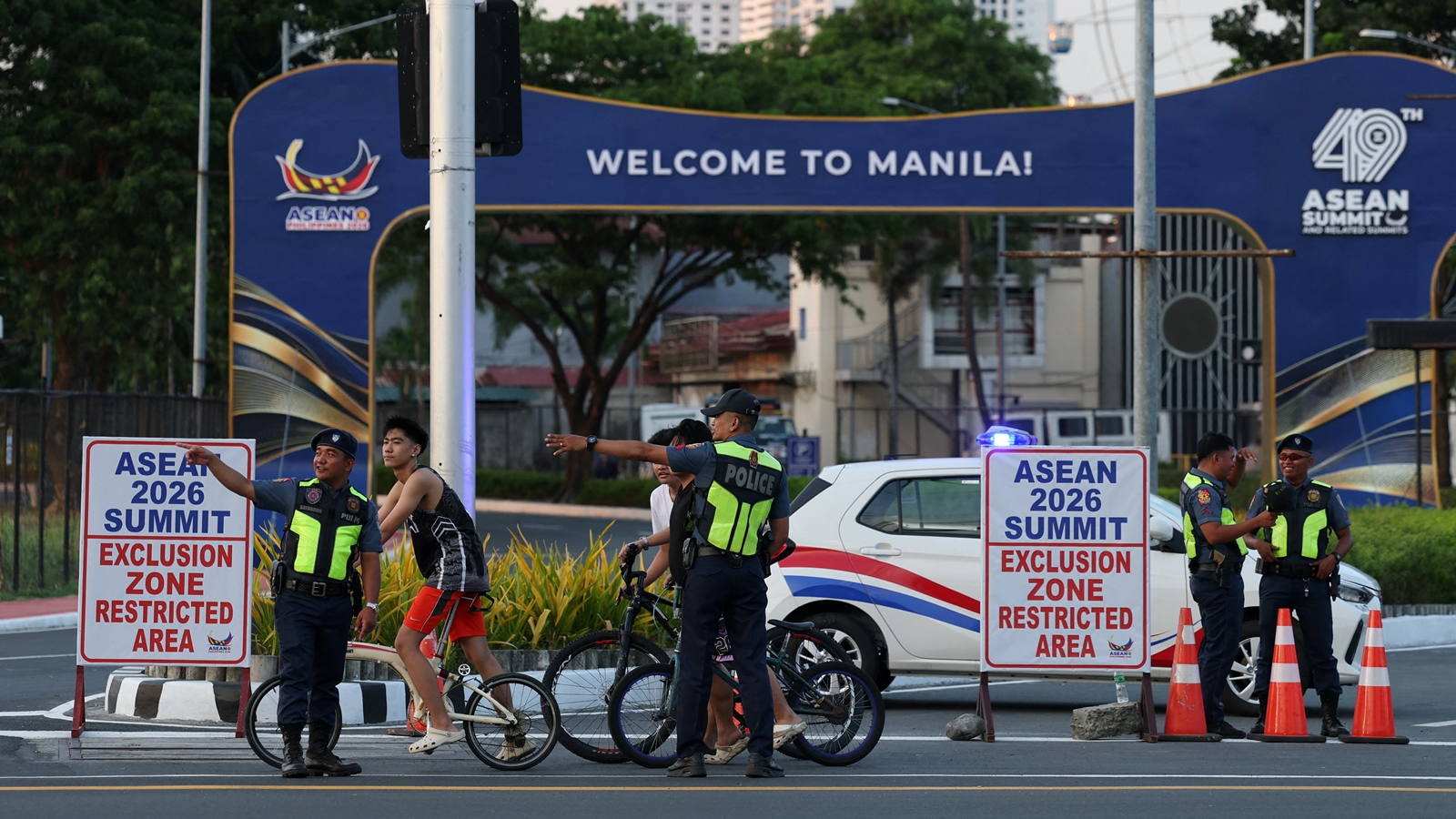
Prime Minister Narendra Modi’s Manila visit was scheduled for November 16–17, 2026, for the ASEAN–India Summit and East Asia Summit. Separately, UN Secretary-General António Guterres urged stronger UN–ASEAN cooperation and action to protect civilians and advance an inclusive political solution in Myanmar.
2026
ASEAN–India Year of Maritime Cooperation
11
ASEAN members, as reported by UN News
Nearly 1.2 million
Rohingya in refugee camps in Bangladesh
35th
Anniversary of ASEAN–India relations in 2027
5th
Anniversary of Comprehensive Strategic Partnership in 2027
60 years
ASEAN anniversary in 2027
Background
ASEAN is an intergovernmental regional organisation whose diplomacy emphasises consultation, consensus and respect for sovereignty. India’s Act East Policy builds on the earlier Look East approach by combining economic engagement with connectivity, strategic cooperation and people-to-people ties. Southeast Asia connects India’s eastern land frontier and adjoining maritime spaces with the wider Indo-Pacific. ASEAN-led institutions, particularly the East Asia Summit, provide platforms where India can engage regional states and major powers without relying exclusively on bilateral relationships or narrower strategic groupings.
The Manila agenda: priorities, not confirmed outcomes
The supplied Indian Express report identifies maritime security, economic cooperation and development partnership as the principal priorities of India’s summit engagement. The Philippines holds the ASEAN chairmanship in 2026 under the theme “Navigating our future, together”.
The visit was intended to review the ASEAN–India Comprehensive Strategic Partnership and identify further cooperation in connectivity, trade, digital transformation, defence, disaster resilience and capacity building. A Quad leaders’ meeting was being planned on the sidelines; the supplied material does not establish that it took place or that any new agreement was concluded.
- Distinguish the ASEAN–India Summit, a partnership forum, from the East Asia Summit, a broader ASEAN-led strategic forum.
- Treat announced priorities and proposed meetings as an agenda rather than a list of completed deliverables.
- The maritime cooperation theme creates an opportunity to connect security initiatives with economic and environmental cooperation.
Infographic
Regional architecture
Keep ASEAN-led dialogue central and Quad cooperation complementary.
Trade
Turn market access into reliable, diversified production networks.
Connectivity
Combine transport infrastructure with customs, transit and local enterprise.
Maritime cooperation
Integrate lawful navigation, safety, disaster response and ocean sustainability.
Myanmar
Prioritise civilian protection, humanitarian access and inclusive dialogue.
Development partnership
Narrow capability gaps through demand-driven capacity building.
AI-assisted infographic by Pragnya IAS Academy, based on the cited sources.
ASEAN centrality: the institutional anchor of Act East
ASEAN centrality means that ASEAN-led institutions retain a leading convening and agenda-setting role in the regional architecture. It does not mean that ASEAN can dictate the policies of major powers or that all its members share identical strategic preferences.
For India, supporting centrality helps preserve an inclusive regional order and reassures Southeast Asian states that Act East is not merely an instrument of major-power competition. ASEAN engagement also provides space for cooperation beyond security, including development, technology and societal links.
The Quad can complement this architecture through practical public goods such as disaster response and maritime capacity building. However, India should avoid presenting ASEAN as subordinate to the Quad or treating Southeast Asian countries as a uniform strategic bloc.
- ASEAN-led dialogue gives smaller and middle powers a collective diplomatic platform.
- Consensus supports institutional legitimacy but can make responses to divisive crises difficult.
- India needs both collective engagement with ASEAN and tailored bilateral partnerships with its members.
Trade and connectivity: move from access to usable integration
The reported economic agenda prioritises trade and investment, connectivity, and resilient, diversified supply chains. The ASEAN–India Trade in Goods Agreement provides an established framework for goods trade, but preferential market access alone cannot ensure commercial integration.
For Act East to generate domestic gains, connectivity must link Northeast India with Southeast Asian production networks and markets. The India–Myanmar–Thailand Trilateral Highway and the Kaladan Multimodal Transit Transport Project illustrate the strategic importance of Myanmar to this vision; the supplied reports do not establish their current completion status.
Physical infrastructure must be supported by predictable customs procedures, compatible standards, reliable logistics and commercially viable transport services. India’s support through the Initiative for ASEAN Integration also recognises that development gaps can limit the ability of less-developed partners to benefit from regional integration.
- Assess trade arrangements through utilisation, value addition and supply-chain participation rather than headline market access alone.
- Strengthen rules-of-origin verification while avoiding unnecessary compliance burdens on legitimate traders.
- Pair infrastructure with local enterprise development, skills and border-trade facilitation in Northeast India.
- The source identifies capacity-building support for Cambodia, Laos, Myanmar and Timor-Leste under the Initiative for ASEAN Integration.
Maritime cooperation: security, law and the blue economy
India and Southeast Asia occupy adjoining maritime spaces, making maritime cooperation a practical necessity. Secure sea lanes support trade and energy movement, while cooperation in maritime safety, disaster response and environmental protection can deliver benefits without requiring identical threat perceptions.
At the ASEAN opening plenary, Philippine President Ferdinand Marcos Jr. called for an effective and substantive South China Sea Code of Conduct consistent with international law, including UNCLOS. The code remains an effort under discussion in the supplied material, not a concluded settlement.
UNCLOS provides the legal framework governing maritime zones and navigational rights. A regional code should reinforce this framework rather than dilute lawful rights or prejudice the interests of states outside the negotiations.
- Prioritise maritime domain awareness, search and rescue, and humanitarian assistance and disaster relief.
- Combine coast guard cooperation with action against unlawful maritime activities.
- Link blue-economy initiatives with sustainable fisheries, marine ecosystem protection and coastal livelihoods.
- Distinguish freedom of navigation under international law from unrestricted activity in every maritime zone.
Myanmar: the test of connectivity and ASEAN’s crisis diplomacy
Guterres called for civilian protection, safe and unhindered humanitarian access, and an inclusive Myanmar-led political solution. He reaffirmed UN support for ASEAN’s Five-Point Consensus and highlighted the continuing displacement of the Rohingya, with nearly 1.2 million living in refugee camps in Bangladesh.
For India, instability in Myanmar affects border management, humanitarian conditions and the feasibility of eastward land connectivity. This creates a policy dilemma: maintaining necessary engagement must be balanced with civilian protection and support for an inclusive political process.
ASEAN’s Five-Point Consensus envisages an end to violence, constructive dialogue, mediation by a special envoy, humanitarian assistance and an envoy visit to meet the parties concerned. Its importance lies in providing a shared diplomatic framework; its weakness is the difficulty of securing cooperation and implementation.
- Humanitarian access should be assessed by assistance reaching affected communities, not merely by diplomatic assurances.
- Rohingya return must be safe, voluntary, dignified and sustainable.
- India should coordinate with ASEAN and the UN while supporting inclusive engagement with relevant Myanmar stakeholders.
- Connectivity planning needs conflict-sensitive implementation and contingency arrangements.

Reference view of Rohingya refugees aboard a wooden boat in the Andaman Sea, illustrating the regional humanitarian and maritime dimensions of the Myanmar crisis; not a scene from the Manila meetings.
Image: UN News
| Platform or framework | Principal role | Relevance to India |
|---|---|---|
| ASEAN–India Summit | High-level review and direction of the ASEAN–India partnership | Advances Act East through economic, strategic and development cooperation |
| East Asia Summit | ASEAN-led, leaders-led forum for broad strategic dialogue | Enables engagement with ASEAN and major regional partners |
| Quad | Consultative grouping of India, Australia, Japan and the United States | Supports practical Indo-Pacific cooperation but is not an ASEAN-led institution |
| UNCLOS | International legal framework governing ocean uses, maritime zones and navigational rights | Provides the legal basis for a rules-based maritime order |
| ASEAN Five-Point Consensus | Political and humanitarian framework addressing the Myanmar crisis | Offers a regional basis for supporting de-escalation and inclusive dialogue |
- 1. Build political trust and address security risks along proposed corridors.
- 2. Develop reliable land, port and multimodal transport connections.
- 3. Align customs processes, transit arrangements and trade documentation.
- 4. Enable firms and local communities to access logistics, skills and market information.
- 5. Integrate production networks and expand sustainable trade and employment.
2014 onwards
The summit preview traces Modi’s participation in ASEAN–India summits to 2014.
August 2017
UN News identifies the crackdown in Myanmar as the trigger for the arrival of most Rohingya now in refugee camps in Bangladesh.
2026
ASEAN and India mark the Year of Maritime Cooperation, while the Philippines chairs ASEAN.
November 16–17, 2026
Modi’s Manila visit was scheduled for participation in the ASEAN–India Summit and East Asia Summit.
2027
ASEAN–India relations are due to mark their 35th anniversary, the Comprehensive Strategic Partnership its fifth anniversary, and ASEAN its 60th anniversary.
Significance, challenges & way forward
Significance
- ASEAN centrality supports an inclusive Indo-Pacific architecture in which regional states retain diplomatic agency.
- Maritime cooperation connects India’s security interests with trade resilience, disaster preparedness and coastal livelihoods.
- Functional connectivity can make Northeast India a participant in regional commerce rather than merely a transit space.
- Development partnerships can narrow capacity gaps and strengthen confidence in India as a long-term partner.
- Coordinated engagement on Myanmar links regional stability with humanitarian protection and the credibility of ASEAN diplomacy.
Challenges
- Divergent national interests within ASEAN complicate common positions on maritime disputes and Myanmar.
- Major-power rivalry can pressure regional states to choose sides and weaken inclusive cooperation.
- Instability in Myanmar creates risks for border communities, transport corridors and project execution.
- Non-tariff barriers, logistics friction and uneven regulatory capacity can limit the benefits of trade agreements.
- Maritime cooperation must accommodate sovereignty sensitivities and differing national capabilities.
- Summit declarations can lose credibility when they are not followed by funded, measurable implementation.
Way forward
- Translate summit priorities into publicly reviewable implementation plans with clear responsibilities and milestones.
- Keep ASEAN-led institutions central while designing Quad initiatives as complementary regional public goods.
- Prioritise usable connectivity by combining infrastructure with transit protocols, customs facilitation and local economic participation.
- Evaluate trade arrangements through transparent evidence on preference utilisation, compliance costs and value-chain integration.
- Expand demand-driven maritime cooperation in safety, disaster response, information sharing and sustainable ocean livelihoods.
- Support ASEAN–UN coordination on Myanmar, focusing on civilian protection, humanitarian access and inclusive political dialogue.
- Target capacity building towards partner-identified needs, including digital access, administrative skills and climate resilience.
Key terms
- ASEAN centrality
- The leading convening and agenda-setting role of ASEAN-led institutions in the regional architecture.
- Act East Policy
- India’s policy of deepening economic, strategic, connectivity and societal engagement with its eastern partners.
- Comprehensive Strategic Partnership
- A broad partnership framework covering multiple areas of cooperation rather than an automatic military alliance.
- Maritime domain awareness
- Understanding activities and developments in maritime spaces that affect security, safety, the economy or the environment.
- Blue economy
- Sustainable use of ocean resources for economic activity and livelihoods while protecting marine ecosystems.
- Rules of origin
- Criteria used to determine the economic origin of goods, including eligibility for preferential tariff treatment.
- Initiative for ASEAN Integration
- An ASEAN framework intended to narrow development gaps and support members’ participation in regional integration.
- Five-Point Consensus
- ASEAN’s framework for addressing Myanmar’s crisis through cessation of violence, dialogue, mediation and humanitarian assistance.
Link with static syllabus
Prelims practice MCQs
Q1. With reference to regional institutions, consider the following statements: 1. The East Asia Summit is an ASEAN-led forum. 2. The Quad is an institutional organ of ASEAN. 3. The ASEAN–India Summit concerns India’s partnership with ASEAN. Which of the statements given above are correct?
Q2. Consider the following pairs: 1. UNCLOS — Legal framework governing maritime zones and navigational rights 2. Initiative for ASEAN Integration — Narrowing development gaps within ASEAN 3. ASEAN Five-Point Consensus — Political and humanitarian response to Myanmar’s crisis Which of the pairs given above are correctly matched?
Q3. With reference to ASEAN centrality, consider the following statements: 1. It supports a leading role for ASEAN-led institutions in regional dialogue. 2. It requires every ASEAN member to adopt identical foreign-policy positions. 3. It makes ASEAN a collective-defence military alliance. Which of the statements given above is/are correct?
Q4. Regarding maritime and humanitarian issues discussed at the Manila meetings in the supplied reports, consider the following statements: 1. The South China Sea Code of Conduct was reported as a concluded settlement. 2. The UN Secretary-General supported safe, voluntary, dignified and sustainable return of the Rohingya. 3. The year 2026 was designated the ASEAN–India Year of Maritime Cooperation. Which of the statements given above are correct?
Mains practice questions
GS 2 · 15 marks · 250 words
ASEAN centrality is essential but insufficient for the success of India’s Act East Policy. Examine with reference to trade, connectivity, maritime cooperation and the Myanmar crisis.
Frequently asked questions
Why is ASEAN central to India’s Act East Policy?
ASEAN links India with Southeast Asian markets, connectivity networks and strategic institutions. Its convening role also supports an inclusive Indo-Pacific approach rather than one organised solely around major-power rivalry.
Does the supplied material confirm a Quad summit in Manila?
No. The summit preview reports that a leaders’ meeting was being planned; it does not confirm that the meeting occurred or produced agreed outcomes.
How does the Myanmar crisis affect India’s regional connectivity?
Myanmar is a key geographical link between India and mainland Southeast Asia. Conflict creates risks for infrastructure implementation, transport reliability, border stability and local communities.
Is the South China Sea Code of Conduct the same as UNCLOS?
No. UNCLOS is an international legal framework for ocean governance, whereas the proposed code concerns regional conduct in the South China Sea and should be consistent with international law.
Sources
- Indian Express: PM Modi heads to ASEAN meet today, focus on trade, maritime security
- Times of India: Ties with Asean crucial for India's Act East Policy: PM
- UN News: At his final ASEAN Summit, Guterres upholds cooperation and action on Myanmar
Analysis prepared by the Pragnya IAS Academy current-affairs desk with AI assistance from the cited reports. Verify figures with the original sources.
Turn current affairs into marks
Join Pragnya IAS Academy's mentorship for daily answer-writing evaluation on stories like this — classroom programmes from a trusted name in IAS coaching in Hyderabad.