
Myanmar Genocide Ruling: ICJ Accountability, Enforcement and Rohingya Protection
Revise the static topic: UPSC International Relations notes
In short: The International Court of Justice ruled on November 19, 2026 that Myanmar committed genocide against the Rohingya during its 2017 military operations, according to the supplied reports. The judgment establishes state responsibility and orders remedies, but translating legal accountability into protection, reparations and safe return depends on implementation and sustained international pressure.
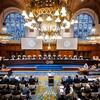
Reference image: Public hearings in The Gambia v. Myanmar at the International Court of Justice in The Hague. The judges and legal representatives illustrate the forum for determining state responsibility under the Genocide Convention; this is not a photograph of the reported ruling.
Image: UN News
Why in news
The ICJ has, for the first time, held a state directly responsible for committing genocide, distinguishing this finding from earlier findings of failure to prevent genocide. A subsequent visit by the UN General Assembly President to refugee camps in Bangladesh highlighted the need to convert the judgment into practical relief.
9–6
Vote finding commission of genocide
14–1
Vote rejecting direct public incitement charge
At least 10,000
Rohingya killed, according to UN News
Some 750,000
People who fled to Bangladesh
Two years
Myanmar's reporting period
Background
The Rohingya are a predominantly Muslim community associated with Rakhine State in western Myanmar, adjoining Bangladesh. The Convention on the Prevention and Punishment of the Crime of Genocide, adopted in 1948, requires states to prevent and punish genocide. The ICJ, the principal judicial organ of the United Nations, adjudicates disputes between states; it does not conduct criminal trials of individuals. The Gambia instituted proceedings against Myanmar in 2019, and the Court issued provisional measures in 2020. The dispute connects international legal accountability with displacement, minority protection and stability in India's neighbourhood.
What the Court decided: responsibility and remedies
The supplied reports state that the ICJ held Myanmar responsible for genocide against the Rohingya in northern Rakhine during the military's 2017 operations. It also found failures to prevent genocide by participating civilians, punish perpetrators and enact legislation required by the Convention, alongside destruction of evidence contrary to its provisional measures.
The judgment concerns the international responsibility of Myanmar as a state, not the criminal conviction of any individual. It is final and without appeal, although the ICJ Statute provides narrowly defined procedures for interpretation and revision.
The Court ordered investigation and, where warranted, prosecution; guarantees of non-recurrence; conditions for safe, voluntary and dignified return; restoration of property; and compensation. Compensation remains to be quantified after Myanmar reports back within two years. The Court declined to order citizenship and rejected the allegation of direct and public incitement of private persons to genocide.
- A finding of state responsibility does not automatically establish the criminal guilt of particular commanders or officials.
- Rejection of a distinct incitement allegation does not negate the finding that genocide was committed.
- The absence of a citizenship order leaves legal status and equal membership as major policy questions for durable protection.
Infographic
Responsibility
State accountability, not individual conviction.
Legal threshold
Prohibited acts, specific intent and state attribution.
Remedies
Investigation, restitution, compensation and non-recurrence.
Enforcement
Binding judgment; implementation depends on compliance and political follow-through.
Protection
Voluntary return, verified safety and refugee participation.
Diplomacy
Regional cooperation and sustained support for Bangladesh.
AI-assisted infographic by Pragnya IAS Academy, based on the cited sources.
Genocide Convention: jurisdiction, intent and attribution
Article IX of the Genocide Convention provides a treaty basis for ICJ jurisdiction over disputes concerning its interpretation, application or fulfilment, including state responsibility for genocide. This jurisdiction remains subject to applicable consent requirements and reservations; membership of the United Nations alone does not confer compulsory ICJ jurisdiction over every dispute.
Genocide requires a prohibited act and the specific intent to destroy, in whole or in part, a national, ethnical, racial or religious group as such. The prohibited acts include killing, serious bodily or mental harm, destructive conditions of life, measures intended to prevent births, and forcible transfer of children. Where intent is inferred from a pattern of conduct, the Court applies the demanding standard that genocidal intent must be the only reasonable inference.
The Gambia's case illustrates obligations erga omnes partes: every party to the Convention has a common legal interest in compliance, even without being directly injured. Standing, however, does not remove the need to establish jurisdiction, prohibited conduct, specific intent and attribution to the state.
- Article I establishes the obligations to prevent and punish genocide.
- Article III identifies punishable acts, including genocide, conspiracy, direct and public incitement, attempt and complicity.
- Article V requires necessary implementing legislation and effective penalties.
- Failure to prevent genocide is not itself one of the acts listed in Article III; it breaches the Convention's preventive obligation.
- State-organ conduct is generally attributable to the state, while attribution of private conduct requires separate legal analysis.
Enforcement: a binding judgment without an independent coercive arm
The ICJ's lack of an enforcement force does not make its judgment merely advisory. Under Article 94 of the UN Charter, UN members undertake to comply with ICJ decisions in cases to which they are parties. If a party fails to perform its obligations, the other party may approach the Security Council, which may recommend or decide measures to give effect to the judgment.
This route is neither automatic nor insulated from politics. Permanent-member vetoes and competing strategic interests can obstruct substantive Security Council action. The General Assembly can mobilise political support and recommend collective responses, but it does not become a substitute coercive enforcement authority.
Domestic investigation, legislative reform, evidence preservation and administrative cooperation are therefore crucial. Reporting requirements can expose non-compliance, but reporting alone cannot deliver compensation, restore homes or make return safe.
- Distinguish legal bindingness from practical enforceability.
- Diplomatic pressure, humanitarian assistance and compliance monitoring should reinforce, rather than substitute for, Myanmar's obligations.
- Implementation should be assessed through demonstrable changes in safety, justice and access to remedies.
Rohingya protection and regional diplomacy
For survivors, the immediate test is whether recognition produces security, reparations and meaningful choices. Return must be voluntary and based on credible guarantees of safety, dignity and freedom of movement. A judicial order enabling return cannot justify sending refugees back into danger.
Bangladesh's hosting role makes international burden-sharing essential. ASEAN members and other regional partners can support humanitarian access, legal reform and monitored implementation. Refugee participation is necessary to prevent diplomatic arrangements from prioritising movement across borders over durable protection.
For India, a calibrated approach should combine engagement with Myanmar, cooperation with Bangladesh, humanitarian assistance and support for accountability. Border management and regional connectivity interests should be pursued alongside protection safeguards, rather than treated as reasons to disregard conditions facing the Rohingya.
- Safe return requires security and rights guarantees, not merely transport arrangements.
- Property restoration needs accessible claims procedures and alternatives where restitution is impossible.
- Protection planning should address documentation, legal status, livelihood access and survivor participation.
- Reparations should not be made conditional on refugees agreeing to return.
Global implications: persuasive reasoning, not an automatic precedent
The judgment differs from the ICJ's earlier Bosnia and Herzegovina v. Serbia and Montenegro decision: the Court recognised genocide at Srebrenica and found Serbia responsible for failing to prevent it, but did not attribute its commission to Serbia. In Croatia v. Serbia, the Court dismissed the competing genocide claims because the required specific intent was not established.
Article 59 of the ICJ Statute limits a judgment's binding force to the parties and that particular case. The Myanmar ruling therefore does not predetermine South Africa v. Israel or any other dispute. Its assessment of evidence, attribution and intent may nevertheless inform future judicial reasoning.
According to the supplied reporting, the Court relied on case-specific evidence, including material from UN investigative bodies. The significance lies in applying the existing demanding threshold to the evidence, not in dispensing with the requirement of specific genocidal intent.
- Mass atrocities and genocide are not legally interchangeable categories.
- A finding in one dispute cannot replace proof of jurisdiction, conduct, intent and attribution in another.
- The absence of strict binding precedent does not mean earlier ICJ reasoning has no persuasive value.
| Dimension | International Court of Justice | International Criminal Court |
|---|---|---|
| Institutional basis | Principal judicial organ of the UN; governed by the UN Charter and ICJ Statute | Treaty-based court established under the Rome Statute |
| Who is before the Court? | States in contentious proceedings | Individuals accused of crimes within its jurisdiction |
| Relevant responsibility | International responsibility of states | Individual criminal responsibility |
| Jurisdiction | Based on state consent through recognised jurisdictional bases | Subject to Rome Statute jurisdictional conditions and admissibility rules |
| Possible outcomes | Declarations of breach and orders concerning cessation, reparation and other remedies | Acquittal or conviction, criminal penalties and victim reparations |
| Enforcement dependence | State compliance and possible Security Council recourse under Article 94 | State cooperation, including arrest and surrender |
- 1. Establish jurisdiction under the Genocide Convention and the applicant state's standing.
- 2. Assess prohibited acts, specific intent and attribution to the state.
- 3. Determine breaches and order remedies.
- 4. Implement investigations, legal reform, property restoration and reparations.
- 5. Verify conditions for voluntary, safe and dignified return with refugee participation.
- 6. Monitor compliance and pursue diplomatic action or Article 94 recourse where necessary.
1948
The UN General Assembly adopted the Genocide Convention.
2007
The ICJ found Serbia had breached its obligation to prevent the Srebrenica genocide, without holding it responsible for committing that genocide.
2015
The ICJ dismissed the genocide claims and counterclaims in Croatia v. Serbia.
2017
Myanmar's military operations in northern Rakhine caused mass violence and large-scale Rohingya displacement into Bangladesh.
2019
The Gambia brought proceedings against Myanmar under the Genocide Convention.
2020
The ICJ issued provisional measures in the case.
November 19, 2026
According to the supplied reports, the ICJ held Myanmar responsible for committing genocide and ordered remedies.
November 20, 2026
The UN General Assembly President visited Rohingya refugee camps in Cox's Bazar and called for implementation.
Significance, challenges & way forward
Significance
- The ruling recognises direct state responsibility for committing genocide, beyond responsibility for failing to prevent it.
- It demonstrates that interstate litigation can complement, but cannot replace, individual criminal accountability.
- It places restoration, compensation and guarantees of non-recurrence within the framework of legal obligations.
- It strengthens the basis for coordinated diplomacy centred on Rohingya rights and Bangladesh's hosting burden.
- Its evidentiary reasoning may influence future genocide litigation without predetermining other cases.
Challenges
- The ICJ lacks an independent coercive mechanism, while Security Council action can be constrained by veto politics.
- Investigation and prosecution require credible domestic institutions and cooperation from authorities implicated in abuses.
- Evidence destruction complicates accountability and the verification of victims' claims.
- The absence of a citizenship order leaves unresolved legal-status questions central to durable inclusion.
- Premature repatriation could expose refugees to renewed persecution despite formal assurances.
- Compensation remains unquantified, and identifying beneficiaries and restoring property require workable procedures.
Way forward
- Develop publicly assessable compliance benchmarks covering investigation, legislation, evidence preservation and reparations.
- Support independent monitoring and humanitarian access to verify whether return conditions are genuinely safe.
- Ensure refugees receive reliable information and participate meaningfully in decisions concerning return and compensation.
- Maintain assistance to refugees and host communities in Bangladesh without making support contingent on repatriation.
- Use coordinated UN and regional diplomacy to secure implementation while avoiding measures that further harm civilians.
- India should link practical cooperation with Myanmar and Bangladesh to humanitarian access, protection safeguards and durable solutions.
Key terms
- Genocide
- Specified acts committed with intent to destroy, in whole or in part, a protected national, ethnical, racial or religious group as such.
- Actus reus
- The prohibited physical conduct forming the material element of an offence.
- Dolus specialis
- The specific intent required for genocide, directed at destroying a protected group as such.
- State responsibility
- The legal consequences of an internationally wrongful act attributable to a state.
- Erga omnes partes
- Obligations owed to all parties to a treaty, giving each a common legal interest in compliance.
- Provisional measures
- Binding interim directions issued by the ICJ to preserve relevant rights pending its final decision.
- Non-refoulement
- The protection principle prohibiting return to places where a person faces persecution or other prohibited serious harm, subject to the applicable legal framework.
- Reparation
- Redress for internationally wrongful conduct, potentially including restitution, compensation and satisfaction.
Link with static syllabus
Prelims practice MCQs
Q1. With reference to the International Court of Justice, consider the following statements: 1. It determines individual criminal guilt in genocide cases. 2. Its judgments bind the parties in respect of the particular case. 3. A party alleging non-performance of a judgment may approach the UN Security Council under Article 94 of the UN Charter. Which of the statements given above are correct?
Q2. Consider the following statements about the Genocide Convention: 1. Genocide requires specific intent to destroy a protected group, in whole or in part, as such. 2. Forcibly transferring children of a protected group to another group can constitute genocide when the required intent exists. 3. Article IX addresses disputes concerning the interpretation, application or fulfilment of the Convention. Which of the statements given above are correct?
Q3. The expression erga omnes partes, in the context of the Genocide Convention, most appropriately refers to:
Q4. Consider the following pairs: 1. Rakhine State — Myanmar 2. Cox's Bazar — Bangladesh 3. The Hague — Seat of the International Court of Justice How many of the above pairs are correctly matched?
Mains practice questions
GS 2 · 15 marks · 250 words
The international adjudication of genocide can establish responsibility without ensuring effective protection. Discuss with reference to the ICJ's Myanmar ruling and its implications for regional diplomacy.
Frequently asked questions
Does the Myanmar judgment convict military leaders of genocide?
No. It establishes Myanmar's international responsibility as a state; individual criminal guilt must be determined through separate proceedings before competent courts.
Can the ICJ enforce its judgment directly?
The ICJ has no independent enforcement force, but its judgment is binding on the parties. Article 94 of the UN Charter permits recourse to the Security Council if a party fails to comply.
Does the ruling automatically determine the outcome of South Africa v. Israel?
No. Article 59 confines binding force to the parties and the particular case, although the Court's legal reasoning and treatment of evidence may influence other proceedings.
Does the order mean Rohingya refugees must immediately return?
No. The reported order requires conditions for safe, voluntary and dignified return; it does not authorise forced repatriation or return into danger.
Sources
- The Hindu: The Rohingya | Vindication for a persecuted people
- Indian Express: Why Myanmar’s genocide verdict matters, including for Israel’s case
- UN News: ‘You will not be alone’: General Assembly President tells Rohingya refugees after genocide ruling
Analysis prepared by the Pragnya IAS Academy current-affairs desk with AI assistance from the cited reports. Verify figures with the original sources.
Turn current affairs into marks
Join Pragnya IAS Academy's mentorship for daily answer-writing evaluation on stories like this — classroom programmes from a trusted name in IAS coaching in Hyderabad.