
Attack off Oman: Indian Seafarer Safety and Gulf Maritime Security
Revise the static topic: UPSC Internal Security notes
In short: An attack on a commercial vessel off Oman has brought renewed attention to the safety of Indian seafarers, with a supplied news headline reporting another Indian seafarer’s death. The incident highlights India’s linked responsibilities to protect its nationals, support maritime security and preserve access to critical Gulf energy routes.
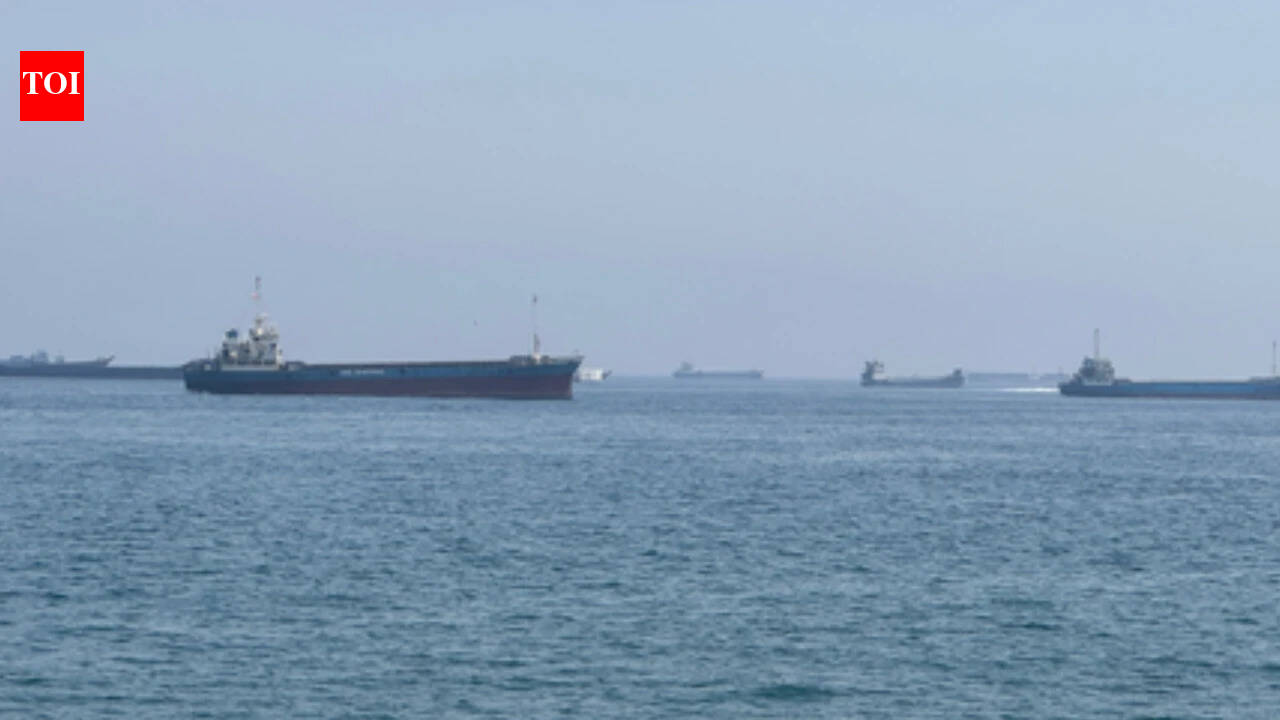
A supplied news report says another Indian seafarer was killed near Oman, highlighting risks to crews aboard commercial vessels.
Image: Times of India
Why in news
The Ministry of External Affairs issued a statement concerning an attack on a commercial vessel off Oman. A Times of India headline reported an additional Indian seafarer fatality, but the supplied extracts do not establish the vessel’s identity, the attacker or the circumstances of the attack.
Background
Oman faces the Arabian Sea and the Gulf of Oman, while its Musandam Peninsula overlooks the Strait of Hormuz. The strait connects the Persian Gulf with the Gulf of Oman, which opens into the Arabian Sea. This geography makes the region important for commercial navigation and Gulf energy exports. India’s interests extend beyond Indian-flagged vessels: Indian nationals also serve aboard foreign-flagged merchant ships, making seafarer protection both a maritime security and a consular responsibility.
What is established—and what remains uncertain
The supplied material identifies an attack on a commercial vessel off Oman and an MEA statement on that incident. The news headline reports another Indian seafarer’s death. However, the accessible extract largely consists of website notices rather than substantive reporting.
The headline’s cumulative toll cannot be treated as casualties from this particular attack because its scope and period are not explained. The incident should therefore be analysed without assuming an attacker, weapon, precise location or connection to any particular regional conflict.
- Distinguish a reported casualty from an independently established incident-wide death toll.
- Do not equate the presence of Indian crew with Indian ownership or Indian flag registration.
- An attack off Oman does not, by itself, establish that the Strait of Hormuz has been disrupted.
Infographic
Protect people
Rescue, medical care, family support and repatriation.
Build awareness
Verified alerts, vessel information and regional coordination.
Secure navigation
Risk-based assistance and lawful maritime operations.
Uphold accountability
Evidence preservation, investigation and applicable compensation.
Strengthen resilience
Energy buffers, diversified sourcing and transport planning.
AI-assisted infographic by Pragnya IAS Academy, based on the cited sources.
Threats to shipping and the energy-security transmission
Commercial shipping near conflict-affected waters can face missiles, drones, mines, armed boarding, seizure and interference with navigation systems. These are regional risk categories, not established features of the reported incident. Merchant vessels are particularly vulnerable because their primary functions are transportation and trade, not combat.
The consequences can extend well beyond the damaged vessel. Perceived danger can increase war-risk insurance costs, alter sailing schedules and discourage port calls. Disruption around a chokepoint can affect energy availability and prices, although an isolated attack does not establish a wider supply interruption.
- Seafarers face risks of death, injury, detention, psychological trauma and delayed repatriation.
- Shipping uncertainty can raise freight costs and delay industrial inputs and exports.
- Oil-market risk premiums can affect importing countries even before physical supplies are interrupted.

Schley’s 1750 map of Hormuz provides historical geographic context for the gateway to the Persian Gulf and longstanding shipping links between India and Arabia; it does not locate the reported attack.
Image: http://www.geographicus.com/mm5/cartographers/schley.txt · Public domain
India’s responsibilities: people, ships and sea lanes
India’s immediate priority should be locating affected nationals, facilitating medical assistance, supporting families and arranging repatriation where necessary. The MEA and Indian missions must coordinate with the Directorate General of Shipping, shipowners, crewing agencies and relevant foreign authorities.
Naval surveillance, distress response and coordination with regional partners can support commercial shipping. However, flag-state jurisdiction, coastal-state sovereignty, applicable international law and the safety of deployed personnel must guide any operational response.
Protection also requires a whole-of-government approach. Maritime information-sharing should connect diplomatic reporting, shipping advisories and operational awareness, while energy authorities and importers assess supply exposure.
- Consular protection follows Indian nationality; it is not limited to Indian-flagged vessels.
- The Indian Navy supports maritime security, while the Indian Coast Guard has maritime safety and security functions under its statutory mandate.
- The Information Fusion Centre–Indian Ocean Region can support maritime domain awareness through information-sharing.
Legal classification and institutional safeguards
Not every attack on a merchant ship is piracy. Under UNCLOS, piracy has specific requirements, including private ends and occurrence on the high seas or outside any state’s jurisdiction, with the conventional definition addressing attacks by a private ship or aircraft against another. Violence within territorial waters may instead fall within the framework for armed robbery against ships; conflict-related attacks require separate legal assessment.
The Convention for the Suppression of Unlawful Acts against the Safety of Maritime Navigation provides a framework for addressing specified unlawful acts against ships. Where an armed conflict exists, applicable international humanitarian law must also be assessed; commercial status alone does not resolve every question of targeting law.
SOLAS and the ISPS Code address ship safety and security systems, while the Maritime Labour Convention provides a framework for seafarers’ working and living conditions, including medical care and repatriation. These instruments perform different functions and cannot substitute for one another.
- The flag state exercises jurisdiction and control over its ships, subject to applicable international law.
- Coastal-state powers vary between territorial waters, the exclusive economic zone and the high seas.
- Legal classification should follow evidence, rather than serve as a premature political label.
| Actor | Primary contribution | Important qualification |
|---|---|---|
| MEA and Indian missions | Consular access, liaison with foreign authorities and family assistance | Indian crew may be serving on foreign-flagged ships |
| Directorate General of Shipping | Shipping regulation and coordination with maritime stakeholders | Regulatory authority depends on the applicable legal framework |
| Indian Navy | Maritime surveillance, security assistance and distress response | Operations must respect international law and operational feasibility |
| Flag state | Jurisdiction and oversight over the vessel | Flag registration is distinct from crew nationality and ownership |
| Coastal state | Local rescue, investigation and maritime enforcement | Powers depend on the maritime zone and applicable law |
| Shipowners and employers | Risk assessment, crew protection, medical support and applicable compensation | Public security measures do not replace employer obligations |
- 1. Verify the vessel’s position, flag, crew manifest and distress information.
- 2. Coordinate rescue and medical assistance with nearby assets and relevant authorities.
- 3. Account for Indian nationals and activate consular and family-support channels.
- 4. Preserve evidence and coordinate investigation with competent jurisdictions.
- 5. Update shipping advisories and assess risks to nearby vessels and energy cargoes.
- 6. Secure applicable compensation, repatriation and longer-term rehabilitation.
Significance, challenges & way forward
Significance
- Seafarer protection links India’s overseas-citizen welfare responsibilities with its maritime security policy.
- Safe Gulf sea lanes support energy access, trade continuity and economic stability.
- Credible distress response and information-sharing strengthen India’s role as a cooperative Indian Ocean security partner.
- The incident underscores that energy security depends on transport safety as well as diversified suppliers.
Challenges
- Incomplete information can lead to incorrect attribution, flawed legal classification and unnecessary escalation.
- Different vessel flags, owners, employers and crew nationalities complicate rescue, investigation and compensation.
- Naval deployments cannot eliminate every threat across dispersed commercial shipping routes.
- Rerouting can involve higher costs and may not bypass a chokepoint for cargo originating inside the Persian Gulf.
- Security responses must protect navigation without drawing merchant shipping into wider conflict.
- Contractual complexity and weak follow-through can delay medical support, compensation and repatriation.
Way forward
- Create a coordinated incident-response mechanism linking the MEA, shipping authorities, security agencies, missions and employers.
- Issue evidence-based, regularly updated advisories distinguishing confirmed incidents from unverified threats.
- Strengthen maritime domain awareness through regional information-sharing and timely communication with merchant vessels.
- Require robust voyage risk assessments, crew briefings, emergency drills and resilient communications under applicable rules.
- Pursue diplomatic de-escalation and practical cooperation with Oman, other regional states and relevant flag states.
- Ensure prompt family assistance, contractual and statutory compensation, repatriation and mental-health support.
- Reduce energy vulnerability through supplier diversification, strategic reserves and contingency planning for transport disruption.
Key terms
- Sea lines of communication
- Maritime routes used for trade, energy transport and other movements essential to national interests.
- Maritime chokepoint
- A narrow maritime passage where disruption can affect traffic across a much wider shipping network.
- Flag state
- The state whose nationality a ship possesses and whose flag it is entitled to fly.
- Maritime domain awareness
- Understanding maritime activities and conditions relevant to security, safety, the economy and the environment.
- War-risk insurance
- Insurance covering specified risks associated with war and related hostile acts, subject to policy terms.
- ISPS Code
- The International Ship and Port Facility Security Code establishes a framework for assessing and managing ship and port security risks.
- Repatriation
- The return of seafarers to an appropriate destination under applicable legal and contractual entitlements.
Link with static syllabus
Prelims practice MCQs
Q1. With reference to the geography of Gulf shipping routes, consider the following statements: 1. The Strait of Hormuz connects the Persian Gulf with the Gulf of Oman. 2. The Gulf of Oman opens into the Arabian Sea. 3. The Bab-el-Mandeb Strait directly connects the Persian Gulf with the Red Sea. Which of the statements given above are correct?
Q2. Consider the following statements about Indian seafarers aboard merchant vessels: 1. The presence of Indian crew necessarily makes a vessel Indian-flagged. 2. Indian nationals aboard foreign-flagged ships may require Indian consular assistance. 3. A vessel’s flag state and the nationality of its crew are distinct legal considerations. Which of the statements given above are correct?
Q3. Which of the following statements most accurately describes piracy under UNCLOS?
Q4. Consider the following pairs: 1. SOLAS — Safety of life at sea 2. ISPS Code — Ship and port facility security 3. Maritime Labour Convention — Seafarers’ working and living conditions How many of the above pairs are correctly matched?
Mains practice questions
GS 3 · 15 marks · 250 words
Attacks on commercial shipping near the Gulf expose the interdependence of seafarer welfare, maritime security and energy security. Examine India’s responsibilities and suggest a balanced response.
Frequently asked questions
What is confirmed by the supplied material about the attack off Oman?
The material identifies an attack on a commercial vessel off Oman, an MEA statement and a news headline reporting another Indian seafarer’s death. It does not establish the attacker, vessel identity, precise location or full casualty circumstances.
Why does an attack off Oman matter for India’s energy security?
Oman lies beside maritime approaches connecting the Persian Gulf with the Arabian Sea. Insecurity can raise transport costs and threaten supply continuity, but the reported attack alone does not prove disruption of the Strait of Hormuz.
Does India assist seafarers serving on foreign-flagged ships?
Indian nationals may receive Indian consular assistance irrespective of the ship’s flag. The flag state, coastal authorities and employers retain their respective responsibilities.
Is every attack on a commercial vessel piracy?
No. Piracy has specific requirements under UNCLOS; other incidents may involve armed robbery against ships, unlawful violence or conflict-related acts requiring a different legal assessment.
Sources
- Times of India: One more Indian seafarer killed near Oman; toll 23
- MEA: Statement on attack on a commercial vessel off the coast of Oman - Ministry of External Affairs
Analysis prepared by the Pragnya IAS Academy current-affairs desk with AI assistance from the cited reports. Verify figures with the original sources.
Turn current affairs into marks
Join Pragnya IAS Academy's mentorship for daily answer-writing evaluation on stories like this — classroom programmes from a trusted name in IAS coaching in Hyderabad.