
Protesters’ Privacy in Public Places: Articles 19, 21 and Surveillance Safeguards
Revise the static topic: UPSC Polity notes · UPSC Governance notes
In short: The Supreme Court is reported to be set to examine protesters’ right to privacy in public places. The constitutional issue is how to reconcile peaceful assembly and informational privacy with legitimate policing, without allowing surveillance to deter lawful dissent.
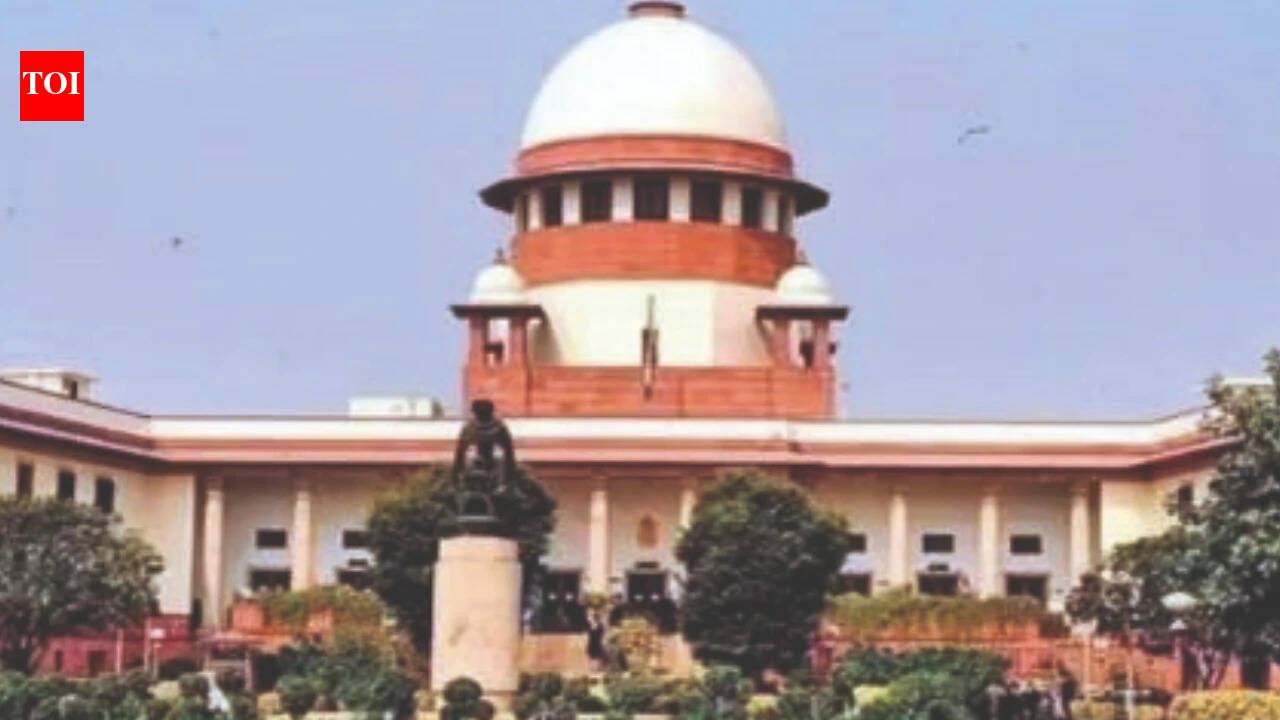
Reference image accompanying reporting on protesters’ privacy in public places, where the constitutional questions concern peaceful assembly, informational privacy and surveillance safeguards.
Image: Times of India
Why in news
The supplied Times of India headline reports that the Supreme Court will examine protesters’ privacy in public places. The accompanying extract does not provide substantive case details, so the petition’s facts, surveillance methods involved and any specific judicial directions cannot be established from it.
Background
Article 19(1)(a) protects citizens’ freedom of speech and expression, while Article 19(1)(b) protects their right to assemble peaceably and without arms. These freedoms operate subject to constitutionally permitted reasonable restrictions. Article 21 protects life and personal liberty. In Justice K.S. Puttaswamy v. Union of India, the Supreme Court recognised privacy as a fundamental right grounded in dignity, liberty and the freedoms guaranteed by the Constitution. Privacy is not confined to the home: entering a public place does not extinguish every privacy interest, although the context affects the nature and extent of protection.
What the reported examination concerns
The central question is not whether a protester can remain entirely unseen in a public gathering. It is whether the State’s collection, identification, aggregation and subsequent use of information about participants remain constitutionally justified.
A public protest deliberately communicates a message to others. That visibility does not, by itself, settle whether authorities may create persistent records of participants’ identities, associations or movements. These are constitutional questions for analysis, not findings established by the supplied report.
- Distinguish ordinary observation of a gathering from systematic identification and long-term profiling.
- Distinguish immediate crowd-safety requirements from subsequent use of data for unrelated purposes.
- The source does not establish that any particular surveillance technology is involved in the proceedings.
Infographic
Protected participation
Read expression, peaceful assembly and privacy together.
Lawful purpose
Require legal authority and a legitimate objective.
Proportional means
Test suitability, necessity and the balance of rights.
Data safeguards
Limit collection, access, retention and reuse.
Accountability
Provide oversight, review and effective remedies.
AI-assisted infographic by Pragnya IAS Academy, based on the cited sources.
Articles 19 and 21 must be read together
Surveillance of a peaceful assembly can affect more than privacy. If people reasonably fear that lawful participation will expose them to adverse consequences, monitoring may discourage speech and assembly. This is the chilling-effect concern linking Article 21 with Article 19.
Under Article 19(3), reasonable restrictions on peaceful assembly must be imposed by law in the interests of the sovereignty and integrity of India or public order. Restrictions on expression must separately satisfy Article 19(2). A broad claim of administrative convenience is not an independent constitutional ground.
The rights are not absolute. Authorities may act to prevent violence and protect public access and safety. However, peaceful participation cannot automatically be equated with unlawful conduct, and restrictions must remain connected to constitutionally permissible objectives.
- Article 19 freedoms are guaranteed to citizens, whereas Article 21 protects persons.
- Privacy and assembly are complementary: protection against unjustified profiling can enable meaningful participation.
- Public-order regulation must distinguish peaceful dissent from specific threats or unlawful acts.
Applying the proportionality test to surveillance
Puttaswamy’s constitutional framework requires an intrusion into privacy to have a basis in law, pursue a legitimate State aim and satisfy proportionality, with safeguards against abuse. A surveillance measure should therefore be examined for its purpose, scope, necessity and consequences rather than justified merely because the location is public.
Proportionality requires scrutiny of whether monitoring actually advances the stated objective, whether a less rights-restrictive but comparably effective alternative is available, and whether the public benefit justifies the burden on rights. General crowd observation, identity-linked recording and persistent tracking need not impose the same degree of intrusion.
- Legality: Identify the law authorising the measure and the limits on official discretion.
- Legitimate aim and suitability: Establish the policing objective and the measure’s connection to it.
- Necessity: Examine whether less intrusive alternatives can achieve the objective effectively.
- Balancing: Assess the effect on privacy, expression and peaceful assembly against the expected benefit.
- Safeguards: Examine authorisation, access controls, retention limits, oversight and remedies.
Safeguards should cover the entire information lifecycle
Constitutional scrutiny should not stop at the camera or the point of collection. Intrusion may deepen when information is retained, matched with other records, shared across agencies or reused for a different purpose. Public visibility and unrestricted downstream data use are distinct questions.
A rights-respecting framework should combine operational flexibility for genuine threats with documented reasons, purpose limitation and review. The safeguards below are policy recommendations derived from constitutional principles, not directions reported in this case.
- Use targeted, risk-based monitoring rather than indiscriminate identity collection wherever feasible.
- Provide clear notice about monitoring where operationally feasible, without treating notice as a substitute for lawful authority.
- Restrict access and sharing to authorised purposes, supported by auditable records.
- Delete information when no longer necessary, subject to lawful evidentiary preservation.
- Provide accessible grievance mechanisms and effective review of intrusive monitoring.
| Constitutional provision | Protected interest | Key scrutiny |
|---|---|---|
| Article 19(1)(a) read with Article 19(2) | Speech and expression | Does the measure restrict expression, and is that restriction reasonable and grounded in Article 19(2)? |
| Article 19(1)(b) read with Article 19(3) | Peaceful assembly without arms | Is the restriction imposed by law and justified by public order or the sovereignty and integrity of India? |
| Article 21 | Privacy, dignity and personal liberty | Does the intrusion satisfy legality, legitimate aim, proportionality and safeguards against abuse? |
| Article 14 | Equality and protection against arbitrariness | Are selection criteria and enforcement non-arbitrary and non-discriminatory? |
- 1. Identify the measure and the rights it affects.
- 2. Verify its legal authority and applicable constitutional grounds.
- 3. Establish a legitimate objective and a rational connection to that objective.
- 4. Compare less intrusive, effective alternatives.
- 5. Balance the expected benefit against the burden on rights.
- 6. Require safeguards, review and remedies throughout data use and retention.
Significance, challenges & way forward
Significance
- Clarifying privacy in public places can prevent the mistaken assumption that public visibility extinguishes constitutional protection.
- Protection against unjustified profiling can preserve citizens’ willingness to participate in lawful democratic activity.
- Clear surveillance standards can help police distinguish legitimate public-order measures from excessive intrusion.
- Lifecycle-based safeguards can address harms arising from retention, identification and reuse, not merely initial recording.
Challenges
- Authorities must protect public order without treating every participant in a protest as a potential offender.
- Broad or unclear authorisation can leave excessive discretion over who is monitored and why.
- Combining publicly observable information with other records can reveal sensitive associations beyond the original policing purpose.
- People may find it difficult to challenge surveillance when its existence, scope or downstream uses are unknown.
- Oversight must accommodate genuine operational confidentiality without making State action immune from scrutiny.
Way forward
- Define surveillance powers and their limits clearly in law, including permissible purposes and accountable authorisation.
- Require documented assessments of necessity and proportionality for intrusive identity-linked monitoring.
- Adopt purpose limitation, data minimisation, restricted access and retention rules proportionate to the stated objective.
- Provide stronger scrutiny for persistent tracking or automated identification than for less intrusive crowd-safety observation.
- Train police personnel to facilitate peaceful assembly while responding specifically to violence or demonstrable threats.
- Ensure effective oversight and accessible remedies for unlawful collection, misuse or arbitrary targeting.
Key terms
- Informational privacy
- The constitutional interest in protecting personal information against unjustified collection, processing and disclosure.
- Chilling effect
- The deterrence of lawful speech or participation because people fear surveillance or adverse consequences.
- Proportionality
- A framework assessing whether a rights restriction is suitable, necessary and balanced in relation to a legitimate objective.
- Purpose limitation
- Restricting the use of collected information to specified, justified purposes rather than unrestricted reuse.
- Data minimisation
- Collecting and processing no more personal information than is necessary for the stated purpose.
- Function creep
- The expansion of a system or dataset into uses beyond the purpose for which it was originally introduced.
Link with static syllabus
Prelims practice MCQs
Q1. With reference to peaceful assembly under the Constitution of India, consider the following statements: 1. Article 19(1)(b) protects the right to assemble peaceably and without arms. 2. Article 19(3) permits reasonable restrictions in the interests of public order. 3. Administrative convenience is expressly listed as an independent ground of restriction under Article 19(3). Which of the statements given above are correct?
Q2. Consider the following statements regarding fundamental rights: 1. The freedoms under Article 19 are guaranteed to citizens. 2. Article 21 protects persons, not only citizens. 3. All privacy protection automatically ends when a person enters a public place. Which of the statements given above are correct?
Q3. Which of the following best explains the necessity component of proportionality when assessing surveillance of a peaceful assembly?
Q4. Consider the following pairs: 1. Purpose limitation — Restricting data use to specified purposes 2. Data minimisation — Collecting the maximum possible information for potential future use 3. Chilling effect — Deterrence of lawful participation due to feared consequences Which of the pairs given above are correctly matched?
Mains practice questions
GS 2 · 15 marks · 250 words
Public visibility does not amount to the abandonment of constitutional privacy. Examine this proposition in the context of surveillance of peaceful protests, with reference to Articles 19 and 21.
Frequently asked questions
Do protesters retain a right to privacy in public places?
Public presence does not extinguish every privacy interest. The extent of protection depends on context, including what information is collected, how individuals are identified and how the information is subsequently used.
Is all surveillance of a peaceful protest unconstitutional?
No. Surveillance must have lawful authority, serve a legitimate objective and satisfy proportionality and safeguards; public visibility alone does not establish its constitutionality.
Has the Supreme Court issued new surveillance safeguards in this case?
The supplied material reports an intended examination but does not provide a judgment or operative directions. The safeguards discussed here are constitutional and policy recommendations, not reported case-specific orders.
How does surveillance affect Article 19 even without banning a protest?
Monitoring may create a chilling effect if people avoid lawful participation because they fear identification or adverse consequences. This makes its impact on expression and assembly relevant alongside privacy.
Sources
- Times of India: SC to define right to privacy of protesters in public places
Analysis prepared by the Pragnya IAS Academy current-affairs desk with AI assistance from the cited reports. Verify figures with the original sources.
Turn current affairs into marks
Join Pragnya IAS Academy's mentorship for daily answer-writing evaluation on stories like this — classroom programmes from a trusted name in IAS coaching in Hyderabad.