
Bail Without Release: Supreme Court on State Responsibility and Undertrial Liberty
Revise the static topic: UPSC Polity notes · UPSC Governance notes
In short: The Supreme Court has held that Uttar Pradesh must ensure that undertrial prisoners granted bail are not left in custody because they cannot meet release conditions. It requested suitable modification of bail conditions and directed legal services authorities not to deny assistance merely because a prisoner has private counsel, linking effective release to personal liberty under Article 21.
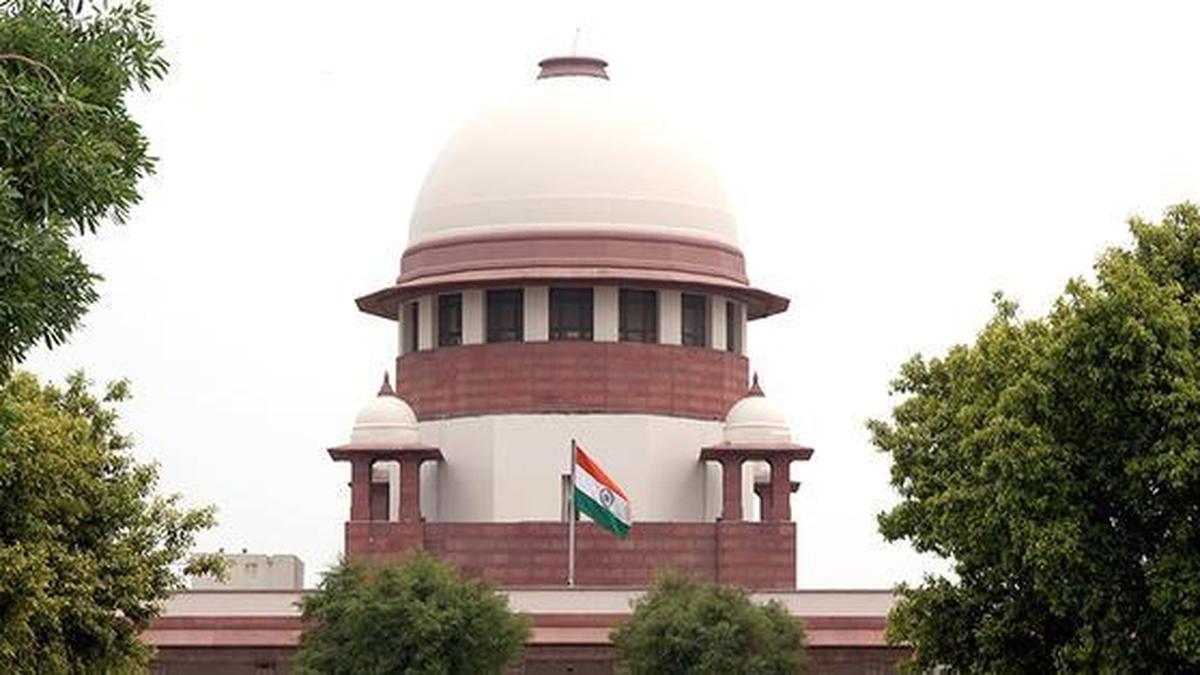
The Supreme Court said Uttar Pradesh must ensure that undertrials granted bail do not remain in custody because they cannot meet release conditions.
Image: The Hindu
Why in news
In the suo motu case ‘In re policy strategy for grant of bail’, a Bench headed by Justice M.M. Sundresh examined information showing that 106 of 264 undertrials granted bail in 20 Uttar Pradesh districts remained in custody. The Court made clear that its order would benefit undertrials across all 75 districts of the State.
264
Undertrials granted bail in reported districts
158
Released after meeting bail conditions
106
Remained in custody for various reasons
20
Districts covered by available information
55
Districts with information still unavailable
75
Districts covered by the Court’s order
Background
An undertrial is a person whose criminal trial has not concluded; detention does not establish guilt. Bail allows release from custody subject to conditions intended to secure attendance and protect the judicial process. Article 21 safeguards life and personal liberty, Article 14 guarantees equality before the law and equal protection of the laws, and Article 39A directs the State to promote equal justice and free legal aid. The Legal Services Authorities Act establishes the institutional framework for legal services, including District Legal Services Authorities. Persons in custody are among the categories eligible for legal services under the Act.
What the Supreme Court said
The Court placed responsibility on Uttar Pradesh to ensure that undertrials already granted bail do not remain incarcerated because they cannot furnish bail bonds, cash security or local sureties. It also requested the trial courts concerned to suitably modify conditions to enable release.
The Court had earlier tasked District Legal Services Authorities with reaching out to affected prisoners. It clarified that assistance cannot be denied merely because a prisoner has engaged a private lawyer: both privately represented prisoners and legal-aid beneficiaries may face the same barrier to freedom.
- The order extends to undertrial prisoners across Uttar Pradesh, not merely those in the districts for which information was available.
- The direction concerns making bail effective; it is not a blanket grant of bail to every undertrial.
- The matter has been listed for further hearing in January 2027.
Infographic
Liberty
A bail order must translate into lawful release.
Proportionality
Conditions should address risks without becoming unattainable barriers.
Legal assistance
Private counsel is not a reason to deny help with release barriers.
State accountability
Coordinate prisons, legal services authorities and courts.
Verification
Track actual release and the reasons for continued custody.
AI-assisted infographic by Pragnya IAS Academy, based on the cited sources.
How financial conditions can turn bail into continued detention
A bail order and actual release are distinct stages. A court may find continued detention unnecessary but impose conditions that an accused person cannot fulfil. If release depends on money or access to a suitable guarantor, poverty can become the practical reason for continued incarceration.
Financial conditions are not inherently invalid. The constitutional concern arises when conditions become excessive or unattainable relative to the person’s circumstances and the legitimate purpose of bail. A local-surety requirement can also disadvantage people who lack social connections in the place where they are prosecuted.
- A personal bond rests on the accused person’s undertaking without requiring a third-party surety.
- A surety requirement depends on another person agreeing to guarantee compliance with bail obligations.
- Cash security requires access to funds and must not be confused with every form of bail bond.
- The reported 106 cases involved various reasons for non-release; the source does not attribute every case solely to poverty.
Constitutional lens: liberty, equality and effective legal aid
The Court expressly connected continued detention caused by unaffordable bail conditions with Article 21. Once a court has found a person deserving of bail, implementation barriers can make judicial protection of liberty ineffective.
Article 14 provides an additional analytical lens: identical financial conditions can produce unequal outcomes for people with different means. Article 39A supports legal assistance that makes access to justice effective rather than merely formal. These constitutional connections explain the importance of extending assistance even to prisoners who already have private counsel.
- Formal equality applies the same condition to everyone; substantive equality examines whether that condition creates an unjust barrier.
- Hiring a private lawyer does not establish an ability to arrange cash security or a surety.
- Legal assistance should address post-bail compliance barriers, not end with the grant of bail.
State responsibility requires coordinated implementation
The State’s responsibility is to make release operational through lawful coordination among prison authorities, legal services institutions and courts. Prison authorities identify non-release cases, legal services authorities assist affected prisoners, and courts consider modification of judicially imposed conditions.
The executive cannot simply disregard a bail condition. Effective compliance requires placing the obstacle before the competent court, obtaining any necessary modification and completing release formalities. Any independent lawful basis for custody must also be checked.
- The distinction between judicial modification and administrative execution preserves institutional roles.
- A system that records only bail grants can conceal failures in actual release.
- State accountability must focus on resolving identified barriers, not merely reporting that bail has been granted.
What the available information establishes—and what it does not
Of the 264 undertrials granted bail in the 20 reported districts, 158 were released after meeting the conditions and 106 remained in custody for various reasons. This establishes a significant gap between judicial relief and its implementation within the reported group.
Information from the other 55 districts was unavailable when the matter was considered. The reported figures therefore cannot be treated as a complete statewide count or as evidence of a uniform pattern across every district.
- Further information should distinguish financial barriers, surety-related barriers and other reasons for non-release.
- Monitoring should separately track bail orders, compliance difficulties, modification applications and actual release.
| Institution | Role |
|---|---|
| State government | Ensure that inability to fulfil release conditions does not leave bail beneficiaries in custody; coordinate lawful implementation. |
| Trial courts | Consider suitable modification of bail conditions, as requested by the Supreme Court. |
| District Legal Services Authorities | Reach affected prisoners and assist them, including those who have private lawyers. |
| Prison authorities | Identify prisoners awaiting release after bail and communicate unresolved barriers to the appropriate institutions. |
| Supreme Court | Monitor the issue through the suo motu proceeding and its subsequent hearing. |
- 1. Identify every prisoner who remains in custody despite a bail order.
- 2. Record the specific obstacle and check for any independent lawful basis for custody.
- 3. Connect the prisoner with the District Legal Services Authority, irrespective of existing private representation.
- 4. Move the competent court for suitable modification where a bail condition is unattainable.
- 5. Complete formalities under the operative court order and verify actual release.
Earlier in the proceeding
The Supreme Court tasked District Legal Services Authorities in Uttar Pradesh with reaching affected undertrials and providing legal aid.
Order reported in the supplied source
The Court placed the onus of effective release on Uttar Pradesh, sought suitable modification of conditions and clarified that private representation cannot by itself justify denial of legal-services assistance.
January 2027
The suo motu case is listed for further hearing.
Significance, challenges & way forward
Significance
- The order treats effective release, rather than the mere existence of a bail order, as central to protecting personal liberty.
- It addresses the unequal impact of financial and surety conditions on people with limited resources.
- It prevents private representation from becoming a ground for excluding prisoners from necessary legal-services assistance.
- It places implementation responsibility on the State while retaining judicial control over bail conditions.
- It strengthens the understanding that legal aid must extend to barriers arising after a favourable judicial order.
Challenges
- Incomplete district-level information prevents a full assessment of the scale and causes of non-release.
- Standardised conditions may fail to account for an accused person’s income, mobility and social connections.
- Fragmented communication between courts, prisons and legal services authorities can prolong custody after bail.
- Private counsel and legal-aid institutions may lack clear coordination over post-bail assistance.
- Reform must protect liberty while addressing genuine risks of absconding, witness intimidation or interference with evidence.
Way forward
- Courts should assess whether release conditions are proportionate, practically achievable and connected to an identified procedural risk.
- Personal bonds and suitable non-financial conditions should be considered where legally appropriate instead of routine reliance on financial security.
- Prison authorities should maintain an updated register of bail beneficiaries awaiting release, with reasons for each unresolved case.
- District Legal Services Authorities should proactively assist prisoners with condition-modification applications without treating private representation as a disqualification.
- State-level monitoring should measure actual release and unresolved barriers rather than only the number of bail orders.
- Administrative coordination should expedite compliance without bypassing judicial conditions or any independent lawful custody requirement.
Key terms
- Undertrial prisoner
- A person detained while criminal proceedings remain pending and whose detention does not itself establish guilt.
- Bail
- Release from custody subject to legally imposed conditions while criminal proceedings continue.
- Personal bond
- An undertaking by the accused to comply with specified obligations without a third-party surety.
- Surety
- A person who guarantees the accused’s compliance with bail obligations and may incur liability upon breach.
- District Legal Services Authority
- A statutory district-level institution that organises legal services and facilitates access to justice.
- Amicus curiae
- A person appointed to assist the court with legal submissions or other relevant assistance.
- Suo motu proceeding
- A proceeding initiated by a court on its own motion.
- Substantive equality
- An approach to equality that considers actual disadvantage rather than relying only on identical treatment.
Link with static syllabus
Prelims practice MCQs
Q1. With reference to the Supreme Court’s directions reported in the source, consider the following statements: 1. Legal-services assistance cannot be denied merely because an undertrial has engaged private counsel. 2. The benefit of the order is confined to the districts for which information was available. 3. The Court requested suitable modification of bail conditions by the trial courts concerned. Which of the statements given above are correct?
Q2. Which constitutional provision directs the State to promote equal justice and provide free legal aid so that economic or other disabilities do not deny opportunities for securing justice?
Q3. Consider the following statements about bail: 1. Grant of bail amounts to acquittal of the accused. 2. Every bail bond necessarily requires an immediate cash deposit. 3. A surety is a third party who guarantees compliance with bail obligations. Which of the statements given above is/are correct?
Q4. Which of the following conclusions is supported by the information placed before the Supreme Court in the supplied report?
Mains practice questions
GS 2 · 15 marks · 250 words
Financial bail conditions can convert poverty into a barrier to personal liberty. Examine the constitutional concerns involved and the State’s responsibility to ensure effective release of undertrial prisoners granted bail.
Frequently asked questions
Did the Supreme Court abolish financial bail conditions?
No. The reported order sought effective release and requested suitable modification of conditions; it did not prohibit every financial or surety condition.
Can an undertrial with a private lawyer receive assistance from a District Legal Services Authority?
Yes. The Court said assistance to overcome bail-compliance barriers cannot be denied merely because the prisoner has engaged private counsel.
Were all 106 prisoners unable to secure release solely because of poverty?
The source does not establish that. It states that they remained in custody for various reasons, including inability to provide financial security or a guarantor.
Does the order authorise the State to ignore bail conditions?
No. The State must facilitate lawful release, while any necessary modification of judicial conditions must be obtained from the competent court.
Sources
- The Hindu: Onus on Uttar Pradesh to ensure undertrials allowed bail are released, says Supreme Court
Analysis prepared by the Pragnya IAS Academy current-affairs desk with AI assistance from the cited reports. Verify figures with the original sources.
Turn current affairs into marks
Join Pragnya IAS Academy's mentorship for daily answer-writing evaluation on stories like this — classroom programmes from a trusted name in IAS coaching in Hyderabad.