
Ukraine Peace Talks: Security Guarantees, Black Sea Food Routes and India
Revise the static topic: UPSC International Relations notes
In short: U.S.-mediated talks involving Russia and Ukraine opened in Abu Dhabi on November 10, 2026, with security guarantees central to the agenda. The principal divide concerns whether a ceasefire should precede a wider security settlement; protecting Black Sea food shipments represents a potential confidence-building measure, not a reported outcome of these talks.
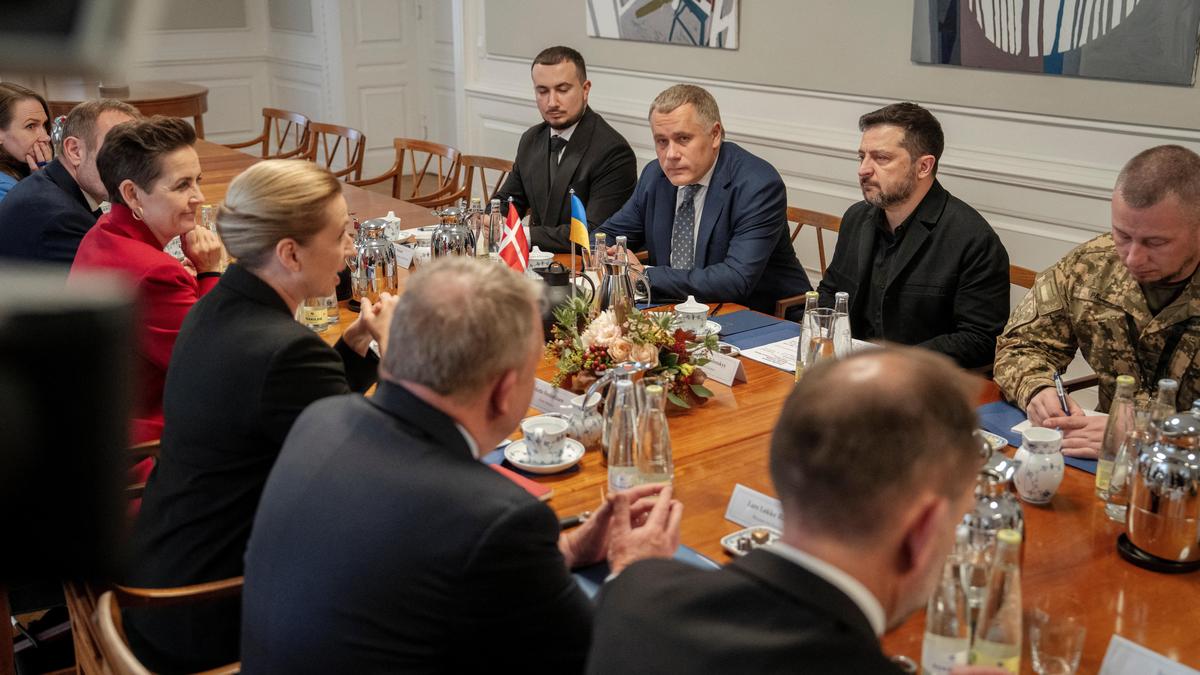
Photo from the source report: Ukraine Peace Talks: Security Guarantees, Black Sea Food Routes and India
Image: The Hindu
Why in news
Ukraine’s President Volodymyr Zelenskyy described the opening discussions as constructive, while Russia reiterated its opposition to an immediate ceasefire without clarity on the subsequent settlement. Parallel G7 discussions highlighted European demands for participation in decisions affecting the continent’s security.
2 days
Scheduled Abu Dhabi session
4 regions
Ukrainian regions covered by Russian withdrawal demands
3 rounds
Negotiations held earlier in the year
Background
Russia’s full-scale invasion of Ukraine began on February 24, 2022. The conflict engages foundational principles of the UN Charter: sovereign equality, peaceful settlement of disputes, prohibition of the threat or use of force, and the right of self-defence. Its consequences extend beyond Europe because the Black Sea connects major agricultural export areas to international markets. India’s diplomatic challenge is to maintain strategic autonomy while supporting sovereignty, dialogue and measures that reduce the conflict’s humanitarian and economic spillovers.
What resumed, and what remains unconfirmed
The Abu Dhabi meeting brought Ukraine, Russia and the United States into a trilateral format for the first such discussions since February. Before the main talks, Ukrainian representatives consulted U.S., European and NATO interlocutors on security questions.
Zelenskyy welcomed messages from U.S. envoys Jared Kushner and Steve Witkoff, but optimism should not be mistaken for agreement. The supplied reports establish neither a concluded ceasefire nor an agreed security-guarantee framework.
The supplied reports also do not document a fresh Indian statement advocating Black Sea food corridors or a corridor agreement at Abu Dhabi. India’s role and maritime food security are therefore examined here as policy dimensions, not as confirmed developments in this round.
- The United Arab Emirates is the venue; the United States is mediating the trilateral discussions.
- European representatives participated in preliminary consultations, rather than the main trilateral talks.
- Parallel G7 discussions concerned support for Ukraine, but the reports did not confirm new assistance commitments.
Infographic
Sequencing
Bridge the divide between ceasefire-first and settlement-first approaches.
Guarantees
Define obligations, verification and responses to violations.
Sovereignty
Distinguish battlefield control from lawful territorial entitlement.
Food routes
Protect civilian shipping through practical maritime arrangements.
India
Combine strategic autonomy with consent-based humanitarian diplomacy.
AI-assisted infographic by Pragnya IAS Academy, based on the cited sources.
The sequencing dispute: ceasefire first or settlement first?
Ukraine favours stopping the war first, securing guarantees against renewed aggression next, and then discussing broader European security arrangements. Russia favours clarifying the future security architecture before agreeing to a ceasefire, arguing that a pause could enable Ukraine to regroup.
This is a commitment problem: each side fears that the other will exploit an interim arrangement. A ceasefire without credible safeguards may merely suspend violence; making every political dispute a precondition for a ceasefire can prolong it.
- Russia demands Ukrainian withdrawal from Donetsk, Luhansk, Zaporizhzhia and Kherson, including territory Russia has not fully captured.
- Moscow also seeks Ukrainian non-membership of NATO and strict limits on Ukraine’s military.
- Kyiv rejects territorial withdrawal on these terms and restrictions on its military or partnerships with Western states.
What would make security guarantees credible?
A guarantee must specify who is protected, against which threats, by whom, and through what response. Diplomatic assurances alone do not establish an automatic obligation to intervene; credibility depends on the undertaking’s legal form, political durability, resources and implementation arrangements.
A workable framework would need agreed monitoring, attribution of violations, consultation procedures and predictable consequences for breaches. Ukraine’s sovereignty must remain distinct from bargaining over the broader regional balance of power.
European participation matters because European states and institutions could be expected to support implementation. However, Russia resists their inclusion in the main negotiations, making the composition of the negotiating table itself contentious.
- Verification should distinguish isolated incidents from sustained violations.
- Any guarantor’s duties should be explicit rather than dependent on ambiguous political language.
- Territorial disputes cannot be legally resolved merely through recognition of battlefield control.
Black Sea food corridors: a limited agreement with wider benefits
The Black Sea opens towards the Mediterranean through the Bosporus, Sea of Marmara and Dardanelles. Disruption of its commercial shipping can constrain food availability and raise freight, insurance and procurement costs, especially for import-dependent economies.
A protected food corridor would require more than permission to sail. It would need consent from relevant parties, identified routes, protection of civilian vessels and port facilities, transparent cargo procedures, and arrangements for mine risks and maritime incidents.
Such an arrangement could be negotiated separately from a final territorial settlement. Its value would lie in protecting civilian welfare and testing practical cooperation; it would not substitute for a comprehensive peace agreement.
- Predictable access is essential for shippers and insurers to resume normal commercial operations.
- Inspection procedures should address security concerns without becoming arbitrary barriers to trade.
- Protection of food shipments should not be presented as legitimising territorial acquisition by force.
India’s diplomatic approach: autonomy with practical purpose
India’s policy options should be assessed through strategic autonomy, respect for sovereignty, continued engagement with relevant parties and protection of development interests. Maintaining channels with Russia, Ukraine and Western partners can support diplomacy, but does not by itself confer a formal mediation role.
A practical Indian contribution could prioritise humanitarian access, civilian protection and reliable food trade. Supporting a technically workable maritime arrangement would connect India’s diplomatic engagement with concerns of vulnerable food-importing countries.
India should avoid equating dialogue with endorsement of coercive territorial changes. Its strongest position combines principled support for international law with realistic, consent-based initiatives that reduce suffering.
- Offer facilitation or technical assistance only where the relevant parties accept it.
- Keep humanitarian and food-security objectives distinct from claims about a final peace settlement.
- Coordinate with relevant international institutions and maritime stakeholders rather than make guarantees beyond available capacity.
| Issue | Ukraine’s reported position | Russia’s reported position | Analytical requirement |
|---|---|---|---|
| Sequencing | Immediate ceasefire before a wider settlement | Clarity on the future settlement before a ceasefire | Link interim restraint to verifiable implementation |
| Territory | Reject withdrawal from territory Russia has not captured | Demand withdrawal from the four claimed regions | Separate military control from lawful sovereignty |
| Defence arrangements | Retain military capacity and Western partnerships | Demand military limits and abandonment of NATO aspirations | Prevent guarantees from leaving Ukraine vulnerable to renewed attack |
| European participation | Consult European and NATO partners | Retain a strictly trilateral main format | Include prospective implementers in relevant decisions |
- 1. Secure consent on civilian food shipments and protected port operations.
- 2. Identify routes and address navigation hazards, including mine risks.
- 3. Establish transparent cargo declarations, inspections and vessel notification.
- 4. Create operational communication and incident-reporting channels.
- 5. Provide predictable compliance information to shippers and insurers.
- 6. Review breaches through agreed consultations while preserving humanitarian access.
February 24, 2022
Russia launched its full-scale invasion of Ukraine.
March 2022
Direct Russia–Ukraine peace talks took place in Istanbul.
September 2022
Russia illegally annexed Donetsk, Luhansk, Zaporizhzhia and Kherson despite not fully controlling them.
February 2026
The previous trilateral talks involving Russia, Ukraine and the United States were held.
November 9, 2026
G7 diplomacy in Paris addressed Ukraine as attacks on energy infrastructure continued.
November 10, 2026
Trilateral talks resumed in Abu Dhabi, with security guarantees central to the discussions.
Significance, challenges & way forward
Significance
- Renewed direct engagement creates a channel for managing escalation even without an immediate settlement.
- Credible security guarantees could reduce the risk that a ceasefire becomes an interval before renewed fighting.
- Reliable Black Sea food trade could ease supply uncertainty for vulnerable importing countries.
- European involvement would connect negotiated obligations with actors potentially responsible for implementation.
- Issue-based diplomacy offers India a way to link strategic autonomy with tangible humanitarian outcomes.
Challenges
- Russian and Ukrainian positions remain incompatible on territory, defence capacity and external partnerships.
- Different preferences over sequencing can prevent even an interim cessation of hostilities.
- Continued attacks deepen distrust and complicate verification of future commitments.
- Guarantees may lack credibility if the responsibilities and responses of guarantors remain undefined.
- Shipping access can remain commercially unviable despite political consent if physical risks and insurance uncertainty persist.
- India’s diplomatic access cannot overcome the absence of consent or willingness to compromise among the belligerents.
Way forward
- Pursue limited civilian-protection and food-shipping arrangements without making them contingent on resolving every territorial dispute.
- Attach any ceasefire to clear monitoring, incident attribution and dispute-resolution procedures.
- Define the legal status, operational scope and duration of security commitments before describing them as guarantees.
- Include European actors meaningfully where their resources or security responsibilities are involved.
- Design maritime arrangements around civilian protection, navigational safety and commercially usable procedures.
- India should combine support for sovereignty and dialogue with consent-based humanitarian facilitation, while avoiding unsupported claims of mediation.
Key terms
- Ceasefire
- An arrangement to stop fighting, which need not resolve the underlying political dispute.
- Security guarantee
- An undertaking to support a state’s security whose practical strength depends on its precise obligations and implementation.
- Security architecture
- The institutions, rules and arrangements governing security relations within a region or internationally.
- Commitment problem
- A negotiating obstacle arising when parties doubt that future promises will be honoured.
- Maritime food corridor
- An agreed arrangement enabling civilian food shipments through routes affected by conflict-related risks.
- Strategic autonomy
- The capacity to make foreign-policy decisions independently according to national interests and principles.
Link with static syllabus
Prelims practice MCQs
Q1. With reference to the Abu Dhabi talks reported on November 10, 2026, consider the following statements: 1. The main negotiating format involved Russia, Ukraine and the United States. 2. European and NATO representatives participated in preliminary consultations. 3. The reports confirmed a general ceasefire agreement. Which of the statements given above are correct?
Q2. A vessel sailing from the Black Sea towards the Aegean Sea would ordinarily pass through which sequence?
Q3. Consider the following statements: 1. A ceasefire may stop hostilities without settling territorial disputes. 2. Every diplomatic security assurance automatically requires military intervention by the state providing it. 3. Verification arrangements can help assess compliance with a ceasefire. Which of the statements given above are correct?
Q4. With reference to a proposed protected maritime food corridor, consider the following statements: 1. Consent to commercial passage alone eliminates physical risks to shipping. 2. Cargo transparency and incident-management arrangements can improve its functioning. 3. Such a corridor can be negotiated without a final territorial settlement. Which of the statements given above are correct?
Mains practice questions
GS 2 · 15 marks · 250 words
Why are security guarantees central to the Russia–Ukraine peace negotiations? Examine how Black Sea food-security arrangements and India’s diplomacy could contribute to conflict mitigation.
Frequently asked questions
Did the Abu Dhabi talks produce a ceasefire?
The supplied reports do not confirm a ceasefire. They describe renewed negotiations and continuing differences over the sequence and terms of a settlement.
Why are security guarantees difficult to negotiate?
Ukraine seeks protection against renewed Russian aggression, while Russia demands restrictions that Kyiv considers incompatible with its security. The identity, obligations and credibility of guarantors also require agreement.
Why does Black Sea shipping matter beyond Europe?
It links important agricultural export areas with global markets. Conflict-related disruption can raise shipping costs and food-supply uncertainty for import-dependent countries.
Do the sources confirm a new Indian proposal for food corridors?
No fresh Indian statement or corridor proposal is documented in the supplied reports. Such an initiative is discussed here as a potential diplomatic contribution, not a confirmed development.
Sources
- The Hindu: Ukraine’s Zelenskyy says he is pleased with messages from U.S. envoys on diplomatic efforts to end war
- The Hindu: U.S.-mediated talks on ending war between Russia, Ukraine begin in Abu Dhabi
- The Hindu: G7 attention in Paris turns to Ukraine while U.S.-mediated talks get underway in Abu Dhabi
- The Hindu: Past talks involving Russia and Ukraine have yielded little progress toward peace
Analysis prepared by the Pragnya IAS Academy current-affairs desk with AI assistance from the cited reports. Verify figures with the original sources.
Turn current affairs into marks
Join Pragnya IAS Academy's mentorship for daily answer-writing evaluation on stories like this — classroom programmes from a trusted name in IAS coaching in Hyderabad.