
Compulsory Retirement: Supreme Court on Efficiency, Government Powers and Safeguards
Revise the static topic: UPSC Polity notes · UPSC Governance notes
In short: The Supreme Court has been reported as affirming the government's wide powers to compulsorily retire employees to improve administrative efficiency. The central distinction is between bona fide, public-interest retirement and punitive removal: administrative discretion remains subject to judicial review for mala fides, arbitrariness and absence of supporting material.
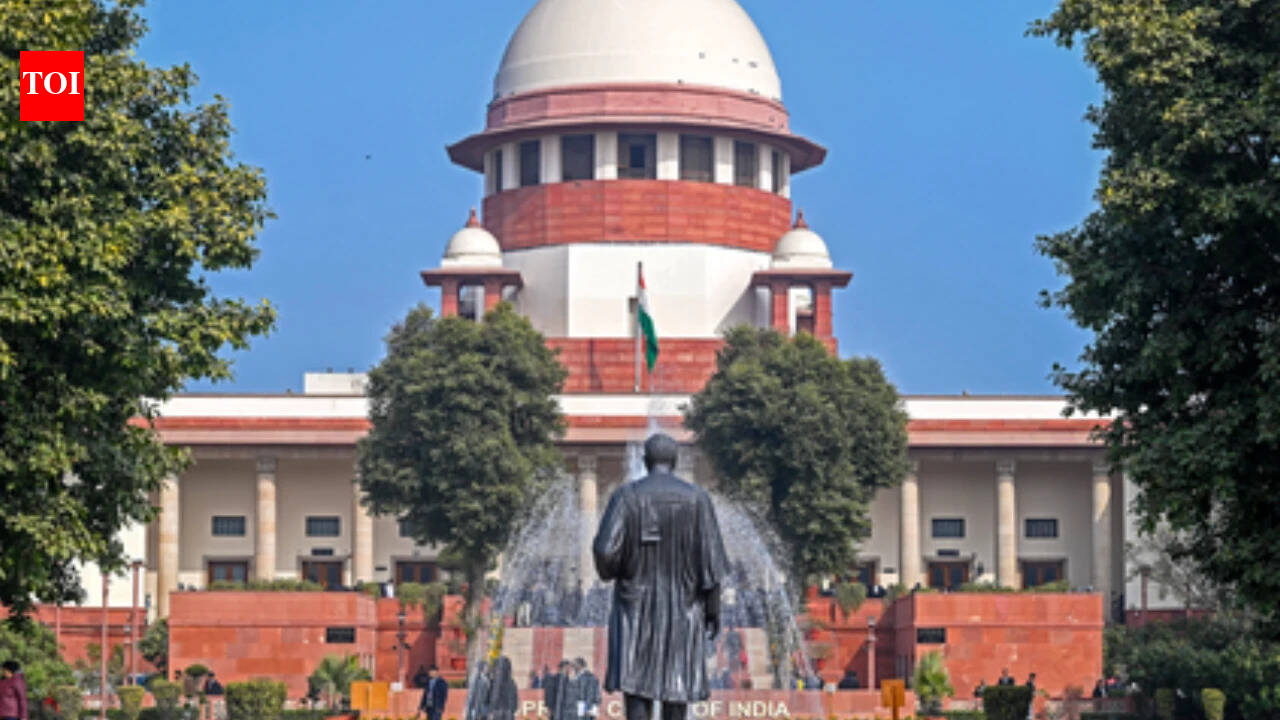
The Supreme Court’s reported clarification distinguishes public-interest compulsory retirement from punitive removal, with judicial review remaining available for mala fides, arbitrariness and lack of supporting material.
Image: Times of India
Why in news
A Times of India report highlights the Supreme Court's position on compulsory retirement as an instrument for improving government efficiency, with emphasis on bona fide appraisal. The supplied extract does not provide the judgment text, case particulars or detailed reasoning; the legal analysis below therefore draws on established service-law principles rather than attributing additional findings to this ruling.
Background
Public employment in India operates within a constitutional framework that balances administrative control with protection against arbitrary action. Article 309 concerns recruitment and conditions of service, Article 310 embodies the pleasure doctrine subject to constitutional limitations, and Article 311 provides safeguards against dismissal, removal and reduction in rank. Service rules, including Fundamental Rule 56(j) for covered Central government employees, permit premature retirement in the public interest subject to prescribed conditions. Such non-punitive retirement is legally distinct from compulsory retirement imposed as a disciplinary penalty under applicable rules.
What the reported clarification means
The report's central proposition is that government has substantial discretion to retire employees compulsorily when this serves administrative efficiency. This power allows the administration to assess continued suitability for public service without treating every case of declining utility as a disciplinary offence.
Wide discretion does not mean unrestricted discretion. The decision must arise from a bona fide appraisal under the applicable service rule and pursue public interest rather than personal hostility, political pressure or an unrelated objective.
- The relevant question is continued suitability for public service, not necessarily proof of a specific disciplinary charge.
- An employee's eligibility for review does not, by itself, establish grounds for compulsory retirement.
- The report does not establish any new retirement threshold, procedure or amendment to service rules.
Infographic
Public interest
Continued suitability, not personal or political convenience.
Bona fide appraisal
Relevant evidence, whole service record and attention to recent performance.
Correct legal route
Keep administrative retirement separate from disciplinary punishment.
Rule compliance
Competent authority and prescribed procedural conditions.
Judicial review
Scrutiny for mala fides, arbitrariness and lack of evidence.
AI-assisted infographic by Pragnya IAS Academy, based on the cited sources.
Administrative retirement versus disciplinary punishment
Non-punitive compulsory retirement ends service before ordinary superannuation under an enabling rule. In established service law, it does not ordinarily carry a stigma or forfeit retirement benefits already earned under the applicable rules. Its purpose is institutional efficiency, not punishment.
Dismissal and removal are punitive forms of termination attracting Article 311 safeguards for persons covered by that provision, subject to its constitutional exceptions. Compulsory retirement can also be imposed as a disciplinary penalty where service rules provide for it; that is a separate legal route governed by disciplinary procedures.
The label attached to an order is not conclusive. A purported public-interest retirement that is, in substance, punishment or a device to bypass the appropriate disciplinary process can be judicially scrutinised.
- Non-punitive compulsory retirement is not equivalent to a finding of misconduct.
- A misconduct allegation must not become a pretext for avoiding procedures required for punishment.
- Benefits and procedural requirements depend on the applicable service rules and the legal character of the action.
Constitutional safeguards and the limits of judicial review
Article 311 does not ordinarily require a departmental inquiry before genuine, non-punitive compulsory retirement. Established service-law doctrine also does not ordinarily require a prior hearing for such a decision. Nevertheless, the administration must satisfy the conditions and notice or pay requirements prescribed by the relevant rule.
Article 14 remains a safeguard against arbitrary State action. Courts can intervene where compulsory retirement is mala fide, based on no evidence, arbitrary or perverse. They may also examine whether the competent authority complied with the governing legal framework.
Judicial review is not an appeal on the employee's comparative usefulness. Courts ordinarily examine the legality and rational foundation of the decision rather than substitute their own service appraisal for that of the designated authority.
- Article 309 supplies the framework for regulating recruitment and conditions of service.
- Article 310's pleasure doctrine is subject to constitutional limitations.
- Article 311 protects against specified punitive actions; it is not an unconditional guarantee of service until superannuation.
- Articles 32 and 226 provide constitutional remedies within their respective jurisdictions.
Bona fide appraisal: the decisive governance safeguard
Established service-law principles require consideration of the employee's entire service record, with greater importance ordinarily attached to later performance. A selective reading that ignores favourable material or rests on unsupported assumptions weakens the legitimacy of the decision.
Performance assessment must also distinguish individual shortcomings from systemic constraints. Vacancies, difficult postings, inadequate resources and the nature of assigned duties can affect outcomes; crude output comparisons may penalise officers serving in challenging environments.
The governance challenge is to remove persistent inefficiency without making civil servants fearful of offering lawful, independent advice. Well-documented assessment and institutional review can reconcile these objectives.
- Relevant service records should support an individualised assessment of continued suitability.
- Integrity concerns require a credible evidentiary foundation rather than mere reputation or suspicion.
- Internal documentation should demonstrate public-interest reasoning even where a detailed speaking order is not legally required.
- Appraisal must not become an instrument of retaliation against honest or politically inconvenient officials.
| Aspect | Non-punitive compulsory retirement | Punitive dismissal or removal | Compulsory retirement as a penalty |
|---|---|---|---|
| Purpose | Assess continued suitability and advance public interest | Impose punishment for misconduct | Impose a disciplinary penalty under applicable rules |
| Legal foundation | Enabling public-interest retirement rule | Disciplinary rules and constitutional safeguards | Disciplinary rules providing for this penalty |
| Prior procedure | Prescribed review and notice or pay requirements; ordinarily no prior hearing | Disciplinary procedure and Article 311 safeguards where applicable, subject to exceptions | Applicable disciplinary procedure |
| Stigma | Does not ordinarily carry a punitive stigma | Punitive in character | Punitive in character |
| Retirement benefits | Earned benefits are ordinarily preserved under applicable rules | Consequences depend on applicable pension and service rules | Consequences depend on applicable penalty and pension rules |
| Judicial scrutiny | Mala fides, no evidence, arbitrariness, perversity and legal compliance | Legality, procedural fairness and other applicable review grounds | Legality and compliance with disciplinary safeguards |
- 1. Identify the applicable service rule, competent authority and eligibility conditions.
- 2. Examine the entire service record, giving appropriate importance to recent performance.
- 3. Assess continued suitability in the public interest using relevant material and contextual factors.
- 4. Document the appraisal and check for bias, irrelevant considerations and disguised punishment.
- 5. Have the competent authority decide and comply with prescribed notice or pay requirements.
- 6. Preserve the record for available representations and judicial scrutiny.
Significance, challenges & way forward
Significance
- Compulsory retirement can improve administrative effectiveness by addressing persistent lack of suitability without converting every performance concern into a misconduct proceeding.
- The distinction between retirement and punishment preserves different legal routes for different administrative problems.
- Bona fide appraisal aligns personnel management with public interest rather than automatic continuation in office.
- Judicial review protects constitutional accountability while respecting the executive's primary responsibility for service administration.
Challenges
- Subjective or inconsistent appraisals can turn a legitimate efficiency measure into arbitrary exclusion.
- Political or personal retaliation can undermine civil-service neutrality and discourage independent advice.
- Fragmented service records may produce selective assessments that overlook recent improvement or favourable evidence.
- Output-based assessment can disadvantage officials working with weak resources or in difficult assignments.
- Confusing non-punitive retirement with disciplinary punishment can lead to procedural shortcuts and avoidable litigation.
Way forward
- Apply clearly defined, role-sensitive review criteria within the governing service rules.
- Maintain accurate service records and ensure that adverse appraisals are processed through the applicable communication and representation procedures.
- Use suitably constituted review mechanisms and conflict-of-interest checks to reduce individual bias.
- Record the relevant material and public-interest rationale internally to support meaningful scrutiny.
- Address remediable performance problems through feedback, training and appropriate deployment before treating retirement as the preferred response.
- Use disciplinary proceedings where punishment for misconduct is intended, rather than disguising punishment as administrative retirement.
Key terms
- Compulsory retirement in public interest
- Premature retirement under an enabling service rule based on continued suitability, ordinarily without punitive stigma.
- Superannuation
- Retirement upon reaching the retirement age prescribed by the applicable service rules.
- Bona fide appraisal
- A good-faith assessment based on relevant service material and directed towards a lawful administrative purpose.
- Mala fides
- Bad faith or use of a legal power for an improper or ulterior purpose.
- Pleasure doctrine
- The constitutional principle under Article 310 that specified public offices are held during the pleasure of the President or Governor, subject to constitutional limitations.
- Fundamental Rule 56(j)
- A service-rule provision enabling public-interest premature retirement of covered Central government employees subject to prescribed conditions.
- Judicial review
- Judicial examination of the legality of State action, distinct from an unrestricted reconsideration of its administrative merits.
Link with static syllabus
Prelims practice MCQs
Q1. With reference to non-punitive compulsory retirement in public interest, consider the following statements: 1. It is necessarily a disciplinary penalty. 2. It may be judicially reviewed on grounds of mala fides or absence of supporting evidence. 3. Article 311 invariably requires a departmental inquiry before such retirement. Which of the statements given above is/are correct?
Q2. Consider the following pairs: 1. Article 309 — Recruitment and conditions of service 2. Article 310 — Pleasure doctrine 3. Article 311 — Safeguards against dismissal, removal or reduction in rank Which of the pairs given above are correctly matched?
Q3. Which of the following best describes judicial review of a bona fide public-interest compulsory retirement decision?
Q4. With reference to compulsory retirement in Indian service law, consider the following statements: 1. Compulsory retirement may also be prescribed as a disciplinary penalty. 2. The label 'public-interest retirement' conclusively prevents a court from examining whether an order is punitive in substance. 3. Non-punitive compulsory retirement ordinarily preserves retirement benefits earned under the applicable rules. Which of the statements given above are correct?
Mains practice questions
GS 2 · 15 marks · 250 words
Compulsory retirement can promote administrative efficiency, but unchecked discretion can weaken civil-service neutrality. Examine the constitutional and administrative safeguards necessary to reconcile these concerns.
Frequently asked questions
Is compulsory retirement always a punishment?
No. Public-interest compulsory retirement is ordinarily non-punitive, but applicable disciplinary rules may separately prescribe compulsory retirement as a penalty.
Can the government compulsorily retire an employee without a departmental inquiry?
Ordinarily, yes, where the action is genuinely non-punitive and complies with the applicable public-interest retirement rule. This does not permit disguised punishment or disregard of mandatory rule-based requirements.
Can a compulsory retirement order be challenged in court?
Yes. Recognised grounds include mala fides, absence of supporting evidence, arbitrariness, perversity and non-compliance with the governing legal framework.
Does compulsory retirement automatically mean loss of pension?
No. Non-punitive public-interest retirement ordinarily preserves earned retirement benefits, while the precise entitlement depends on the applicable pension and service rules.
Sources
Analysis prepared by the Pragnya IAS Academy current-affairs desk with AI assistance from the cited reports. Verify figures with the original sources.
Turn current affairs into marks
Join Pragnya IAS Academy's mentorship for daily answer-writing evaluation on stories like this — classroom programmes from a trusted name in IAS coaching in Hyderabad.