
COP31 Climate Finance: Adaptation Gaps, Accounting Transparency and India’s Equity Case
Revise the static topic: UPSC Environment notes
In short: COP31 talks in Antalya, Türkiye, have exposed the gap between climate finance pledges and timely, affordable support reaching developing countries, particularly for adaptation. For India, the central issue is whether developed countries deliver predictable finance and technology support without shifting costs onto vulnerable countries or restricting nationally determined development pathways.
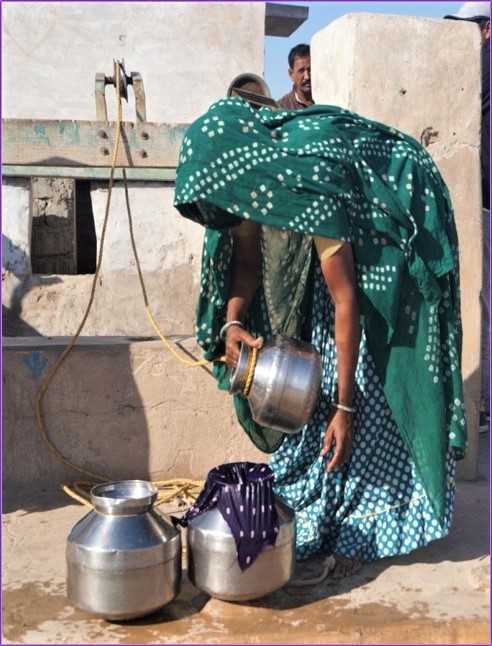
Reference view of an IDRF-supported water-harvesting project for drinking water and irrigation in areas with inadequate, erratic rainfall. Such projects illustrate practical adaptation needs relevant to climate-finance debates; this is not an image of COP31.
Image: Vinod prakash idrf · CC BY-SA 4.0
Why in news
The supplied reports describe urgent finance appeals at COP31, alongside a warning by UN Secretary-General António Guterres that even tripling adaptation funding would meet less than one-third of vulnerable countries’ needs. India has declined a proposed electrification pledge, emphasising predictable climate finance, technology transfer and nationally determined mitigation approaches.
$300 billion annually
Climate finance goal by 2035
$1.3 trillion annually
Broader all-source finance goal by 2035
$137 billion
Finance mobilised in 2024, according to Brazil’s analysis
$840 billion
Projected shortfall against the broader goal
Less than one-third
Needs met even with tripled adaptation funding, UN warning
Background
The United Nations Framework Convention on Climate Change places equity and common but differentiated responsibilities and respective capabilities at the centre of international climate cooperation. Developed countries have financing responsibilities under the Convention, while the Paris Agreement requires developed-country parties to provide financial resources to assist developing countries with mitigation and adaptation. Climate finance therefore concerns both emissions reduction and resilience, with support delivered through public funding, multilateral institutions and private investment. Its adequacy depends not merely on headline totals but also on affordability, accessibility, predictability and whether resources respond to recipient countries’ priorities.
What COP31 is debating: delivery rather than another headline pledge
The supplied reports describe COP31 as an implementation-focused conference, hosted by Türkiye with negotiations presided over by Australia. The central finance benchmarks remain the COP29 goal of $300 billion annually by 2035 and the broader goal of $1.3 trillion annually from public and private sources combined.
These benchmarks should not be conflated. The developed-country-led finance goal and the broader all-source mobilisation goal differ in scope; neither should be presented as an exclusively grant-funded public transfer. The editorial also identifies the COP30 call to triple adaptation finance, while reporting that decisions on practical funding flows have been deferred to COP32.
An analysis published by Brazil, cited in the reporting, estimates that $137 billion was mobilised in 2024 and projects an $840 billion shortfall against the broader goal under current trends. This is a projection, not an already incurred annual deficit; the report also notes weaker direct aid and future commitments to multilateral funds.
- The supplied material does not establish that COP31 has adopted a new finance target.
- Implementation must be assessed through actual disbursement and recipient access, not announcements alone.
- Political attention to security and living costs is competing with climate funding in developed countries.
Infographic
Adequacy
Measure support against climate needs, not pledges alone.
Equity
Reflect responsibility, capability and vulnerability.
Quality
Prioritise affordable terms and adaptation grants.
Transparency
Separate commitments, disbursements and grant equivalents.
Delivery
Simplify access and verify resilience outcomes.
AI-assisted infographic by Pragnya IAS Academy, based on the cited sources.
Why adaptation exposes the deepest funding and equity gaps
Adaptation protects people and assets against climate impacts through measures such as flood protection, drought resilience and heat preparedness. Many such investments generate public benefits rather than readily monetisable revenue, making reliance on commercial investment alone unsuitable.
The UN Secretary-General’s warning that even tripling adaptation funding would meet less than one-third of needs shows why a larger pledge can still be inadequate. Small island states describe repeated recovery costs and shrinking fiscal space, while lenders’ technical requirements can overwhelm limited administrative capacity.
For India, adaptation finance has direct relevance to farms, water security, urban flooding and extreme heat. Grants and highly concessional support are especially important where protective investments cannot generate repayment streams. Adaptation should also remain distinct from loss and damage: preventing or reducing harm is not the same as responding to impacts that occur despite mitigation and adaptation.
- Funding should be assessed against vulnerability and resilience needs, not only commercial bankability.
- Debt-financed resilience can strain the budgets it is intended to protect.
- A call to triple funding does not by itself establish that resources have been delivered or needs met.
Climate finance obligations and common but differentiated responsibilities
UNFCCC Article 3 recognises equity and common but differentiated responsibilities and respective capabilities, with developed countries expected to take the lead. Article 4 addresses developed-country financial support, including assistance with adaptation costs for particularly vulnerable developing countries.
Paris Agreement Article 9 requires developed-country parties to provide financial resources for developing-country mitigation and adaptation, while encouraging other parties to provide support voluntarily. It also calls for scaled-up resources to aim for a balance between adaptation and mitigation and recognises the need for public and grant-based resources for adaptation.
From India’s negotiating perspective, these provisions support differentiation based on historical responsibility, capability and development needs. They do not exempt India from climate action; rather, they strengthen the case that enhanced ambition must be accompanied by credible means of implementation. Broad private-finance mobilisation cannot erase developed countries’ treaty-based financing responsibilities.
- The legal obligation to provide support must be distinguished from the precise allocation of a collective finance target.
- The sources do not establish an enforceable country-wise contribution schedule.
- CBDR-RC supports differentiated effort within a shared climate response, not identical burdens for all countries.
Accounting transparency: what counts and what reaches recipients
The reporting identifies a fundamental divide: wealthy countries highlight money mobilised, while developing countries ask how much reaches them, on what terms and how quickly. These are different measures. A commitment is not a disbursement, and a repayable loan does not provide the same fiscal benefit as a grant of equal face value.
Transparent reporting should distinguish public provision from private mobilisation, commitments from disbursements, and grants from concessional and market-rate loans. Grant-equivalent reporting can reveal the concessional benefit within lending rather than treating the full loan principal as equivalent to grant support.
Private finance can complement public resources, particularly where projects generate predictable revenues. However, accounting should explain how public intervention mobilised private investment and avoid counting the same flow repeatedly across institutions. Recipient-side information on access, financing terms and outcomes should accompany provider-side totals.
- Report adaptation, mitigation and loss-and-damage support separately where identifiable.
- Disclose interest terms, repayment obligations and relevant currency risks.
- Identify possible overlap with existing development assistance to assess additionality.
- Track resilience outcomes alongside financial inputs.
India’s negotiating priorities and practical institutional reform
According to the supplied editorial, India has refused the proposed pledge to raise electricity’s share of total energy consumption from 23% to 35% by 2035. Its stated emphasis is predictable finance, technology transfer and nationally determined mitigation. This should not be interpreted as opposition to electrification itself; the negotiating issue is how externally proposed targets relate to domestic circumstances and enabling support.
India’s case is strongest when equity demands are paired with practical delivery reforms: clearer finance accounting, greater adaptation support and simpler access to multilateral funds. The reporting notes that a group of multilateral funds plans to rely more on one another’s assessments in co-financed operations, reducing overlapping processes.
Risk-sharing and stronger links between national plans and budgets can improve project readiness and lower financing barriers. However, public guarantees and other de-risking tools should be evaluated for fiscal exposure and additional climate benefits rather than assumed to be cost-free solutions.
- India can seek common ground with vulnerable countries on grant-based adaptation support without overlooking their distinct needs.
- Simplified access should preserve environmental safeguards, fiduciary accountability and local participation.
- Private capital should supplement, not replace, predictable public support for public-good adaptation.
| Distinction | Meaning | Why it matters |
|---|---|---|
| Mitigation versus adaptation | Mitigation reduces emissions or enhances sinks; adaptation reduces vulnerability to climate impacts. | Commercial investment opportunities and public funding needs differ. |
| Adaptation versus loss and damage | Adaptation reduces climate risk; loss and damage concerns adverse impacts not avoided through mitigation and adaptation. | Funding one purpose should not conceal unmet needs in another. |
| Commitment versus disbursement | A commitment promises support; disbursement releases funds. | Announced finance may not yet be available for implementation. |
| Grant versus loan | A grant does not require repayment; a loan creates repayment obligations. | Equal headline amounts can have very different fiscal effects. |
| Face value versus grant equivalent | Face value records the loan amount; grant equivalent reflects its concessional benefit. | This prevents loans from being treated as economically identical to grants. |
| Public provision versus private mobilisation | Public provision uses public resources; private mobilisation draws investment through supporting interventions. | Transparent attribution is needed to assess responsibility and avoid double counting. |
- 1. Identify nationally determined climate needs and vulnerable communities.
- 2. Secure predictable finance with clear provider responsibilities and terms.
- 3. Apply proportionate project appraisal through simplified access procedures.
- 4. Disburse funds and implement locally appropriate measures.
- 5. Report instruments, grant equivalents and recipient-level flows without double counting.
- 6. Evaluate resilience outcomes and use findings to improve future funding.
COP28, Dubai
Parties agreed on transitioning away from fossil fuels in energy systems.
COP29, Baku
The climate finance agreement established the $300 billion annual goal by 2035 alongside the broader $1.3 trillion annual all-source goal.
COP30
The supplied editorial records a call to triple adaptation finance but no formal roadmap away from fossil fuels.
COP31, November 2026
Negotiations in Antalya focus on implementing existing finance commitments, improving access and addressing adaptation funding gaps.
COP32, prospective
According to the supplied editorial, decisions on practical climate funding flows have been deferred to this conference.
2035
Target year for the agreed climate finance benchmarks.
Significance, challenges & way forward
Significance
- Credible finance delivery sustains trust between developed and developing countries in climate negotiations.
- Adaptation support protects lives, livelihoods and infrastructure while reducing pressure on vulnerable public budgets.
- Transparent accounting reveals whether reported funding creates usable fiscal space or additional repayment burdens.
- India’s emphasis on enabling support links climate ambition with energy access, development and nationally determined pathways.
- Simpler multilateral procedures can make existing resources more accessible without requiring another headline target.
Challenges
- Security expenditure, living-cost pressures and reduced international funding weaken political support for climate finance.
- High capital costs and constrained fiscal space make climate investment difficult where needs are acute.
- Adaptation’s public-good character limits dependence on private investors seeking predictable returns.
- Overlapping assessments and technical requirements delay access for capacity-constrained recipients.
- Opaque treatment of loans, commitments and mobilised private flows can obscure the value of actual support.
- Unfulfilled commitments weaken trust and make agreement on additional ambition harder.
Way forward
- Translate collective goals into transparent delivery plans with predictable public contributions and clear progress reporting.
- Prioritise grants and highly concessional finance for adaptation, especially for vulnerable countries and non-revenue-generating projects.
- Publish comparable data on commitments, disbursements, financing terms, grant equivalents and climate outcomes.
- Simplify access through shared assessments and stronger recipient capacity while retaining safeguards and accountability.
- Use risk-sharing selectively, disclosing public liabilities and demonstrating that it enables additional climate investment.
- India should pair its CBDR-RC-based negotiating position with credible national project pipelines, resilience indicators and demands for technology access.
Key terms
- CBDR-RC
- Common but differentiated responsibilities and respective capabilities recognises shared climate duties with differentiated burdens based on responsibility and capability.
- Adaptation finance
- Resources supporting measures that reduce vulnerability and build resilience to climate impacts.
- Mitigation finance
- Resources supporting emissions reduction or the enhancement of greenhouse gas sinks.
- Loss and damage
- Adverse climate impacts, including economic and non-economic losses, not avoided through mitigation and adaptation.
- Grant equivalent
- A measure of the concessional benefit embedded in financing, rather than its full repayable face value.
- Additionality
- The principle that climate support should add resources rather than merely relabel existing assistance.
- Concessional finance
- Financing offered on more favourable terms than comparable market finance.
- Fiscal space
- The capacity of a government to finance priorities without undermining fiscal sustainability.
Link with static syllabus
Prelims practice MCQs
Q1. With reference to climate finance under the Paris Agreement, consider the following statements: 1. Developed-country parties shall provide financial resources to assist developing-country parties with mitigation and adaptation. 2. Other parties are encouraged to provide such support voluntarily. 3. Climate finance under the Agreement is restricted to emissions-reduction projects. Which of the statements given above are correct?
Q2. Consider the following statements about climate finance accounting: 1. A commitment necessarily establishes that funds have reached the recipient. 2. A loan’s face value and grant equivalent measure different aspects of financing. 3. Reporting mobilised private finance requires care to avoid double counting. Which of the statements given above are correct?
Q3. Which of the following best describes common but differentiated responsibilities and respective capabilities?
Q4. Consider the following pairs: 1. Drought-resilient farming — Adaptation 2. Renewable electricity replacing fossil-fuel generation — Mitigation 3. Response to unavoidable climate-related destruction — Loss and damage Which of the pairs given above are correctly matched?
Mains practice questions
GS 3 · 15 marks · 250 words
Climate finance is a question of equity and delivery, not merely aggregate mobilisation. Discuss in the context of COP31, highlighting India’s negotiating priorities.
Frequently asked questions
Why is climate finance a recurring dispute at climate summits?
Providers emphasise aggregate mobilisation, while recipients question delivery, affordability, accessibility and additionality. The dispute also concerns whether developed countries are meeting differentiated financing responsibilities.
Why does adaptation need public and grant-based finance?
Many adaptation measures protect communities without producing reliable commercial revenues. Grants can fund these public benefits without adding repayment burdens to vulnerable budgets.
Is the $1.3 trillion goal entirely a developed-country public funding commitment?
No. The supplied reporting describes it as a broader annual goal combining public and private sources by 2035; it should not be equated with grant-only public transfers.
What is India’s position in the supplied COP31 reporting?
India emphasises predictable climate finance, technology transfer and nationally determined mitigation approaches. It has declined the proposed electrification pledge, linking additional ambition to development circumstances and enabling support.
Sources
- The Hindu: Urgent climate finance pleas at COP31 face a non-urgent response
- The Hindu: Why climate finance remains a recurring flashpoint at UN summits
- The Hindu: New deal: On COP31 and lofty climate goals
- UN News: COP31: Climate finance falls short as calls grow for polluters to pay
Analysis prepared by the Pragnya IAS Academy current-affairs desk with AI assistance from the cited reports. Verify figures with the original sources.
Turn current affairs into marks
Join Pragnya IAS Academy's mentorship for daily answer-writing evaluation on stories like this — classroom programmes from a trusted name in IAS coaching in Hyderabad.