
COP31 Deadlock: Fossil-Fuel Phase-Out, Climate Finance and India’s Equity Case
Revise the static topic: UPSC Environment notes
In short: According to the supplied reports, COP31 in Antalya, Türkiye, ended without an agreed overarching cover decision after the EU and other parties rejected a draft lacking explicit fossil-fuel language. The deadlock exposed the unresolved bargain between stronger mitigation commitments and adequate finance for developing countries, but did not terminate the Paris Agreement or erase all negotiating progress.
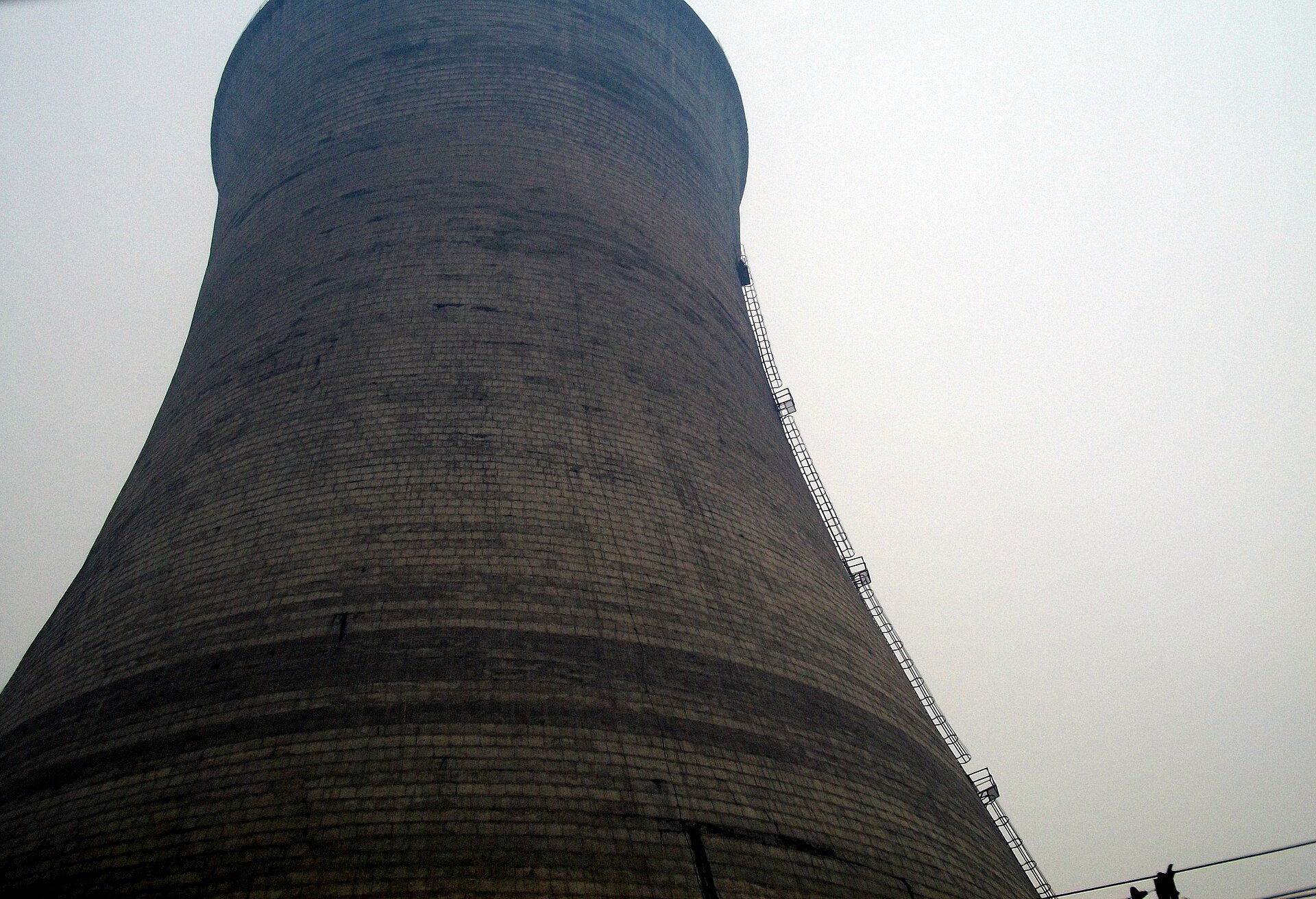
Reference view of Suratgarh Super Thermal Power Plant in India. Coal-fired electricity generation illustrates the fossil-fuel transition at the heart of debates over mitigation, climate finance and equity; this is not a photograph of the COP31 talks.
Image: Ramilarora · CC BY-SA 3.0
Why in news
The supplied reports state that COP31 failed to adopt its proposed Antalya Pact on November 22, 2026, despite extended negotiations. India supported the draft while emphasising nationally determined, equitable transitions backed by finance, technology and capacity-building.
About 130
Countries reportedly backing fossil-fuel language
48 hours
Reported conference overtime
35%
Proposed electricity share of final energy by 2035
Around 23%
Reported current electricity share of final energy
More than 75
Countries backing the external electrification pledge
180
Businesses backing the electrification pledge
Background
The United Nations Framework Convention on Climate Change provides the overarching framework for international climate cooperation. Its Conference of the Parties reviews implementation and negotiates collective action, while the Paris Agreement combines nationally determined contributions with transparency, periodic assessment and progressively stronger ambition. Equity and common but differentiated responsibilities and respective capabilities recognise that countries share responsibility for climate protection but differ in historical contributions, resources and development circumstances. Mitigation addresses emissions and carbon sinks; adaptation reduces vulnerability to climate impacts. Finance, technology transfer and capacity-building connect negotiated ambition with implementation.
What failed—and what remained intact
The immediate failure concerned the proposed overarching cover decision, described in the reports as the Antalya Pact. The EU, Panama and other parties objected because it omitted explicit language on moving away from fossil fuels. India, China and Saudi Arabia were among those willing to accept the draft, although developing-country groups also expressed concerns about equity and adaptation finance.
A cover decision frames a conference’s political direction; it is not a prerequisite for the continued operation of the climate treaties. The supplied explainer reports some progress on just transition and adaptation alignment, alongside unresolved issues concerning the Global Goal on Adaptation and mitigation negotiations. Therefore, failure to agree on the cover text should not be described as cancellation of every COP outcome.
The reported blockage of a mitigation work programme is also distinct from the disappearance of mitigation obligations. The Paris Agreement’s nationally determined contribution, transparency and global stocktake architecture continues independently of a particular negotiating workstream.
- The breakdown weakened the collective political signal on fossil fuels and implementation.
- Existing treaty obligations were not extinguished by rejection of the proposed cover decision.
- The supplied material does not establish a complete inventory of adopted decisions, so claims of total institutional collapse would be excessive.
Infographic
Ambition
Retain a credible collective direction away from fossil fuels.
Equity
Differentiate pathways by responsibility, capability and development needs.
Finance
Make mitigation and adaptation support predictable and accessible.
Technology
Combine clean power, grids, storage and scrutinised residual-emissions solutions.
Consensus
Protect inclusion while reducing last-minute blockages.
Accountability
Connect treaty implementation and voluntary initiatives to measurable outcomes.
AI-assisted infographic by Pragnya IAS Academy, based on the cited sources.
Consensus: inclusive legitimacy, difficult bargaining
UNFCCC substantive decisions are generally adopted by consensus because the draft procedural rule governing substantive voting has not been agreed. Consensus is not a recorded affirmative vote by every party; in practice, it generally requires the absence of a formal objection preventing adoption.
No country possesses a specially designated veto comparable to that of permanent members of the UN Security Council. Nevertheless, a sustained objection can block consensus. This distinction explains how a large coalition supporting stronger language could still fail to secure adoption, while opponents could not simply impose a weaker text.
Consensus protects sovereign equality and gives vulnerable countries negotiating leverage. However, it can also encourage diluted language, linked bargaining across unrelated agenda items and lowest-common-denominator outcomes. The challenge is to strengthen ambition without sacrificing the legitimacy and participation that make implementation possible.
- Consensus should not be equated with majority voting or compulsory recorded unanimity.
- Transparent drafting and early consultation can reduce last-minute procedural confrontation.
- Changing substantive decision-making rules would itself require political agreement; a simple majority shortcut is not an established substitute.
Fossil fuels, electrification and the limits of technological compromise
COP28 in Dubai agreed on transitioning away from fossil fuels in energy systems. This formulation is not identical to a uniform, legally binding phase-out timetable. At the reported COP31 talks, supporters of explicit fossil-fuel language viewed its omission as a retreat from the earlier political direction.
The proposed compromise centred on electrification with the greatest possible use of clean energy. The associated pledge sought to raise electricity’s share of global final energy consumption to 35% by 2035 from around 23%. According to the supplied explainer, the pledge attracted support outside formal negotiations but was not embedded in an adopted cover text.
Electrification can reduce direct fossil-fuel use in transport, buildings and industry, but its climate benefits depend on the electricity supply, efficiency and actual displacement of fossil fuels. Carbon capture, utilisation and storage may address some residual emissions, especially in hard-to-abate activities, but cannot automatically substitute for economy-wide emissions reduction.
- Final energy consumption is energy delivered to end users; it is not the same as electricity generation.
- An electrification target does not itself guarantee a clean power supply.
- CCUS proposals require scrutiny of capture performance, lifecycle emissions, storage permanence and costs.
- A credible transition should combine renewable energy, efficiency, grid strengthening, storage and targeted treatment of residual emissions.
Climate finance and India’s equity argument
Climate finance is a core element of the climate regime, not merely voluntary assistance. Under the Paris Agreement, developed-country parties shall provide financial resources to assist developing-country parties with mitigation and adaptation, in continuation of their Convention obligations. Other parties are encouraged to provide such support voluntarily; treaty obligations should nevertheless be distinguished from separately negotiated collective targets and individual pledges.
India’s reported position linked ambition to means of implementation: finance, technology and capacity-building. It also stressed nationally determined transitions, food security, livelihoods and cultural practices in methane-related action. The LMDC highlighted inadequate recognition of equity, historical responsibility and developed-country obligations.
Equity supports differentiated pathways, not exemption from climate action. India’s development and energy-access needs justify attention to transition costs and sequencing, while its own climate vulnerability makes faster clean-energy deployment and adaptation equally important. The supplied explainer also reports Indian support for an external fossil-fuel transition roadmap, showing that participation in voluntary initiatives need not imply acceptance of identical negotiated obligations.
- Historical emissions and present capabilities are central to equitable burden-sharing.
- Adaptation finance must not be crowded out by commercially attractive mitigation projects.
- Predictability, accessibility, concessionality and transparent accounting matter alongside the volume of finance.
- India should distinguish its development-based case from arguments for indefinite fossil-fuel dependence.
Beyond the deadlock: complementary coalitions, not treaty replacement
The reports describe growing activity outside formal consensus negotiations, including fossil-fuel transition roadmaps, the Santa Marta conference and the electrification pledge. Such initiatives can allow willing participants to test policies, mobilise investment and move faster than universal negotiations.
However, voluntary coalitions lack universal coverage and can fragment standards or exclude countries with limited administrative and financial capacity. They should complement the UNFCCC framework through transparent reporting and alignment with national climate plans, rather than replace developed-country finance obligations or weaken multilateral accountability.
- Participation in an external pledge must not be presented as a universally adopted COP decision.
- Coalitions should offer finance and technology partnerships, not only additional expectations.
- Progress should be assessed through implementation and emissions outcomes rather than announcements alone.
| Instrument or concept | Purpose | Essential distinction |
|---|---|---|
| COP cover decision | Provides overarching political direction | Its rejection does not terminate the Paris Agreement |
| Nationally determined contribution | Sets out a party’s national climate contribution | Operates within the Paris Agreement’s continuing treaty framework |
| Transitioning away from fossil fuels | Signals a shift away from fossil-fuel-based energy systems | Does not by itself prescribe an identical phase-out deadline for all countries |
| Climate-finance obligation | Supports developing-country mitigation and adaptation | Must be distinguished from particular collective targets and voluntary pledges |
| External electrification pledge | Mobilises willing participants around greater electrification | Is not equivalent to a consensus COP outcome or a clean-electricity mandate |
| CCUS | Captures carbon dioxide for utilisation or storage | Climate benefits depend on lifecycle performance and durable emissions avoidance |
- 1. Parties negotiate priorities across mitigation, adaptation, finance and implementation.
- 2. The presidency consults negotiating groups and circulates a proposed cover text.
- 3. Parties assess whether the package reflects their substantive concerns and agreed principles.
- 4. Objections prompt revisions and further political consultations.
- 5. The decision is adopted if consensus is reached; unresolved blocking objections prevent its adoption.
- 6. Existing treaty obligations and separately adopted decisions continue regardless of the cover-text outcome.
2021: Glasgow
The supplied explainer identifies the Glasgow meeting as a reference point for the growing prominence of overarching political cover texts.
COP28: Dubai
Countries agreed on transitioning away from fossil fuels in energy systems.
COP30: Brazil
According to the supplied explainer, Brazil committed to developing a fossil-fuel transition strategy outside the formal negotiating agenda.
2026: Before COP31
The supplied explainer reports that 57 nations attended a conference on transitioning away from fossil fuels in Santa Marta, Colombia.
November 22, 2026
The reports state that COP31 ended without adoption of the proposed overarching cover decision after objections over omitted fossil-fuel language.
Significance, challenges & way forward
Significance
- The deadlock exposes the difficulty of separating mitigation ambition from the finance and technology needed to implement it.
- Opposition to a fossil-fuel-free text demonstrates that consensus can defend ambition as well as dilute it.
- India’s position places development needs, historical responsibility and national circumstances at the centre of transition design.
- The growth of external initiatives may accelerate cooperation among willing participants while increasing the need for common accountability.
- The distinction between political failure and treaty continuity is essential for accurately assessing climate diplomacy.
Challenges
- Different levels of fossil-fuel dependence create conflicting preferences over the scope, pace and costs of transition.
- Insufficient clarity on adaptation finance undermines trust among countries facing acute climate impacts.
- Consensus can allow entrenched objections to delay collective action even where broad support exists.
- Electrification without cleaner electricity may shift emissions between sectors rather than adequately reduce them.
- Uncritical reliance on carbon capture risks delaying available emissions-reduction measures.
- Abrupt transition policies without livelihood protection can impose concentrated burdens on workers, communities and poorer consumers.
Way forward
- Negotiate a linked package combining stronger transition commitments with predictable finance, technology cooperation and capacity-building.
- Differentiate transition pathways by responsibility, capability and national circumstances while retaining a clear collective direction away from fossil-fuel dependence.
- Improve climate-finance accounting by transparently distinguishing grants, loans, concessional support and mobilised private finance.
- Prioritise accessible, grant-based or highly concessional support for adaptation in vulnerable countries.
- Use early consultations and transparent drafting to identify red lines before the final plenary.
- Link voluntary coalitions to national climate plans and transparent implementation reporting without allowing them to displace treaty obligations.
- For India, integrate clean power, grids, storage, efficiency, worker protection and adaptation into a coherent development-centred transition strategy.
Key terms
- CBDR-RC
- Common but differentiated responsibilities and respective capabilities recognises shared climate duties alongside differences in responsibility and capacity.
- Consensus
- A decision-making practice generally based on the absence of a formal objection preventing adoption, rather than a majority vote.
- Cover decision
- An overarching COP decision providing political direction across issues rather than resolving only one negotiating item.
- Means of implementation
- Finance, technology development and transfer, and capacity-building that enable climate action.
- Just transition
- A shift towards a low-emissions economy that protects workers, communities, livelihoods and equitable access to opportunities.
- Global Goal on Adaptation
- The Paris Agreement’s goal of enhancing adaptive capacity, strengthening resilience and reducing vulnerability to climate change.
- Global carbon budget
- The cumulative carbon dioxide emissions compatible with limiting warming to a specified level at a given probability.
- CCUS
- Carbon capture, utilisation and storage comprises technologies that capture carbon dioxide for use or storage, with climate benefits dependent on lifecycle outcomes.
Link with static syllabus
Prelims practice MCQs
Q1. With reference to UNFCCC decision-making, consider the following statements: 1. Substantive decisions are generally adopted by consensus. 2. Consensus necessarily requires a recorded affirmative vote by every party. 3. A formal objection can prevent the adoption of a proposed decision. Which of the statements given above are correct?
Q2. With reference to climate finance under the Paris Agreement, consider the following statements: 1. Developed-country parties shall provide financial resources to assist developing-country parties with mitigation and adaptation. 2. Other parties are encouraged to provide such support voluntarily. 3. Climate finance under the Agreement is restricted to mitigation projects. Which of the statements given above are correct?
Q3. Consider the following pairs: 1. Mitigation — Reducing greenhouse-gas emissions or enhancing sinks 2. Adaptation — Reducing vulnerability to climate impacts 3. Just transition — Shifting towards a low-emissions economy while addressing distributional and livelihood concerns Which of the pairs given above are correctly matched?
Q4. With reference to electrification and climate action, consider the following statements: 1. An increase in electricity’s share of final energy consumption necessarily eliminates fossil-fuel use. 2. The climate benefits of electrification depend partly on the emissions intensity of electricity supply. 3. Final energy consumption and electricity generation are identical measures. Which of the statements given above is/are correct?
Mains practice questions
GS 3 · 15 marks · 250 words
The reported COP31 deadlock reflects a crisis of equitable implementation as much as a crisis of climate ambition. Discuss with reference to consensus-based decision-making, climate finance and India’s position.
Frequently asked questions
Did the reported COP31 breakdown end the Paris Agreement?
No. Failure to adopt the proposed cover decision did not terminate the Paris Agreement, and the supplied reports describe some progress in other negotiating areas.
Why did India support the proposed cover text?
The reports associate India’s support with nationally determined, just and equitable transitions, development needs and recognition of livelihood concerns. India also insisted that ambition be supported by finance, technology and capacity-building.
Does CBDR-RC exempt developing countries from climate action?
No. It recognises shared responsibility while differentiating expectations according to responsibility, capability and national circumstances.
Can electrification replace an explicit fossil-fuel transition strategy?
Not by itself. Electrification reduces emissions effectively when electricity becomes cleaner and substitutes for fossil-fuel consumption rather than merely adding to energy demand.
Sources
- The Hindu: COP31 talks fail as EU, others reject any climate deal without language on a fossil fuel phase-out
- The Hindu: How did the COP31 climate agreement fall apart – and what happens now?
- The Hindu: Fatal disagreement: on the COP31 summit
- The Hindu: COP31 ends without a deal: Is global climate diplomacy breaking? | The Hindu Analysis
Analysis prepared by the Pragnya IAS Academy current-affairs desk with AI assistance from the cited reports. Verify figures with the original sources.
Turn current affairs into marks
Join Pragnya IAS Academy's mentorship for daily answer-writing evaluation on stories like this — classroom programmes from a trusted name in IAS coaching in Hyderabad.