
Free Speech and Privacy: Supreme Court Flags Need for Constitutional Balance
Revise the static topic: UPSC Polity notes · UPSC Governance notes
In short: The Supreme Court has emphasised the need to balance freedom of speech with the right to privacy, according to the supplied Times of India headline. The constitutional challenge is to protect public-interest expression without permitting unjustified intrusion into personal life, using proportionality and effective safeguards.
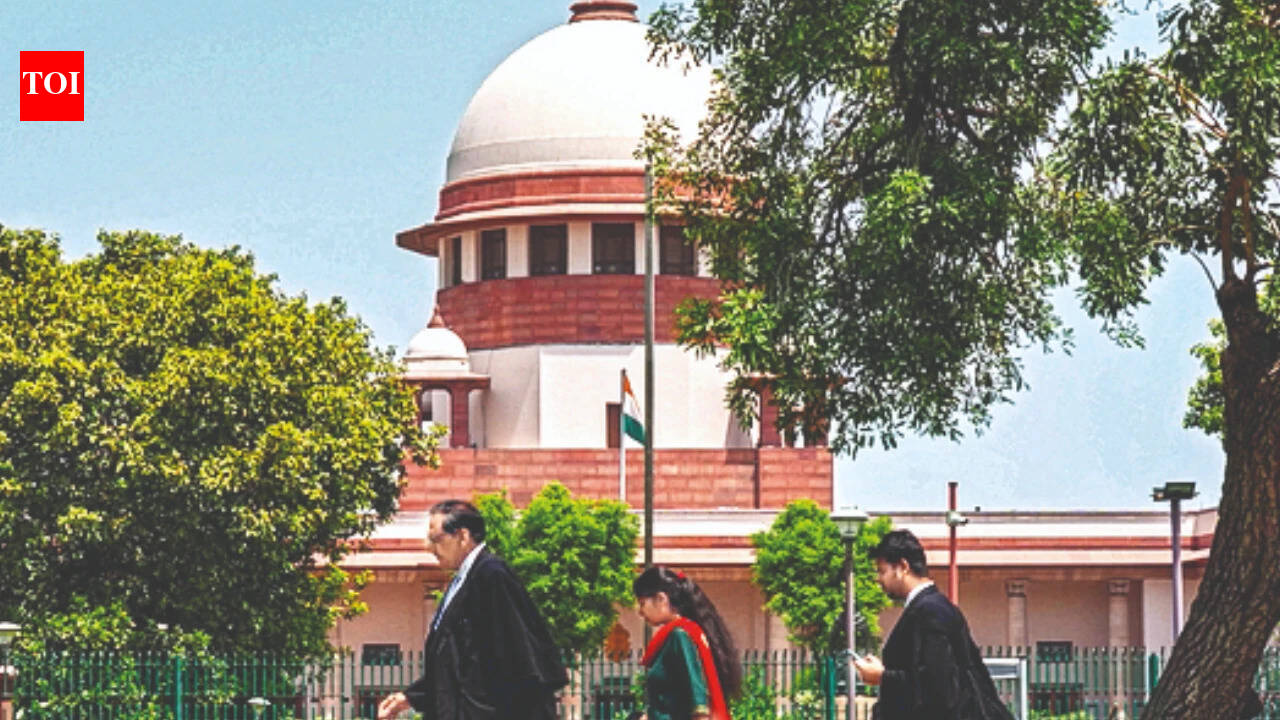
Reference image accompanying coverage of the Supreme Court’s emphasis on balancing freedom of speech and privacy; not a depiction of the proceedings.
Image: Times of India
Why in news
The Times of India reported the Supreme Court's emphasis on balancing free speech and privacy. The supplied extract does not disclose the case, factual dispute or operative directions; it therefore does not establish a new judicial rule.
Background
Article 19(1)(a) guarantees citizens freedom of speech and expression, including freedom of the press. Article 19(2) permits reasonable restrictions on specified grounds. In K.S. Puttaswamy v. Union of India, the Supreme Court recognised privacy as a fundamental right rooted in dignity, liberty and the freedoms guaranteed by the Constitution, particularly Article 21. Neither speech nor privacy is absolute. Their intersection requires context-sensitive adjudication rather than an automatic preference for either right.
The constitutional relationship: complementary rights, competing claims
Free expression enables democratic scrutiny, political participation and the circulation of ideas. Privacy protects personal autonomy, intimate choices and control over access to one's personal life. The rights can reinforce each other: private space enables people to think, associate and express themselves without constant surveillance.
Conflict arises when publication exposes personal information. Courts must distinguish information necessary for public accountability from disclosure that merely satisfies curiosity. Holding public office strengthens scrutiny of official conduct but does not extinguish privacy.
- The freedom of the press derives from Article 19(1)(a); it is not a separate constitutional guarantee.
- Privacy protects dignity and autonomy, not simply secrecy.
- The truth of information does not, by itself, resolve every privacy objection to its publication.
Infographic
Expression
Protect debate, journalism and public accountability.
Privacy
Preserve dignity, autonomy and personal life.
Legality
Identify the applicable law and constitutional limits.
Proportionality
Test necessity and less restrictive alternatives.
Safeguards
Require precise orders, fair procedure and timely review.
AI-assisted infographic by Pragnya IAS Academy, based on the cited sources.
Legal limits: balancing cannot bypass Article 19(2)
Article 19(2) specifies the grounds on which speech may be reasonably restricted, including defamation, contempt of court, public order, and decency or morality. Privacy is not expressly listed as a separate ground. A general invocation of privacy therefore cannot simply create an additional constitutional ground for restricting speech.
At the same time, privacy is constitutionally protected. Courts must examine the applicable law, the nature of the claim and the remedy sought while harmonising competing rights. Privacy and reputation should not be conflated: an accurate disclosure may implicate privacy even when its central problem is not reputational injury.
- Identify the legal basis of any proposed restriction rather than relying on an abstract appeal to balance.
- Distinguish scrutiny of public functions from unnecessary disclosure of intimate personal details.
- Recognise that disputes involving private publishers require attention to applicable legal duties and remedies, not a mechanical transplantation of rules governing State surveillance.
Proportionality: a structured test, not discretionary compromise
For State interference with privacy, constitutional scrutiny requires a legal basis, a legitimate aim, proportionality and safeguards against abuse. Proportionality examines whether the measure is suitable for its purpose, whether a less rights-restrictive alternative exists, and whether the resulting harm is excessive relative to the legitimate benefit.
In speech–privacy disputes, this discipline helps test the scope of the requested remedy. A restraint on an entire report may be excessive where anonymisation, redaction or removal of a specific intimate detail would adequately protect privacy. Proportionality does not replace the constitutional requirement that restrictions on speech comply with Article 19(2).
- Assess the public-interest value of disclosure and the sensitivity of the information.
- Ask whether identifying the individual is necessary to convey the public-interest issue.
- Compare the likely privacy injury with the democratic cost of withholding information.
- Consider how digital replication and searchability can magnify the consequences of disclosure.
Safeguards: protect dignity without enabling censorship
Prior restraint prevents expression before publication and therefore demands particular caution. Yet disclosure of intimate information can cause harm that later compensation cannot fully repair. Adjudication must address both risks rather than assume that either publication or restraint is invariably harmless.
Reasoned orders, precise identification of disputed material, an opportunity to be heard and timely review can reduce arbitrary outcomes. Where urgent interim protection is necessary, its scope and duration should be narrowly tailored, with prompt reconsideration.
- Prefer targeted redaction or anonymisation where these adequately address the injury.
- Avoid vague orders suppressing all reporting about a person or controversy.
- Provide accessible remedies for serious privacy violations without insulating public conduct from scrutiny.
- Encourage editorial verification, data minimisation and a documented public-interest assessment.
| Dimension | Freedom of speech | Right to privacy |
|---|---|---|
| Constitutional foundation | Article 19(1)(a) | Article 21 and the broader guarantees of liberty and dignity |
| Core purpose | Expression, democratic debate and public accountability | Autonomy, dignity and protection of personal life |
| Limits | Reasonable restrictions on grounds specified in Article 19(2) | Not absolute; State interference requires constitutional justification |
| Risk of overreach | Intrusive exposure presented as public-interest reporting | Privacy claims used to suppress legitimate scrutiny |
| Adjudicatory focus | Legality, constitutional grounds and proportionality of restraint | Nature of intrusion, justification and effective safeguards |
- 1. Identify the expression, personal information and parties involved.
- 2. Establish the applicable law and constitutional basis of the claim and proposed restriction.
- 3. Assess the public-interest purpose and the likely privacy harm.
- 4. Examine suitability and less restrictive alternatives, including redaction or anonymisation.
- 5. Weigh the rights impact and craft a narrowly tailored remedy.
- 6. Provide reasons, procedural fairness and timely review.
Significance, challenges & way forward
Significance
- A principled balance protects democratic scrutiny while recognising that dignity does not disappear in the digital public sphere.
- Proportionality discourages both blanket censorship and indiscriminate exposure of personal information.
- Clear judicial reasoning can guide journalists, digital platforms and public authorities facing competing rights claims.
- Privacy protection can strengthen free expression by reducing fear of surveillance and unwanted exposure.
Challenges
- Public interest is difficult to distinguish from public curiosity, particularly in sensational reporting.
- Digital information can be copied and redistributed before an effective remedy becomes available.
- Broad injunctions can chill investigative journalism and shield powerful actors from scrutiny.
- Unnecessary disclosure can cause lasting personal harm even where the underlying report serves a legitimate public purpose.
- Unequal access to legal remedies can leave vulnerable individuals underprotected while enabling strategic litigation by influential claimants.
Way forward
- Require courts and public authorities to identify the precise legal basis and necessity of restrictions affecting expression.
- Prefer remedies directed at the harmful detail rather than suppressing an entire public-interest discussion.
- Ensure urgent interim orders receive prompt review and remain limited to what protection genuinely requires.
- Institutionalise editorial public-interest assessments and minimise publication of irrelevant personal information.
- Develop clear, accessible grievance procedures that protect privacy without encouraging automatic takedowns of lawful reporting.
Key terms
- Proportionality
- A rights-review framework examining legitimate purpose, suitability, necessity and the balance between benefits and rights-related harm.
- Informational privacy
- An individual's interest in how personal information is collected, used and disclosed.
- Prior restraint
- A restriction that prevents expression or publication before it occurs.
- Chilling effect
- The discouragement of lawful expression because of fear of penalties, litigation or uncertain restrictions.
- Public interest
- A genuine societal concern, such as accountability or public safety, rather than mere audience curiosity.
- Harmonious construction
- Interpreting constitutional provisions so that they operate together without unnecessarily extinguishing one another.
Link with static syllabus
Prelims practice MCQs
Q1. With reference to freedom of expression and privacy, consider the following statements: 1. Freedom of the press is protected within Article 19(1)(a). 2. Privacy is expressly listed as an independent ground for restriction under Article 19(2). 3. The right to privacy is absolute. Which of the statements given above is/are correct?
Q2. Which of the following most accurately describes the necessity component of proportionality?
Q3. Consider the following pairs: 1. Prior restraint — Prevention of expression before publication 2. Chilling effect — Discouragement of lawful expression through fear of adverse consequences 3. Informational privacy — An absolute prohibition on all collection of personal information Which of the pairs given above are correctly matched?
Q4. Which statement best reflects the constitutional significance of K.S. Puttaswamy v. Union of India?
Mains practice questions
GS 2 · 15 marks · 250 words
Freedom of expression and privacy are mutually reinforcing rights that can nevertheless conflict. Discuss how constitutional proportionality and procedural safeguards can reconcile them.
Frequently asked questions
Has the Supreme Court established a new speech–privacy rule in this report?
The supplied headline records an emphasis on balancing the rights. Without the case details or operative order, it cannot be treated as evidence of a new binding rule.
Is privacy an express restriction ground under Article 19(2)?
No. Privacy is not expressly listed, so restrictions on expression require careful examination of their legal and constitutional basis rather than a general appeal to privacy.
Do public officials retain a right to privacy?
Yes. Their official conduct is open to legitimate scrutiny, but public office does not automatically remove protection for unrelated aspects of personal life.
How can reporting protect both expression and privacy?
Reporting can preserve its public-interest substance while redacting unnecessary personal details or anonymising individuals where identification is not essential. Such measures must be assessed against the context and the harm involved.
Sources
- Times of India: Need to balance right to free speech, privacy: Supreme Court
Analysis prepared by the Pragnya IAS Academy current-affairs desk with AI assistance from the cited reports. Verify figures with the original sources.
Turn current affairs into marks
Join Pragnya IAS Academy's mentorship for daily answer-writing evaluation on stories like this — classroom programmes from a trusted name in IAS coaching in Hyderabad.