
Electoral Roll Revision: ECI Powers, Deletion Safeguards and Supreme Court Scrutiny
Revise the static topic: UPSC Polity notes · UPSC Governance notes
In short: Karnataka’s final electoral roll after the Special Intensive Revision recorded a net decline of 99.32 lakh electors, while Shivamogga district reported 1,89,166 deletions alongside fresh enrolments. Supreme Court proceedings concerning revision procedures, the online presentation of Form 6 and institutional decision-making underline the need to reconcile accurate electoral rolls with protection against wrongful exclusion.
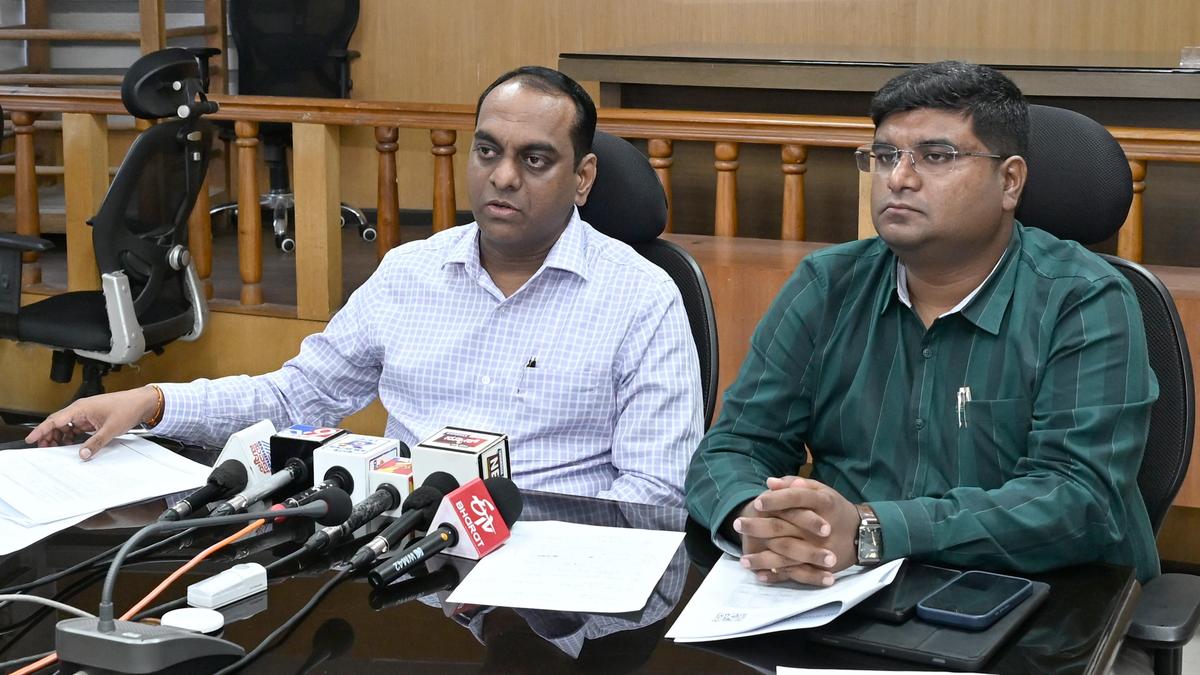
Photo from the source report: Electoral Roll Revision: ECI Powers, Deletion Safeguards and Supreme Court Scrutiny
Image: The Hindu
Why in news
Karnataka published its final revised electoral rolls as the Supreme Court continued hearing petitions concerning the Election Commission’s functioning and the SIR exercise. The Commission’s counter-affidavit also addressed the disputed online presentation of Form 6 and appeals against voter inclusions in West Bengal.
4,55,00,011
Karnataka final electorate
99.32 lakh
Karnataka net electorate decline
1,89,166
Shivamogga gross deletions
13,54,046
Shivamogga final electorate
23,753
Shivamogga fresh additions
More than 43.5 lakh
Karnataka notices served
Background
Article 324 of the Constitution vests the Election Commission of India with superintendence, direction and control over the preparation of electoral rolls and the conduct of elections within its constitutional remit. Article 325 requires a general electoral roll for each territorial constituency and prohibits exclusion solely on grounds of religion, race, caste or sex; Article 326 establishes adult suffrage for Lok Sabha and State Legislative Assembly elections. The Representation of the People Act, 1950 and the Registration of Electors Rules, 1960 govern electoral registration, revision, correction and appeals. Citizenship, the prescribed qualifying age and ordinary residence are central to eligibility. The right to vote is statutory, operating within this constitutional framework.
What the revised rolls show—and what they do not
According to the Karnataka Chief Electoral Officer’s office, the electorate declined from 5,54,32,314 before revision to 4,55,00,011 in the final roll. This is a net decline, not necessarily the total number of deletion orders: additions and deletions must be examined separately.
Shivamogga reported 1,89,166 deletions, covering absent, permanently shifted, dead or duplicate entries and persons found ineligible during enquiry. Fresh enrolment after the draft roll added 23,753 names, taking the final electorate to 13,54,046.
The district issued 48,660 notices for logical discrepancies, following which 612 names were deleted. This illustrates why a discrepancy flag should trigger verification rather than be treated as proof of ineligibility. The supplied reports do not independently establish whether every individual deletion complied with the required safeguards.
- A large reduction warrants scrutiny but does not, by itself, prove either wrongful exclusion or successful removal of ineligible entries.
- Gross deletions, fresh additions and net change are distinct measures and should be reported separately.
- Statewide conclusions should not be drawn solely from the administrative practices reported in one district.
Infographic
Legal authority
ECI supervision must remain within the Act and Rules.
Individual verification
A data flag initiates enquiry; it does not prove ineligibility.
Procedural fairness
Clear notice, meaningful hearing and recorded reasons.
Effective remedy
Accessible inclusion, correction and statutory appeals.
Accountable records
Transparent outcomes and preserved files enable scrutiny.
AI-assisted infographic by Pragnya IAS Academy, based on the cited sources.
ECI powers are broad, but bounded by electoral law
Section 21 of the Representation of the People Act, 1950 governs preparation and revision of electoral rolls, including the Commission’s power to direct a special revision for reasons recorded. Sections 22 and 23 deal with correction or deletion of entries and inclusion of names respectively. The Electoral Registration Officer is the statutory authority responsible for these decisions.
Article 324 does not authorise the Commission to override an express statutory provision or a prescribed rule. Form 6 is the statutory enrolment form under the Registration of Electors Rules, 1960. Changes to prescribed forms require the competent rule-making authority: the Central Government, exercising its statutory power after consulting the Election Commission.
The Commission’s affidavit states that its online presentation of an SIR declaration could have been construed as an amendment to Form 6, while denying that the statutory form had been amended. It said that on October 21 it decided to display Form 6 and the SIR declaration separately.
- An online interface must not silently create eligibility conditions beyond the governing law.
- Separating a statutory form from an additional declaration improves clarity, but does not by itself settle every challenge to that declaration.
- Administrative convenience cannot substitute for statutory authority.
Deletion safeguards: individual verification, notice and reasons
Under Section 22, the ERO must conduct appropriate verification before correcting or deleting an entry. Where deletion is proposed because a person has ceased to be ordinarily resident or is otherwise not entitled to registration, the law requires a reasonable opportunity of being heard. An objection or software-generated flag is an input for enquiry, not a deletion order.
Section 20 recognises that temporary absence does not, by itself, terminate ordinary residence. Consequently, being unavailable during a field visit cannot automatically establish permanent shifting. Equally, inability to map an elector to an earlier roll is not, by itself, conclusive proof of ineligibility.
Shivamogga officials stated that affected persons were heard, death certificates were checked and a mahazar was conducted for permanent shifting. They also reported receiving 3,517 Form 7 applications, of which 1,675 were rejected for insufficient information or documents. These are official accounts of safeguards, not an independent judicial finding on their adequacy.
- Notices should identify the proposed ground of deletion and the material discrepancy clearly.
- Decisions should record case-specific reasons and be communicated in time for an effective remedy.
- Duplicate-entry verification must avoid leaving an eligible elector without a valid registration.
- Verification should distinguish temporary migration from cessation of ordinary residence.
Voter redress: checking the roll, seeking inclusion and appealing
Voters should search the ECI Voters’ Service Portal using their EPIC number, personal details or registered mobile number, and verify the relevant electoral-roll PDF. Possession of an EPIC does not substitute for inclusion in the operative electoral roll.
A missing or incorrect entry should be taken up promptly with the BLO or ERO. Form 6 is used for enrolment; Form 8 covers specified corrections, shifting of residence and related registration services. Form 7 is used to object to proposed inclusion or seek deletion, but filing it does not itself remove a name.
Section 24 provides appeals against ERO orders under Sections 22 and 23. The Shivamogga administration identified the District Magistrate as the first appellate authority and the Chief Electoral Officer as the second. Voters should follow the prescribed procedure and time limits applicable to their order; merely contacting a BLO is not equivalent to filing an appeal.
- Obtain the relevant order and reasons, and preserve application acknowledgements and supporting documents.
- Final publication does not permanently close the statutory route for seeking inclusion.
- Section 23 restricts roll changes after the last date for nominations until completion of the election, making early action important.
Supreme Court scrutiny: legality, accountability and institutional records
The Supreme Court granted petitioners ten days to respond to the Commission’s affidavit and issued notice on a fresh plea concerning changes to Form 6 during the Bihar SIR. A notice or an opportunity to file a rejoinder is a procedural step, not a final finding that the SIR or an official’s conduct was unlawful.
The Commission stated that SIR decisions were unanimous and distinguished internal suggestions or disagreements from formal decisions under Section 18 of the 2023 law governing the Commission. That provision envisages unanimity as far as possible and majority decision-making where opinions differ. Internal dissent alone does not establish illegality, but authenticated records are important for testing institutional claims.
West Bengal involved a court-directed adjudication arrangement using judicial officers, which should not be presented as the ordinary nationwide procedure. The Commission’s affidavit attributed appeals against inclusions to officers of the State CEO’s office acting under the Act and court orders; the supplied report says the precise number filed by these officers and their reasons remained unclear. A separate supplied headline reports a request to preserve SIR files and notings, not an order granting that request.
- Judicial review can examine statutory authority, procedural fairness, arbitrariness and compliance with court directions.
- The Commission’s claim that an SIR declaration had received judicial approval should not be treated as blanket validation of every subsequent implementation choice.
- Preserving notices, field reports, decision records and digital change logs supports meaningful scrutiny.
- Public communication should distinguish allegations, affidavit assertions, procedural orders and final judgments.
| Instrument or provision | Purpose | Important distinction |
|---|---|---|
| Article 324 | ECI supervision of electoral rolls and elections | Operates within the Constitution and applicable electoral law |
| Section 21, RPA 1950 | Preparation and revision of rolls | Includes special revision directed by the Commission |
| Section 22, RPA 1950 | Correction and deletion of entries | Requires verification and an opportunity of hearing in specified cases |
| Form 6 | Application for voter enrolment | An application must be assessed against statutory eligibility |
| Form 7 | Objection to proposed inclusion or request for deletion | An objection is not itself a deletion decision |
| Form 8 | Specified corrections, shifting and related services | Used for changes concerning an existing elector |
| Section 24, RPA 1950 | Appeals against orders under Sections 22 and 23 | The prescribed appellate route and deadlines must be followed |
- 1. An objection, field report or data discrepancy identifies an entry for verification.
- 2. The ERO examines the facts and applicable statutory ground.
- 3. Notice and a reasonable opportunity to respond are provided where required.
- 4. The ERO assesses the evidence and records a reasoned decision.
- 5. The elector checks the updated roll and obtains the relevant order.
- 6. An aggrieved person uses the prescribed appeal or inclusion route promptly.
June 24, 2025
The Commission’s affidavit identifies this as the date of the order initiating the Bihar SIR.
October 27, 2025
The affidavit identifies a subsequent order extending the SIR to other states.
May 14, 2026
The affidavit identifies another order for further SIR rollout.
June 16, 2026
Shivamogga’s pre-revision roll was frozen with 15,19,459 electors.
August 24, 2026
Shivamogga’s draft roll was published with 13,30,905 electors.
September 30, 2026
The disputed declaration was removed from the portal, according to the supplied report.
October 21, 2026
The Commission said it decided to present online Form 6 and the SIR declaration in separate parts.
October 22, 2026
According to the affidavit, West Bengal’s CEO office informed the Commission that its officers had filed appeals against inclusions.
Significance, challenges & way forward
Significance
- Accurate rolls protect electoral integrity by removing deceased, duplicate and otherwise ineligible entries.
- Fair verification protects eligible citizens from exclusion caused by migration, data mismatch or administrative error.
- Accessible appeals make electoral registration accountable rather than a one-way administrative exercise.
- Law-compliant digital processes prevent portal design from becoming an unauthorised source of registration requirements.
- Transparent institutional records help sustain trust in an independent Election Commission.
Challenges
- Large-scale verification can strain field enquiry, notice service, hearing and appellate capacity.
- Temporary migrants and electors with inconsistent records may face difficulties responding to residence or mapping queries.
- Software-generated anomalies can become exclusion risks if officials treat them as conclusive evidence.
- Aggregate deletion figures conceal whether individual decisions were justified and whether eligible voters were restored.
- Unclear authority for appeals against inclusions can weaken accountability and prolong uncertainty.
- Election-related statutory cut-offs can make delayed remedies ineffective for an approaching poll.
Way forward
- Publish category-wise additions, deletions, pending claims and appeal outcomes while protecting personal information.
- Use standardised notices that state the ground of enquiry, response procedure and available assistance clearly.
- Require individual verification and recorded reasons rather than automatic deletion based on software flags.
- Legally vet digital forms and preserve version histories before introducing any additional declaration.
- Maintain accessible offline assistance alongside online services for claims, corrections and appeals.
- Preserve case files, internal authorisations and digital audit trails for statutory and judicial scrutiny.
- Track disposal and implementation of appeal orders early enough to avoid exclusion during an election.
Key terms
- Special Intensive Revision
- An intensive electoral-roll revision exercise involving verification of entries and processing of claims and objections.
- Ordinary residence
- The statutory residence connection for registration in a constituency; temporary absence alone does not end it.
- Electoral Registration Officer
- The statutory officer responsible for preparing and revising a constituency’s electoral roll and deciding registration matters.
- Booth Level Officer
- A field-level functionary who assists electoral registration work and voter verification.
- Natural justice
- Procedural fairness, including an effective opportunity to respond before an adverse decision where required.
- Mahazar
- A contemporaneous written record of a spot inspection or factual verification.
- Net electorate change
- The overall change in roll strength after accounting for both additions and deletions.
- Counter-affidavit
- A sworn response to claims made in a judicial proceeding, not a judicial determination of those claims.
Link with static syllabus
Prelims practice MCQs
Q1. With reference to electoral rolls, consider the following statements: 1. Article 324 places the preparation of electoral rolls under the Election Commission’s superintendence, direction and control. 2. Article 325 prohibits exclusion from an electoral roll solely on grounds of religion, race, caste or sex. 3. Article 326 establishes adult suffrage for Lok Sabha and State Legislative Assembly elections. Which of the statements given above are correct?
Q2. Consider the following pairs: 1. Form 6 — Application for voter enrolment 2. Form 7 — Objection to proposed inclusion or request for deletion 3. Form 8 — Specified corrections and shifting of residence Which of the pairs given above are correctly matched?
Q3. With reference to the Representation of the People Act, 1950, consider the following statements: 1. Temporary absence alone necessarily terminates ordinary residence in a constituency. 2. Section 24 provides appeals against ERO orders under Sections 22 and 23. 3. Possession of an EPIC substitutes for inclusion in the operative electoral roll. Which of the statements given above is/are correct?
Q4. Which of the following best describes the legal position concerning statutory electoral registration forms?
Mains practice questions
GS 2 · 15 marks · 250 words
Electoral-roll accuracy and protection against wrongful exclusion are complementary democratic obligations. Examine the Election Commission’s powers and suggest safeguards for fair electoral-roll revision.
Frequently asked questions
Can a voter’s name be deleted merely because the person was absent during a visit?
Temporary absence alone does not terminate ordinary residence. Deletion must rest on a legally valid ground established through the applicable verification and hearing procedure.
What should a voter do if their name is missing from the final roll?
Check the official roll, contact the BLO or ERO and obtain any deletion order. Use the appropriate inclusion or appeal procedure promptly, keeping the applicable deadlines and election-related cut-offs in view.
Does a voter ID card guarantee the right to vote at a polling station?
No. Possession of an EPIC does not substitute for inclusion in the operative electoral roll, which the voter should verify.
Has the Supreme Court declared the nationwide SIR illegal?
The supplied reports do not establish such a final ruling. They describe pending petitions, notices, affidavits and time granted for a rejoinder.
Sources
- The Hindu: 1.89 lakh names deleted in electoral rolls of Shivamogga district after SIR
- Indian Express: Karnataka SIR deletions: In final rolls, voters shrink by nearly 1 crore
- Indian Express: Form 6, voter roll deletions: What Election Commission told the Supreme Court
- Times of India: Order preservation of SIR files & notings, petitioners urge SC
Analysis prepared by the Pragnya IAS Academy current-affairs desk with AI assistance from the cited reports. Verify figures with the original sources.
Turn current affairs into marks
Join Pragnya IAS Academy's mentorship for daily answer-writing evaluation on stories like this — classroom programmes from a trusted name in IAS coaching in Hyderabad.