
India at ADMM-Plus: Counter-Terrorism, Act East and Indo-Pacific Security
Revise the static topic: UPSC International Relations notes
In short: At the 13th ADMM-Plus in Cebu, Philippines, on October 29, 2026, Defence Minister Rajnath Singh offered to deepen counter-terrorism cooperation through joint exercises, capacity building and intelligence sharing, and proposed a defence Youth Bridge with ASEAN. These initiatives could strengthen the security dimension of India’s Act East policy by linking operational cooperation with ASEAN centrality and maritime security in the Indo-Pacific.
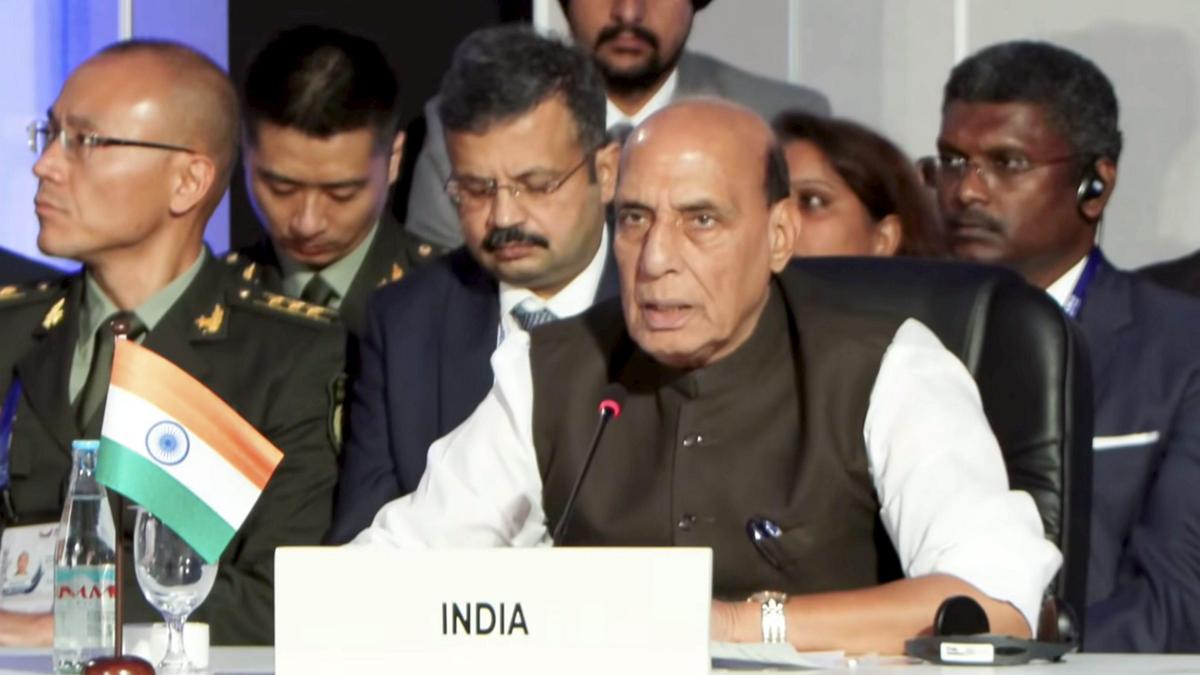
Photo from the source report: India at ADMM-Plus: Counter-Terrorism, Act East and Indo-Pacific Security
Image: The Hindu
Why in news
India presented its counter-terrorism and maritime security priorities at ADMM-Plus and proposed a dedicated defence Youth Bridge. India and Malaysia are co-chairing the forum’s Experts’ Working Group on Counter-Terrorism for the 2024-2027 cycle.
13th
ADMM-Plus meeting in Cebu
2024-2027
India-Malaysia counter-terrorism co-chair cycle
2026
ASEAN-India Year of Maritime Cooperation
Second
ASEAN-India Maritime Exercise reported
Since 2008
Indian Navy presence in Gulf of Aden
Background
India’s Act East policy connects engagement with Southeast Asia to wider economic, strategic and people-to-people cooperation. ASEAN occupies a central place in this approach. ADMM-Plus brings ASEAN defence ministers together with their dialogue partners—Australia, China, India, Japan, New Zealand, the Republic of Korea, Russia and the United States—for dialogue and practical security cooperation. Its Experts’ Working Groups facilitate cooperation in areas including counter-terrorism and maritime security. It is a cooperative defence platform, not a collective-defence alliance.
What India offered—and what remains a proposal
Rajnath Singh offered to share India’s operational counter-terrorism experience through joint exercises, capacity-building programmes and intelligence sharing. He cited Operation Sindoor as an illustration of India’s approach to state-sponsored terrorism; this was the Minister’s characterisation of the operation.
He also proposed a dedicated defence Youth Bridge with ASEAN to promote institutional people-to-people connectivity, digital innovation and capacity building. The reports record appreciation by ASEAN members, but do not establish a formally adopted framework, funding arrangement or implementation schedule.
- India’s offer concerns practical cooperation rather than a new collective-defence commitment.
- The India-Malaysia co-chairmanship provides an existing institutional channel for advancing counter-terrorism cooperation.
- Appreciation of the Youth Bridge proposal should not be confused with its formal operationalisation.
Infographic
Intelligence
Build trusted exchanges with secure channels and legal safeguards.
Capacity
Translate operational experience into partner-specific training.
Maritime security
Protect sea lanes through cooperation consistent with UNCLOS.
Youth Bridge
Develop the proposed institutional and digital innovation links.
ASEAN centrality
Keep cooperation inclusive and responsive to ASEAN priorities.
AI-assisted infographic by Pragnya IAS Academy, based on the cited sources.
Act East: From diplomatic engagement to operational cooperation
The proposals could give Act East a stronger practical security component. Joint training, institutional exchanges and capability support can make India’s partnership with Southeast Asia more useful to participating states while building confidence over time.
ADMM-Plus allows India to work through an ASEAN-led framework rather than present regional security solely through major-power competition. Its broad participation creates opportunities for functional cooperation, although competing strategic interests may constrain agreement on sensitive issues.
- ASEAN centrality requires meaningful ASEAN ownership of priorities, not merely rhetorical endorsement.
- Capacity-building programmes should respond to partner requirements rather than replicate Indian operational models unchanged.
- The proposed Youth Bridge could complement official defence engagement through sustained professional and institutional links.
Intelligence sharing and capacity building: Potential and safeguards
Terrorist networks can exploit cross-border movement, finance, communications and logistical support. Intelligence cooperation can help participating agencies connect fragmented information, identify risks earlier and support coordinated responses. Joint exercises can test communication channels and expose gaps in procedures.
However, experience-sharing is not the same as unrestricted access to intelligence. Effective cooperation depends on trust, compatible procedures and clear rules governing confidentiality, authorised use and protection of sources. Threat information intended for operational warning may also require further legal processing before it can support prosecution.
- A feasible starting point would be sharing threat assessments and sanitised information before moving towards more sensitive exchanges.
- Training could cover intelligence analysis, crisis response, digital evidence handling and inter-agency coordination.
- Cooperation should comply with domestic law, applicable international obligations and safeguards against misuse.
- Exercise findings should feed into revised procedures and follow-up training.
Maritime security: Connecting the Indian Ocean and Southeast Asia
Singh highlighted the ASEAN-India Year of Maritime Cooperation in 2026 and the conduct of the second ASEAN-India Maritime Exercise. He reiterated support for UNCLOS, freedom of navigation and overflight, and secure global sea lanes, presenting these as collective interests rather than measures directed against a particular country.
The Gulf of Aden provides an operational reference point: the Minister cited the Indian Navy’s uninterrupted presence there since 2008 and its protection of merchant shipping irrespective of flag or nationality. Such activities underpin India’s aspiration to be a reliable net security provider, but sustained capability and partner confidence remain essential.
Maritime security and counter-terrorism can reinforce each other through better situational awareness and information exchange. Nevertheless, piracy, terrorism and interstate maritime disputes have distinct legal characteristics and should not be treated as interchangeable threats.
- UNCLOS provides the principal legal framework for maritime zones and associated rights and duties.
- Navigation and overflight rights must be understood within the applicable legal regime, rather than as unlimited freedoms everywhere.
- Practical cooperation can include maritime information exchange, coordinated training and improved emergency response.
- ASEAN-led cooperation should accommodate differing national positions on regional maritime disputes.
| Cooperation area | Reported position | Requirement for effective implementation |
|---|---|---|
| Counter-terrorism | India offered operational experience, joint exercises and capacity building. | Partner-led priorities, agreed training objectives and follow-up assessment are needed. |
| Intelligence sharing | India offered to strengthen exchanges with ADMM-Plus partners. | Secure channels, confidentiality rules and lawful information use are essential. |
| Defence Youth Bridge | India proposed an initiative appreciated by ASEAN members. | Its scope, institutional partners and implementation arrangements remain to be specified. |
| Maritime cooperation | India highlighted the maritime cooperation year and the second ASEAN-India Maritime Exercise. | Sustained exercises and information exchange should respect applicable international law. |
| Regional security architecture | India reaffirmed ASEAN centrality and an inclusive, rules-based Indo-Pacific. | Cooperation must remain responsive to ASEAN priorities and avoid exclusive bloc logic. |
- 1. Identify shared threats and partner-specific capability gaps through the relevant working group.
- 2. Agree on authorised contact points, legal safeguards and information-handling procedures.
- 3. Begin with threat assessments, training exchanges and scenario-based exercises.
- 4. Test secure communications and coordinated responses during joint activities.
- 5. Review lessons and update training, procedures and future cooperation priorities.
2008 onwards
The Indian Navy maintained an uninterrupted operational presence in the Gulf of Aden, according to the Minister’s address.
2024-2027
India and Malaysia co-chair the ADMM-Plus Experts’ Working Group on Counter-Terrorism.
2026
India designated the year as the ASEAN-India Year of Maritime Cooperation; the Minister also reported the conduct of the second ASEAN-India Maritime Exercise.
October 29, 2026
At the 13th ADMM-Plus in Cebu, India offered deeper counter-terrorism cooperation and proposed a defence Youth Bridge.
Significance, challenges & way forward
Significance
- The proposals could make Act East more operational by linking diplomacy with defence training and institutional cooperation.
- India’s counter-terrorism co-chairmanship offers a channel for converting national experience into shared regional capabilities.
- Intelligence exchange could improve early warning against cross-border terrorist networks where partners agree on threats and safeguards.
- Maritime cooperation supports the security of sea lanes connecting the Indian Ocean with Southeast Asia.
- An ASEAN-led approach can strengthen India’s regional credibility without requiring an alliance-based security arrangement.
Challenges
- Different threat perceptions and political sensitivities may limit agreement on terrorist actors and state support for terrorism.
- Intelligence agencies may hesitate to share information because of source protection, leakage risks and concerns about subsequent use.
- Uneven institutional and technical capacities can reduce the effectiveness of joint training and information exchange.
- Major-power rivalry and differing positions on the South China Sea can complicate broader defence cooperation.
- The Youth Bridge proposal requires defined objectives and institutional arrangements before its practical value can be assessed.
- India must sustain resources and operational readiness if its net security provider role is to remain credible.
Way forward
- Use the India-Malaysia co-chairmanship to develop a partner-driven counter-terrorism work programme with clear deliverables.
- Adopt graduated intelligence sharing, beginning with less-sensitive threat assessments and expanding as trust develops.
- Establish secure communication procedures and rules for authorised access, confidentiality and lawful information use.
- Design capacity-building modules around local requirements and evaluate whether training improves operational procedures.
- Develop the proposed Youth Bridge through agreed institutional partnerships and clearly defined areas of digital innovation.
- Link maritime exercises with information exchange and response preparedness while keeping distinct legal mandates clear.
- Measure cooperation through improved coordination and sustained institutional links rather than declarations alone.
Key terms
- ADMM-Plus
- An ASEAN-led platform bringing ASEAN defence ministers and dialogue partners together for defence dialogue and practical security cooperation.
- ASEAN centrality
- The principle that ASEAN should retain a leading convening and agenda-shaping role in regional cooperation.
- Act East policy
- India’s approach to deepening economic, strategic and cultural engagement with Southeast Asia and the wider eastern neighbourhood.
- Capacity building
- Strengthening personnel, institutions, skills and procedures so partners can perform security functions more effectively.
- Interoperability
- The ability of different forces or agencies to communicate and work together effectively.
- Maritime domain awareness
- Understanding activities and developments in the maritime domain that may affect security, safety, the economy or the environment.
- Net security provider
- A state that contributes to wider regional security through capabilities and assistance beyond its immediate self-defence needs.
- UNCLOS
- The United Nations Convention on the Law of the Sea, which establishes the legal framework for maritime zones and related rights and duties.
Link with static syllabus
Prelims practice MCQs
Q1. With reference to ADMM-Plus, consider the following statements: 1. It is an ASEAN-led platform for defence dialogue and practical security cooperation. 2. It imposes an automatic collective-defence obligation on its participants. 3. India and Malaysia co-chair its Experts’ Working Group on Counter-Terrorism for the 2024-2027 cycle. Which of the statements given above are correct?
Q2. Consider the following statements regarding India’s defence Youth Bridge proposal: 1. It seeks to strengthen institutional people-to-people connectivity with ASEAN countries. 2. Digital innovation and capacity building are among its intended areas of engagement. 3. The supplied reports confirm a formally adopted implementation schedule. Which of the statements given above are correct?
Q3. Which of the following best describes ASEAN centrality in the regional security architecture?
Q4. With reference to maritime security, consider the following statements: 1. UNCLOS provides a legal framework for maritime zones and associated rights and duties. 2. Piracy, terrorism and interstate maritime disputes are legally interchangeable categories. 3. Maritime domain awareness can support cooperation without creating a collective-defence alliance. Which of the statements given above are correct?
Mains practice questions
GS 2 · 15 marks · 250 words
Assess how India’s proposed counter-terrorism cooperation at ADMM-Plus can strengthen its Act East policy. Discuss the opportunities and constraints relating to intelligence sharing, capacity building and maritime security.
Frequently asked questions
What did India propose at the Cebu ADMM-Plus meeting?
India offered counter-terrorism cooperation through joint exercises, capacity building and intelligence sharing. It also proposed a defence Youth Bridge with ASEAN focused on institutional connectivity, digital innovation and capacity building.
How does ADMM-Plus support India’s Act East policy?
It provides an ASEAN-led platform for translating diplomatic engagement into practical defence cooperation. Training, information exchange and maritime exercises can deepen institutional trust and regional security partnerships.
Has the defence Youth Bridge been formally established?
The supplied reports describe an Indian proposal appreciated by ASEAN members. They do not confirm its formal establishment, funding or implementation schedule.
Is ADMM-Plus a military alliance?
No. It is a defence dialogue and cooperation mechanism and does not impose an automatic collective-defence obligation on participants.
Sources
- The Hindu: India ready to share battle-tested counter-terrorism expertise with ASEAN partners: Rajnath
- The Hindu: India ready to share 'battle-tested' anti-terror expertise with ASEAN, its dialogue partners: Rajnath Singh
Analysis prepared by the Pragnya IAS Academy current-affairs desk with AI assistance from the cited reports. Verify figures with the original sources.
Turn current affairs into marks
Join Pragnya IAS Academy's mentorship for daily answer-writing evaluation on stories like this — classroom programmes from a trusted name in IAS coaching in Hyderabad.