
India–Iran Humanitarian Air Route: Sanctions Exemptions and Strategic Autonomy
Revise the static topic: UPSC International Relations notes
In short: Iran has sought a direct air route from India for humanitarian medical supplies after Iran Air reportedly failed to obtain permission to transport medicines to Tehran over concerns about US sanctions. The dispute highlights the difference between humanitarian exemptions for medicines and sanctions-related restrictions affecting airlines, payments and logistics, creating a test for India’s strategic autonomy.
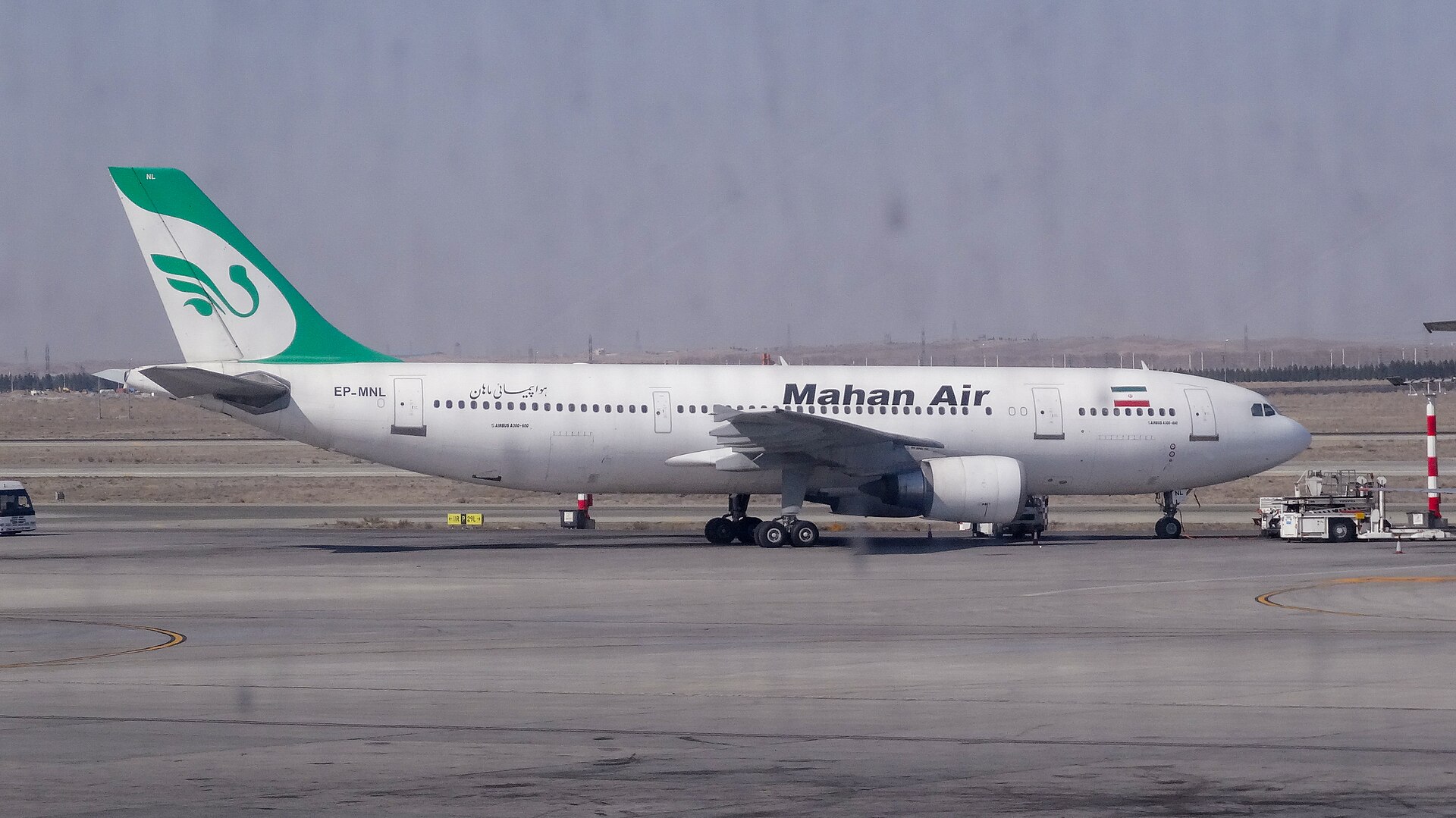
Reference view of a Mahan Air Airbus A300 at Imam Khomeini International Airport near Tehran in 2014. The aircraft is not operated by Iran Air, the airline named in the reported dispute over transporting medicines from India.
Image: Hansueli Krapf · CC BY-SA 4.0
Why in news
The Hindu reports that Iran is pressing India to prioritise direct medical deliveries rather than third-country transit. Iran also announced that its parliamentary Speaker would not attend the forthcoming BRICS Parliamentary Forum in New Delhi, although Indian official sources denied any connection with the medical-supply issue.
3 hours
Direct delivery time cited by Iran
24–48 hours
Indirect delivery time cited by Iran
Background
India and Iran share longstanding civilisational ties, while Iran’s location connects the Persian Gulf with overland routes towards Central Asia and the Caucasus. India’s engagement with Iran exists alongside its important relationship with the United States. Economic sanctions can target states, sectors, entities or individuals; humanitarian exemptions and authorisations seek to preserve access to essential goods, but their practical use depends on the applicable rules and the actors involved. BRICS provides a platform for political coordination, but membership does not itself create an exemption from sanctions.
What is being sought, and what remains disputed?
Iran wants India to operationalise a direct bilateral air route for humanitarian medical consignments. According to the report, Iran Air failed to secure permission to fly medicines from India because of concerns that Indian airport operators and other service providers could face US sanctions-related difficulties.
Indian official sources maintain that India is ready to supply medicines and that consignments can move through third countries such as Armenia and Oman. Iranian officials argue that indirect movement increases transit time and handling, and claim that some temperature-sensitive medicines became unusable during earlier deliveries.
The Iranian Embassy attributed Speaker Mohammad Baqer Ghalibaf’s absence from the BRICS Parliamentary Forum to unforeseen circumstances and confirmed that a parliamentary delegation would participate. The available material does not establish that the absence was retaliation over the air-route dispute.
- The reported bottleneck concerns direct transport and associated services, rather than a general Indian ban on supplying medicines to Iran.
- No agreement establishing a direct humanitarian route is reported in the supplied material.
- The reported loss of temperature-sensitive medicines is an Iranian official claim, not an independently verified finding in the source.
Infographic
Cargo eligibility
Confirm humanitarian coverage and conditions.
Compliant partners
Check carriers, banks, insurers and recipients.
Reliable logistics
Protect the cold chain and minimise delays.
Diplomatic coordination
Resolve uncertainty through targeted engagement.
Verified outcomes
Document usable delivery and intended end use.
AI-assisted infographic by Pragnya IAS Academy, based on the cited sources.
Humanitarian exemptions: goods and delivery chains are different
Iran’s assertion that humanitarian assistance is outside sanctions expresses its position; it should not be treated as proof that every transaction involving medicines is automatically permitted. Sanctions compliance requires examination of the goods, counterparties, transport providers, financial intermediaries and services involved.
An exemption excludes specified activity from a prohibition, while a licence authorises activity under stated conditions. Even where medicines qualify for humanitarian treatment, dealings with a sanctioned carrier or financial institution may require separate scrutiny or authorisation. The source does not identify the precise legal provisions governing this proposed shipment.
US sanctions and United Nations Security Council sanctions are distinct legal frameworks. Concerns about exposure to US restrictions should not be presented as proof of a universal international prohibition on the medical consignment.
- Cargo eligibility does not automatically establish carrier or payment-channel eligibility.
- The legal effect of any exemption depends on the applicable sanctions programme and its conditions.
- Uncertainty can produce overcompliance, where firms avoid otherwise permissible humanitarian business.
Why logistics can determine humanitarian outcomes
For temperature-sensitive medicines, delivery quality matters as much as dispatch. Storage conditions, customs delays, road transit and repeated cargo transfers can compromise the cold chain unless properly managed.
An Iranian official cited a direct journey of three hours compared with indirect delivery taking 24–48 hours. These are source-attributed estimates, not universal transit times. A direct flight could reduce handling, but would still require appropriate packaging, monitoring and timely clearance.
- A consignment is not an effective humanitarian delivery if it arrives unusable.
- Third-country routing should be assessed for medicine integrity as well as sanctions compliance.
- Temperature records and documented handovers can help verify whether the cold chain remained intact.
India’s strategic autonomy and the BRICS dimension
India faces a practical balancing problem: preserving humanitarian supplies and confidence with Iran while managing sanctions exposure for Indian commercial entities and its wider relationship with the United States. Strategic autonomy requires an independent assessment of national interests, legal constraints and feasible delivery options, rather than either automatic compliance with external pressure or disregard of commercial risk.
Iran’s appeal to shared BRICS membership raises expectations of solidarity. However, BRICS cannot by itself remove sanctions restrictions or compel airlines, insurers and banks to participate. Its useful role would be to facilitate consultation and promote workable humanitarian arrangements.
A credible Indian response would combine diplomatic engagement with transaction-specific legal clarity and reliable medical logistics. This would move the discussion beyond the false choice between abandoning humanitarian supplies and ignoring sanctions risks.
- Humanitarian assistance and commercial risk management should be addressed together.
- Political assurances need operational support from aviation, customs, banking and pharmaceutical stakeholders.
- The Speaker’s absence should not be interpreted as a confirmed diplomatic rupture.
| Layer | Key question | Policy implication |
|---|---|---|
| Medical cargo | Does the consignment qualify under relevant humanitarian provisions? | Verify product classification and applicable conditions. |
| Airline and airport services | Are the carrier or related dealings restricted? | Assess permissions independently of the cargo’s humanitarian character. |
| Payments and insurance | Can the transaction use compliant financial and insurance channels? | Obtain clarity before dispatch to avoid blocked transactions. |
| Transit and cold chain | Will the medicines remain usable throughout delivery? | Validate storage, handling, route and customs arrangements. |
| Recipient and end use | Can delivery to the intended medical recipient be documented? | Maintain traceability and safeguards against diversion. |
- 1. Identify medical need, recipient and storage requirements.
- 2. Check cargo, carrier, intermediaries and payment arrangements against applicable restrictions.
- 3. Seek necessary clarification or authorisation from relevant authorities.
- 4. Select a legally viable route with validated cold-chain arrangements.
- 5. Coordinate customs clearance, monitored transport and documented handovers.
- 6. Verify receipt, medicine integrity and intended end use.
19 October 2026
Iran Air’s managing director publicly stated that the airline had failed to obtain permission to fly medicines from India and Singapore.
24 October 2026
Iran’s Embassy announced that Speaker Mohammad Baqer Ghalibaf would not attend the BRICS Parliamentary Forum, while confirming participation by an Iranian delegation.
26–27 October 2026
The BRICS Parliamentary Forum meeting in New Delhi is scheduled to take place.
Significance, challenges & way forward
Significance
- The dispute demonstrates that humanitarian access depends on functioning transport and financial channels, not merely exemptions on paper.
- Reliable medicine deliveries would help sustain trust in India–Iran relations.
- The issue tests India’s ability to exercise strategic autonomy through practical, legally informed diplomacy.
- BRICS faces a credibility challenge when expectations of humanitarian cooperation exceed its operational capabilities.
Challenges
- Uncertainty about the interaction between humanitarian provisions and restrictions on particular entities can discourage service providers.
- Banks, insurers and logistics firms may avoid permissible transactions because of perceived enforcement or reputational risks.
- Indirect routes can increase cargo handling and make cold-chain management more demanding.
- Political messaging may obscure the distinction between willingness to supply medicines and permission to use a particular airline.
- The supplied report does not establish the precise legal basis for refusing direct carriage, limiting definitive conclusions about its necessity.
Way forward
- India should seek transaction-specific legal clarification on the proposed cargo, airline, airport services and payment arrangements.
- Where required, relevant parties should pursue humanitarian authorisations rather than assume that medical cargo removes all restrictions.
- A direct route using a legally permissible operator should be examined without presuming that Iran Air is the only possible carrier.
- Where indirect routing remains necessary, validated cold-chain packaging, priority clearance and temperature monitoring should protect medicine integrity.
- India and Iran should establish a technical coordination mechanism linking diplomatic, aviation, pharmaceutical and logistics stakeholders.
- Public communication should distinguish verified restrictions from perceived risks and avoid unsupported claims about diplomatic retaliation.
Key terms
- Humanitarian exemption
- A provision excluding specified humanitarian goods or activities from particular sanctions prohibitions.
- Sanctions licence
- An authorisation allowing specified transactions under a sanctions regime, subject to applicable conditions.
- Secondary sanctions
- Measures that can expose third-country actors to restrictions for specified dealings with sanctioned parties or sectors.
- Overcompliance
- Avoidance of activity beyond what sanctions legally require, often because of uncertainty or perceived risk.
- Cold chain
- A temperature-controlled storage and distribution system that preserves sensitive products throughout delivery.
- Strategic autonomy
- The capacity to make foreign-policy choices independently according to national interests.
- OFAC
- The Office of Foreign Assets Control, a US Treasury office that administers and enforces US economic and trade sanctions.
Link with static syllabus
Prelims practice MCQs
Q1. With reference to humanitarian exemptions under sanctions regimes, consider the following statements: 1. An exemption covering medicines necessarily permits all dealings with any airline carrying them. 2. The carrier, payment channel and recipient may require examination even when the cargo is humanitarian. Which of the statements given above is/are correct?
Q2. Consider the following statements regarding sanctions and international groupings: 1. US sanctions and United Nations Security Council sanctions are identical legal frameworks. 2. BRICS membership automatically exempts a member’s airlines from US sanctions. Which of the statements given above is/are correct?
Q3. Which one of the following countries shares a land border with Iran and was identified in the report as a transit option for Indian medicines?
Q4. With reference to pharmaceutical cold chains, consider the following statements: 1. They involve temperature-controlled storage as well as transport. 2. Repeated cargo transfers can create risks unless handling conditions are controlled. 3. A direct flight eliminates the need for temperature monitoring. Which of the statements given above are correct?
Mains practice questions
GS 2 · 15 marks · 250 words
Humanitarian exemptions from sanctions are meaningful only when supported by workable delivery channels. Discuss in the context of Iran’s request for a direct medical air route from India and India’s strategic autonomy.
Frequently asked questions
Has India stopped supplying medicines to Iran?
The report does not establish a general halt. Indian official sources say medicines continue to move through third countries and that India remains ready to supply them.
Are humanitarian medicines automatically free from all sanctions-related restrictions?
No. Humanitarian provisions may permit the goods, but restrictions involving carriers, financial channels or other parties must still be assessed under the applicable regime.
Why does Iran prefer a direct route?
Iran argues that direct delivery reduces transit time and cargo transfers, helping protect temperature-sensitive medicines. Its officials claim that some consignments deteriorated during previous indirect deliveries.
Did Iran’s Speaker cancel his visit because of the dispute?
That connection is not established. The Iranian Embassy cited unforeseen circumstances, while Indian official sources denied a link with the medicine-supply bottleneck.
Sources
- The Hindu: Iran Speaker to skip BRICS meet, as Iran seeks bilateral air route for ‘humanitarian aid’ from India
Analysis prepared by the Pragnya IAS Academy current-affairs desk with AI assistance from the cited reports. Verify figures with the original sources.
Turn current affairs into marks
Join Pragnya IAS Academy's mentorship for daily answer-writing evaluation on stories like this — classroom programmes from a trusted name in IAS coaching in Hyderabad.