
India–New Zealand FTA: Market Access, Sensitive Sectors and Indo-Pacific Stakes
Revise the static topic: UPSC International Relations notes
In short: The supplied Pragativadi and Construction World headlines report that the India–New Zealand Free Trade Agreement has come into force. Its significance lies in potentially widening bilateral market access and strengthening economic engagement in the Indo-Pacific, but the supplied material does not establish its tariff commitments, sensitive-sector safeguards or implementation date.
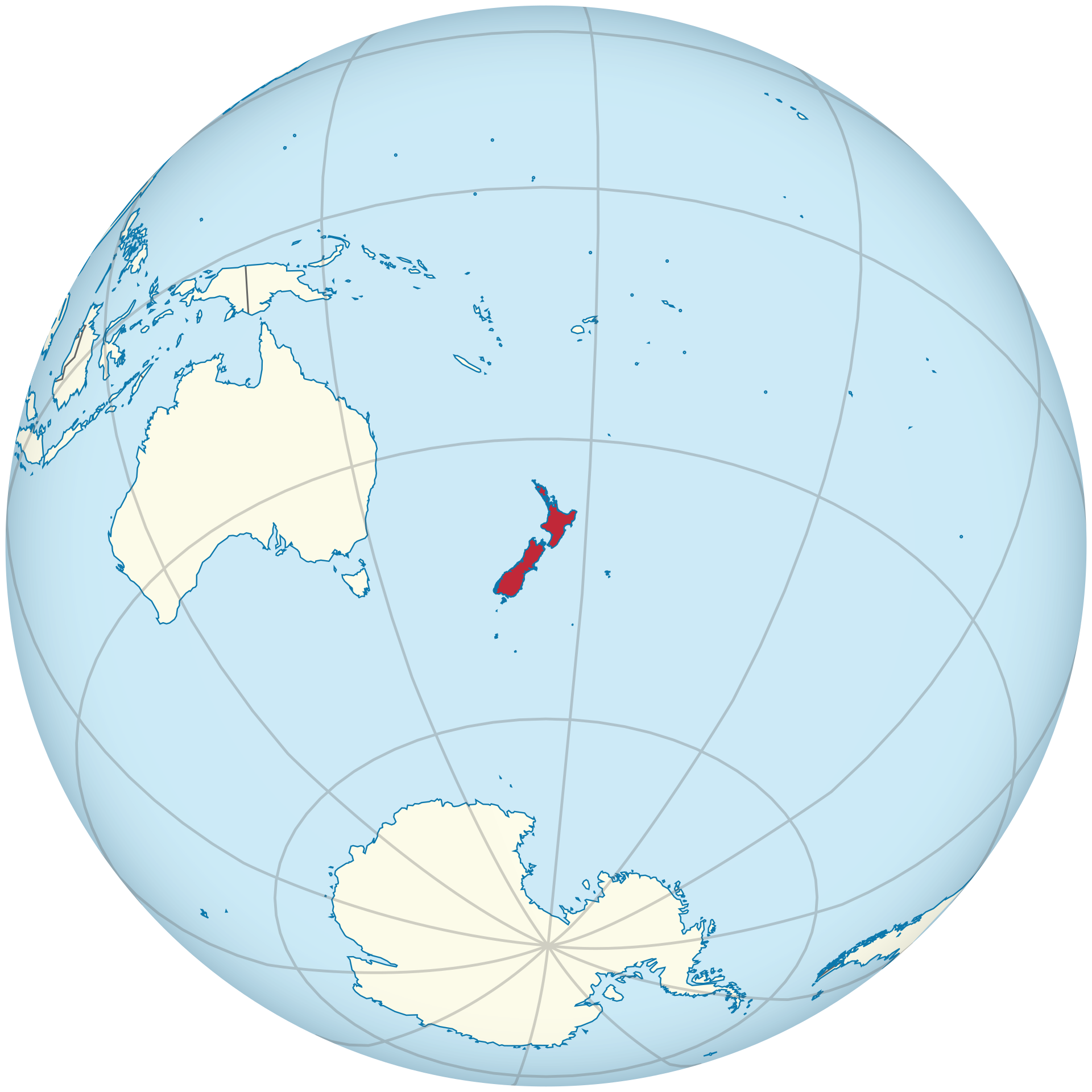
Globe map locating New Zealand in the South Pacific, providing geographic context for the article’s discussion of India–New Zealand trade and Indo-Pacific engagement.
Image: TUBS · CC BY-SA 3.0
Why in news
Pragativadi and Construction World have reported the agreement’s entry into force. The supplied extracts contain only headlines and links, so agreement-specific provisions require verification against the official treaty text, schedules and implementing notifications.
Background
A free trade agreement grants negotiated preferences between participating economies while generally allowing each partner to retain its own external tariffs towards non-members. India and New Zealand are WTO members. New Zealand participates in both the Regional Comprehensive Economic Partnership and the Comprehensive and Progressive Agreement for Trans-Pacific Partnership; India is a member of neither. Their differing economic structures make market access, agricultural sensitivities, standards and services important areas for assessing a bilateral trade arrangement.
What the available sources establish
Both supplied headlines report that the agreement has taken effect. However, neither extract supplies an official commencement date, tariff schedule, product exclusions, services commitments or safeguard clauses. The report should therefore be distinguished from a verified account of the agreement’s legal obligations.
Entry into force is different from completion of negotiations or signature: it ordinarily means that an agreement has become legally operative under its own conditions. Domestic customs preferences must be assessed through the relevant implementing instruments; entry into force does not necessarily mean that every tariff concession applies immediately.
- Verify the treaty text and commencement notice before stating the agreement’s effective date.
- Read each partner’s tariff schedule separately because reciprocal commitments need not be identical.
- Distinguish immediate concessions from phased reductions and excluded products.
Infographic
Legal certainty
Verify commencement, official schedules and implementing instruments.
Usable market access
Assess tariffs alongside standards, logistics and services restrictions.
Sensitive-sector balance
Examine product treatment, adjustment needs and lawful protective tools.
Practical implementation
Make origin compliance and customs procedures accessible to smaller firms.
Indo-Pacific outcomes
Build commercial diversification without assuming regional-bloc access.
AI-assisted infographic by Pragnya IAS Academy, based on the cited sources.
Market access: assess effective access, not tariff announcements alone
For goods, the central questions are which products receive preferences, how quickly duties fall and whether quotas or exclusions apply. Since these details are absent from the supplied material, no sector-specific tariff benefit can be asserted.
Preferential tariffs create usable opportunities only when exporters meet rules of origin, product standards and customs requirements. Freight costs, certification expenses and access to buyers also influence whether a nominal concession translates into competitive exports.
If the agreement covers services, assessment should separately examine market-access commitments, regulatory restrictions, recognition of qualifications and temporary entry provisions. An FTA does not automatically provide unrestricted employment, migration or professional recognition.
- Measure commercial value through effective preference margins, compliance costs and actual utilisation.
- Examine sanitary and phytosanitary requirements for agricultural and food products.
- Check technical regulations, testing requirements and conformity-assessment procedures for manufactured goods.
- Treat services access and movement of professionals as schedule-dependent commitments, not automatic outcomes.
Sensitive sectors: protection must be precise and legally usable
Dairy is an important sensitivity to examine because New Zealand is an established dairy exporter, while Indian dairying supports numerous small producers and cooperative institutions. This structural concern does not establish whether dairy has been included, excluded or given special treatment under the reported agreement.
Possible negotiating instruments include exclusions, longer transition periods, tariff-rate quotas and bilateral safeguards. Their functions differ: an exclusion withholds a concession, a transition delays adjustment, a tariff-rate quota limits access at a preferential rate, and a safeguard provides conditional temporary relief.
Safeguards must not be confused with anti-dumping or countervailing measures. A safeguard addresses qualifying import-related injury under applicable rules; anti-dumping addresses dumped imports, while countervailing action concerns subsidised imports. None of these instruments should be presumed available on terms not established by the relevant legal text.
- Assess exposure at the product level rather than treating all agriculture as equally vulnerable.
- Examine safeguard triggers, injury requirements, duration and investigation procedures.
- Pair calibrated protection with productivity, quality infrastructure and adjustment assistance.
- Account for consumer and downstream-industry gains alongside producer vulnerabilities.
Legal architecture and Indo-Pacific implications
Within the WTO framework, goods FTAs are assessed principally under GATT Article XXIV, while services economic integration agreements fall under GATS Article V. Preferential liberalisation therefore operates within an international legal framework rather than outside the multilateral trading system.
In India, treaty-making falls within the Union executive’s constitutional sphere. Article 253 empowers Parliament to legislate for implementing treaties and international agreements; whether fresh legislation is needed depends on the obligations involved and existing domestic law.
Strategically, a workable agreement could add economic substance to India’s engagement with a Pacific partner and diversify commercial relationships. However, a bilateral FTA does not give India membership of New Zealand’s regional trade agreements or automatically extend their preferences to Indian goods. Supply-chain gains depend on investment, logistics, regulatory compatibility and applicable origin rules.
- Complement bilateral preferences with WTO-consistent rules and transparent implementation.
- Avoid equating an economic agreement with a security alliance or regional-bloc membership.
- Judge strategic success through sustained commercial use rather than the announcement alone.
| Instrument or issue | What to verify and why it matters |
|---|---|
| Tariff schedules | Product coverage, reduction paths and exclusions determine the actual scope and timing of goods access. |
| Rules of origin | Product-specific requirements determine eligibility and help prevent transshipment-based misuse. |
| Tariff-rate quotas | Where provided, quota volumes and administration determine access at the lower tariff. |
| Bilateral safeguards | Where provided, triggers and procedures determine whether temporary relief is practically usable. |
| Standards and certification | SPS and technical requirements influence whether exporters can use tariff concessions. |
| Services schedules | Sectoral commitments and reservations determine access; professional recognition and mobility require separate examination. |
- 1. Confirm that the agreement and relevant domestic preference notification are operative.
- 2. Identify the product’s tariff classification and applicable concession.
- 3. Check the product-specific rules of origin.
- 4. Obtain the required origin documentation and meet standards requirements.
- 5. Claim preferential treatment through the prescribed customs procedure.
- 6. Retain records for verification under applicable rules.
Significance, challenges & way forward
Significance
- Usable preferences could diversify export markets and commercial relationships for Indian businesses.
- Predictable rules could encourage investment and longer-term sourcing arrangements.
- Lower trade costs could benefit consumers and industries using imported inputs, depending on product coverage and price transmission.
- A commercially effective agreement could strengthen the economic dimension of India’s Indo-Pacific engagement.
- The agreement’s implementation could demonstrate how India balances external liberalisation with livelihood-sensitive domestic interests.
Challenges
- The supplied material does not permit verification of the agreement’s legal scope, commencement date or sectoral commitments.
- Import competition could impose concentrated adjustment costs on vulnerable producers if sensitive products are liberalised.
- Complex origin documentation and certification costs can discourage smaller firms from claiming preferences.
- Distance, logistics costs and regulatory differences can weaken the commercial value of tariff concessions.
- Restrictive origin rules can reduce utilisation, while weak verification can facilitate circumvention.
- Expectations of employment access or entry into regional trading blocs may exceed what a bilateral agreement actually provides.
Way forward
- Publish accessible official texts, product-level schedules, commencement information and implementation guidance.
- Prepare sector-wise assessments covering export opportunities, import exposure, employment and consumer effects.
- Design any sensitive-sector protection around clear objectives, workable procedures and periodic review.
- Support smaller exporters through origin-rule guidance, testing facilities and customs assistance.
- Pursue regulatory cooperation without weakening legitimate food-safety, health or environmental protections.
- Monitor preference utilisation, import surges and adjustment outcomes through transparent institutional review.
Key terms
- Free trade agreement
- An arrangement providing negotiated trade preferences between members, generally without a common external tariff.
- Preference margin
- The difference between the ordinary applicable tariff and the preferential tariff available under a trade arrangement.
- Rules of origin
- Criteria used to determine a product’s origin and eligibility for preferential treatment.
- Tariff-rate quota
- A system applying a lower tariff within a specified import quantity and a higher tariff beyond it.
- Safeguard
- A temporary protective measure against qualifying import-related injury, subject to the applicable legal conditions.
- Sanitary and phytosanitary measures
- Measures protecting human, animal or plant life or health against specified food-safety, pest and disease risks.
- Preference utilisation
- The extent to which eligible trade actually claims available preferential treatment.
Link with static syllabus
Prelims practice MCQs
Q1. With reference to free trade areas, consider the following statements: 1. Members generally retain their own external tariffs towards non-members. 2. Preferential rules of origin help determine eligibility for tariff concessions. 3. Every free trade agreement necessarily grants unrestricted movement of workers. Which of the statements given above are correct?
Q2. Which of the following best describes a tariff-rate quota?
Q3. Consider the following pairs: 1. GATT Article XXIV — Goods-related regional trade arrangements 2. GATS Article V — Economic integration agreements in services 3. Article 253 of the Constitution of India — Parliamentary legislation to implement international agreements How many of the above pairs are correctly matched?
Q4. With reference to regional economic integration, consider the following statements: 1. New Zealand participates in both RCEP and CPTPP. 2. A bilateral FTA with New Zealand would automatically make India a member of RCEP. Which of the statements given above is/are correct?
Mains practice questions
GS 2 · 15 marks · 250 words
In the context of reports of an India–New Zealand Free Trade Agreement entering into force, examine how India can reconcile market-access opportunities with sensitive-sector protection and its Indo-Pacific economic objectives.
Frequently asked questions
Has the India–New Zealand FTA come into force?
Both supplied news headlines report that it has. However, the extracts provide no official commencement notice or implementation date, so the legal position cannot be independently established from this material alone.
Does the agreement provide duty-free access for dairy products?
The supplied material does not establish the treatment of dairy. Its inclusion, exclusion or conditional access must be checked in the official product schedules.
Will a bilateral FTA give India access to RCEP or CPTPP preferences?
Not automatically. Membership and preferential eligibility under those agreements remain governed by their own accession provisions and rules.
Why do rules of origin matter even when tariffs are reduced?
They determine which products qualify for the negotiated preference and help prevent misuse through transshipment. Exporters must meet the applicable origin and documentation requirements to claim benefits.
Sources
- International Relations: Landmark India–New Zealand Free Trade Agreement Comes into Force - Pragativadi
- International Relations: India-New Zealand Free Trade Agreement Takes Effect - Construction World
Analysis prepared by the Pragnya IAS Academy current-affairs desk with AI assistance from the cited reports. Verify figures with the original sources.
Turn current affairs into marks
Join Pragnya IAS Academy's mentorship for daily answer-writing evaluation on stories like this — classroom programmes from a trusted name in IAS coaching in Hyderabad.