
Maharashtra Women Farmers’ Bill: Recognition Beyond Land Ownership
Revise the static topic: UPSC Agriculture notes · UPSC Economy notes
In short: Maharashtra passed the Women Farmers’ Empowerment Bill in July 2026, providing independent recognition to women farmers irrespective of land ownership through a Woman Farmer Certificate. The reform addresses the exclusion arising from equating farming with landownership, but effective access to credit, extension services and welfare will depend on implementation and scheme-specific eligibility rules.
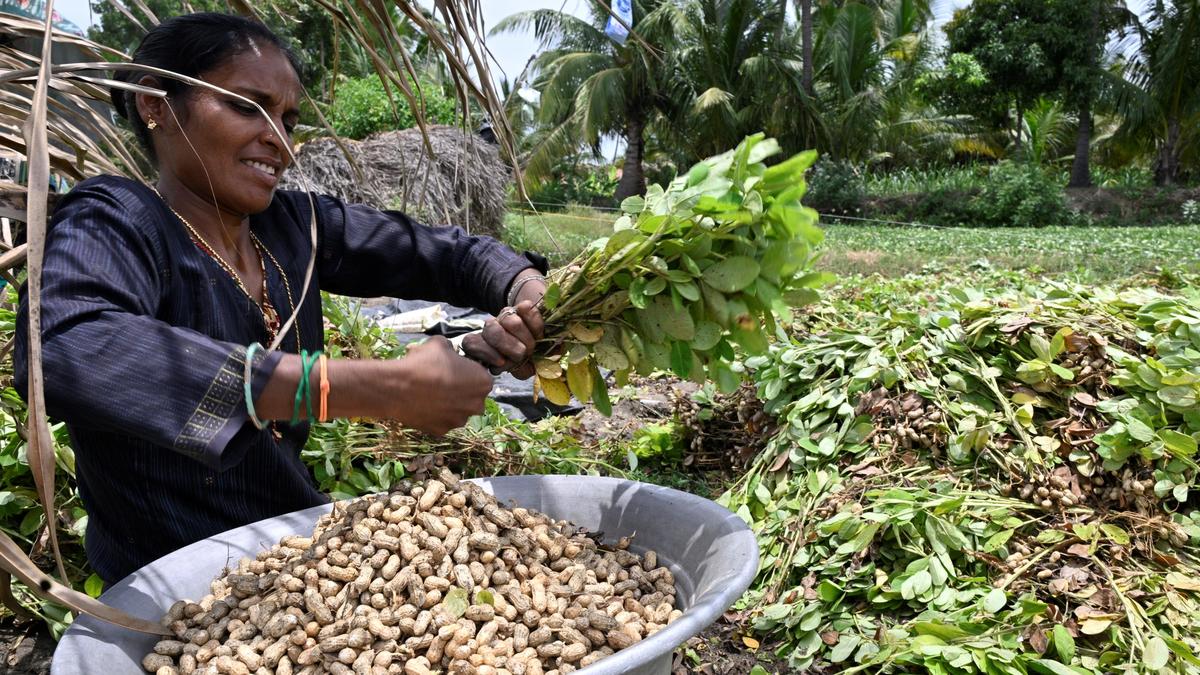
Reference image accompanying reporting on recognition of women farmers—not a photograph of the Maharashtra bill’s passage.
Image: The Hindu
Why in news
The Hindu’s analysis highlights Maharashtra’s Bill as a move towards activity-based recognition of women farmers. It emphasises the need for a database of women farmers and its use in improving access to welfare schemes.
Roughly 110 million
Women employed in rural agriculture in 2025
Roughly 127 million
Men employed in rural agriculture in 2025
Background
Agricultural work, operational control over cultivation and legal ownership of land are distinct. Women may contribute to production and farm decisions without holding land titles, making ownership-based identification an incomplete measure of who farms. The National Policy for Farmers, 2007 articulated an activity-based understanding of farmers. Agricultural extension provides knowledge and advisory support, while institutional credit and welfare programmes operate through their respective eligibility frameworks. Recognising women as farmers can strengthen their visibility within these systems, but recognition must be distinguished from ownership rights and entitlement to any particular benefit.
What the Bill changes—and what remains unverified
According to the supplied report, Maharashtra passed the Women Farmers’ Empowerment Bill in July 2026. Its central feature is independent recognition of women as farmers irrespective of land ownership, through a Woman Farmer Certificate.
The Hindu describes it as the first Indian State legislation giving enforceable legal form to the activity-based, land-delinked definition articulated in the National Policy for Farmers, 2007. This is a shift from identifying the farmer primarily through an asset to recognising her agricultural activity.
The supplied material establishes passage of the Bill, but does not provide details of assent, commencement, implementing rules or certificate procedures. It does not establish automatic entitlement to loans or welfare benefits, nor does the reported recognition itself establish a transfer of landownership.
- Verified feature: a Woman Farmer Certificate enabling recognition independent of land ownership.
- Unverified details: issuing authority, application requirements, appeals mechanism and scheme-wise benefits.
- Exam distinction: passage, commencement and operational implementation are separate stages.
Infographic
Recognition
Identify women through agricultural activity, not ownership alone.
Visibility
Build an inclusive, accurate and protected farmer database.
Access
Align recognition with credit, extension and welfare systems.
Agency
Assess women’s ability to receive, use and control benefits.
Rights
Complement recognition with stronger property and tenure rights.
AI-assisted infographic by Pragnya IAS Academy, based on the cited sources.
Why ownership-based identification creates gender exclusion
The report cites roughly 110 million women and 127 million men employed in rural agriculture in 2025, using PLFS-based, Census-adjusted estimates. These are employment estimates, not counts of landowners or certificate beneficiaries.
When administrative systems treat land records as the principal evidence of being a farmer, women who actually cultivate or make agricultural decisions can remain invisible. Recognition through a household’s male landowner may also fail to establish women’s independent identity in service delivery.
An activity-based database could make women’s contribution visible and help identify service gaps. Its usefulness, however, depends on inclusive verification, regular updating and safeguards against exclusion.
- Participation in agricultural production does not necessarily imply ownership of agricultural land.
- Household-level coverage does not necessarily ensure that women directly receive or control benefits.
- A database should support inclusion rather than become another documentary barrier.
How recognition can improve credit, extension and welfare
Credit: An independent farmer identity can help women establish their occupational status when approaching financial institutions. It cannot, by itself, supply collateral, establish repayment capacity or override lending rules. Appropriate credit products and bank-level acceptance are therefore essential complements.
Extension: Recognition can allow agricultural departments to contact women directly for training, advisories and demonstrations rather than treating them as secondary household participants. Delivery must also address constraints relating to time, mobility, literacy and access to communication devices.
Welfare: A reliable database can help identify eligible women and track whether benefits reach them. However, programmes with landholding-based conditions will require changes by the competent authority where broader coverage is intended; certification alone cannot amend those conditions.
- Credit access requires recognition, suitable financial products and effective institutional coordination.
- Extension must treat women as agricultural decision-makers, not merely as recipients of household information.
- Welfare integration should distinguish enrolment, actual receipt and women’s control over benefits.
Constitutional basis and the limits of recognition
Article 14 provides the equality framework, while Article 15(3) permits special provisions for women and children. Article 39(a) directs the State towards securing an adequate means of livelihood for men and women equally. These provisions support a substantive-equality approach that addresses barriers rather than assuming identical starting conditions.
Agriculture and land fall principally within the State List, whereas banking is a Union List subject. State-level recognition can improve agricultural administration, but changes affecting lending practices or centrally governed schemes require coordination with the relevant institutions.
Recognition and property rights are complementary, not interchangeable. Delinking farmer identity from ownership can address immediate service exclusion, while women’s access to inheritance, secure tenure and ownership remains important for longer-term economic agency.
- Article 15(3) permits targeted provisions for women; it does not itself create a particular scheme entitlement.
- Farmer certification should not be presented as a substitute for women’s property rights.
- Federal coordination is necessary where State recognition intersects with banking and national programmes.
| Dimension | Meaning | Implication |
|---|---|---|
| Farmer recognition | Acknowledgement of agricultural activity | Can establish independent occupational identity without requiring ownership |
| Landownership | Legal rights over land | Is not established merely by farmer certification |
| Credit eligibility | Compliance with applicable lending conditions | Requires more than occupational recognition |
| Welfare entitlement | Eligibility under a particular programme | Depends on that programme’s rules |
| Effective empowerment | Ability to access services and exercise economic agency | Must be assessed beyond certificates issued |
- 1. Identify women engaged in agricultural activity through accessible outreach.
- 2. Verify activity through inclusive evidence that does not make landownership mandatory.
- 3. Provide independent certification and maintain an updated, protected database.
- 4. Align recognition with applicable credit, extension and welfare eligibility frameworks.
- 5. Deliver services directly and provide accessible grievance redress.
- 6. Assess actual benefit receipt, service access and women’s decision-making agency.
2007
The National Policy for Farmers articulated an activity-based, land-delinked definition of farmer, according to the report.
2011
A comparable national-level Bill was introduced in the Rajya Sabha; the source describes it as having lapsed.
July 2026
Maharashtra passed the Women Farmers’ Empowerment Bill, providing recognition through a Woman Farmer Certificate irrespective of land ownership.
Significance, challenges & way forward
Significance
- Independent recognition challenges the assumption that the farmer is necessarily the male landowner.
- Activity-based identification can improve the visibility of women excluded from ownership-centred administrative systems.
- Direct engagement with women can improve the targeting and relevance of agricultural extension.
- A reliable database can support gender-responsive planning and reveal gaps between eligibility and actual benefit receipt.
- The reform creates an opportunity to connect agricultural policy with substantive gender equality.
Challenges
- Recognition may remain largely symbolic if programme rules and administrative practices continue to exclude non-owning cultivators.
- Women without formal records of agricultural activity may face difficulties proving eligibility.
- Certification cannot by itself overcome collateral constraints, unsuitable loan products or limited access to banking.
- Digital-only enrolment and communication can exclude women facing connectivity, literacy or device-access barriers.
- Local verification may reproduce existing social hierarchies unless it includes transparent safeguards and appeals.
- A farmer database can create privacy and exclusion risks if information is excessive, inaccurate or difficult to correct.
Way forward
- Clarify assent, commencement and implementing rules before presenting the Bill’s provisions as operational entitlements.
- Use multiple forms of activity-based evidence and provide assisted, offline registration.
- Audit scheme eligibility rules and amend them through the competent authorities where inclusion requires changes.
- Coordinate with banks, agricultural departments, self-help groups and producer organisations to translate recognition into services.
- Offer extension at accessible locations and timings, with content suited to women’s agricultural responsibilities.
- Provide data-correction facilities, accessible appeals and safeguards for personal information.
- Measure outcomes through credit access, advisory use, benefit receipt and women’s agency while continuing efforts to strengthen property rights.
Key terms
- Activity-based farmer recognition
- Identification of a person through agricultural activity rather than landownership alone.
- Woman Farmer Certificate
- The instrument reported under Maharashtra’s Bill for recognising women farmers independently of land ownership.
- Agricultural extension
- Services that provide farmers with knowledge, skills and advice for agricultural decision-making.
- Substantive equality
- An approach to equality that addresses structural barriers rather than relying only on identical formal treatment.
- Institutional credit
- Credit supplied through formal financial institutions, including banks and cooperative credit institutions.
- Gender-responsive database
- An information system designed to make gender-specific participation, needs and service gaps visible.
Link with static syllabus
Prelims practice MCQs
Q1. With reference to Maharashtra’s Women Farmers’ Empowerment Bill as described in the supplied report, consider the following statements: 1. It provides independent recognition to women farmers irrespective of land ownership. 2. It uses a Woman Farmer Certificate for such recognition. 3. The report establishes automatic eligibility of certificate holders for all agricultural welfare schemes. Which of the statements given above are correct?
Q2. Which of the following constitutional provisions expressly permits the State to make special provisions for women and children?
Q3. Consider the following pairs concerning the Seventh Schedule: 1. Agriculture — State List 2. Land — Union List 3. Banking — State List How many of the pairs given above are correctly matched?
Q4. Consider the following statements: 1. Activity-based recognition can identify a woman as a farmer even when she does not own agricultural land. 2. Recognition as a farmer and legal ownership of agricultural land are distinct. 3. A farmer certificate necessarily substitutes for collateral under all agricultural lending arrangements. Which of the statements given above are correct?
Mains practice questions
GS 3 · 15 marks · 250 words
Independent recognition of women as farmers is necessary but insufficient for agricultural empowerment. Discuss in the context of Maharashtra’s Women Farmers’ Empowerment Bill.
Frequently asked questions
What is the central feature of Maharashtra’s Women Farmers’ Empowerment Bill?
It provides independent recognition to women farmers irrespective of land ownership through a Woman Farmer Certificate, according to the supplied report.
Does the Woman Farmer Certificate give ownership of agricultural land?
The reported provision concerns farmer recognition, not transfer of landownership. Occupational recognition and property rights are legally distinct.
Will certification automatically ensure loans and welfare benefits?
No automatic entitlement is established by the supplied material. Lending conditions and programme-specific eligibility rules must be addressed separately.
Has the Bill become operational?
The source confirms passage in July 2026 but does not provide information on assent, commencement or implementing rules. Operational status cannot be established from this material alone.
Sources
- The Hindu: Towards recognising women farmers
Analysis prepared by the Pragnya IAS Academy current-affairs desk with AI assistance from the cited reports. Verify figures with the original sources.
Turn current affairs into marks
Join Pragnya IAS Academy's mentorship for daily answer-writing evaluation on stories like this — classroom programmes from a trusted name in IAS coaching in Hyderabad.