
MeitY–Meta Advisory: Algorithmic Accountability and the Limits of State Intervention
Revise the static topic: UPSC Polity notes · UPSC Governance notes
In short: MeitY has asked Meta to review its recommendation systems, limit disproportionate amplification of potentially misleading content and provide context for posts about ongoing public events. The advisory raises a central governance question: how can the State address algorithm-driven public-order risks without using vague standards to suppress lawful political expression?
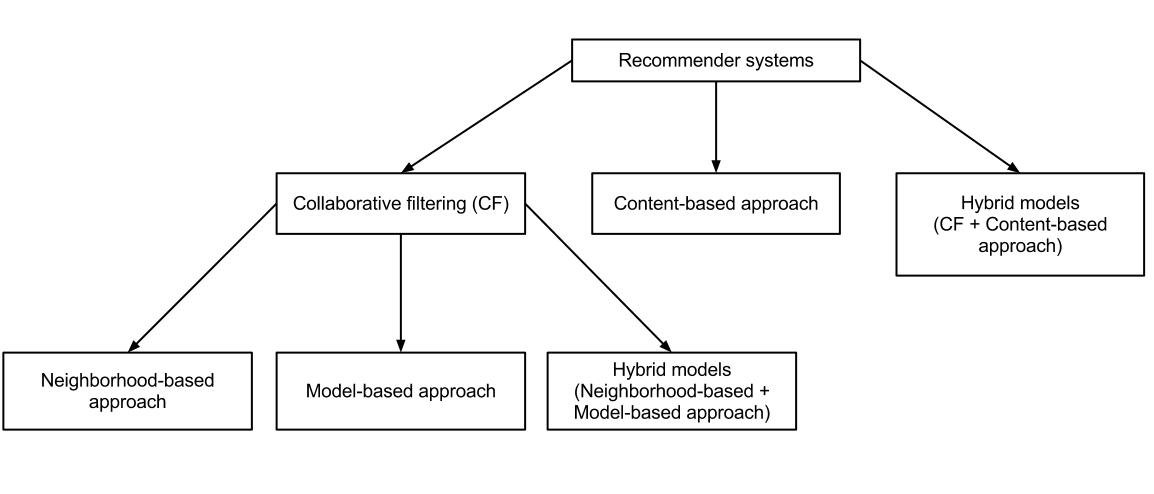
Illustration of collaborative filtering in recommender systems, providing background on one approach to personalizing recommendations—not a depiction of Meta’s specific systems.
Image: Moshanin · CC BY-SA 3.0
Why in news
MeitY’s advisory, dated October 10, 2026, seeks immediate measures and an action-taken response from Meta. Although it names no triggering incident, The Hindu reports that it was issued amid protests demanding Chief Election Commissioner Gyanesh Kumar’s resignation over the Special Intensive Revision of electoral rolls.
6
Specific asks outlined in the advisory
Background
Social media intermediaries do more than host user-generated content: recommendation systems rank and distribute it, influencing visibility and public attention. In India, the Information Technology Act, 2000 and the Information Technology (Intermediary Guidelines and Digital Media Ethics Code) Rules, 2021 provide the principal framework for intermediary due diligence. Section 79 provides conditional protection from liability for third-party information, while Section 69A enables government-directed blocking on specified grounds through a prescribed procedure. Government intervention affecting citizens’ expression must also satisfy Article 19(1)(a), the permissible restrictions under Article 19(2), and constitutional safeguards against arbitrariness.
What MeitY has asked Meta to do
The advisory moves beyond individual posts to the systems that determine what users repeatedly see. It asks Meta to review recommendation and ranking mechanisms so that potentially misleading, manipulated or out-of-context material is not disproportionately amplified, and to endeavour to provide diversity of relevant and credible information.
It also seeks contextual information where the authenticity, date, location or circumstances of material depicting ongoing public events are unclear. Particular concerns include old visuals presented as current events and misleading claims about emergencies, restrictions or police action.
The Ministry states that its objective is responsible dissemination while respecting lawful expression. However, the report supplies neither the underlying agency assessments nor a measurable standard for deciding when exposure to a narrative becomes disproportionate.
- Strengthen rapid identification, review and escalation of widely recommended content posing public-order risks.
- Cooperate with authorised agencies in accordance with applicable law and prescribed timelines.
- Take necessary measures immediately and inform the Ministry of the action taken.
- Treat the reported political context as relevant background, not proof of the advisory’s motive.
Infographic
Clear legal authority
Identify the statutory basis for compulsory intervention.
Evidence of harm
Separate public-order risks from lawful disagreement.
Proportionate response
Use the least restrictive effective measure.
Meaningful transparency
Explain ranking interventions and State requests.
Independent review
Enable audits, appeals and correction of errors.
AI-assisted infographic by Pragnya IAS Academy, based on the cited sources.
Legal basis: due diligence is not an unlimited power over ranking
MeitY invokes intermediary due diligence under the IT Act and IT Rules. These obligations provide a legal framework for addressing unlawful content, but an advisory cannot independently create new statutory duties or enlarge the grounds on which lawful expression may be restricted. The source does not identify a specific provision establishing a general obligation to promote competing political narratives equally.
Section 79 concerns conditional immunity for third-party content; it is not a free-standing power to prescribe editorial balance. Section 69A provides a separate route for blocking access to information on specified grounds, supported by procedural safeguards. A general request to alter recommendations should not be treated as interchangeable with a statutory blocking order.
In Shreya Singhal v. Union of India, the Supreme Court read down the actual-knowledge requirement under Section 79(3)(b) to a court order or an appropriate government notification concerning unlawful acts relatable to Article 19(2). The judgment underscores the importance of legally grounded directions rather than leaving intermediaries to determine broad questions of legality under regulatory pressure.
- An action-taken request does not, by itself, establish an independent enforceable legal obligation.
- Non-compliance with an advisory should not be equated automatically with loss of safe-harbour protection.
- Each coercive direction requires an identifiable legal source, a competent authority and applicable procedural safeguards.
- The report quotes digital-rights advocate Apar Gupta describing the advisory as non-binding and criticising it as a continuing censorship directive; this is an attributed assessment, not a judicial finding.
Constitutional limits: public order cannot become narrative control
Article 19(1)(a) protects citizens’ freedom of speech and expression, including political criticism. Article 19(2) permits reasonable restrictions on specified grounds, including public order and incitement to an offence. Public confusion, embarrassment to authorities or an imbalance between competing narratives are not independent constitutional grounds for restricting expression.
State-directed restrictions must have a lawful basis and a sufficiently close connection to the harm being addressed. They must also satisfy reasonableness and proportionality: contextual labels or friction on sharing may sometimes address a demonstrated risk more narrowly than removal or broad suppression of visibility.
There is no general constitutional entitlement to algorithmic amplification by a private platform. Nevertheless, government-induced downranking can substantially affect the circulation of lawful speech and must not escape scrutiny merely because a post remains accessible. Article 14 also requires State action to avoid arbitrary or selectively applied standards.
- Distinguish criticism of public institutions from incitement or other legally actionable content.
- Avoid treating engagement with one political viewpoint as sufficient evidence of algorithmic wrongdoing.
- Require reasons and review mechanisms for State-induced restrictions, including restrictions on reach.
- Apply safeguards without privileging official narratives over independently verifiable reporting.
Algorithmic accountability: regulate processes, not preferred viewpoints
Recommendation systems can repeatedly expose users to misleading material and create concentrated information environments. Accountability should therefore examine amplification patterns, design incentives, error rates and user choice, rather than merely count removed posts.
Transparency need not mean unrestricted publication of source code, which may create privacy, security and manipulation risks. Meaningful alternatives include explanations of major ranking factors, privacy-preserving independent audits, aggregate reporting of interventions and accessible grievance mechanisms.
Information diversity is a legitimate policy objective, but mandatory equal promotion of narratives is an unsuitable shortcut. It can create false equivalence between verified information and falsehoods while allowing authorities to define acceptable political balance.
- Separate content authenticity, legal permissibility and algorithmic amplification as distinct assessment questions.
- Explain whether a post was labelled, removed or downranked, and whether the intervention followed a legal order or platform policy.
- Offer meaningful controls over personalisation and feed ordering.
- Evaluate moderation across Indian languages and contexts, including satire, eyewitness accounts and protest reporting.
| Instrument | Function | Key limitation |
|---|---|---|
| MeitY advisory | Communicates government expectations and requests compliance-related measures. | Cannot independently create powers or duties absent a legal foundation. |
| Section 79, IT Act | Provides conditional protection against liability for third-party information. | Is not an unrestricted authority to dictate political balance in recommendations. |
| IT Rules, 2021 | Prescribe intermediary due diligence and related compliance mechanisms. | Must operate within the parent Act and constitutional limits. |
| Section 69A, IT Act | Enables blocking directions on specified grounds through prescribed procedures. | Requires statutory justification and procedural safeguards; an advisory is not a substitute. |
| Platform moderation policy | Provides contractual standards for content and distribution decisions. | Must be distinguished from government-compelled restrictions in transparency reporting. |
- 1. Identify specific content or system-level risks using documented evidence.
- 2. Distinguish unlawful content from lawful but disputed or unpopular expression.
- 3. Identify the statutory authority and applicable constitutional ground for any compulsory restriction.
- 4. Select a necessary, proportionate response and record reasons.
- 5. Provide notice and meaningful review, subject to narrowly justified exceptions.
- 6. Publish privacy-protective aggregate outcomes and audit for errors or selective enforcement.
2000
The Information Technology Act established India’s principal statutory framework for electronic transactions and related digital regulation.
2015
In Shreya Singhal v. Union of India, the Supreme Court struck down Section 66A, upheld Section 69A and its blocking framework, and read down Section 79(3)(b).
2021
The IT Rules, 2021 prescribed intermediary due-diligence requirements and additional obligations for specified categories of intermediaries.
October 10, 2026
MeitY issued the reported advisory asking Meta to review recommendations, contextualise public-event content and strengthen public-order-related checks.
Significance, challenges & way forward
Significance
- The advisory shifts attention from content hosting to the distribution power exercised through recommendation systems.
- Contextual verification can reduce the misuse of old or selectively edited visuals during sensitive public events.
- Clear algorithmic-accountability standards can protect both democratic debate and public safety.
- The controversy highlights how informal executive communication may affect speech without a visible blocking order.
- Transparent distribution decisions can strengthen public trust in platforms and regulatory institutions.
Challenges
- Terms such as disproportionate exposure and adequate context lack operational definitions in the reported advisory.
- Platforms may over-comply with broad government requests because of perceived regulatory or liability risks.
- Downranking is difficult for users to detect, making restrictions on reach less visible than takedowns.
- Mandatory narrative balance can privilege official accounts or create false equivalence between reliable and unreliable information.
- Automated systems may misclassify regional-language speech, satire and genuine documentation of public events.
- Auditing recommendation systems requires access to useful evidence without compromising personal data or facilitating manipulation.
Way forward
- MeitY should clarify which requests restate existing legal duties and which are voluntary recommendations, identifying the relevant provisions.
- Compulsory restrictions should use legally prescribed procedures rather than informal pressure to achieve equivalent outcomes.
- Replace vague narrative-balancing expectations with evidence-based assessment of unlawful amplification risks and demonstrably misleading context.
- Require meaningful transparency on State-requested removals and downranking, subject to lawful confidentiality and privacy safeguards.
- Institutionalise independent, privacy-preserving audits that assess public-order risks, discriminatory effects and wrongful suppression.
- Provide affected users with reasons, accessible appeals and timely correction of erroneous restrictions.
- Strengthen user choice, contextual information and digital literacy without making the government the final arbiter of political truth.
Key terms
- Recommendation system
- An automated system that selects and orders content for users using signals such as relevance, interactions and predicted preferences.
- Algorithmic amplification
- Increased visibility or repeated distribution of content through automated ranking and recommendation.
- Downranking
- Reducing content’s visibility in feeds or recommendations without necessarily removing it.
- Safe harbour
- Conditional legal protection for intermediaries against liability arising from third-party information.
- Due diligence
- Legally prescribed measures an intermediary must observe under the applicable regulatory framework.
- Proportionality
- A constitutional standard requiring a rights restriction to be justified, suitably connected to its objective and no more restrictive than necessary.
- Chilling effect
- The deterrence of lawful expression because speakers or platforms fear adverse consequences.
Link with static syllabus
Prelims practice MCQs
Q1. With reference to the Information Technology Act, 2000, consider the following statements: 1. Section 79 provides conditional protection to intermediaries concerning third-party information. 2. Section 69A enables blocking of access to information on specified statutory grounds. 3. A ministry advisory can independently add new grounds for blocking under Section 69A. Which of the statements given above are correct?
Q2. Which of the following is expressly recognised as a ground for reasonable restrictions under Article 19(2)?
Q3. With reference to Shreya Singhal v. Union of India, consider the following statements: 1. The Supreme Court struck down Section 66A of the IT Act. 2. The Court upheld Section 69A and the associated blocking framework. 3. The Court read down the actual-knowledge requirement under Section 79(3)(b). Which of the statements given above are correct?
Q4. Consider the following pairs: 1. Downranking: Reduction in content visibility without necessarily removing it 2. Contextual labelling: Addition of information about a post’s date, location or authenticity 3. Safe harbour: Unconditional immunity for all activities of a platform Which of the pairs given above are correctly matched?
Mains practice questions
GS 2 · 15 marks · 250 words
Algorithmic accountability must not become a justification for executive control over public narratives. Examine in the context of government intervention in social media recommendation systems.
Frequently asked questions
Does the advisory legally require Meta to promote all political narratives equally?
The reported advisory asks Meta to avoid disproportionate exposure to limited narratives and encourage diversity of credible information. The source does not establish a statutory obligation to give every political narrative equal reach.
Is the advisory equivalent to a blocking order?
No. A Section 69A blocking direction derives from a specific statutory power and prescribed procedure; an advisory cannot substitute for that framework.
Can downranking raise freedom-of-expression concerns?
Yes, particularly when government pressure reduces the circulation of lawful speech without clear authority or safeguards. This does not mean that every user has a constitutional right to algorithmic amplification by a private platform.
How can algorithmic accountability avoid censorship?
Focus on documented risks, transparent procedures, independent audits, user choice and effective appeals. Do not allow vague demands for narrative balance to replace lawful, proportionate and reviewable decisions.
Sources
Analysis prepared by the Pragnya IAS Academy current-affairs desk with AI assistance from the cited reports. Verify figures with the original sources.
Turn current affairs into marks
Join Pragnya IAS Academy's mentorship for daily answer-writing evaluation on stories like this — classroom programmes from a trusted name in IAS coaching in Hyderabad.