
Myanmar and ICJ Genocide Orders: State Responsibility and Enforcement Limits
Revise the static topic: UPSC International Relations notes
In short: According to the supplied report, Myanmar has rejected full compliance with an ICJ judgment finding that its security forces committed genocide against the Rohingya and ordering accountability, reparations and protection measures. The dispute highlights the gap between binding international adjudication and enforcement, with direct consequences for displaced Rohingya and survivors.
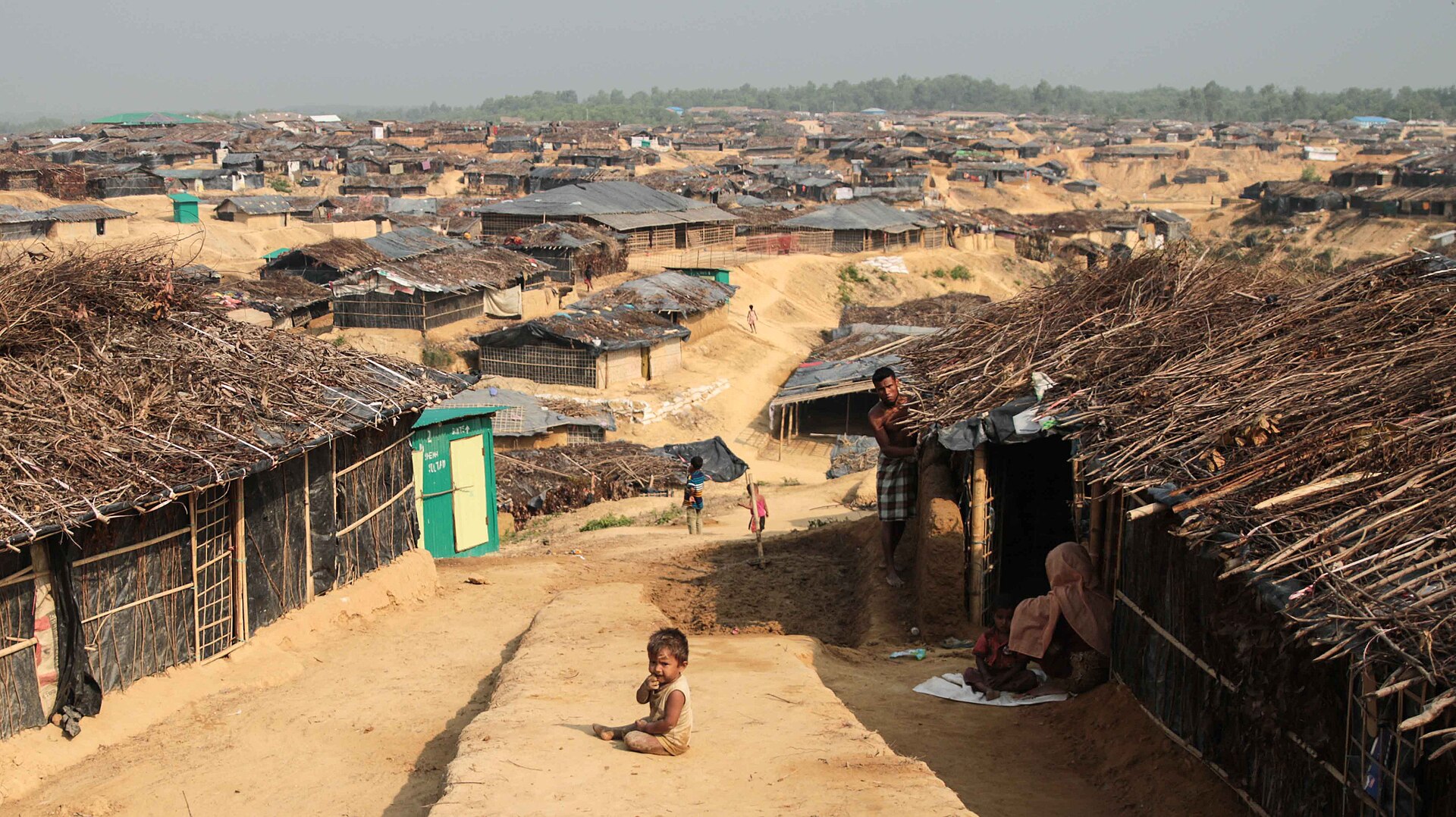
Reference view of Kutupalong Refugee Camp in Bangladesh, illustrating the displacement context for Rohingya protection and reparations.
Image: John Owens ( VOA ) · Public domain
Why in news
Myanmar’s military-backed President Min Aung Hlaing said his administration would not comply with requirements it considered inappropriate, without identifying the disputed orders. The reported judgment requires Myanmar to remedy violations and report on implementation within two years.
2017
Military crackdown examined
More than 730,000
Rohingya driven into Bangladesh
About 1.2 million
Reported refugee population in Bangladesh camps
Two years
Implementation reporting deadline
Background
The Rohingya are a mainly Muslim minority associated with Myanmar’s Rakhine state, which borders Bangladesh. The Genocide Convention obliges its parties to prevent and punish genocide, including during peacetime. The International Court of Justice, the principal judicial organ of the United Nations, adjudicates disputes between states; it does not conduct criminal trials of individuals. Article IX of the Convention provides a jurisdictional basis for disputes concerning its interpretation, application or fulfilment, including state responsibility for genocide, subject to applicable jurisdictional conditions.
What the reported judgment requires
The supplied report states that the ICJ found that Myanmar’s military actions against the Rohingya in 2017, including killings, village destruction and sexual violence, amounted to genocide. Its directions extend beyond ending unlawful conduct to accountability, survivor recovery and prevention of recurrence.
Myanmar’s response is one of selective compliance: it says it will undertake actions it considers appropriate but rejects other requirements. A state cannot unilaterally reduce its legal obligations under a binding judgment by labelling particular remedies inappropriate.
- Myanmar must end ongoing breaches of the Genocide Convention and investigate, prosecute and punish people reasonably suspected of involvement in the military operations.
- It must provide guarantees of non-repetition and protect Rohingya from discrimination and persecution.
- It must facilitate displaced persons’ return, restore or replace lost property, help locate missing people and rehabilitate survivors.
- It must compensate harm not remedied through restitution and report on implementation, including proposed compensation, within two years.
Infographic
Responsibility
A state answers for attributable breaches of the Genocide Convention.
Accountability
Independent investigations and fair criminal proceedings address individual conduct.
Reparation
Restitution, compensation and rehabilitation address survivor harm.
Protection
Safe, voluntary return requires non-discrimination and credible safeguards.
Enforcement
Binding duties depend on implementation, scrutiny and sustained political cooperation.
AI-assisted infographic by Pragnya IAS Academy, based on the cited sources.
State responsibility under the Genocide Convention
Genocide is a narrowly defined legal category, not a synonym for every mass atrocity. Article II requires a prohibited act accompanied by intent to destroy, in whole or in part, a national, ethnical, racial or religious group as such. The scale of violence is relevant evidence, but it does not replace the requirement of specific intent.
State responsibility and individual criminal responsibility are distinct. The ICJ can determine a state’s breach of treaty obligations and order remedies; criminal proceedings determine the guilt of particular individuals. Conduct of state organs, including armed forces, is generally attributable to the state under international law.
Myanmar characterises the operations as counter-terrorism measures and denies genocidal intent. A security justification does not excuse genocide; the legal inquiry concerns the acts, their attribution and the requisite intent, rather than the label attached to the operation.
- The duty to prevent genocide is distinct from the prohibition on committing it and from the duty to punish perpetrators.
- Official position does not exempt an individual from punishment under Article IV of the Convention.
- Reparations address injury to victims; guarantees of non-repetition address the risk of future violations.
Binding judgment, constrained enforcement
Under Article 59 of the ICJ Statute, a judgment binds the parties in the particular case. Article 60 makes it final and without appeal, although the Statute provides limited procedures for interpretation and revision. Article 94 of the UN Charter requires UN members to comply with ICJ decisions in cases to which they are parties.
If a party fails to perform its obligations under a judgment, the other party may approach the UN Security Council. The Council may make recommendations or decide measures to give effect to the judgment, but action is discretionary and can be constrained by permanent-member vetoes and geopolitical bargaining.
The ICJ has no independent police force or automatic sanctions machinery. Nevertheless, a judgment can establish an authoritative legal basis for diplomatic pressure, implementation monitoring and survivor-centred remedies. Limited coercive capacity does not make the judgment legally optional.
- Do not confuse the ICJ, which adjudicates interstate disputes, with the ICC, which prosecutes individuals within its jurisdiction.
- Provisional measures preserve rights pending adjudication; a merits judgment determines the substantive dispute.
- A reporting requirement supports scrutiny but cannot by itself compel implementation.
Rohingya protection and regional implications
The report places the refugee population in Bangladesh’s camps at about 1.2 million. Facilitating return cannot be reduced to transporting refugees across the border: sustainable return requires safety, voluntariness, dignity, secure legal status, access to livelihoods and protection against renewed persecution.
Property restoration, compensation, rehabilitation and tracing missing persons address different dimensions of displacement. Refugees who cannot safely return still require protection and humanitarian assistance; assistance should not be made conditional on repatriation.
For India, the issue connects neighbourhood stability, relations with Myanmar and Bangladesh, border management and humanitarian protection. Engagement with Myanmar should be combined with support for credible implementation, regional coordination and measures that do not expose displaced people to persecution.
- Bangladesh’s hosting burden makes international responsibility-sharing essential.
- Survivors, including women affected by sexual violence, need accessible and confidential support mechanisms.
- Independent assessment of conditions in Rakhine is necessary before large-scale return is promoted.
- Regional engagement through ASEAN can complement, but cannot dilute, binding legal obligations.
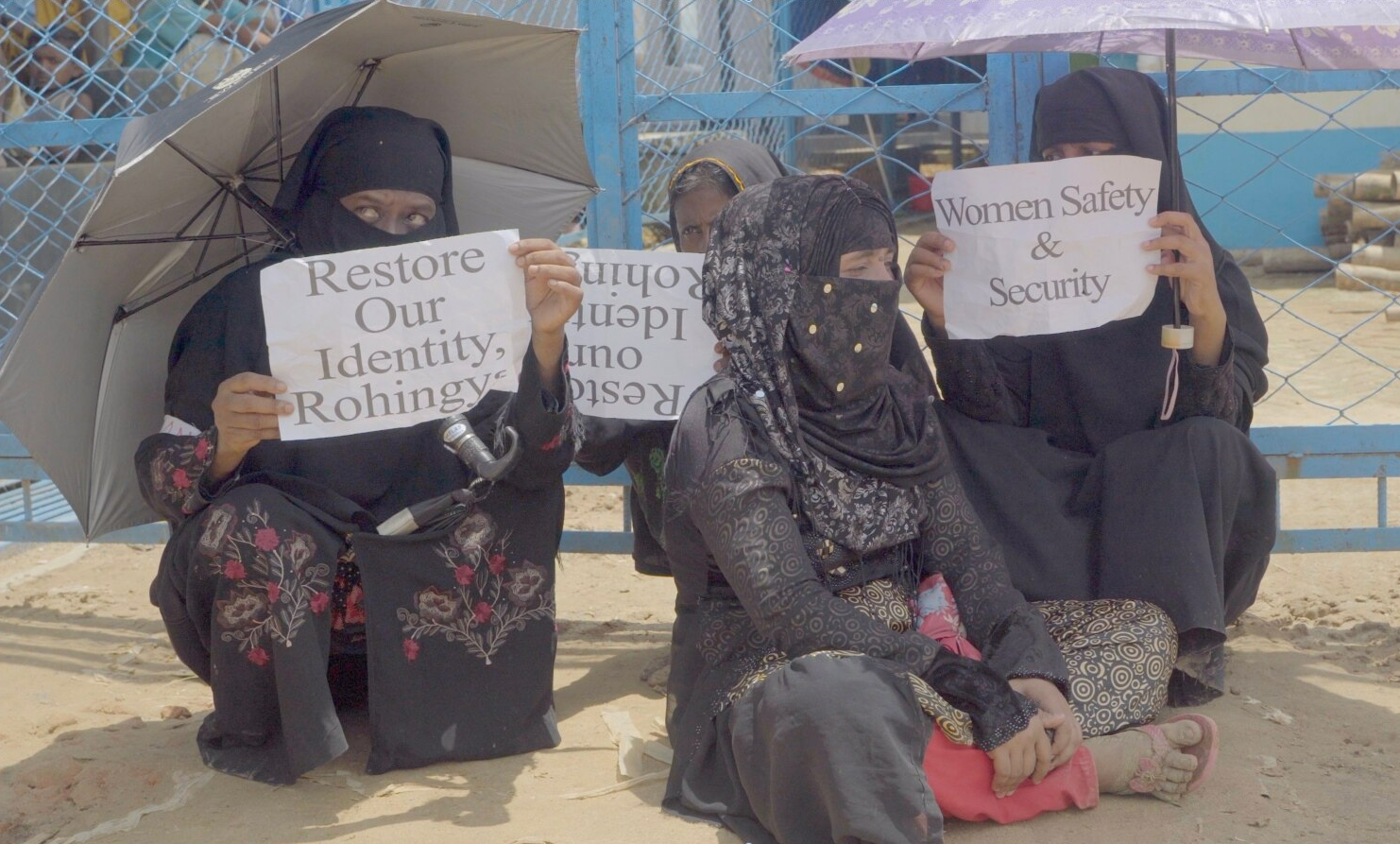
Rohingya women protest for increased rights at Kutupalong Refugee Camp in Bangladesh. This reference image illustrates refugee rights advocacy, not a response to the reported judgment.
Image: Steve Sandford · Public domain
| Feature | International Court of Justice | International Criminal Court |
|---|---|---|
| Institutional position | Principal judicial organ of the United Nations | Treaty-based criminal court established under the Rome Statute |
| Who appears as a party or accused | States are parties in contentious cases | Individuals are accused in criminal cases |
| Relevant responsibility | International responsibility of states | Individual criminal responsibility |
| Genocide jurisdiction | Can adjudicate Convention disputes where jurisdiction exists | Can prosecute genocide where its jurisdictional requirements are met |
| Possible outcomes | Declarations of breach, cessation and reparations | Conviction or acquittal, criminal sentences and victim reparations |
| Enforcement dependence | State compliance and possible Security Council action | State cooperation, including for arrests and surrender |
- 1. The Genocide Convention establishes substantive duties and a basis for adjudicating qualifying interstate disputes.
- 2. The ICJ determines responsibility and orders binding remedies.
- 3. The respondent state must implement cessation, accountability and reparation measures.
- 4. Implementation reports and independent scrutiny assess compliance.
- 5. On non-performance, the other party may seek Security Council action under Article 94.
- 6. Political cooperation and practical protection measures determine whether the judgment improves survivors’ lives.
2016–2018
Period of security operations in northern Rakhine that Myanmar describes as counter-terrorism actions.
2017
The military crackdown drove more than 730,000 Rohingya into Bangladesh, according to the report.
Judgment reported in the supplied source
The ICJ reportedly found genocide and ordered cessation, accountability, reparations and protection measures.
After the reported judgment
Min Aung Hlaing rejected full compliance without specifying which requirements Myanmar would refuse.
Within two years of the order
Myanmar must report on implementation, including proposed compensation.
Significance, challenges & way forward
Significance
- The reported judgment places state responsibility, rather than only individual wrongdoing, at the centre of accountability.
- The remedies recognise that justice requires property recovery, rehabilitation and compensation as well as prosecution.
- Guarantees of non-repetition connect retrospective accountability with future protection.
- The compliance dispute illustrates how international law can be binding despite decentralised enforcement.
- Effective implementation could reduce insecurity surrounding Rohingya displacement and regional refugee protection.
Challenges
- Myanmar has not identified which requirements it considers inappropriate, creating uncertainty over implementation.
- Investigations into security-force conduct require independence from institutions potentially implicated in abuses.
- Security Council divisions may obstruct collective enforcement or weaken political pressure.
- Damaged property records, missing persons and displaced claimants complicate restitution and compensation.
- Discrimination and insecure legal status can make formally organised return unsafe or unsustainable.
- Survivors may face intimidation, trauma and barriers to accessing justice and support.
Way forward
- Translate each remedy into publicly assessable implementation milestones rather than treating a reporting deadline as permission to delay action.
- Ensure independent investigations, evidence preservation, witness protection and fair-trial safeguards.
- Design accessible restitution and compensation mechanisms with meaningful participation by affected Rohingya.
- Make return voluntary, safe, dignified and independently monitored, with credible protection against renewed persecution.
- Sustain humanitarian assistance and strengthen support for Bangladesh and other host communities.
- Use coordinated UN, regional and bilateral diplomacy to secure compliance while safeguarding humanitarian access.
- Address discriminatory laws and administrative practices that undermine legal identity, movement and access to essential services.
Key terms
- Genocide
- A prohibited act committed with intent to destroy, in whole or in part, a national, ethnical, racial or religious group as such.
- Specific intent
- The intent to destroy a protected group, distinguishing genocide from other categories of international crimes.
- State responsibility
- The legal consequences arising when conduct attributable to a state breaches its international obligations.
- Restitution
- A form of reparation aimed at restoring the situation that existed before the wrongful act.
- Compensation
- Financial reparation for legally compensable damage not made good by restitution.
- Guarantees of non-repetition
- Measures intended to prevent recurrence of internationally wrongful conduct.
- Non-refoulement
- The principle prohibiting return to a place where a person faces persecution or other serious harm under applicable international law.
Link with static syllabus
Prelims practice MCQs
Q1. With reference to the International Court of Justice, consider the following statements: 1. Only states may be parties in contentious cases before it. 2. Its judgments bind the parties in the particular case. 3. Every finding of non-compliance automatically triggers UN Security Council sanctions. Which of the statements given above are correct?
Q2. Which of the following best describes the specific intent required for genocide under the Genocide Convention?
Q3. Consider the following pairs: 1. Article 94 of the UN Charter — Compliance with ICJ decisions 2. Article IX of the Genocide Convention — Submission of qualifying Convention disputes to the ICJ 3. Article 60 of the ICJ Statute — General right of appeal against ICJ judgments How many of the above pairs are correctly matched?
Q4. With reference to international accountability, consider the following statements: 1. The ICJ can determine state responsibility for breaches of the Genocide Convention where it has jurisdiction. 2. The ICC determines individual criminal responsibility within its jurisdiction. 3. An ICJ finding against a state automatically constitutes a criminal conviction of its political leader. Which of the statements given above are correct?
Mains practice questions
GS 2 · 15 marks · 250 words
The binding character of international adjudication does not guarantee effective enforcement. Discuss with reference to the reported ICJ genocide judgment against Myanmar and the protection of the Rohingya.
Frequently asked questions
Can Myanmar legally reject ICJ orders it considers inappropriate?
A party cannot unilaterally opt out of a binding ICJ judgment because it disagrees with particular remedies. Enforcement constraints do not extinguish the obligation to comply.
Can the ICJ arrest Myanmar’s leaders?
No. The ICJ adjudicates disputes between states and does not try or arrest individuals; criminal accountability requires competent domestic or international criminal proceedings.
Does the reported judgment require immediate forced repatriation?
The report says Myanmar must facilitate displaced Rohingya’s return, not compel refugees to return. Sustainable repatriation must be voluntary, safe and dignified.
What can happen if Myanmar does not comply?
The other party may seek Security Council action under Article 94 of the UN Charter. Diplomatic pressure and implementation scrutiny can also support compliance, but sanctions or coercive measures are not automatic.
Sources
Analysis prepared by the Pragnya IAS Academy current-affairs desk with AI assistance from the cited reports. Verify figures with the original sources.
Turn current affairs into marks
Join Pragnya IAS Academy's mentorship for daily answer-writing evaluation on stories like this — classroom programmes from a trusted name in IAS coaching in Hyderabad.