
RBI Bulletin: Food and Imported Inflation Test India’s Policy Response
Revise the static topic: UPSC Economy notes
In short: India’s CPI inflation rose to 6.1% in October 2026 from 5.5% in September, while the November RBI Bulletin flagged continuing broad-based food-price pressures. The findings highlight the limits of interest rates against supply shocks and the need for complementary food-management, fiscal and external-risk measures.
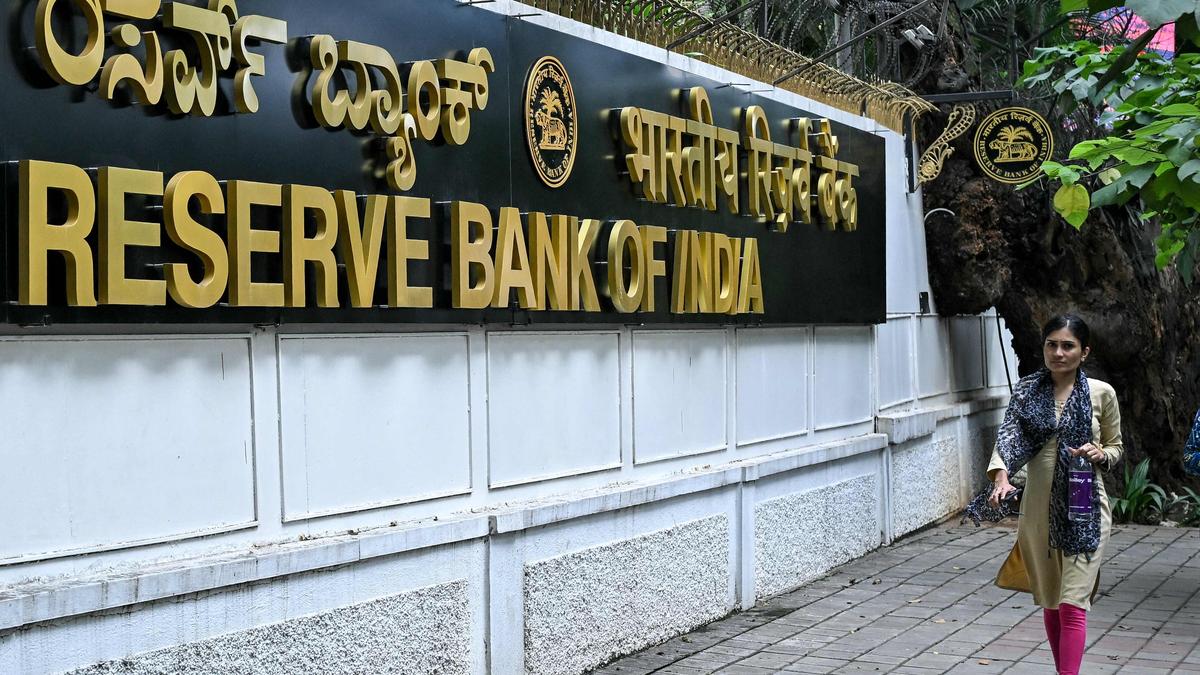
Reference image from coverage of the RBI Bulletin’s findings on persistent, broad-based food-price pressures in India.
Image: The Hindu
Why in news
The November 2026 RBI Bulletin reported persistent food-price pressures in high-frequency data up to November 19. A separate Bulletin study estimated that imported items contributed around 18% of headline inflation in October despite accounting for only 8.5% of the CPI basket under its import-intensity-weighted measure.
6.1%
CPI inflation, October 2026
5.5%
CPI inflation, September 2026
6%
Upper inflation tolerance level cited
8.5%
Imported-item weight estimated by study
Around 18%
Imported contribution to October inflation
$95 per barrel
Indian crude basket, November 1–18
Background
Consumer Price Index inflation measures changes in prices paid by households for a representative basket of goods and services. India’s flexible inflation-targeting framework operates under the Reserve Bank of India Act, with the Monetary Policy Committee determining the policy rate to achieve the inflation target while keeping growth in mind. Food prices are particularly sensitive to harvest conditions, storage, transport and trade availability, whereas imported inflation transmits overseas price and exchange-rate changes into domestic costs. Monetary policy primarily influences demand, credit conditions and expectations rather than directly expanding food or energy supplies.
What the Bulletin establishes
Headline CPI inflation rose above the upper tolerance level cited in the report. Food and beverages were the primary driver, but fuel and core inflation also firmed up; 11 of the 12 CPI divisions registered sequential price increases in October. This indicates broader monthly price momentum, not merely a rise in a single commodity.
High-frequency observations up to November 19 showed increases across major cereals, pulses and edible oils, led by mustard oil. Vegetable prices were mixed: onions rose moderately, tomatoes corrected sharply and potatoes became dearer. Food and beverages inflation remained above 6% in both rural and urban areas.
The Bulletin is an analytical publication, not a policy-rate decision. Its release explicitly states that article authors’ views do not represent the views of the RBI; the findings should therefore not be presented as an MPC commitment to tighten policy.
- A fall in tomato prices does not establish broad food-price relief when cereals, pulses and oils remain under pressure.
- Year-on-year inflation and month-on-month price momentum describe different aspects of price behaviour.
- Resilient activity and strong credit demand provide economic context but do not, by themselves, prove that excess demand caused the inflation increase.
Infographic
Food pressure
Cereals, pulses and edible oils rose; vegetables showed mixed trends.
Imported exposure
Small imported basket weight generated a disproportionate inflation contribution.
Monetary vigilance
Anchor expectations and contain second-round pressures.
Supply response
Address shortages through stocks, logistics and calibrated trade measures.
Fiscal protection
Target vulnerable households without open-ended subsidies.
Structural resilience
Strengthen food infrastructure and diversify energy dependence.
AI-assisted infographic by Pragnya IAS Academy, based on the cited sources.
Imported inflation: Small basket weight, disproportionate influence
The Bulletin study constructs an import-intensity-weighted CPI using item-level production, imports and exports data. It estimates that imported items account for 8.5% of the new CPI basket, with base 2024=100, but contributed around 18% of headline inflation in October 2026. The latter is a share of inflation, not an addition of 18 percentage points to the inflation rate.
Food and fuel were the principal imported-inflation channels during the pandemic and the Russia–Ukraine conflict. The study identifies rising precious-metal prices as a source of imported inflation since 2024, becoming a key imported-core channel from 2025. The West Asia conflict renewed crude-related pressures in 2026.
The study reports a sharper crude shock during the West Asia conflict than during the Russia–Ukraine conflict, but relatively lower transmission into retail fuel prices. The Indian crude basket’s decline to $95 per barrel during November 1–18 offered some relief, without removing geopolitical uncertainty.
- Import intensity was highest for fuel and light, followed by food and beverages, and then core components.
- Imported inflation can arise from global price increases or rupee depreciation, although the supplied evidence does not quantify their separate October contributions.
- Lower retail pass-through limits immediate consumer inflation but does not establish that the underlying import-cost shock has disappeared.
Why supply shocks complicate monetary policy
Higher interest rates cannot produce cereals, repair disrupted shipping routes or expand oil supply immediately. Tightening against an isolated supply shock can compress investment and consumption without quickly addressing its origin. Conversely, treating repeated food shocks as automatically temporary risks allowing inflation expectations to become less anchored.
The central bank must distinguish the initial relative-price shock from second-round effects, such as broader wage demands, cost revisions and price-setting responses. Firmer core inflation and widespread sequential increases warrant close monitoring, but do not conclusively establish a wage–price spiral.
External financial conditions add another complication. The Bulletin’s event study associates tighter US monetary news with rupee depreciation, higher Indian government bond yields and lower Sensex returns. This identifies a potential financial transmission channel, not a mechanical forecast for every US policy announcement.
- Monetary policy should assess persistence, breadth and expectations rather than react mechanically to a single monthly reading.
- A single monthly breach should not be equated with a formal determination of failure under the statutory inflation-targeting framework.
- Clear communication can explain why supply interventions and monetary vigilance are complementary.
The complementary fiscal and supply-side response
Immediate measures should be commodity-specific. Where stocks and market conditions permit, calibrated releases of buffer stocks, improved logistics and timely import facilitation can address shortages more directly than interest rates. Mixed vegetable trends make blanket interventions less appropriate than granular market intelligence.
Fiscal policy should protect vulnerable households without creating indiscriminate demand stimulus. Temporary, targeted support and carefully evaluated tax adjustments can cushion shocks, but prolonged subsidies or suppressed prices may transfer costs to budgets or firms and weaken incentives.
Over the medium term, irrigation, crop diversification, scientific storage, cold chains and more predictable trade policy can reduce recurring food-price volatility. Diversified energy procurement and reduced dependence on imported fossil fuels can strengthen resilience against external shocks.
- Publish timely information on arrivals, stocks and prices to improve intervention quality.
- Balance consumer relief with remunerative incentives for farmers and investment in supply.
- Make emergency interventions transparent, time-bound and subject to review.
| Inflation channel | Policy response | Main limitation |
|---|---|---|
| Domestic food-supply disruption | Calibrated stock releases, logistics support and import facilitation where appropriate | Availability, implementation lags and producer incentives constrain effectiveness. |
| Global fuel and commodity shock | Diversified procurement, energy efficiency and evaluated tax relief | Global prices remain outside domestic control; relief may carry fiscal costs. |
| Exchange-rate transmission | Macroeconomic credibility and management of disorderly market conditions | Exchange-rate management cannot permanently neutralise an external commodity shock. |
| Persistent demand and second-round pressures | Monetary-policy action and credible communication | Transmission takes time and can impose output costs. |
| Loss of purchasing power among vulnerable households | Targeted food or income support | Poor targeting raises fiscal costs without proportionate protection. |
- 1. Global commodity prices rise or external supply routes are disrupted.
- 2. Import costs increase; rupee depreciation can amplify the increase.
- 3. Costs pass into retail goods, transport and intermediate inputs, with varying lags.
- 4. Repeated increases can influence wage demands, expectations and firms’ pricing decisions.
- 5. Supply measures address shortages while monetary policy seeks to prevent generalised persistence.
COVID-19 pandemic
The Bulletin study identifies food and fuel as principal channels transmitting imported inflation into retail prices.
Russia–Ukraine conflict
Food and fuel remained principal imported-inflation channels.
2024–2025
Precious-metal prices emerged as an imported-inflation source from 2024 and became a key imported-core channel from 2025.
2026
The West Asia conflict renewed crude-related price pressures.
September 2026
Headline CPI inflation stood at 5.5%.
October 2026
Headline CPI inflation rose to 6.1%, primarily driven by food and beverages.
November 2026
The Bulletin reported broad food-price pressure in observations up to November 19, alongside some easing in the Indian crude basket during November 1–18.
Significance, challenges & way forward
Significance
- Broad food-price pressure threatens household purchasing power, particularly where food absorbs a large share of expenditure.
- The imported-inflation estimate shows that basket weight alone is an inadequate guide to a component’s contribution to inflation.
- Firmer core and fuel inflation make it important to monitor whether food shocks are spreading into wider price-setting behaviour.
- The episode demonstrates why price stability requires coordination across monetary, fiscal, agricultural and trade policies.
Challenges
- Commodity-specific volatility complicates the distinction between temporary shocks and persistent inflation.
- Global conflict and volatile energy prices can offset gains from domestic supply management.
- Monetary tightening may restrain growth before supply-driven prices respond.
- Untargeted subsidies can strain public finances while concealing rather than resolving cost pressures.
- Unpredictable trade restrictions may deliver short-term relief but weaken producer confidence and longer-term supply incentives.
Way forward
- Use disaggregated price, stock and arrivals data to identify the commodities driving persistence.
- Calibrate monetary policy to inflation expectations, underlying momentum and evidence of second-round effects.
- Deploy stock releases, import facilitation and logistics measures according to commodity conditions rather than through blanket responses.
- Protect vulnerable households through targeted support while preserving fiscal credibility.
- Invest in storage, irrigation, crop diversification and energy resilience to reduce repeated supply shocks.
- Communicate clearly the distinction between temporary price relief, durable disinflation and the respective responsibilities of policy institutions.
Key terms
- Headline inflation
- The rate of change in the overall consumer price index, including food and fuel.
- Core inflation
- An underlying inflation measure commonly calculated by excluding food and fuel from headline CPI.
- Imported inflation
- Domestic price increases transmitted through imported goods or inputs because of global prices or exchange-rate movements.
- Import intensity
- The degree of import dependence associated with an item; the Bulletin study uses it to weight imported exposure within CPI.
- Pass-through
- The extent to which an upstream cost or exchange-rate change is reflected in downstream prices.
- Second-round effects
- The spread of an initial price shock into wider wages, expectations and price-setting decisions.
- Disinflation
- A decline in the inflation rate, which does not necessarily mean that the overall price level is falling.
Link with static syllabus
Prelims practice MCQs
Q1. With reference to the imported-inflation study in the November 2026 RBI Bulletin, consider the following statements: Statement I: Imported items accounted for 8.5% of the CPI basket under the study’s measure. Statement II: Imported items contributed around 18% of headline inflation in October 2026. Statement III: The contribution in Statement II means that imported items added 18 percentage points to headline inflation. Which of the statements given above are correct?
Q2. Which of the following most accurately describes monetary policy’s role during a food-supply shock?
Q3. Consider the following pairs: Pair I: Pass-through — Transmission of cost changes into downstream prices. Pair II: Disinflation — A necessary fall in the overall price level. Pair III: Core inflation — An inflation measure commonly excluding food and fuel. Which of the pairs given above are correctly matched?
Q4. Regarding the November 2026 RBI Bulletin, consider the following statements: Statement I: Publication of a State of the Economy article is itself a decision to change the policy rate. Statement II: The release states that article authors’ views do not represent the RBI’s views. Which of the statements given above is/are correct?
Mains practice questions
GS 3 · 15 marks · 250 words
Persistent food-price pressures and imported inflation expose the limits of monetary policy acting alone. Discuss with reference to the November 2026 RBI Bulletin and suggest a coordinated policy response.
Frequently asked questions
Why did inflation rise in October 2026?
The supplied reports identify food and beverages as the primary driver of the rise to 6.1%. Fuel and core inflation also firmed up, indicating that pressures were not confined to food.
Can the RBI control food inflation through interest rates alone?
Interest rates cannot directly resolve harvest, storage or transport constraints. They can, however, restrain broader demand and help prevent food shocks from destabilising inflation expectations.
How can imported items have a larger inflation contribution than their basket weight?
Inflation contribution depends on both weight and price movements. Relatively sharp increases in imported-item prices can therefore generate a contribution larger than their share of the basket.
Does the Bulletin announce a monetary-policy tightening?
No policy-rate decision is reported in the supplied material. The release also states that the views expressed in Bulletin articles are those of their authors, not the RBI.
Sources
- The Hindu: Broad-based pressure on food prices continues: RBI Bulletin
- RBI: RBI Bulletin – November 2026
Analysis prepared by the Pragnya IAS Academy current-affairs desk with AI assistance from the cited reports. Verify figures with the original sources.
Turn current affairs into marks
Join Pragnya IAS Academy's mentorship for daily answer-writing evaluation on stories like this — classroom programmes from a trusted name in IAS coaching in Hyderabad.