
U.S. Section 301 Tariffs on India: WTO Rules and Trade Negotiation Choices
Revise the static topic: UPSC Economy notes
In short: The U.S. Trade Representative has proposed a net tariff of 25% on Indian goods following a Section 301 investigation into alleged structural excess capacity, with a possible reduction to 17% if a trade agreement is reached. The proposal is not final: India must use the consultation process to contest the findings while evaluating tariff relief against reciprocal market access, export competitiveness and domestic policy autonomy.
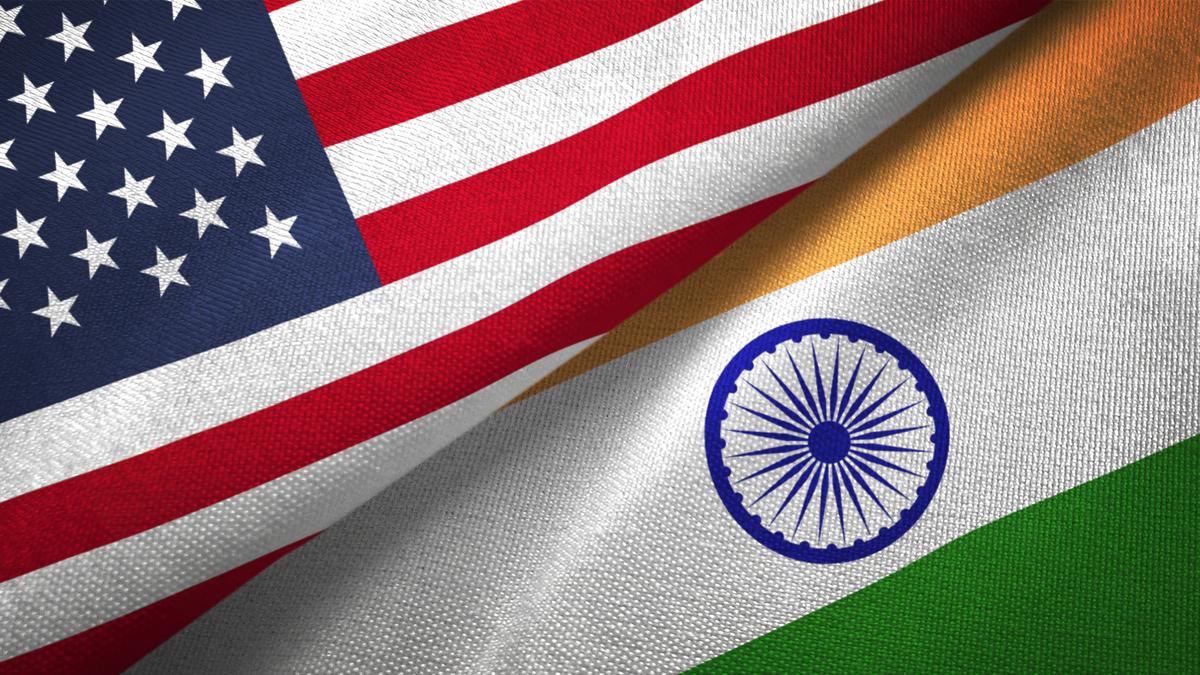
Related coverage from The Hindu on India’s response to U.S. tariffs and the case against rushing into a trade agreement.
Image: The Hindu
Why in news
On November 25, 2026, the USTR announced proposed tariff action against India and other trading partners. Written comments and requests to testify are due by January 5, 2027, and public hearings begin on January 25, 2027.
25%
Proposed net tariff on India
17%
Possible tariff after an agreement
10%
Existing forced-labour-related tariff
50%
Steel and aluminium tariff
18%
February interim framework tariff
14
Economies covered by latest action
Background
Section 301 of the U.S. Trade Act authorises action against foreign acts, policies and practices considered to violate trade rights or to be unjustifiable, unreasonable or discriminatory and burdensome to U.S. commerce. It is distinct from Section 232 of the Trade Expansion Act, which concerns the national-security implications of imports. At the multilateral level, the WTO framework disciplines discrimination, protects negotiated tariff commitments and provides procedures for resolving disputes. A measure authorised under domestic law does not automatically comply with international trade obligations.
What has been proposed, and what remains unsettled?
The USTR proposes tariffs of up to 25% on Indian goods, net of existing Section 301 tariffs, with exemptions for certain goods. A rate of 17% could apply if India reaches an Agreement on Reciprocal Trade responsive to the investigation's findings. The supplied reports do not identify the proposed product exemptions.
The reported framework does not simply add 25% to the existing 10% Section 301 tariff arising from the forced-labour investigation. Steel and aluminium are reported to remain subject to their separate 50% Section 232 duty without the proposed tariff being added. Nevertheless, the notice leaves duty adjustments for further consideration, making the final notification essential for product-level calculations.
The current proposal broadly returns negotiations to earlier headline rates: India faced a 25% announcement in July 2025, while the February 2026 interim framework envisaged 18% after an agreement. These historical comparisons are negotiating benchmarks, not proof that today's proposal is already operational.
- Distinguish a proposed tariff from a final, enforceable customs measure.
- Check product exemptions, duty interaction and implementation conditions before estimating exporter exposure.
- Do not treat a conditional tariff reduction as an already concluded trade agreement.
Infographic
Verify
Separate proposed rates from final product-level duties.
Contest
Answer excess-capacity allegations with sectoral evidence.
Defend
Assess WTO non-discrimination and tariff commitments.
Negotiate
Seek reciprocal, predictable and commercially useful access.
Strengthen
Improve competitiveness and diversify markets.
AI-assisted infographic by Pragnya IAS Academy, based on the cited sources.
Section 301: Domestic authority and the excess-capacity allegation
The USTR launched separate investigations in March 2026 into forced labour and structural excess capacity. The latest proposal follows the second investigation, in which it concluded that Indian policies contribute to excess capacity that harms U.S. producers and exporters and creates economic-security risks.
India's Department of Commerce has rejected the allegation that India has structural excess capacity in any sector. This makes the dispute partly evidentiary: export growth alone cannot establish whether capacity is persistently excessive or whether particular policies cause adverse trade effects.
India's response should distinguish installed capacity, capacity utilisation, current domestic consumption and credible future demand. It should also explain the objectives and operation of sectoral support measures rather than rely only on a general denial.
- Section 301 findings are U.S. administrative determinations, not WTO adjudications.
- Excess capacity is not automatically equivalent to dumping or a prohibited subsidy.
- The consultation process offers an opportunity to challenge factual assumptions and seek product-specific exclusions.
WTO compatibility: A domestic power is not an international exemption
Country-specific tariff treatment raises questions under the WTO's most-favoured-nation principle, while duties exceeding a member's bound tariff commitments raise separate concerns. A definitive assessment requires the final measure, relevant tariff lines, applicable commitments and any claimed legal justification.
Where a member seeks redress for a breach of WTO obligations, WTO dispute-settlement disciplines constrain unilateral determinations and retaliation. The key distinction is between domestic authority to investigate and impose measures, and international permission to depart from negotiated commitments.
A bilateral agreement does not automatically remove these concerns. Preferential treatment must fit an applicable WTO legal framework, such as the requirements governing qualifying free trade areas. Likewise, the domestic national-security basis of Section 232 does not, by itself, establish that every resulting restriction satisfies WTO security exceptions.
- Most-favoured-nation treatment generally requires equal treatment of like goods from different WTO members, subject to recognised exceptions.
- Bound tariffs are negotiated ceilings; applied tariffs are the duties actually charged.
- Anti-dumping, countervailing and safeguard measures have distinct evidentiary and procedural requirements.
- An allegation of excess capacity is not a standalone WTO exception permitting unrestricted tariff increases.
Export competitiveness: Relative treatment matters as much as headline rates
Industry representatives cited in the reports expect limited short- to medium-term disruption, referring to the composition and price stickiness of major Indian exports, including electronics, pharmaceuticals, gems and jewellery, and textiles. This is an assessment, not a guarantee: exporters can still face thinner margins, renegotiated contracts and weaker investment incentives.
Tariffs are collected from importers, but their economic burden can be shared among exporters, importers and consumers. The distribution depends on substitution possibilities, bargaining power, contracts and demand responsiveness; price stickiness does not eliminate the cost.
A negotiated 17% rate would improve India's position relative to competitors facing 18% or up to 20% under the reported framework, but not relative to economies facing 15%. Any claimed advantage must therefore be assessed by product and competitor, including exemptions and other duties.
- Assess exposure through actual product coverage and buyer dependence, not aggregate export values alone.
- Distinguish an advantage over selected competitors from universal preferential access.
- Monitor order retention, margins and investment decisions alongside export shipments.
India's negotiating choice: Engage without accepting an artificial deadline
The choice is not simply between an immediate agreement and abandoning negotiations. India can simultaneously contest the investigation, seek predictable market access and evaluate whether reciprocal concessions serve its long-term economic interests.
A sound agreement should offer commercially meaningful access and clarity on exemptions, duty interaction and dispute handling. India should assess the value of these commitments against any requested concessions and their implications for domestic development policy.
Market diversification and stronger competitiveness are complements to negotiations, not instant substitutes for the U.S. market. Expanding the use of trade agreements, improving standards compliance and lowering logistics costs can strengthen India's bargaining position over time.
- Negotiate the full package rather than only the difference between the proposed and conditional tariff rates.
- Avoid concessions whose long-term costs exceed the likely benefits of tariff relief.
- Preserve legal options while maintaining constructive bilateral engagement.
| Measure | Reported rate | Basis and status |
|---|---|---|
| Structural excess-capacity action | Up to 25% net | Section 301 proposal; consultation and hearings precede final action. |
| Conditional negotiated treatment | 17% | Possible rate if a qualifying reciprocal trade agreement is reached. |
| Forced-labour-related action | 10% | Existing Section 301 tariff; the new proposal is framed as net of existing Section 301 duties. |
| Steel and aluminium imports | 50% | Separate Section 232 duty; reports state that the proposed tariff will not be added. |
| Earlier interim trade framework | 18% | Envisaged in the February 2026 framework; the deal remains unfinalised. |
- 1. The USTR investigates alleged foreign practices burdening U.S. commerce.
- 2. It issues findings and proposes tariff action.
- 3. Affected governments, firms and other stakeholders submit evidence and comments.
- 4. Public hearings examine objections and proposed remedies.
- 5. The USTR considers adjustments, exemptions and any negotiated outcome.
- 6. Final action specifies the operative treatment.
April 2025
The U.S. proposed a 26% reciprocal tariff on India and paused it a week later to pursue trade negotiations.
July 2025
A 25% tariff on India was announced.
After the July 2025 announcement
An additional 25% penalty linked to Russian oil imports was announced, taking the reported combined tariff to 50%.
February 2026
India and the U.S. announced an interim trade framework envisaging an 18% U.S. tariff on Indian goods.
March 2026
The USTR launched separate Section 301 investigations into forced labour and structural excess capacity.
November 25, 2026
The USTR proposed a net tariff of 25% on India, with a possible reduction to 17% following an agreement.
January 5, 2027
Deadline for written comments and requests to testify.
January 25, 2027
Public hearings are scheduled to begin; final action will be communicated subsequently.
Significance, challenges & way forward
Significance
- The proposal illustrates how unilateral trade instruments can become leverage in bilateral negotiations.
- India's effective competitiveness depends on the tariff treatment of competing suppliers as well as its own rate.
- The dispute tests the relationship between domestic industrial policy, external scrutiny and WTO disciplines.
- Predictable market access matters for manufacturing investment and supply-chain planning beyond immediate export earnings.
Challenges
- Unsettled exemptions and duty adjustments make product-level exposure difficult to calculate.
- A broad excess-capacity allegation requires detailed sectoral evidence rather than a uniform rebuttal.
- Exporter interests differ according to margins, buyer dependence and the availability of alternative markets.
- Conditional tariff relief can create pressure to accept concessions before their wider economic costs are assessed.
- Diversification requires time, distribution networks and compliance with destination-market standards.
Way forward
- Submit sector-specific evidence on capacity utilisation, domestic demand, investment plans and the operation of support policies.
- Coordinate government, industry and importer submissions before the consultation deadline.
- Seek explicit commitments on product coverage, exemptions, duty interaction and procedures for addressing future disputes.
- Evaluate reciprocal concessions through transparent assessment of sectoral gains, adjustment costs and development priorities.
- Examine WTO legal options against the final measure without treating litigation and negotiations as mutually exclusive.
- Support competitiveness through trade facilitation, standards infrastructure, export finance and more effective use of existing trade agreements.
Key terms
- Section 301
- A U.S. statutory mechanism for investigating and responding to specified foreign trade practices that burden or restrict U.S. commerce.
- Section 232
- A U.S. statutory mechanism addressing the national-security implications of imports.
- Structural excess capacity
- Persistent productive capacity beyond what can be sustainably absorbed by demand, rather than a temporary mismatch.
- Most-favoured-nation treatment
- The WTO principle generally requiring a trade advantage granted to one member to be extended to other members, subject to recognised exceptions.
- Bound tariff
- A tariff ceiling committed in a WTO member's schedule.
- Applied tariff
- The customs tariff actually charged on an imported product.
- Tariff incidence
- The distribution of a tariff's economic burden among exporters, importers and consumers.
- Countervailing duty
- A trade remedy addressing injurious subsidised imports after the required investigation.
Link with static syllabus
Prelims practice MCQs
Q1. With reference to the proposed U.S. tariff action against India announced in November 2026, consider the following statements: 1. The proposed 25% tariff is already final and operational. 2. The proposal is framed as net of existing Section 301 tariffs. 3. A 17% rate is conditional on reaching a trade agreement. Which of the statements given above are correct?
Q2. Consider the following pairs: 1. Section 301: Specified foreign trade practices burdening U.S. commerce 2. Section 232: National-security implications of imports 3. Bound tariff: The tariff actually charged on every import consignment Which of the pairs given above are correctly matched?
Q3. With reference to WTO disciplines, consider the following statements: 1. Domestic statutory authority alone establishes a tariff's WTO compatibility. 2. Country-specific tariff treatment may raise most-favoured-nation concerns. 3. An allegation of excess capacity automatically authorises countervailing duties without an investigation. Which of the statements given above is/are correct?
Q4. Which of the following best explains the economic incidence of an import tariff?
Mains practice questions
GS 2 · 15 marks · 250 words
Unilateral tariffs test both the rules-based trading system and India's negotiating autonomy. Examine with reference to the proposed U.S. Section 301 tariffs and suggest an appropriate Indian response.
Frequently asked questions
Has the proposed 25% tariff already become final?
No. The supplied reports describe a proposal subject to written comments and public hearings, after which final action will be communicated.
Will 25% simply be added to the existing 10% tariff?
The proposal is framed as net of existing Section 301 tariffs, not as a straightforward addition. Final duty adjustments and product treatment must be checked in the operative notification.
Does a Section 301 finding prove that India violated WTO rules?
No. It is a U.S. administrative determination under domestic law, not a WTO ruling.
Should India accept a trade agreement solely to obtain the 17% rate?
No. India should assess reciprocal access, competitor treatment, durability of tariff relief and the long-term costs of any concessions.
Sources
- The Hindu: Experts say new U.S. tariffs do not pose substantial threat, India should not rush into trade deal
- The Hindu: U.S. announces new 25% tariffs on India, second-highest in the 14 countries against which action has been taken
- The Hindu: Trump’s tariff plan explained: Which countries could be hit and why?
- The Hindu (Editorial): Pressure tactics: On the new U.S. tariffs on India
Analysis prepared by the Pragnya IAS Academy current-affairs desk with AI assistance from the cited reports. Verify figures with the original sources.
Turn current affairs into marks
Join Pragnya IAS Academy's mentorship for daily answer-writing evaluation on stories like this — classroom programmes from a trusted name in IAS coaching in Hyderabad.