
Wholesale Inflation at 12.3%: WPI–CPI Transmission and RBI’s Policy Trade-off
Revise the static topic: UPSC Economy notes
In short: India’s wholesale inflation rose to 12.3% in October 2026, marking the second consecutive month of double-digit inflation, with fuel prices driving the increase. With retail inflation also above 6%, the development raises concerns about further consumer-price increases and a monetary-policy trade-off between containing inflation and supporting growth.
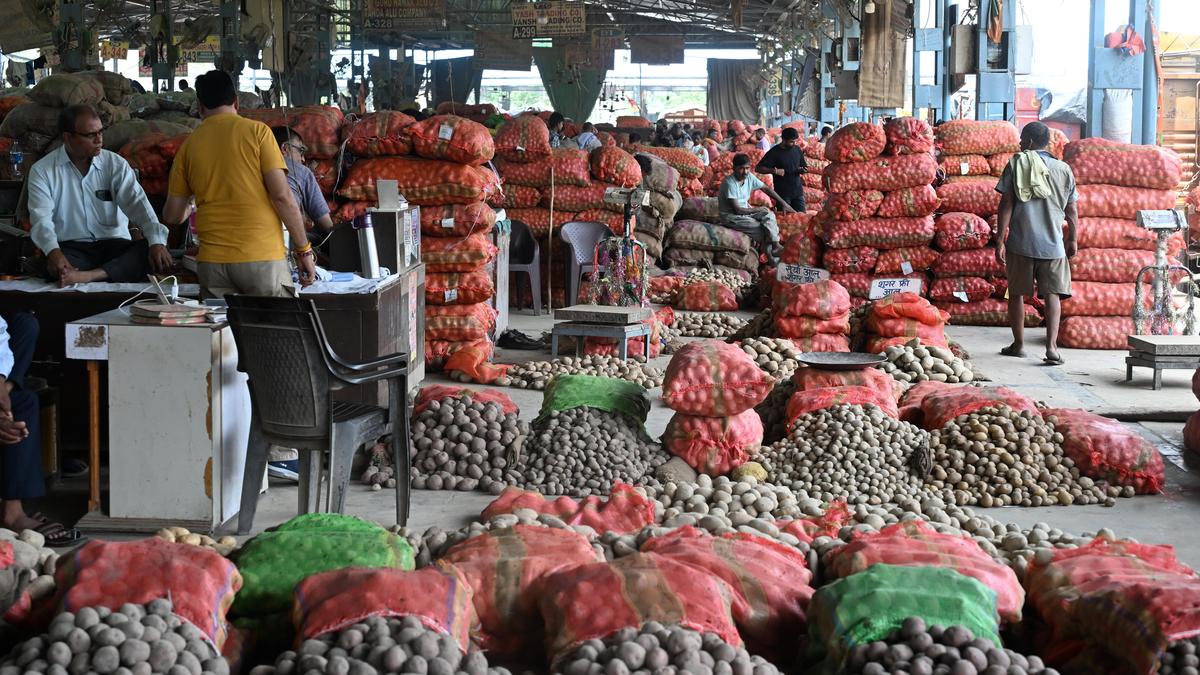
India’s wholesale inflation reached 12.3% in October 2026, with fuel prices driving the increase and raising concerns about transmission to consumer prices.
Image: The Hindu
Why in news
Official data released on November 16, 2026 showed a sharp rise in wholesale inflation, alongside elevated food and manufactured-product inflation. Economists quoted in the report expect greater pressure on consumer prices and anticipate monetary tightening, although no rate decision is reported.
12.3%
Headline WPI inflation
9.5%
Manufactured-products inflation
8.3%
WPI food inflation
Nearly 33%
Fuel and power inflation
70.8%
Crude petroleum and natural gas inflation
Above 6%
Retail inflation
Background
Inflation is a sustained rise in the general price level. India’s Wholesale Price Index tracks price movements in goods at the wholesale stage, while the Consumer Price Index measures retail price changes in goods and services consumed by households. WPI is compiled by the Office of the Economic Adviser under the Ministry of Commerce and Industry; CPI is compiled by the National Statistical Office under the Ministry of Statistics and Programme Implementation. Under India’s flexible inflation-targeting framework, headline CPI inflation is the monetary-policy anchor, while WPI provides supplementary information about upstream price pressures.
What the October data reveal
The supplied report places headline WPI inflation at 12.3% in October 2026, the highest since at least April 2024, which is the starting point of the new series available in the report. This limited history does not support describing the reading as an all-time record.
Fuel and power inflation rose to nearly 33% from about 26% in September. Crude petroleum and natural gas inflation increased to 70.8% from 57.3%, while manufactured-products inflation reached 9.5%. WPI food inflation stood at 8.3%, its highest in 22 months.
The headline and main text report 12.3%, while an economist’s quotation uses 12.39%. This analysis follows the headline figure; the supplied material does not resolve the discrepancy.
- Fuel is the principal driver identified in the report, but price pressures also extend to food and manufactured products.
- The reported inflation rates are annual comparisons, not measures of the price increase within October alone.
- A low comparison base contributed to the sharp annual increase in energy-related inflation.
Infographic
Price shock
WPI inflation at 12.3%, with fuel the main driver.
Transmission
Higher input costs can reach consumers through firms’ pricing decisions.
Interpretation
Low-base effects amplify annual readings; pass-through is conditional.
Policy anchor
RBI targets headline CPI, using WPI as supplementary evidence.
Balanced response
Contain persistent inflation while addressing supply constraints and growth risks.
AI-assisted infographic by Pragnya IAS Academy, based on the cited sources.
Why WPI and CPI can move differently
WPI measures wholesale goods-price movements and does not cover services. CPI captures household purchases of goods and services at retail prices. Their different baskets, weights and pricing stages mean that identical shocks need not produce identical inflation rates.
WPI is useful for identifying input-cost pressures but is not interchangeable with a comprehensive producer-price index. CPI is more directly relevant to household purchasing power and is the inflation measure used as India’s monetary-policy anchor.
- Wholesale inflation can accelerate before consumer inflation if firms initially absorb higher costs.
- Services prices can affect CPI without being directly represented in WPI.
- Distribution costs, retail margins and firms’ pricing decisions can create divergence between wholesale and retail inflation.
How producer-cost shocks reach consumers
Higher crude and energy prices can raise transport, electricity and production costs across supply chains. Costlier chemicals, metals, rubber products and electrical equipment can then increase the cost of intermediate inputs and finished goods.
Firms may initially absorb these increases through lower margins, existing inventories or contractual arrangements. If the shock persists, they may raise selling prices, potentially increasing non-food, non-fuel consumer inflation. However, the extent and timing of pass-through depend on demand conditions, competition, productivity and pricing power.
- Strong demand and greater pricing power make passing costs to consumers easier.
- Weak demand can constrain price increases but intensify pressure on firms’ margins and investment.
- Persistent inflation expectations can trigger further wage and price adjustments, creating second-round effects.
- WPI and CPI may also respond directly to the same energy shock; every CPI increase need not be caused by prior WPI inflation.
RBI’s inflation–growth trade-off
Retail inflation above the reported upper comfort mark strengthens the case for close monetary-policy scrutiny. Nevertheless, a high WPI reading does not automatically require a rate hike. The Monetary Policy Committee must assess the CPI outlook, persistence of the shock, inflation expectations, demand conditions and risks to growth.
Higher policy rates can restrain credit growth, consumption and investment, helping contain demand and prevent a supply shock from becoming entrenched inflation. They cannot directly expand crude-oil supply or remove supply-chain disruptions. Tightening therefore carries output costs, particularly when businesses already face higher input expenses.
The report quotes an economist describing a December rate hike as almost certain. This is a forecast, not an RBI announcement. The appropriate response remains conditional on incoming evidence and the balance between persistent inflation risks and economic weakness.
- Insufficient action risks persistent inflation and erosion of household purchasing power.
- Excessive tightening risks weakening investment, employment and consumption.
- Monetary restraint works best alongside targeted measures addressing supply constraints.
| Dimension | Wholesale Price Index | Consumer Price Index |
|---|---|---|
| Pricing stage | Wholesale goods prices | Retail prices paid by consumers |
| Coverage | Goods; excludes services | Household goods and services |
| Compiling institution | Office of the Economic Adviser, Ministry of Commerce and Industry | National Statistical Office, Ministry of Statistics and Programme Implementation |
| Main analytical use | Tracks wholesale and upstream goods-price pressures | Tracks household retail inflation |
| Monetary-policy role | Supplementary indicator | Headline CPI is the inflation-targeting anchor |
| Relationship | Can signal potential consumer-price pressure | Pass-through from wholesale prices is neither immediate nor one-for-one |
- 1. Crude and energy prices rise.
- 2. Transport, production and intermediate-input costs increase.
- 3. Firms absorb costs through margins or offset them through inventories and efficiency.
- 4. Persistent cost pressures may prompt increases in final selling prices.
- 5. Consumer inflation can rise, depending on demand, competition and the extent of pass-through.
- 6. Monetary policy assesses persistence and expectations, while supply-side measures address underlying bottlenecks.
April 2024
The new WPI series cited in the report begins, limiting longer historical comparisons.
October 2025
Crude petroleum and natural gas prices recorded a 7.2% annual contraction, creating a low comparison base.
September 2026
Fuel and power inflation was about 26%, while crude petroleum and natural gas inflation stood at 57.3%.
October 2026
Headline wholesale inflation reached 12.3%, marking the second consecutive month of double-digit inflation.
November 16, 2026
Official WPI data for October were released.
Significance, challenges & way forward
Significance
- Elevated wholesale inflation signals potential pressure on future consumer prices, though it does not provide a mechanical CPI forecast.
- Broadening price pressures across fuel, food and manufactured products complicate inflation management.
- Higher retail prices erode real household purchasing power, especially where essential expenditure dominates budgets.
- Rising input costs can weaken business profitability and investment even before firms raise consumer prices.
- Concurrent inflation and growth risks require coordination between monetary policy and supply-side economic management.
Challenges
- The short history of the new WPI series limits assessment of long-term records and trends.
- Low-base effects complicate interpretation of annual inflation without making the price pressure irrelevant.
- The source provides neither an exact October CPI rate nor a measured estimate of wholesale-to-retail pass-through.
- Geopolitical tensions identified in the report could prolong energy-price uncertainty.
- Monetary tightening can contain demand and expectations but cannot directly remedy an energy-supply shortage.
- Businesses with limited pricing power may face a simultaneous squeeze from higher costs and weaker demand.
Way forward
- Base monetary-policy decisions on the projected CPI path, inflation expectations and evidence of second-round effects rather than WPI alone.
- Distinguish low-base effects from fresh price momentum by examining price levels and sequential movements alongside annual inflation.
- Monitor sector-specific margins, inventories and pricing decisions to assess how quickly wholesale pressures reach consumers.
- Improve logistics, address supply bottlenecks and strengthen energy-source diversification to reduce exposure to recurring cost shocks.
- Use targeted and fiscally prudent support for vulnerable households rather than broad demand stimulus that could intensify inflation.
- Communicate clearly that monetary policy aims to prevent persistent inflation while recognising the growth costs of tighter financial conditions.
Key terms
- Wholesale inflation
- The rate of increase in the Wholesale Price Index, reflecting changes in wholesale goods prices.
- Retail inflation
- The rate of increase in consumer prices for the goods and services included in the CPI basket.
- Cost-push inflation
- Inflation arising from higher production costs or adverse supply conditions.
- Pass-through
- The extent to which an upstream cost change is reflected in downstream selling prices.
- Core inflation
- A measure commonly derived by excluding food and fuel from headline consumer inflation.
- Base effect
- The influence of the comparison-period price level on the current annual inflation rate.
- Second-round effects
- Further wage and price adjustments following an initial shock that can make inflation persistent.
- Flexible inflation targeting
- A monetary-policy framework prioritising price stability while keeping the objective of growth in mind.
Link with static syllabus
Prelims practice MCQs
Q1. With reference to inflation indices in India, consider the following statements: 1. WPI covers goods but excludes services. 2. CPI covers household goods and services. 3. WPI is the inflation-targeting anchor for the Monetary Policy Committee. Which of the statements given above are correct?
Q2. Which of the following best explains the low-base effect mentioned in the October wholesale inflation report?
Q3. Consider the following statements about transmission from wholesale to retail prices: 1. Firms may initially absorb higher input costs through lower profit margins. 2. Weak consumer demand can limit cost pass-through. 3. WPI inflation must pass into CPI inflation immediately and in the same proportion. Which of the statements given above are correct?
Q4. With reference to monetary policy during an energy-price shock, consider the following statements: 1. Higher policy interest rates can restrain aggregate demand. 2. Monetary tightening directly increases the physical supply of crude oil. 3. Monetary policy can help prevent an initial supply shock from generating persistent inflation expectations. Which of the statements given above are correct?
Mains practice questions
GS 3 · 15 marks · 250 words
Explain how rising wholesale prices can affect consumer inflation. Discuss the monetary-policy trade-off when inflation is driven primarily by fuel and other input costs.
Frequently asked questions
Why did wholesale inflation rise sharply in October 2026?
The report identifies fuel prices as the main driver, alongside higher food and manufactured-product prices. A low comparison base also amplified annual energy-related inflation.
Does higher WPI inflation necessarily mean equally high CPI inflation?
No. Different baskets and pricing stages, together with firms’ margins, competition and demand conditions, make wholesale-to-retail pass-through variable and potentially delayed.
Has the RBI announced a December rate hike?
The supplied report does not announce an RBI decision. It quotes an economist forecasting a hike; the MPC’s eventual decision depends on its assessment of inflation and growth.
Does a low-base effect mean inflation is not a concern?
No. It explains part of the annual rate but does not remove the burden of higher prices; policymakers must also examine price levels, momentum and persistence.
Sources
- The Hindu: Wholesale inflation rises to 12.3% in October 2026, second straight month of double-digit inflation
Analysis prepared by the Pragnya IAS Academy current-affairs desk with AI assistance from the cited reports. Verify figures with the original sources.
Turn current affairs into marks
Join Pragnya IAS Academy's mentorship for daily answer-writing evaluation on stories like this — classroom programmes from a trusted name in IAS coaching in Hyderabad.