
Census 2027: Self-Enumeration, Data Safeguards and the Cost of Coverage Gaps
Revise the static topic: UPSC Polity notes · UPSC Governance notes
In short: Census 2027 self-enumeration has begun in four States, while the exercise in Manipur has been postponed, according to the supplied reports. The development highlights the need to combine digital convenience with statutory confidentiality, inclusive field enumeration and complete population coverage for welfare planning and representative governance.
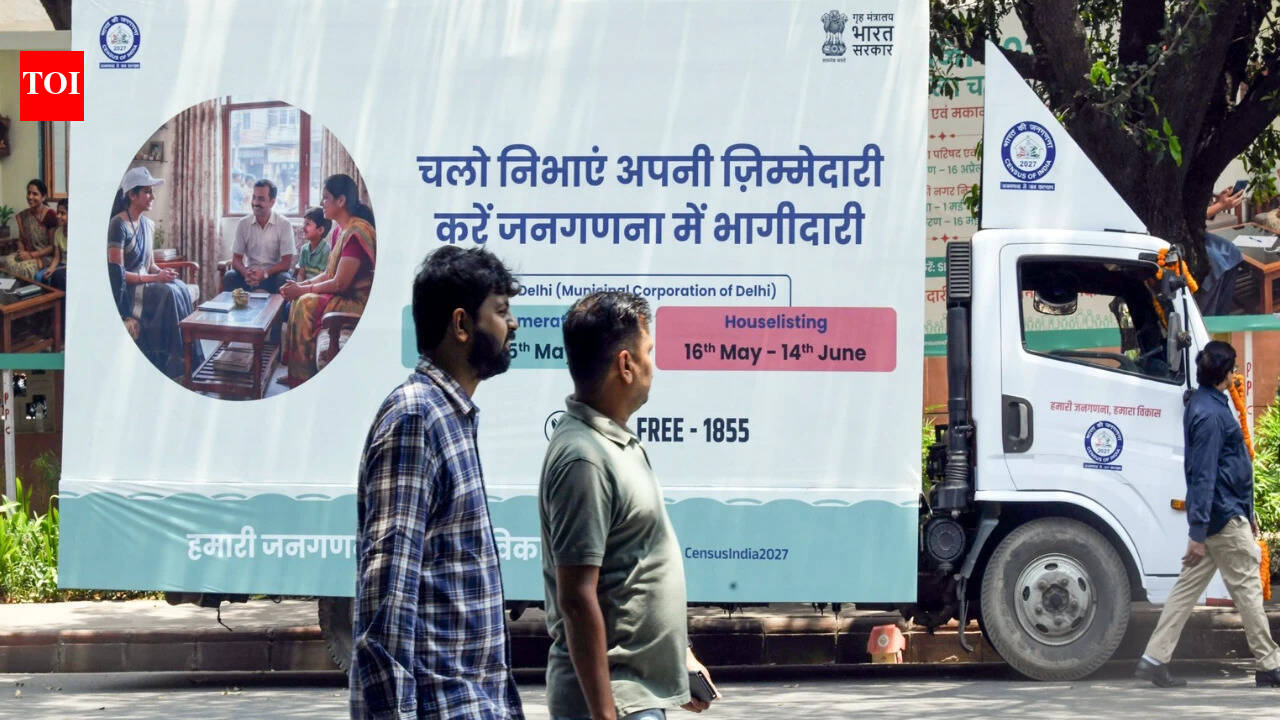
Image accompanying the supplied report on Census 2027 self-enumeration in four States and the planned house-to-house count; not independently verified as a photograph of the current exercise.
Image: Times of India
Why in news
The reports state that the current self-enumeration window will run until November 30, followed by house-to-house enumeration from December 1. The supplied excerpts identify Uttar Pradesh, Punjab and Goa but do not identify the fourth State or provide a revised schedule for Manipur.
4
States where self-enumeration began
November 30
Reported end of current window
December 1
Reported start of house-to-house enumeration
Background
The Census is a comprehensive statistical enumeration of the population and its characteristics. Census is a Union subject under Entry 69 of the Union List in the Seventh Schedule, and its principal statutory framework comprises the Census Act, 1948 and the Census Rules, 1990. The Office of the Registrar General and Census Commissioner, India, under the Ministry of Home Affairs, administers the exercise with State and local machinery. Census statistics provide a common demographic baseline for planning, research and constitutionally regulated processes concerning representation; they are not themselves a register of citizenship or a welfare-beneficiary list.
What the reports establish—and what remains unclear
The supplied reports establish the commencement of self-enumeration in four States and the postponement of the exercise in Manipur. They also give a sequence: the current window continues until November 30, and house-to-house enumeration follows from December 1.
The excerpts are incomplete. They do not establish the fourth State’s identity, the reason for Manipur’s postponement, the revised timetable or the technical design of the digital platform. The headline’s reference to Phase-II should not, without an official schedule, be treated as confirmation that this is the population-enumeration phase of the national Census.
- Distinguish a reporting label or scheduling tranche from the Census’s substantive operations of houselisting and population enumeration.
- Treat digital safeguards discussed below as requirements and recommendations, not as verified features of the reported platform.
- Do not infer that postponement necessarily means permanent exclusion; the key issue is whether complete and comparable coverage is subsequently secured.
Infographic
Lawful collection
Authorised questions within the statutory framework.
Digital inclusion
Accessible self-enumeration backed by field outreach.
Confidentiality
Protect identifiable returns and control access.
Complete coverage
Address omissions, duplication and postponed operations.
Public legitimacy
Reliable statistics for welfare and representative governance.
AI-assisted infographic by Pragnya IAS Academy, based on the cited sources.
Statutory authority must be matched by confidentiality
The Census Act empowers the Union government to conduct a Census and provides for the appointment and duties of census officers. Section 8 governs the asking of authorised questions and the obligation to answer them, subject to the Act’s provisions. Census officers must therefore collect information within the authorised questionnaire rather than seek unrelated personal details.
Section 15 protects census records by restricting inspection and their evidentiary use, subject to statutory exceptions. This confidentiality framework is central to obtaining candid responses. Publishing aggregate statistics must remain distinct from exposing identifiable household returns.
Digital collection also engages the constitutional right to privacy under Article 21, recognised in the Puttaswamy judgment. Lawful authority, a legitimate purpose, proportionality and effective safeguards should guide collection and processing. Digitisation changes the medium of collection, not the obligation to protect respondents.
- Census administration rests on Union legislative competence, while implementation requires coordination across levels of government.
- Confidential individual returns and publicly usable statistical outputs serve different purposes.
- Public communication should explain the Census’s statistical purpose and distinguish it from citizenship determination.
Digital self-enumeration: convenience without exclusion
Self-enumeration allows households to enter their information directly through a digital interface. It can reduce transcription errors and make participation more convenient, but it may also shift the burden of understanding classifications and completing the questionnaire onto respondents.
A credible design should provide multilingual instructions, accessible interfaces, opportunities to correct errors and secure handling of records. Encryption, role-based access, access logs and security testing are appropriate safeguards; their deployment in this exercise is not confirmed by the supplied excerpts.
Self-enumeration should complement, not replace, an inclusive field operation. Enumerator follow-up must reach households without reliable connectivity, devices, literacy or accessible digital services. Reconciliation between digital submissions and field records is necessary to avoid both omissions and duplicate counting.
- Provide assisted participation without making access to a smartphone a practical condition for being counted.
- Use clear questionnaire guidance and validation checks without preventing legitimate but unusual responses.
- Publish safe participation instructions and warnings against fraudulent websites or requests for unrelated information.
- Establish correction and grievance channels with protections against disclosure of household information.
Coverage gaps can become welfare-planning gaps
A Census supplies population denominators and information about settlement patterns, household conditions and demographic composition. Incomplete coverage can distort estimates of service needs and the distribution of infrastructure such as schools, health facilities, housing and water supply.
People with unstable residence, including migrants, homeless persons and displaced households, require particular attention. Omission can understate need, while counting the same household at multiple locations can inflate it. Clear residence rules and coordinated fieldwork are therefore as important as the digital interface.
Manipur’s postponement creates a need for a credible completion plan and transparent treatment of any resulting data limitations. The excerpts do not establish its cause. Census statistics may inform scheme design and population-based ceilings, but a census entry does not automatically confer an individual welfare entitlement.
- Use repeat visits and targeted outreach to reach households missed in the initial operation.
- Document coverage limitations rather than silently treating incomplete returns as a complete population count.
- Use administrative records and surveys as supplementary planning inputs, not as unexamined substitutes for enumeration.
Representative governance: Census data matter, but not automatically
Articles 82 and 170 connect census population data with the constitutional framework for readjusting parliamentary and Assembly representation. The relevant freeze provisions refer to publication of the figures of the first Census taken after 2026. Thus, completion of fieldwork or the Census’s title alone does not automatically change constituencies or seat allocations.
Any subsequent readjustment must follow the applicable constitutional and statutory process. Uneven or contested coverage could nevertheless weaken the evidentiary foundation and public legitimacy of representation-related decisions.
Accurate enumeration is therefore both an administrative and a democratic requirement. Concerns over representation and federal balance should be addressed through transparent constitutional deliberation, while protecting the Census from pressures to alter or suppress demographic findings.
- Distinguish population enumeration, publication of figures and legally authorised delimitation.
- Do not assume a particular redistribution of seats from the current reports.
- Ensure that debates on representation do not undermine public trust in statistical confidentiality.
| Dimension | Digital self-enumeration | House-to-house enumeration |
|---|---|---|
| Primary contribution | Convenient direct submission by households | Contact with households and coverage of those not reached digitally |
| Main exclusion risk | Connectivity, literacy, language and accessibility barriers | Missed dwellings, absent residents and difficult-to-reach locations |
| Main quality risk | Misinterpretation, incomplete entries or duplicate submissions | Recording errors, inadequate follow-up or inconsistent classification |
| Required safeguards | Secure access, clear guidance, validation and correction facilities | Training, supervision, repeat visits and safe field protocols |
| Common requirement | Confidentiality and reconciliation with field records | Confidentiality and reconciliation with digital records |
- 1. Explain authorised questions, confidentiality protections and participation options.
- 2. Enable secure self-enumeration with accessible guidance and correction facilities.
- 3. Conduct field visits to cover non-participants and resolve incomplete records.
- 4. Reconcile digital and field entries under consistent residence and counting rules.
- 5. Assess omissions, duplication and coverage limitations through quality checks.
- 6. Publish protected statistical outputs with appropriate methodological disclosures.
1948
The Census Act established the principal statutory framework for conducting the Census.
1990
The Census Rules provided the supporting procedural framework.
November 30
Reported closing date of the current self-enumeration window in the four States.
December 1
Reported start of the subsequent house-to-house enumeration.
Significance, challenges & way forward
Significance
- A complete Census provides a shared demographic baseline for evidence-based public expenditure and service delivery.
- Well-designed self-enumeration can improve convenience while allowing field effort to focus on households requiring assistance.
- Statutory confidentiality can strengthen public trust and improve the accuracy of responses.
- Reliable population statistics support the legitimacy of constitutionally regulated representation-related processes.
- Transparent completion of postponed operations can prevent temporary administrative gaps from becoming persistent statistical exclusion.
Challenges
- Digital inequality may produce uneven participation across social groups and locations.
- Incomplete source information leaves the precise scope of the current operation and Manipur’s revised schedule unverified.
- Migrants, homeless persons and displaced households face heightened risks of omission or duplicate counting.
- Cybersecurity failures or unauthorised disclosure could damage trust beyond the affected records.
- Staggered operations require consistent reference concepts and clear documentation to maintain comparability.
- Confusion between Census, welfare registration and citizenship processes may discourage accurate participation.
Way forward
- Publish an authoritative State-wise schedule and clearly identify the operation covered by each enumeration window.
- Provide Manipur with a publicly explained completion plan based on verified operational conditions, without presuming the cause of postponement.
- Retain effective field coverage and assisted participation for households unable to self-enumerate.
- Embed confidentiality through access controls, encryption, security audits and enforceable staff responsibilities.
- Train enumerators in residence rules, sensitive communication, accessibility and reconciliation of digital submissions.
- Use post-enumeration quality assessment and publish aggregate findings on coverage and methodological limitations.
- Keep statistical enumeration separate from decisions on individual eligibility or citizenship, and explain that distinction consistently.
Key terms
- Self-enumeration
- Direct completion of census information by a household through a designated interface rather than initial recording by an enumerator.
- Coverage error
- An error arising when persons or households are omitted, counted more than once or incorrectly included.
- Reference date
- The specified point in time to which particular census information relates, distinct from the date of collection.
- Statistical confidentiality
- Protection of identifiable respondent information while enabling authorised statistical use.
- Post-enumeration survey
- A separate survey used to assess coverage and content errors in a completed census.
- Delimitation
- The legally authorised process of fixing or readjusting territorial constituency boundaries.
- Population denominator
- The population base used to calculate rates, assess needs or compare service coverage.
Link with static syllabus
Prelims practice MCQs
Q1. With reference to the legal framework of the Census in India, consider the following statements: 1. Census is a subject in the Union List. 2. The Census Act, 1948 provides the principal statutory framework for conducting the Census. 3. The Election Commission of India administers the Census. Which of the statements given above are correct?
Q2. Consider the following statements about digital self-enumeration: 1. Digital participation by some households eliminates the need to assess omissions. 2. Reconciliation between digital submissions and field records can help prevent duplicate counting. 3. Digital collection removes the need for statutory confidentiality. Which of the statements given above is/are correct?
Q3. Which of the following best describes the relationship between Census data and delimitation in India?
Q4. With reference to the Census and welfare governance, consider the following statements: 1. Census statistics can inform assessments of public-service requirements. 2. Inclusion in a Census return automatically establishes eligibility for every welfare scheme. 3. Undercounting can distort population-based measures of service coverage. Which of the statements given above are correct?
Mains practice questions
GS 2 · 15 marks · 250 words
Digital self-enumeration can modernise the Census, but complete coverage and public trust remain its foundations. Discuss with reference to statutory safeguards, welfare planning and representative governance.
Frequently asked questions
Which States have begun Census 2027 self-enumeration?
The supplied reports say four States have begun, but the available excerpt names only Uttar Pradesh, Punjab and Goa. The fourth State cannot be established from the supplied material.
Why has the exercise in Manipur been postponed?
The supplied excerpts report postponement but do not give its reason or a revised schedule. An authoritative notification is needed before attributing a cause.
Does self-enumeration replace house-to-house enumeration?
The reports describe self-enumeration as being followed by house-to-house enumeration from December 1. Digital participation should be reconciled with field records to secure coverage and avoid duplication.
Will Census 2027 automatically change parliamentary seats?
No. Relevant published census figures must operate through the applicable constitutional and statutory framework; enumeration alone does not change seats or constituency boundaries.
Sources
- Times of India: Census Phase-II starts in 4 poll-bound states, postponed in Manipur
- Times of India: Census 2027: Self-enumeration begins in four states, house-to-house count from December 1
Analysis prepared by the Pragnya IAS Academy current-affairs desk with AI assistance from the cited reports. Verify figures with the original sources.
Turn current affairs into marks
Join Pragnya IAS Academy's mentorship for daily answer-writing evaluation on stories like this — classroom programmes from a trusted name in IAS coaching in Hyderabad.