
India’s HPV Vaccination Milestone: Coverage, Equity and Cervical Cancer Prevention
Revise the static topic: UPSC Social Justice notes · UPSC Science & Technology notes
In short: India has administered more than one crore HPV vaccine doses within nine months of its nationwide campaign, reaching 87 per cent of eligible girls, according to a government statement reported by The Indian Express. The milestone strengthens cervical cancer prevention, but equitable coverage, continued screening and timely treatment remain essential.
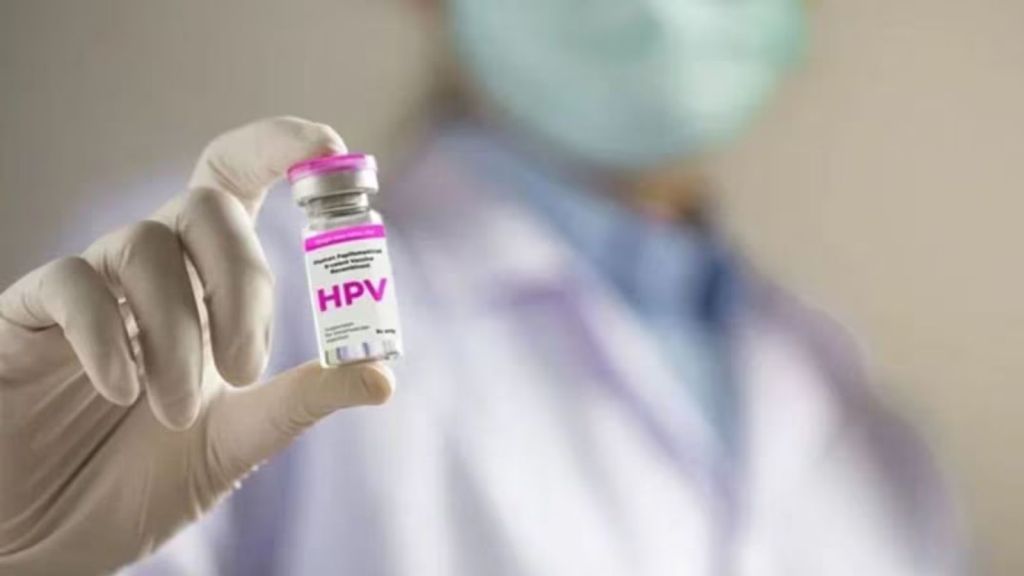
HPV vaccination supports cervical cancer prevention and equitable access to preventive healthcare. Reference view, not documentation of the reported campaign milestone.
Image: Indian Express
Why in news
The government has reported that six states achieved 100 per cent coverage under the campaign targeting 14-year-old girls. Differences in reported state coverage highlight the need to move from aggregate vaccination achievements towards equitable and sustained protection.
More than 1 crore
HPV vaccine doses administered
9 months
Reported campaign duration
87%
Eligible girls reached
14 years
Target age of girls
1.2 crore
Estimated annual beneficiaries
6 states
Reported full coverage
Background
Cervical cancer develops in the cervix, the lower part of the uterus. Persistent infection with high-risk human papillomavirus is its principal cause, although most HPV infections do not progress to cancer. HPV vaccination is primary prevention: it helps prevent infection with vaccine-covered types rather than treating an existing infection or cancer. Screening is secondary prevention, enabling identification of high-risk infection or precancerous changes before invasive cancer develops. An effective public-health response therefore combines adolescent vaccination with age-appropriate screening, diagnosis and treatment.
What the campaign has achieved
Launched on February 28, the nationwide campaign aims to immunise every 14-year-old girl, covering an estimated annual cohort of 1.2 crore beneficiaries. The reported achievement of more than one crore doses and 87 per cent coverage indicates substantial reach within the target group.
Gujarat, Uttar Pradesh, Andhra Pradesh, Mizoram, Madhya Pradesh and Bihar have reported 100 per cent coverage. Uttar Pradesh leads in absolute numbers, with more than 29.33 lakh girls vaccinated. Absolute numbers measure programme scale, whereas coverage percentages measure reach relative to the eligible population.
- The reported 87 per cent coverage concerns eligible girls, not all girls or all women in India.
- Full reported coverage in a state does not mean that cervical cancer has been eliminated.
- Annual incoming cohorts require sustained delivery beyond the initial campaign.
Infographic
Vaccinate
Protect eligible adolescents against vaccine-covered HPV types.
Include
Reach missed girls through school and community channels.
Screen
Continue age-appropriate screening despite vaccination.
Treat
Connect abnormal findings to diagnosis and timely care.
Build trust
Provide clear information and transparent safety monitoring.
AI-assisted infographic by Pragnya IAS Academy, based on the cited sources.
How HPV vaccination prevents cervical cancer
The campaign uses the quadrivalent Gardasil vaccine, covering HPV types 16, 18, 6 and 11. Types 16 and 18 are high-risk cancer-associated types; types 6 and 11 are principally associated with genital warts. Vaccination before exposure provides preventive protection.
The source reports that the WHO Strategic Advisory Group of Experts on Immunization supported a single-dose approach for relevant younger age groups in 2022, with strong efficacy evidence among children aged nine to 14. A single-dose approach can reduce repeat-visit requirements and simplify delivery, but this should not be interpreted as a universal schedule for every clinical group.
According to the report, the similar vaccine developed by the Serum Institute of India was not initially included because WHO pre-qualification and approval for single-dose use were pending. Its possible later inclusion should be treated as an anticipated development, not a completed procurement decision.
- The vaccine is preventive, not a treatment for existing HPV infection or cervical cancer.
- Protection against selected HPV types does not remove the need for screening.
- Vaccine selection must combine regulatory assurance, reliable supply and programme suitability.
Coverage equity: look beyond national averages
Reported coverage varies across states and Union Territories. Telangana reached 95.28 per cent, compared with 77.02 per cent in Kerala and 74.90 per cent in Odisha. These figures identify differences in reported reach, but the supplied material does not establish their causes.
State averages may conceal district-level and social gaps. Out-of-school girls, migrants, adolescents in remote settlements and girls with disabilities require deliberate inclusion in beneficiary identification and service delivery. These are implementation risks to assess, not documented explanations for the reported state differences.
- Combine school-linked mobilisation with community and health-facility outreach.
- Validate eligibility denominators and beneficiary records before interpreting full-coverage claims.
- Use district-level reviews to identify missed girls rather than relying only on state rankings.
- Protect adolescent privacy while coordinating health, education and local-government systems.
Why screening and public awareness remain indispensable
Vaccinating adolescents primarily reduces future risk; it does not address all existing infections or disease among adult women. Eligible women, including vaccinated women, should continue screening under applicable clinical guidance because the vaccine does not cover every cancer-causing HPV type.
Screening must connect to diagnosis and treatment. Finding an abnormality without affordable referral, follow-up and treatment creates a break in the prevention pathway. Public communication should explain this continuum and distinguish vaccination, screening and cancer treatment.
Awareness efforts should address misinformation without stigma, explain expected adverse effects and reporting channels, and support informed consent under programme rules. Article 47 provides a constitutional policy anchor by making improvement of public health a duty of the State.
- Explain that persistent high-risk infection, rather than every HPV infection, is the key concern.
- Avoid messaging that implies vaccination guarantees complete protection from cervical cancer.
- Integrate adolescent prevention with accessible services for adult women.
| Component | Purpose | Important limitation |
|---|---|---|
| HPV vaccination | Prevents infection with vaccine-covered HPV types | Does not treat existing infection or cover every cancer-causing type |
| Cervical screening | Identifies high-risk infection or precancerous changes | An abnormal result requires appropriate follow-up |
| Diagnosis and treatment | Confirms disease and manages precancer or cancer | Benefits depend on timely access and continuity of care |
| Public awareness | Supports informed uptake and appropriate care-seeking | Communication cannot substitute for available services |
- 1. Identify eligible girls through validated school and community records.
- 2. Provide clear information and obtain consent under applicable programme rules.
- 3. Deliver vaccination with appropriate storage, documentation and safety monitoring.
- 4. Identify and reach missed beneficiaries through local follow-up.
- 5. Continue age-appropriate cervical screening for eligible women, regardless of vaccination status.
- 6. Link abnormal screening findings to diagnosis and timely treatment.
2022
WHO’s Strategic Advisory Group of Experts on Immunization supported a single-dose HPV vaccination approach for relevant younger age groups, as reported in the source.
February 28
The nationwide campaign targeting 14-year-old girls was launched.
Nine months into the campaign
The government reported more than one crore doses, 87 per cent coverage and full coverage in six states.
Significance, challenges & way forward
Significance
- Large-scale adolescent vaccination strengthens primary prevention of cervical cancer.
- A single-dose approach can reduce repeat-visit barriers and simplify programme delivery.
- Public immunisation can reduce dependence on household purchasing power for preventive protection.
- The campaign offers an opportunity to strengthen adolescent-health outreach and interdepartmental coordination.
- Combining vaccination with screening can connect prevention across different stages of women’s lives.
Challenges
- National and state averages can conceal missed beneficiaries and local coverage gaps.
- Uncertain denominators, migration and duplicate records can weaken interpretation of administrative coverage.
- Misinformation and stigma surrounding HPV can undermine informed acceptance.
- Vaccination success may create false reassurance unless the continuing need for screening is clearly communicated.
- Screening delivers limited benefit if diagnostic referral, treatment and follow-up remain inaccessible.
- The supplied reports do not provide district-level equity data, screening coverage or long-term cancer outcomes.
Way forward
- Conduct district-level coverage reviews and targeted catch-up outreach for missed eligible girls.
- Combine school-based mobilisation with community channels to include out-of-school and mobile populations.
- Independently validate coverage data while safeguarding adolescent health information.
- Strengthen vaccine safety surveillance and communicate transparently about adverse-event assessment.
- Expand screening alongside dependable referral, affordable treatment and patient navigation.
- Plan predictable vaccine procurement and assess domestic supply options subject to applicable quality and regulatory requirements.
- Track sustained cohort coverage and prevention outcomes rather than treating doses administered as the sole measure of success.
Key terms
- Human papillomavirus
- A group of viruses, some types of which can cause cancer when infection persists.
- Persistent high-risk HPV infection
- Continuing infection with a cancer-associated HPV type that can lead to precancerous changes.
- Quadrivalent vaccine
- A vaccine designed to protect against four specified types of a pathogen.
- Primary prevention
- Measures that prevent disease from developing, such as vaccination against an infection associated with cancer.
- Secondary prevention
- Early detection and intervention to prevent progression of disease or precancerous changes.
- Administrative coverage
- Recorded beneficiaries reached as a proportion of the estimated eligible population.
- WHO pre-qualification
- WHO assessment of a health product’s quality, safety, efficacy and programme suitability for international procurement.
Link with static syllabus
Prelims practice MCQs
Q1. With reference to HPV vaccination and cervical cancer, consider the following statements: 1. HPV vaccination is a form of primary prevention. 2. HPV vaccination treats an established cervical cancer. 3. Vaccinated women may still require cervical screening under applicable guidance. Which of the statements given above are correct?
Q2. The quadrivalent Gardasil vaccine used in the reported campaign covers which of the following HPV types?
Q3. Which constitutional provision explicitly places improvement of public health among the duties of the State?
Q4. With reference to the reported nationwide HPV vaccination campaign, consider the following statements: 1. Its target group is every 14-year-old girl in the country. 2. The reported 87 per cent coverage refers to all women in India. 3. Reported full vaccination coverage in a state establishes that cervical cancer has been eliminated there. Which of the statements given above is/are correct?
Mains practice questions
GS 2 · 15 marks · 250 words
India’s HPV vaccination milestone is an important step towards cervical cancer prevention, but vaccination alone is insufficient. Discuss with reference to equitable coverage, screening and public awareness.
Frequently asked questions
Who is eligible under the reported nationwide HPV vaccination campaign?
The campaign targets every 14-year-old girl in India, with an estimated annual cohort of 1.2 crore beneficiaries. This programme target should not be confused with the full range of ages for which vaccination may be clinically recommended.
Does HPV vaccination remove the need for cervical screening?
No. Vaccination does not cover every cancer-causing HPV type or treat an existing infection, so eligible women should continue screening under applicable clinical guidance.
Which states have reported full coverage?
Gujarat, Uttar Pradesh, Andhra Pradesh, Mizoram, Madhya Pradesh and Bihar have reported 100 per cent coverage of the eligible cohort.
Does one crore doses mean cervical cancer has already declined?
No. Doses administered measure delivery, while cancer reduction is a longer-term outcome requiring separate evidence and surveillance.
Sources
- Indian Express: India crosses 1 crore HPV vaccinations in 9 months, 6 states hit 100% mark
- Times of India: India crosses 1 crore HPV vax in 9 months
Analysis prepared by the Pragnya IAS Academy current-affairs desk with AI assistance from the cited reports. Verify figures with the original sources.
Turn current affairs into marks
Join Pragnya IAS Academy's mentorship for daily answer-writing evaluation on stories like this — classroom programmes from a trusted name in IAS coaching in Hyderabad.