
WHO Flags AMR Implementation Gaps: Financing, Diagnostics and One Health
Revise the static topic: UPSC Social Justice notes · UPSC Science & Technology notes
In short: WHO reports that 173 countries have developed antimicrobial resistance action plans, but only 22 per cent of countries report both adequate funding and full implementation. Weak laboratory capacity, surveillance and treatment guidance underline the need to turn plans into funded One Health action while ensuring equitable access to effective medicines.
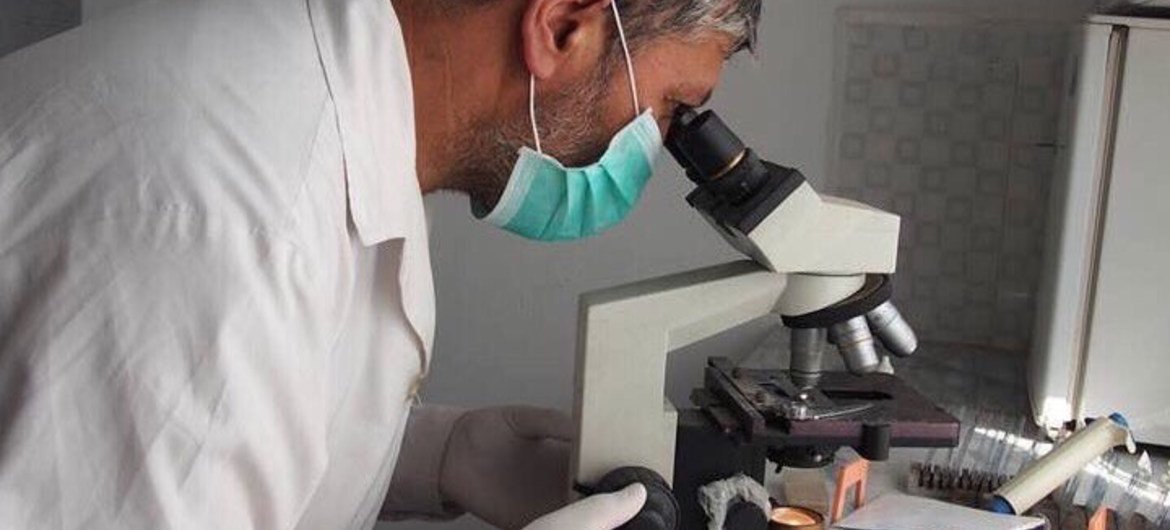
Reference view of a scientist using a microscope in a laboratory. Laboratory capacity is essential to diagnosing infections and strengthening antimicrobial resistance surveillance.
Image: UN News
Why in news
WHO released findings from the latest Tracking Antimicrobial Resistance Country Self-assessment Survey ahead of World AMR Awareness Week, observed from 18 to 24 November. The findings highlight a widening gap between adopting national plans and delivering effective prevention, diagnosis and treatment.
173
Countries reporting AMR action plans
22%
Countries reporting funding and full implementation
36%
Countries reporting equipped national reference laboratories
63%
Countries reporting appropriate-use guidelines
One in six
Laboratory-confirmed bacterial infections resistant in 2023
80%
Country testing-capacity target for 2030
Background
Antimicrobial resistance occurs when bacteria, viruses, fungi or parasites no longer respond to medicines intended to treat them. Antibiotic resistance is a subset concerning bacteria. Resistance can emerge naturally, but inappropriate antimicrobial use accelerates selection of resistant organisms, while inadequate sanitation and infection control facilitate their spread. One Health recognises the interdependence of human, animal and ecosystem health, making AMR a shared health, agricultural and environmental governance challenge rather than merely a prescribing problem.
What the WHO findings establish
The latest TrACSS survey was completed by 183 countries. Countries reporting national AMR plans increased from 79 in 2017 to 173, but only 22 per cent of countries report both the necessary funding and full implementation.
Only 36 per cent report a national reference laboratory equipped to test the selected bacteria and fungi. This falls well short of the global target of comprehensive bacterial and fungal resistance testing capacity in 80 per cent of countries by 2030.
These are country self-assessments of capacities and implementation. They should not be read as independently verified service coverage or as measurements of the proportion of patients receiving appropriate care.
- Only 63 per cent of countries report guidelines on appropriate antimicrobial use.
- Just over half report systems to monitor national antibiotic use and track AMR.
- The reported resistance estimate concerns laboratory-confirmed bacterial infections, not all infections or all antimicrobial classes.
Infographic
Finance
Fund costed plans and assign accountability.
Prevent
Reduce infections through sanitation and infection control.
Diagnose
Make quality testing accessible and timely.
Treat responsibly
Combine stewardship with equitable medicine access.
Track
Link resistance surveillance with antimicrobial-use data.
Coordinate
Unite human, animal and environmental action.
AI-assisted infographic by Pragnya IAS Academy, based on the cited sources.
Diagnostics and surveillance: the missing feedback loop
Without adequate testing, clinicians may prescribe an ineffective antibiotic or use one when it is unnecessary. Resistant infections and outbreaks can also remain undetected, delaying both patient treatment and public-health responses.
Surveillance must connect laboratory findings with clinical information and antimicrobial-use data. Resistance data identify which medicines are losing effectiveness; use data help identify prescribing patterns that require investigation. Neither alone provides a complete picture.
For India, the policy priority should be a quality-assured laboratory referral network connecting peripheral facilities with higher-level laboratories. Affordable sample collection, transport, timely reporting and public-private data integration are as important as establishing laboratories.
- Testing capacity must translate into accessible, timely services rather than remain confined to reference institutions.
- Surveillance interpretation should account for uneven testing and the populations represented in laboratory samples.
- Local resistance findings should inform treatment guidelines and outbreak responses.
Reference view of an outpatient consultation at a community health centre in Jhabua district, India. Clinical care needs reliable diagnostic feedback and treatment guidance to support appropriate prescribing.
Image: UN News
Stewardship must protect access, not merely restrict use
Antimicrobial stewardship means optimising the choice, dose, route and duration of treatment. It includes appropriate empirical treatment when urgently needed, followed by review as clinical and laboratory information becomes available.
A policy focused only on reducing consumption can overlook patients who lack timely access to effective treatment. WHO therefore stresses equitable access to essential antimicrobials alongside quality diagnostics, surveillance and infection prevention.
- Use prescribing audits and feedback to improve clinical decisions rather than impose indiscriminate prescribing cuts.
- Collect diagnostic samples where feasible without delaying urgent treatment for severe infection.
- Maintain reliable supplies of quality-assured medicines while enforcing appropriate prescription requirements.
- Reduce avoidable antimicrobial demand through vaccination, sanitation and infection prevention.
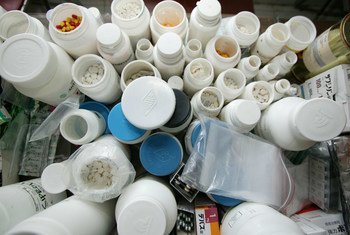
Reference view of pills, capsules and medicine packaging. Antimicrobial stewardship must promote appropriate medicine use while protecting equitable access to effective treatment.
Image: UN News
Funded One Health plans: from coordination to accountability
Human healthcare alone cannot address AMR. Antimicrobial use in animals, transmission between populations and contamination of shared environments require coordinated action across health, animal husbandry, agriculture and environmental authorities.
National plans should assign responsibilities, cost activities and provide predictable budgets. Shared indicators should link financing to functioning laboratories, appropriate treatment, infection prevention and environmental safeguards rather than merely count meetings or published documents.
In India, public health and sanitation, hospitals and dispensaries are principally State List subjects. Effective implementation therefore requires Centre–State coordination, with national support for standards and surveillance and state-level ownership of service delivery.
- Create joint implementation arrangements with clearly identified departmental responsibilities.
- Include veterinary stewardship, farm biosecurity and appropriate waste management in AMR action.
- Publish progress against funded milestones and address capacity gaps across regions.
| Gap identified | Policy response |
|---|---|
| Plans without adequate funding and implementation | Cost activities, assign responsibilities and provide predictable budgets. |
| Insufficient bacterial and fungal testing capacity | Build quality-assured laboratory networks with accessible sample referral. |
| Incomplete resistance and antibiotic-use monitoring | Link laboratory, clinical and antimicrobial-use information. |
| Gaps in appropriate-use guidelines | Update guidance using resistance evidence and support prescribing audits. |
| Unequal access to diagnostics and effective treatment | Improve affordability, medicine availability and timely clinical care. |
| Fragmented sectoral action | Coordinate human, animal and environmental interventions through One Health. |
- 1. Fund a costed One Health plan with accountable institutions.
- 2. Prevent infections through sanitation, vaccination, biosecurity and infection control.
- 3. Provide timely diagnosis through accessible, quality-assured laboratories.
- 4. Ensure appropriate treatment and equitable access to effective antimicrobials.
- 5. Monitor resistance, antimicrobial use and implementation outcomes.
- 6. Use findings to revise guidelines, budgets and interventions.
2017
WHO's comparison records 79 countries with AMR action plans.
2023
Around one in six laboratory-confirmed bacterial infections worldwide were resistant to antibiotics.
Latest TrACSS release
The survey, completed by 183 countries, records 173 countries with plans but major implementation gaps.
2030 target
The global target is comprehensive bacterial and fungal resistance testing capacity in 80 per cent of countries.
Significance, challenges & way forward
Significance
- Effective AMR control protects the safety of surgery, childbirth and cancer care, which depend on reliable infection prevention and treatment.
- Accessible diagnostics improve treatment selection and help detect resistant infections and outbreaks.
- Funded implementation converts international commitments into functioning public-health services.
- One Health coordination addresses connected risks across people, animals and the environment.
- An access-sensitive approach prevents stewardship from becoming a barrier to essential treatment.
Challenges
- Adoption of national plans does not ensure adequate financing, institutional capacity or implementation.
- Laboratory infrastructure alone is insufficient without trained staff, quality assurance, sample transport and timely reporting.
- Uneven testing can produce surveillance gaps and limit the representativeness of resistance estimates.
- Fragmented responsibilities can weaken coordination across human health, animal health and environmental regulation.
- Prescribing restrictions can fail if affordable diagnostics and effective medicines remain inaccessible.
- Country self-assessments require complementary service-level monitoring to establish actual delivery.
Way forward
- Provide predictable financing for costed national and subnational AMR plans with named implementing agencies.
- Strengthen laboratory referral networks and make quality diagnostics affordable and clinically usable.
- Integrate resistance surveillance with antimicrobial-use monitoring across public and private providers.
- Institutionalise stewardship through treatment guidelines, prescription review, clinician training and audit feedback.
- Combine appropriate-use regulation with reliable access to quality-assured essential antimicrobials.
- Embed veterinary action, environmental safeguards and infection prevention within funded One Health programmes.
- Assess progress through service delivery and health outcomes, not the existence of plans alone.
Key terms
- Antimicrobial resistance
- The ability of microorganisms to withstand medicines intended to treat infections caused by them.
- Antibiotic resistance
- Resistance in bacteria to antibiotics; it is a subset of antimicrobial resistance.
- One Health
- An integrated approach recognising the interdependence of human, animal and ecosystem health.
- Antimicrobial stewardship
- Coordinated action to optimise antimicrobial selection and use while securing effective patient treatment.
- TrACSS
- The Tracking Antimicrobial Resistance Country Self-assessment Survey used to monitor countries' reported AMR response.
- Antimicrobial susceptibility testing
- Laboratory testing to determine whether a microorganism is susceptible or resistant to particular antimicrobial medicines.
- Empirical treatment
- Treatment selected using clinical assessment and likely causes before definitive organism-specific results are available.
Link with static syllabus
Prelims practice MCQs
Q1. With reference to antimicrobial resistance, consider the following statements: 1. Antibiotic resistance is a subset of antimicrobial resistance. 2. Antimicrobial resistance means that a patient's body becomes resistant to medicines. 3. Resistant infections can make surgery and cancer care riskier. Which of the statements given above are correct?
Q2. Consider the following statements about the WHO findings cited in the report: 1. The number of countries reporting AMR action plans has more than doubled since 2017. 2. Most countries report both adequate funding and full implementation of their plans. 3. TrACSS is a country self-assessment survey. Which of the statements given above are correct?
Q3. Which of the following best describes antimicrobial stewardship?
Q4. With reference to One Health action against AMR, consider the following statements: 1. It requires attention to human, animal and ecosystem health. 2. Monitoring antibiotic use and monitoring resistance provide identical information. 3. Infection prevention can reduce the need for antimicrobials. Which of the statements given above are correct?
Mains practice questions
GS 2 · 15 marks · 250 words
The proliferation of national antimicrobial resistance action plans has not ensured effective implementation. Examine the gaps and suggest an access-sensitive One Health strategy for India.
Frequently asked questions
What is the central message of the WHO findings?
More countries have AMR plans, but financing and implementation remain inadequate. A published plan cannot substitute for functioning diagnostics, surveillance, infection prevention and treatment services.
Does the one-in-six figure apply to all infections?
No. The cited estimate refers to laboratory-confirmed bacterial infections worldwide in 2023 that were resistant to antibiotics, not all infections.
Why is AMR a One Health issue?
Resistance can emerge and spread across connected human, animal and environmental settings. Effective action therefore requires coordinated interventions beyond hospitals.
Does stewardship mean withholding antibiotics?
No. It means using antimicrobials appropriately while ensuring timely treatment for those who need them, supported by clinical assessment, diagnostics and treatment review.
Sources
- UN News: ‘An unfulfilled plan helps no one’: Superbug plans have doubled, but few countries are delivering
Analysis prepared by the Pragnya IAS Academy current-affairs desk with AI assistance from the cited reports. Verify figures with the original sources.
Turn current affairs into marks
Join Pragnya IAS Academy's mentorship for daily answer-writing evaluation on stories like this — classroom programmes from a trusted name in IAS coaching in Hyderabad.