
ICJ Rohingya Genocide Ruling: State Responsibility, Enforcement and Safe Return
Revise the static topic: UPSC International Relations notes
In short: According to the supplied reports from The Hindu, the International Court of Justice ruled on November 19, 2026 that Myanmar committed genocide against the Rohingya, ordering safe, voluntary and dignified return, investigation and punishment of those responsible, and compensation. The judgment establishes state responsibility under the Genocide Convention, but translating legal accountability into refugee protection depends on implementation, security and restoration of rights.
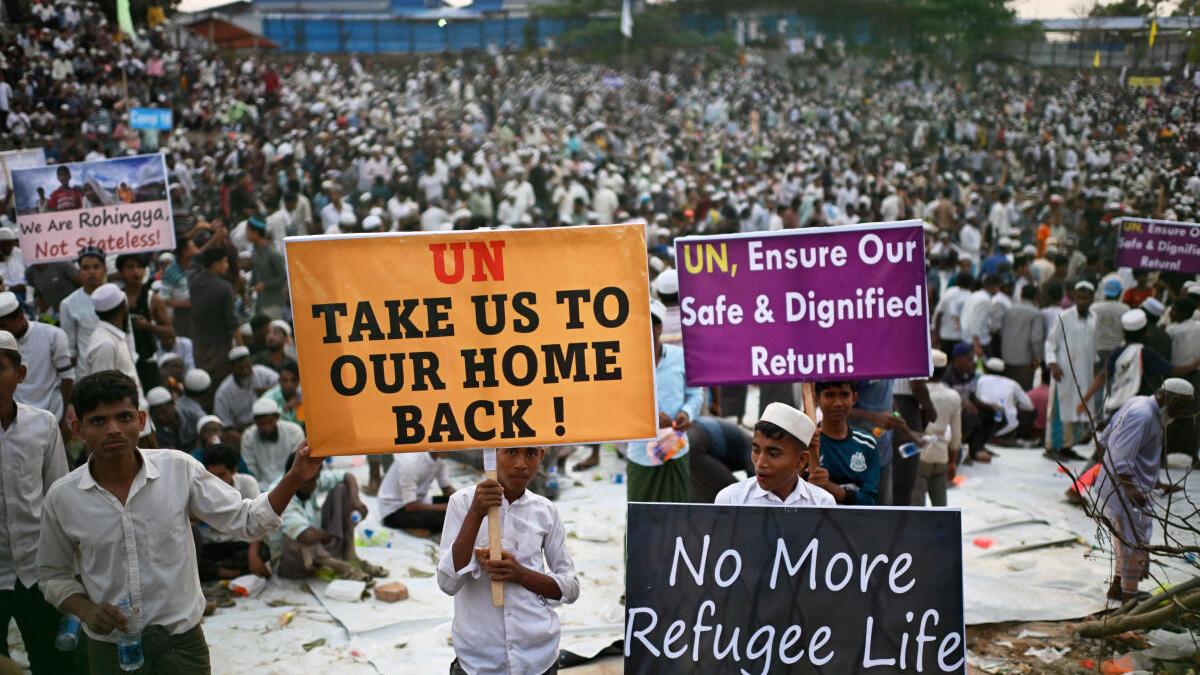
Reference image accompanying coverage of the Rohingya refugee crisis and the ICJ case against Myanmar; not a photograph of the reported judgment.
Image: The Hindu
Why in news
The supplied reports describe an ICJ judgment against Myanmar in the case brought by The Gambia under the Genocide Convention. It places renewed attention on the gap between binding international judgments and enforceable guarantees for displaced Rohingya.
More than a million
Rohingya living outside Myanmar, as reported
Around 10,000
Deaths indicated by evidence cited in the reported ruling
Seven years
Duration of ICJ consideration reported by the source
Background
The Rohingya are a predominantly Muslim ethnic minority associated with Myanmar’s Rakhine State, historically known as Arakan, which borders Bangladesh. Their displacement is rooted in exclusion from citizenship, restrictions on movement, contested narratives of belonging and recurrent violence. The International Court of Justice, based in The Hague, is the principal judicial organ of the United Nations and adjudicates legal disputes between states on the basis of jurisdiction accepted by them. The Genocide Convention obliges its parties to prevent and punish genocide; proceedings concerning state responsibility are distinct from criminal trials of individuals.
What the reported judgment decides
The supplied reporting states that the ICJ found Myanmar responsible for genocide against the Rohingya in northern Rakhine State during the military’s 2017 operations. It describes killings, widespread sexual violence, extreme violence against children and systematic destruction of villages as evidence considered by the Court.
According to the report, the Court concluded that the only reasonable inference from the evidence was an intention to destroy a substantial part of the protected group. Myanmar’s argument that its operations responded to insurgent attacks did not displace the reported finding of genocidal intent.
The reported remedies connect accountability with return and reparation. However, the excerpts do not reproduce the complete operative judgment; detailed implementation arrangements should not be inferred from them.
- Myanmar was directed to allow and facilitate safe, voluntary and dignified return to refugees’ places of residence.
- The reporting states that Myanmar must investigate and punish those responsible for genocide, subject to lawful proceedings.
- Compensation was provided for, with its amount to be determined later.
- The ruling concerns Myanmar’s international responsibility, not the criminal conviction of any named individual.
Infographic
Accountability
State responsibility and lawful proceedings against individual perpetrators.
Implementation
Binding obligations backed by monitoring and coordinated diplomacy.
Immediate protection
Prevent renewed violence, retaliation and coercive return.
Rights restoration
Citizenship reform, identity documents, movement and property remedies.
Durable return
Free choice, verified safety, dignity and sustainable livelihoods.
AI-assisted infographic by Pragnya IAS Academy, based on the cited sources.
Genocide Convention: intent, attribution and standing
Genocide requires a prohibited act committed with the specific intent to destroy, in whole or in part, a national, ethnical, racial or religious group as such. The prohibited acts include killing, causing serious bodily or mental harm, deliberately imposing destructive conditions of life, preventing births and forcibly transferring children. Mass displacement or extensive civilian suffering does not, by itself, establish every element of genocide.
State responsibility requires a legally relevant breach attributable to the state. Conduct of state organs, including armed forces, is generally attributable to the state under international law. Responsibility for committing genocide must be distinguished from separate responsibility for failing to prevent or punish it.
The Convention’s obligations protect a common interest of its parties, often described as obligations erga omnes partes. This explains why a state need not itself be the direct victim to invoke another party’s responsibility. Nevertheless, the ICJ’s jurisdiction must still be established under an applicable legal basis, including the Convention’s dispute-settlement clause where available.
- Article I establishes the undertaking to prevent and punish genocide.
- Article II defines genocide and its protected groups.
- Article IX provides for ICJ adjudication of Convention-related disputes, including disputes concerning state responsibility, subject to applicable jurisdictional conditions.
- A security operation against insurgents cannot legally justify genocide against a protected group.
Binding judgment, constrained enforcement
ICJ judgments in contentious cases are binding on the parties and final, with no ordinary appeal. Under Article 94 of the UN Charter, UN members undertake to comply with ICJ decisions in cases to which they are parties. If a party fails to comply, the other party may approach the Security Council, which may make recommendations or decide measures to give effect to the judgment.
The ICJ has no independent police force or automatic sanctions mechanism. Security Council discretion, permanent-member vetoes, geopolitical interests and resistance by domestic authorities can obstruct implementation. A binding legal obligation therefore does not guarantee immediate compliance.
The judgment may influence interpretation of genocidal intent and remedies in other disputes, including the separately reported proceedings concerning Gaza. However, Article 59 of the ICJ Statute limits a judgment’s binding force to the parties and the particular case; other disputes require independent assessment of jurisdiction, facts and evidence.
- Judicial authority and coercive enforcement are institutionally separate.
- Diplomatic pressure and coordinated compliance monitoring can support implementation but do not substitute for Myanmar’s obligations.
- Compensation requires further determination and practical arrangements for reaching victims.
- Pressure measures should be designed to avoid worsening civilian deprivation.
Refugee protection: a legal victory is not yet a safe return
The central protection question is whether refugees can return without renewed persecution, coercion or confinement. Safe passage across a border is only the beginning: sustainable return requires physical security, legal identity, citizenship reform, freedom of movement, access to livelihoods and remedies for lost homes and land.
Voluntariness requires informed and individual choice rather than pressure generated by deteriorating camp conditions or withdrawal of assistance. Non-refoulement protects against return to specified serious risks under applicable refugee and human-rights law. A return order directed at Myanmar does not itself establish that conditions are safe or authorise host countries to compel repatriation.
For India, the issue links neighbourhood diplomacy, border management and protection of vulnerable persons. India is not a party to the Refugee Convention or its Protocol, but constitutional guarantees under Articles 14 and 21 apply to persons, not only citizens. Refugee-related decisions must therefore be considered alongside applicable domestic law, due process and individual protection risks.
- Bangladesh’s hosting role requires sustained international responsibility-sharing rather than an assumption of indefinite unilateral responsibility.
- Independent access to return areas is necessary to verify security and rights conditions.
- Rohingya participation is essential in decisions on return, restitution and citizenship.
- Protection must also cover Rohingya remaining inside Myanmar, including those exposed to possible retaliation.
| Dimension | International Court of Justice | International Criminal Court |
|---|---|---|
| Institutional character | Principal judicial organ of the United Nations | Treaty-based international criminal court |
| Who is before the court? | States in contentious proceedings | Individuals accused of crimes within its jurisdiction |
| Relevant legal question | Whether a state breached its international obligations | Whether an individual bears criminal responsibility |
| Jurisdiction | Requires a recognised basis of state consent | Depends on the Rome Statute’s jurisdictional and admissibility requirements |
| Possible outcome | Declaration of breach and orders concerning cessation, reparation or other remedies | Acquittal or conviction, with punishment and possible reparations |
| Enforcement dependence | Relies on state compliance and available UN Charter mechanisms | Relies heavily on state cooperation, including arrest and surrender |
- 1. Establish the state’s breach and identify binding remedial obligations.
- 2. Secure cessation of violations and protection against recurrence or retaliation.
- 3. Verify safety, legal status, freedom of movement and access to homes and livelihoods.
- 4. Enable refugees to make informed and voluntary individual decisions.
- 5. Facilitate dignified return with independent monitoring and access to remedies.
- 6. Sustain reintegration through citizenship reform, restitution, compensation and accountability.
1948
The Genocide Convention established the treaty framework for preventing and punishing genocide.
2012
Communal violence intensified the Rohingya crisis and exposed unresolved issues of citizenship, identity and exclusion.
August 2017
Insurgent attacks were followed by Myanmar military operations involving widespread violence and displacement into Bangladesh.
2021
Myanmar’s military ousted the elected government, further complicating the political context for accountability and return.
November 19, 2026
According to the supplied reports, the ICJ found Myanmar responsible for genocide and ordered measures concerning return, accountability and compensation.
Significance, challenges & way forward
Significance
- The reported ruling recognises the Rohingya’s persecution as a matter of international legal responsibility, not merely a humanitarian emergency.
- The case illustrates how treaty parties can defend a shared legal interest even when they are not directly injured.
- The remedies link accountability with victims’ needs for return, reparation and protection.
- The judgment strengthens the basis for coordinated diplomacy while exposing the limits of judicial action without political implementation.
- For India, the crisis demonstrates the interdependence of neighbourhood stability, migration governance and human rights.
Challenges
- Myanmar’s willingness and capacity to implement the judgment remain uncertain.
- Security Council action may be constrained by geopolitical divisions and veto politics.
- Citizenship exclusion and restrictions on movement could reproduce persecution even after physical return.
- Destroyed homes, contested property and insecurity complicate restitution and reintegration.
- Host-country pressures can undermine genuine voluntariness if refugees lose access to essential assistance.
- Rohingya within Myanmar may face retaliation, requiring protection alongside international accountability efforts.
Way forward
- Translate the reported remedies into transparent implementation benchmarks without inventing obligations beyond the judgment.
- Maintain humanitarian assistance until refugees have genuinely safe and sustainable options.
- Support independent monitoring of return areas, including confidential access to affected communities.
- Prioritise citizenship reform, identity documentation, freedom of movement and effective remedies for property loss.
- Combine evidence preservation and lawful accountability proceedings with safeguards against retaliation.
- India should pursue regional diplomacy and humanitarian cooperation while ensuring lawful, individualised assessment of protection and security concerns.
Key terms
- Genocide
- Specified acts committed with intent to destroy, in whole or in part, a protected national, ethnical, racial or religious group as such.
- Specific intent
- The particular intent to destroy a protected group that distinguishes genocide from other grave violations.
- State responsibility
- International legal responsibility arising from conduct attributable to a state that breaches its international obligations.
- Erga omnes partes
- Obligations owed to all parties to a treaty because they protect a shared legal interest.
- Non-refoulement
- Protection against return to persecution or other specified serious harm under applicable international law.
- Stateless person
- A person not considered a national by any state under the operation of its law.
- Reparation
- Measures addressing injury caused by an internationally wrongful act, potentially including restitution, compensation and satisfaction.
- Voluntary repatriation
- Return to the country of origin based on a free and informed choice, under conditions of safety and dignity.
Link with static syllabus
Prelims practice MCQs
Q1. With reference to the International Court of Justice, consider the following statements: 1. Only states may be parties in contentious proceedings before it. 2. Its contentious judgments ordinarily bind every member of the United Nations. 3. A party alleging non-compliance with a judgment may approach the UN Security Council under Article 94 of the UN Charter. Which of the statements given above are correct?
Q2. With reference to the Genocide Convention, consider the following statements: 1. Genocide requires intent to destroy, in whole or in part, a protected group as such. 2. Large-scale displacement automatically establishes genocide irrespective of intent. 3. Causing serious bodily or mental harm can constitute a genocidal act when accompanied by the required intent. Which of the statements given above are correct?
Q3. The expression erga omnes partes, in the context of the Genocide Convention, most appropriately refers to:
Q4. Consider the following statements concerning refugee protection: 1. An international judgment directing a country to facilitate refugees’ return automatically makes compulsory repatriation lawful. 2. Voluntary repatriation requires a free and informed choice by the persons concerned. 3. Articles 14 and 21 of the Indian Constitution protect persons and are not confined to citizens. Which of the statements given above are correct?
Mains practice questions
GS 2 · 15 marks · 250 words
International adjudication can establish accountability without ensuring protection on the ground. Discuss with reference to the reported ICJ judgment concerning Myanmar and the conditions necessary for sustainable Rohingya repatriation.
Frequently asked questions
Does the ICJ judgment convict Myanmar’s military leaders?
No. The ICJ determines the international responsibility of states; individual criminal guilt requires separate proceedings before a competent criminal court.
Can the ICJ directly enforce its judgment?
It has no independent enforcement force. Its judgments bind the parties, while implementation depends on compliance and available mechanisms such as recourse to the UN Security Council.
Why could The Gambia bring a case concerning Rohingya in Myanmar?
The Genocide Convention protects a common interest of its parties, allowing a party to invoke responsibility without being directly injured. The Court must nevertheless have jurisdiction over the dispute.
Does the reported return order mean Rohingya refugees can now be deported?
No. An obligation on Myanmar to facilitate safe, voluntary and dignified return does not establish that conditions are safe or remove applicable protections against forced return.
Sources
- The Hindu: The Rohingya question: International solidarity, accountability and the missing road home
- The Hindu: Myanmar guilty of genocide against Rohingya, says top UN court
- The Hindu: Top UN court finds that Myanmar committed genocide against Rohingya: Refugee crisis, timeline of the case, and more
Analysis prepared by the Pragnya IAS Academy current-affairs desk with AI assistance from the cited reports. Verify figures with the original sources.
Turn current affairs into marks
Join Pragnya IAS Academy's mentorship for daily answer-writing evaluation on stories like this — classroom programmes from a trusted name in IAS coaching in Hyderabad.