
Justice Varma’s Resignation: Judicial Removal Procedure and Accountability
Revise the static topic: UPSC Polity notes · UPSC Governance notes
In short: Justice Yashwant Varma has argued that parliamentary proceedings for his removal as a High Court judge cannot continue after his resignation. His contention raises an unresolved question about the relationship between removal from office and wider accountability, following an inquiry committee’s finding that the charges against him were proved.
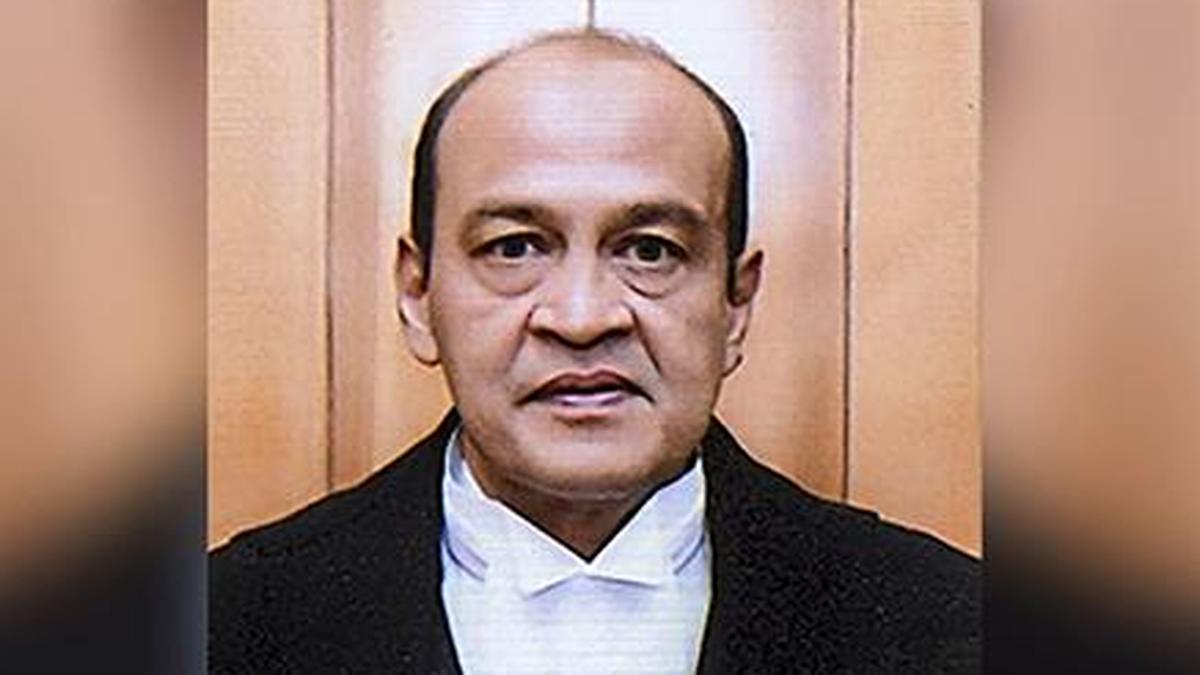
Photo from the source report: Justice Varma’s Resignation: Judicial Removal Procedure and Accountability
Image: The Hindu
Why in news
A letter from Justice Varma asserting that removal proceedings had become infructuous after his resignation was circulated among MPs on November 19, 2026. The supplied report does not record a final parliamentary or judicial determination accepting this contention.
3
Members of the inquiry committee
3
Charges found proved by the committee
Background
Higher-court judges enjoy constitutionally protected tenure to safeguard judicial independence. Article 124(4) provides for the removal of a Supreme Court judge by presidential order following an address by each House of Parliament on the ground of proved misbehaviour or incapacity. Article 218 applies the relevant Supreme Court removal provisions to High Court judges, while Article 217 governs their conditions of office, including resignation. The Judges (Inquiry) Act, 1968 regulates the investigation and parliamentary process associated with removal. These safeguards protect judges from political retaliation without placing them beyond accountability.
What the report establishes
Justice Varma’s letter, dated September 10 and addressed to Lok Sabha Secretary General Utpal Kumar Singh, responded to the report of an inquiry committee constituted by Speaker Om Birla. He maintained that his resignation ended proceedings directed towards removing him from office.
The committee’s report, tabled in Parliament on August 12, found all the charges against him proved. Justice Varma denied wrongdoing, including the suggestion that he possessed ill-gotten funds, and stated that resignation should not be treated as an admission of any allegation or finding.
- The charges included failure to explain the presence, source or ownership of cash found at his official residence.
- The committee also examined failure to secure and preserve material evidence, leading to the unexplained disappearance of the currency.
- Another charge concerned evasive and unsatisfactory explanations during the inquiry.
- The committee’s findings and Justice Varma’s denial must be distinguished from any criminal adjudication.
Infographic
Resignation
Voluntary exit under Article 217; not an admission of guilt.
Removal
Parliamentary addresses and presidential order on constitutional grounds.
Inquiry findings
Relevant to removal; not equivalent to a criminal conviction.
Wider accountability
Any investigation or prosecution requires an independent legal basis.
Unresolved issue
The report does not settle which parliamentary steps survive resignation.
AI-assisted infographic by Pragnya IAS Academy, based on the cited sources.
How the constitutional removal mechanism works
Removal is a constitutional process, not an ordinary executive dismissal. For a High Court judge, Articles 217 and 218 connect security of tenure with the removal procedure prescribed in Article 124(4). The grounds are proved misbehaviour or incapacity.
Under the Judges (Inquiry) Act, a removal motion begins with notice by the prescribed number of members. The Speaker or Chairman decides whether to admit it. Admission leads to an inquiry committee comprising a Supreme Court judge, a High Court Chief Justice and a distinguished jurist.
A finding against the judge does not itself remove the judge. The motion must secure the constitutionally prescribed special majority in each House, and the addresses must be presented to the President in the same session. Removal is effected by the President’s order.
- The constitutional majority requirement concerns both the total membership of each House and the members present and voting.
- If the committee finds neither misbehaviour nor incapacity proved, the statutory removal process does not proceed further.
- Judicial removal is often described as impeachment, but removal is the more precise constitutional expression for judges.
Resignation and removal: distinct constitutional routes
Article 217 permits a High Court judge to resign by writing under their hand addressed to the President. Resignation and removal are different routes out of office: resignation originates with the judge, while removal requires the parliamentary and presidential process.
Justice Varma’s argument rests on the purpose of removal: if the office has already been vacated through an effective resignation, an order removing its former holder may no longer have an operative object. This is his legal contention, not a settled outcome established by the supplied report.
The separate question is whether every pending parliamentary step necessarily ends with resignation. The supplied material does not establish a definitive ruling on the survival of proceedings, the scope of any further parliamentary action or the legal consequences of the committee’s report.
- An effective resignation must be distinguished from merely announcing an intention to resign.
- The source does not specify the date on which Justice Varma’s resignation took effect.
- Any continuation of proceedings must rest on constitutional or statutory authority, not solely on the desirability of accountability.
Loss of office does not answer every accountability question
Removal addresses fitness to continue in constitutional office. Criminal proceedings address alleged offences under applicable law. An inquiry committee’s adverse findings are not a criminal conviction, and resignation is not an admission of guilt.
Conversely, resignation does not, by itself, create immunity from otherwise lawful investigation or prosecution. Whether such proceedings are warranted depends on the applicable law, competent authorities, evidence and procedural safeguards.
Even if removal becomes unavailable after an effective resignation, that does not logically establish that the allegations were false or that the inquiry findings were erased. The report’s continuing legal relevance must be distinguished from its public-accountability significance.
- Separate the power to remove from the authority to investigate alleged wrongdoing.
- Do not infer guilt from resignation or innocence from the possible termination of removal proceedings.
- Do not treat a parliamentary inquiry report as a substitute for proof in a criminal trial.
The institutional balance: independence with accountability
The constitutional design seeks to prevent both politically motivated removal and unaccountable exercise of judicial power. A demanding removal procedure protects decisional independence, while an evidence-based inquiry provides a route for examining serious misconduct.
The present controversy exposes a potential accountability gap when resignation intervenes during removal proceedings. The appropriate response is legal clarity about pending proceedings and records, coupled with lawful use of separate accountability mechanisms—not an assumption that Parliament possesses unlimited jurisdiction over former judges.
- Procedural fairness remains essential even where allegations generate intense public concern.
- Preservation of evidence and reasoned institutional decisions are central to public confidence.
- Any reform must respect judicial independence, constitutional limits and the rights of the individual concerned.
| Dimension | Resignation | Constitutional removal | Criminal proceedings |
|---|---|---|---|
| Primary purpose | Voluntary relinquishment of office | Removal for proved misbehaviour or incapacity | Determination of liability for an alleged offence |
| Legal foundation | Article 217 for High Court judges | Articles 124(4), 124(5), 217 and 218; Judges (Inquiry) Act | Applicable substantive and procedural criminal law |
| Key institutional actors | Judge resigning through a writing addressed to the President | Presiding officer, inquiry committee, both Houses and President | Competent investigative authorities and criminal courts |
| Relationship with guilt | Does not itself establish misconduct or criminal guilt | Adverse inquiry findings do not constitute a criminal conviction | Guilt must be established through the applicable judicial process |
| Issue after resignation | Office is vacated when resignation becomes effective | Survival of pending proceedings is contested in this case | Resignation alone does not confer immunity |
- 1. Members submit notice of a removal motion under the Judges (Inquiry) Act.
- 2. The Speaker or Chairman considers whether to admit the motion.
- 3. If admitted, the statutory inquiry committee investigates the charges with procedural safeguards.
- 4. An adverse finding permits parliamentary consideration; a finding that the grounds are not proved stops the statutory process.
- 5. Each House must adopt the address with the constitutionally prescribed special majority, with presentation to the President in the same session.
- 6. The President issues the order of removal.
August 12, 2026
The inquiry committee’s report was tabled in Parliament; it found all charges against Justice Varma proved.
September 10, 2026
Justice Varma wrote to the Lok Sabha Secretary General, arguing that removal proceedings did not survive his resignation and denying wrongdoing.
November 19, 2026
The letter was circulated among MPs, bringing the resignation–removal question into focus.
Significance, challenges & way forward
Significance
- The controversy tests the limits of a constitutional remedy designed specifically to remove a serving judge.
- It highlights why termination of removal proceedings and closure of wider accountability questions are not necessarily identical.
- A reasoned institutional response can strengthen confidence in both judicial independence and parliamentary oversight.
- The case offers a direct application of constitutional tenure safeguards, separation of powers and procedural fairness.
Challenges
- The supplied report records Justice Varma’s contention but does not establish a final ruling on the effect of resignation.
- Resignation during proceedings can create uncertainty about the remaining purpose and permissible scope of parliamentary action.
- Public debate may incorrectly equate committee findings with criminal guilt or resignation with an admission.
- Evidence preservation becomes critical when allegations concern disappearance of material relevant to an inquiry.
- Accountability measures must avoid both political retaliation against judges and unsupported extensions of parliamentary power.
Way forward
- The competent parliamentary authorities should clarify the status of pending proceedings through a reasoned decision grounded in the Constitution and the Judges (Inquiry) Act.
- Inquiry records and relevant evidence should be preserved in accordance with applicable law, irrespective of the dispute over removal.
- Any legally warranted investigation of alleged offences should proceed through competent authorities with full procedural safeguards.
- Parliament should examine whether the statutory framework needs clearer provisions on resignation during an inquiry, within constitutional limits.
- Institutional communication should clearly distinguish allegations, committee findings, the judge’s response and final legal determinations.
Key terms
- Infructuous proceedings
- Proceedings claimed to have lost their practical object or capacity to provide the relief originally sought.
- Proved misbehaviour or incapacity
- The constitutional grounds on which a higher-court judge may be removed through the prescribed process.
- Parliamentary address
- A formal communication adopted by a House and presented to the President as part of the constitutional removal process.
- Security of tenure
- Protection against arbitrary termination of office, supporting the independent exercise of judicial functions.
- Judicial accountability
- The obligation of judges to comply with constitutional, legal and ethical standards through lawful oversight mechanisms.
- Procedural fairness
- A fair opportunity to know and answer allegations before an adverse determination is made.
Link with static syllabus
Prelims practice MCQs
Q1. With reference to the removal of a High Court judge, consider the following statements: 1. Article 218 applies the relevant Supreme Court removal provisions to High Court judges. 2. An adverse finding by the statutory inquiry committee automatically removes the judge. 3. The President’s removal order follows the constitutionally prescribed parliamentary process. Which of the statements given above are correct?
Q2. A High Court judge’s resignation under Article 217 must be addressed to which of the following?
Q3. Consider the following statements about judicial accountability: 1. Resignation by a judge necessarily amounts to admission of the allegations against the judge. 2. An adverse parliamentary inquiry finding is equivalent to a criminal conviction. 3. Resignation alone does not confer immunity from otherwise lawful criminal proceedings. Which of the statements given above is/are correct?
Q4. Which of the following correctly describes the composition of the inquiry committee under the Judges (Inquiry) Act?
Mains practice questions
GS 2 · 15 marks · 250 words
A judge’s resignation may end the need for removal without resolving the demand for accountability. Examine with reference to the constitutional framework governing higher-court judges.
Frequently asked questions
Has it been conclusively decided that Justice Varma’s resignation ended the proceedings?
No such final determination is recorded in the supplied report. It reports his contention that removal proceedings became infructuous after resignation.
Does a committee finding of proved charges automatically remove a judge?
No. Removal requires the constitutionally prescribed process involving both Houses of Parliament and a presidential order.
Does resignation prevent criminal proceedings against a former judge?
Resignation alone does not create immunity. Any investigation or prosecution must nevertheless satisfy the applicable law and procedural safeguards.
Is resignation an admission of misconduct?
No. Justice Varma expressly denied wrongdoing, and resignation by itself does not establish either misconduct or criminal guilt.
Sources
Analysis prepared by the Pragnya IAS Academy current-affairs desk with AI assistance from the cited reports. Verify figures with the original sources.
Turn current affairs into marks
Join Pragnya IAS Academy's mentorship for daily answer-writing evaluation on stories like this — classroom programmes from a trusted name in IAS coaching in Hyderabad.