
AERB Clears RAPP-8’s First Approach to Criticality: Nuclear Safety Explained
Revise the static topic: UPSC Science & Technology notes
In short: The Atomic Energy Regulatory Board has approved the first approach to criticality for Rajasthan’s RAPP-8. This permits progression towards a controlled, self-sustaining nuclear chain reaction; it does not establish that criticality has been achieved or that commercial electricity generation has begun.
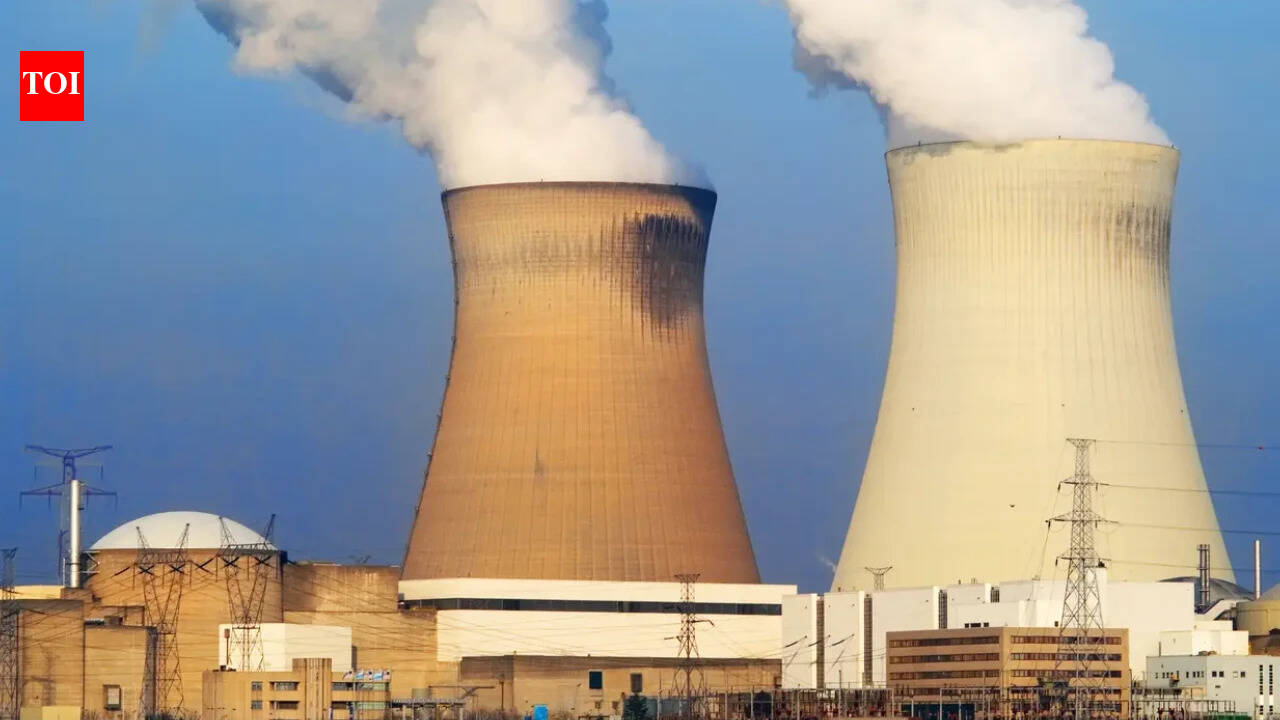
RAPP-8 in Rajasthan: AERB has approved its first approach to criticality, permitting progression toward a controlled, self-sustaining chain reaction—not confirming that criticality or commercial generation has begun.
Image: Times of India
Why in news
The supplied report identifies AERB’s approval for RAPP-8’s first approach to criticality. The development highlights how nuclear commissioning proceeds through safety-controlled stages rather than directly from construction to commercial operation.
Background
Nuclear reactors produce heat through controlled fission, which releases energy and neutrons capable of causing further fission. A reactor becomes critical when the neutron population sustains itself from one generation to the next. Commissioning bridges construction and routine operation through equipment checks, reactor-physics measurements and progressively higher-power testing. In India, the Atomic Energy Act provides the overarching legal framework for atomic energy, while AERB exercises nuclear and radiation safety oversight. Regulatory oversight is distinct from the operator’s responsibility for safe operation.
What the approval means—and what it does not
A first approach to criticality is the controlled process of bringing a reactor towards a self-sustaining fission chain reaction. Approval for this activity is a commissioning milestone, not a declaration that the reactor is already generating commercial electricity.
The supplied source establishes the approval but does not provide the detailed authorisation conditions, commissioning schedule or operating parameters. These should not be inferred from the headline.
- Permission to approach criticality is different from confirmation that criticality has been achieved.
- First criticality is different from grid synchronisation and commercial operation.
- Subsequent commissioning activities remain subject to applicable testing requirements and regulatory permissions.
Infographic
Permission
AERB approves the first approach to criticality.
Physics
Criticality means a self-sustaining chain reaction.
Verification
Commissioning tests establish readiness progressively.
Accountability
Regulatory oversight complements operator responsibility.
Boundary
Approval is not proof of commercial generation.
AI-assisted infographic by Pragnya IAS Academy, based on the cited sources.
Criticality is a neutron-balance condition, not an emergency
Criticality describes the balance between neutron production and neutron losses through absorption and leakage. In a critical reactor, each neutron generation sustains the next, allowing a stable chain reaction. The term does not, by itself, indicate a dangerous condition.
The effective neutron multiplication factor, commonly called k-effective, expresses this balance. A value below unity indicates subcriticality; unity indicates criticality; and above unity indicates a growing neutron population. Reactor power can be raised through controlled reactivity changes and then stabilised at a new operating level.
- Criticality can occur at low power and does not imply full-power operation.
- Control rods absorb neutrons and help regulate or shut down the chain reaction.
- A moderator slows neutrons in thermal reactors, while a coolant removes heat; these are distinct functions.
- Shutdown ends the sustained fission chain reaction, but residual decay heat still requires removal.
Why nuclear commissioning is staged
Commissioning tests whether the installed plant behaves as intended, rather than relying solely on design calculations. Pre-critical checks examine equipment and system readiness; low-power tests examine reactor behaviour; and power-raising tests assess performance under progressively greater thermal and operational demands.
Each stage generates evidence for proceeding further. A satisfactory result at one stage cannot automatically establish safety at all higher power levels because operating conditions, equipment loads and system interactions change.
- Reactor-physics measurements help compare actual core behaviour with predictions.
- Instrumentation must reliably detect neutron levels and changes in reactor power.
- Protection systems must respond appropriately to abnormal conditions.
- Commissioning observations must be documented, assessed and resolved before progression where required.
AERB oversight and the nuclear-expansion challenge
AERB’s role is to assess nuclear and radiation safety through regulatory review, inspection and applicable authorisations. The operator remains responsible for demonstrating readiness and operating the facility safely; regulatory approval does not transfer that responsibility to the regulator.
India’s nuclear-energy expansion must therefore be understood as both an infrastructure programme and a safety-governance task. Nuclear power can provide low-carbon, dispatchable electricity, but its contribution depends on reliable commissioning, competent personnel, waste management and sustained public confidence.
- Defence-in-depth combines successive safety provisions rather than relying on a single protective measure.
- Safety oversight must continue across commissioning, operation and eventual decommissioning.
- Expansion should strengthen regulatory capacity alongside construction and operating capacity.
- Public communication should distinguish permission, technical achievement and commercial operation.
| Milestone | Meaning | What it does not establish |
|---|---|---|
| Approval for first approach to criticality | Permission to undertake the controlled approach towards a self-sustaining chain reaction | That criticality has already been achieved |
| First criticality | Initial achievement of a self-sustaining fission chain reaction | Full-power operation or commercial electricity supply |
| Power-raising tests | Progressive assessment of reactor and plant performance at higher power levels | Unrestricted operation merely because an earlier test succeeded |
| Grid synchronisation | Connection of the generator to the electricity grid under matching electrical conditions | Automatic commencement of commercial operation |
| Commercial operation | Transition to commercial electricity generation after applicable requirements are met | An end to regulatory oversight or periodic safety assessment |
- 1. Complete relevant pre-critical checks and demonstrate readiness.
- 2. Obtain applicable authorisation for the first approach to criticality.
- 3. Approach criticality through controlled changes in reactivity.
- 4. Conduct low-power reactor-physics measurements and assess results.
- 5. Raise power progressively and undertake plant tests and grid synchronisation at the authorised stage.
- 6. Enter commercial operation after meeting applicable commissioning and regulatory requirements.
Significance, challenges & way forward
Significance
- The approval marks regulatory progression towards operating RAPP-8, without establishing that electricity generation has begun.
- Staged commissioning connects engineering readiness with demonstrated safety performance.
- Nuclear power can complement variable renewable generation by supplying low-carbon, dispatchable electricity.
- Clear milestone reporting improves public understanding and prevents commissioning approvals from being mistaken for completed capacity additions.
Challenges
- Construction completion does not eliminate the need to demonstrate integrated plant performance during commissioning.
- Power escalation changes thermal conditions and equipment demands, requiring evidence-based progression.
- A growing nuclear programme requires sufficient trained operators, inspectors and technical reviewers.
- Decay-heat removal, radioactive-waste management and emergency preparedness remain essential beyond first criticality.
- Opaque communication or exaggerated claims about milestones can weaken public trust.
Way forward
- Link progression to verified test results and closure of safety observations, rather than schedule pressure.
- Strengthen regulatory expertise, inspection capability and functional independence as the nuclear programme expands.
- Maintain operator accountability through training, documented procedures and a safety culture that encourages reporting of anomalies.
- Communicate commissioning milestones and their limitations clearly while protecting genuinely sensitive information.
- Treat waste management, emergency preparedness and decommissioning planning as lifecycle obligations.
Key terms
- Criticality
- The condition in which a nuclear fission chain reaction is self-sustaining.
- First approach to criticality
- The controlled commissioning activity that brings a reactor towards its initial self-sustaining chain reaction.
- Effective neutron multiplication factor
- A measure of neutron reproduction between successive generations, accounting for absorption and leakage.
- Reactivity
- A measure of a reactor’s departure from the critical state.
- Commissioning
- The testing and verification process that establishes a plant’s readiness for operation.
- Defence-in-depth
- Successive protective provisions designed to prevent failures and limit their consequences.
- Decay heat
- Heat produced by radioactive decay that continues after the sustained fission chain reaction stops.
Link with static syllabus
Prelims practice MCQs
Q1. With reference to reactor criticality, consider the following statements: 1. It indicates a self-sustaining nuclear fission chain reaction. 2. It can be achieved at low reactor power. 3. It necessarily indicates an uncontrolled increase in reactor power. Which of the statements given above are correct?
Q2. A regulatory approval for the first approach to criticality most directly signifies which of the following?
Q3. Consider the following pairs: 1. Moderator: Slows neutrons in a thermal reactor 2. Control rod: Absorbs neutrons to help control reactivity 3. Coolant: Removes heat from the reactor core Which of the pairs given above are correctly matched?
Q4. With reference to nuclear safety, consider the following statements: 1. A reactor requires no further heat removal once its sustained fission chain reaction has stopped. 2. Defence-in-depth relies on successive protective provisions. 3. Regulatory approval transfers responsibility for safe operation from the operator to the regulator. Which of the statements given above is/are correct?
Mains practice questions
GS 3 · 15 marks · 250 words
Distinguish first criticality from commercial operation of a nuclear reactor. Discuss how staged commissioning and regulatory oversight can support India’s nuclear-energy expansion.
Frequently asked questions
Has RAPP-8 started commercial electricity generation?
The supplied source establishes only approval for the first approach to criticality. It does not establish that criticality, grid synchronisation or commercial operation has occurred.
Does a reactor becoming critical mean it is unsafe?
No. Criticality means a self-sustaining fission chain reaction and is a normal reactor operating condition when controlled within authorised limits.
Why are further tests needed after first criticality?
First criticality does not demonstrate performance at higher power levels. Further testing evaluates reactor behaviour, heat removal, protection systems and integrated plant performance.
Who is responsible for reactor safety after AERB grants approval?
The operator retains responsibility for safe operation. AERB provides regulatory oversight; its approval does not replace operator accountability.
Sources
Analysis prepared by the Pragnya IAS Academy current-affairs desk with AI assistance from the cited reports. Verify figures with the original sources.
Turn current affairs into marks
Join Pragnya IAS Academy's mentorship for daily answer-writing evaluation on stories like this — classroom programmes from a trusted name in IAS coaching in Hyderabad.