
India–China Arunachal LAC Talks: Managing Friction, Not Settling the Boundary
Revise the static topic: UPSC Internal Security notes
In short: India and China have concluded a second round of Corps Commander-level talks focused on preventing face-offs, establishing engagement protocols and maintaining communication along the Arunachal Pradesh frontier. The discussions seek to reduce operational risks before severe winter conditions, but implementation remains uncertain and they do not constitute a boundary settlement.
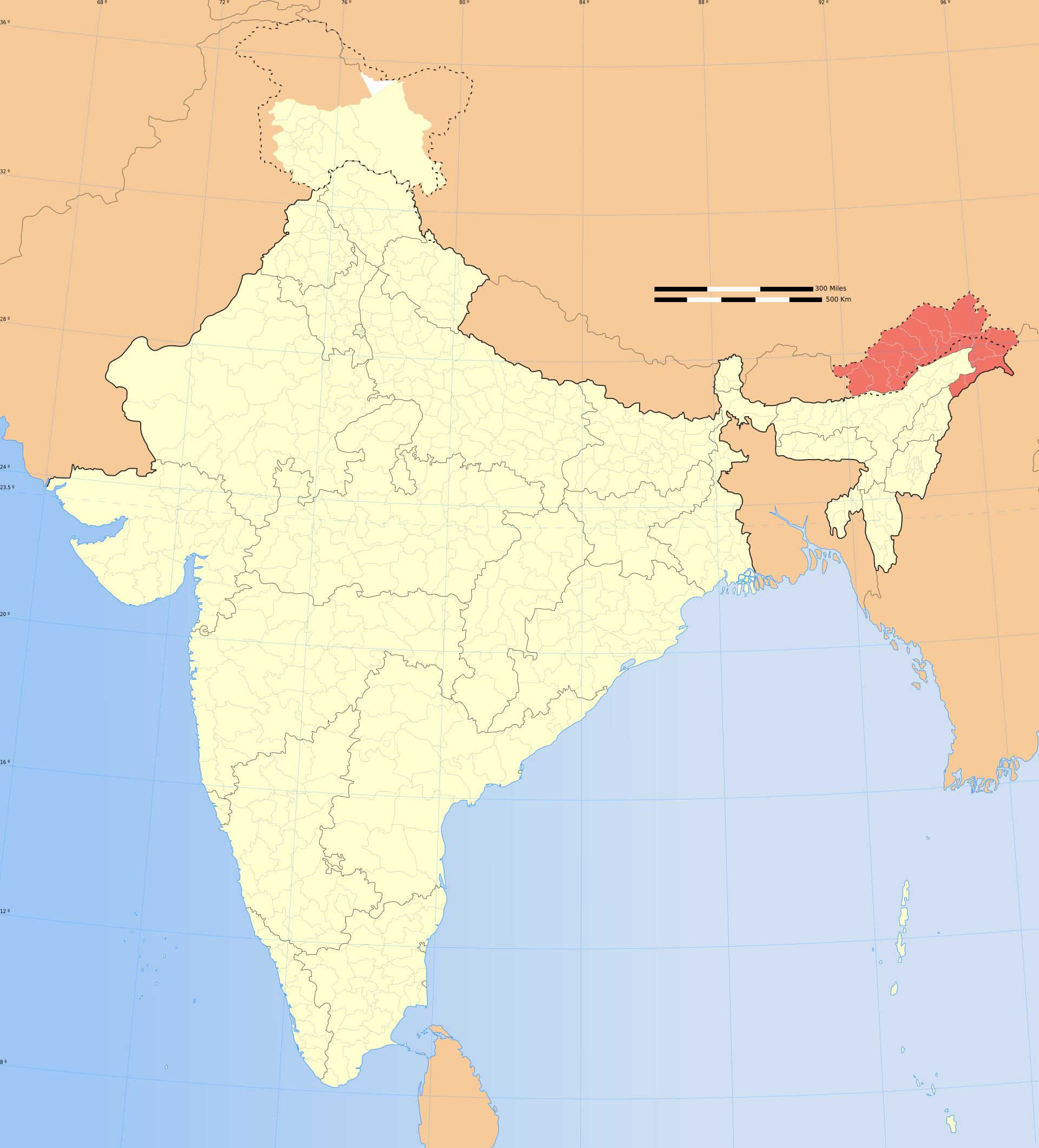
Locator map showing Arunachal Pradesh in northeastern India, providing geographic context for the frontier talks. The map does not represent a negotiated boundary settlement.
Why in news
According to the supplied reports, the discussions began on November 8, 2026, and continued for nearly 10 days, with a short break. They followed an earlier military meeting in September and reports of face-offs at multiple locations in Arunachal Pradesh.
Nearly 10 days
Duration of latest talks
2 rounds
Reported eastern-sector commander talks
Background
The India–China boundary remains unsettled, and the Line of Actual Control is not a mutually agreed international boundary. Differing perceptions of its alignment can bring patrols into contact in contested areas. In the eastern sector, India maintains its boundary position along the McMahon Line, associated with the 1914 arrangement between British India and Tibet; China does not recognise that line. Arunachal Pradesh is an integral part of India. Border management therefore requires arrangements that preserve peace without prejudicing India's territorial position, while the boundary question is addressed through diplomatic negotiations.
What the latest talks sought to achieve
The Indian delegation was led by Lieutenant-General Girish Kalia, General Officer Commanding of III Corps, also known as the Spear Corps, headquartered at Rangapahar near Dimapur in Nagaland. His Chinese counterpart and other officers participated, and an official from the Ministry of External Affairs was present.
The discussions centred on engagement protocols, prevention of face-offs and misunderstandings, and open communication between deployed forces. Both reports describe the atmosphere as cordial, but neither establishes completed implementation on the ground.
The evidentiary distinction is important: The Hindu refers to measures discussed, while The Indian Express refers to measures agreed upon but awaiting clarity on implementation. The safe conclusion is that practical arrangements were pursued; their detailed terms and operational effect are not established by the supplied material.
- The reports do not establish troop withdrawal, verified disengagement or a reduction in force levels.
- The latest meeting's venue and the detailed text of any protocol are not provided.
- Winter creates urgency because movement, troop sustenance and logistical support become more difficult.
Infographic
Immediate objective
Prevent face-offs and misunderstandings.
Operational tools
Engagement protocols and direct military contact.
Winter constraint
Difficult movement, resupply and troop sustenance.
Credibility test
Observable implementation, not cordial language alone.
Strategic distinction
Tactical stabilisation is not boundary settlement.
AI-assisted infographic by Pragnya IAS Academy, based on the cited sources.
How military and diplomatic mechanisms fit together
Border management operates through complementary channels rather than a single negotiating forum. Local military contacts can address immediate incidents; senior commander-level talks can negotiate operational arrangements; diplomatic mechanisms can sustain coordination and address wider political concerns.
The Working Mechanism for Consultation and Coordination on India–China Border Affairs supports diplomatic-military coordination on border management. The Special Representatives mechanism addresses the boundary question at a higher political level. These institutions provide static context; the supplied reports specifically establish the recent Corps Commander-level talks and the August meeting of the Special Representatives.
- Border Personnel Meetings provide direct contact between personnel from the two sides.
- Commander-level engagement can help translate broad commitments into instructions for deployed troops.
- Diplomatic participation can improve consistency between military arrangements and national policy.
- Communication channels are useful only when they are accessible, trusted and connected to officers empowered to act.
Engagement protocols: From dialogue to operational restraint
An engagement protocol should tell troops what to do when patrols meet, how to communicate intent and when to refer an incident to higher commanders. Its purpose is to prevent a local encounter from escalating through misinterpretation or uncoordinated action.
The reports do not disclose the proposed rules. As a policy requirement, effective protocols should include predictable conduct during encounters, rapid incident reporting, designated contact points and an agreed method for reviewing compliance. These are recommendations, not confirmed outcomes of the talks.
- Local commanders need clear instructions that balance restraint with the protection of India's territorial interests.
- Reliable communications should allow clarification before an incident triggers reinforcement or confrontation.
- Any arrangement affecting patrolling should be precisely recorded and assessed for its implications for access and claims.
- Implementation should be checked through mutually understood procedures rather than inferred from diplomatic language.
Why tactical de-escalation is not a boundary settlement
Preventing face-offs addresses immediate behaviour; disengagement separates forces at particular friction points; broader de-escalation reduces military pressure. None automatically resolves the underlying dispute over the boundary.
A boundary settlement requires political agreement on the boundary's alignment and arrangements for its implementation. Local operational accommodations cannot be treated as recognition of a final boundary or abandonment of territorial claims.
This distinction also shapes bilateral relations. The Ministry of External Affairs reiterated, according to The Indian Express, that peace and tranquillity in border areas are essential for the overall development of relations. Durable stabilisation therefore depends on consistent conduct on the ground, not merely the resumption of meetings.
- A cordial meeting is a diplomatic signal, not proof of changed deployments.
- Reduced confrontation can coexist with substantial troop presence and unresolved claims.
- Eastern-sector arrangements must reflect local terrain and friction points rather than assume that solutions elsewhere are directly transferable.
| Concept | Operational or political meaning | What it does not establish |
|---|---|---|
| Engagement protocol | Rules for conduct, communication and incident handling when troops interact | Withdrawal of troops or settlement of territorial claims |
| Disengagement | Separation of forces at a particular friction point | A wider reduction in military deployment |
| De-escalation | Reduction in military pressure and confrontation risk | Agreement on the international boundary |
| Boundary settlement | Political and legal agreement on boundary alignment and its implementation | An outcome that can be inferred from local military talks alone |
- 1. A patrol encounter or suspected deviation is detected.
- 2. Troops follow agreed restraint and communication procedures.
- 3. Designated military contacts clarify the incident promptly.
- 4. Unresolved issues are referred to higher commanders and diplomatic channels.
- 5. Any agreed corrective action is checked on the ground.
- 6. Lessons are incorporated into instructions and compliance reviews.
1914
The McMahon Line emerged from an arrangement between British India and Tibet; China does not recognise it.
August 2026
National Security Adviser Ajit Doval and Chinese Foreign Minister Wang Yi met in Beijing as Special Representatives for boundary negotiations.
September 6–7, 2026
The first reported eastern-sector Corps Commander-level meeting took place at Wacha-Damai in the Kibithoo sector, following reports of tension around Taksing.
October 2026
ITBP Director-General Shatrujeet Kapur said troops had faced off at multiple locations in Arunachal Pradesh; the MEA reiterated the importance of border peace.
Beginning November 8, 2026
The second round of Corps Commander-level talks continued for nearly 10 days, with a short break, focusing on engagement protocols and communication.
Significance, challenges & way forward
Significance
- Direct military engagement can reduce the risk of a local face-off escalating into a wider confrontation.
- Winter-focused risk reduction can improve the predictability of operations when access and logistics are constrained.
- Military-diplomatic coordination can connect field-level arrangements with India's broader bilateral policy.
- An eastern-sector focus addresses reported friction in Arunachal Pradesh rather than treating LAC management as confined to another sector.
- Sustained border stability can create a more credible foundation for wider bilateral engagement without resolving the boundary dispute.
Challenges
- Differing perceptions of the LAC can generate recurring patrol encounters even when both sides endorse restraint.
- The absence of publicly available protocol details limits assessment of reciprocity, enforceability and implementation.
- Substantial troop presence means that communication failures can have serious consequences.
- Severe winter conditions complicate movement, resupply and implementation checks.
- Infrastructure development and force multipliers can intensify friction when rules and expectations remain unclear.
- Temporary operational arrangements require safeguards against unintended effects on patrolling access or territorial positions.
Way forward
- Translate broad understandings into clear, mutually understood field instructions with designated responsibilities.
- Maintain reliable military communication channels, supported by fallback arrangements when direct contact fails.
- Assess progress through observable compliance and incident reduction rather than the tone or duration of talks.
- Ensure that temporary arrangements expressly preserve India's territorial position and are carefully assessed for their effects on patrolling.
- Coordinate the Army, ITBP and diplomatic authorities so that operational practice remains consistent with national policy.
- Combine credible defensive preparedness and winter logistics with sustained negotiations on border management and the boundary question.
Key terms
- Line of Actual Control
- The line of actual control between Indian and Chinese forces, whose alignment is not mutually agreed in all areas and which is not a settled international boundary.
- McMahon Line
- The eastern-sector boundary alignment associated with the 1914 British India–Tibet arrangement, recognised by India but not by China.
- Engagement protocol
- Agreed procedures governing troop interaction, communication and responses to potentially confrontational encounters.
- Border Personnel Meeting
- A structured military contact mechanism for interaction and discussion of border-related issues at designated points.
- Disengagement
- Separation of opposing forces at a specific friction point to reduce direct confrontation.
- De-escalation
- A broader reduction in military pressure, deployments or confrontation risk.
- Special Representatives mechanism
- The high-level India–China negotiating mechanism addressing the boundary question.
- Working Mechanism for Consultation and Coordination
- An India–China diplomatic-military mechanism supporting consultation and coordination on border affairs.
Link with static syllabus
Prelims practice MCQs
Q1. With reference to the India–China frontier, consider the following statements: 1. The LAC is a mutually agreed and demarcated international boundary throughout its length. 2. The McMahon Line relates to the eastern sector of the India–China boundary question. 3. Disengagement at a friction point necessarily settles the underlying territorial dispute. Which of the statements given above is/are correct?
Q2. Consider the following pairs: 1. Wacha-Damai meeting point — Kibithoo sector 2. Taksing — Upper Subansiri district 3. III Corps headquarters — Rangapahar near Dimapur How many of the above pairs are correctly matched?
Q3. With reference to India–China border-management mechanisms, consider the following statements: 1. Border Personnel Meetings facilitate direct military interaction. 2. The Special Representatives mechanism addresses the boundary question. 3. An engagement protocol, by itself, establishes a final international boundary. Which of the statements given above are correct?
Q4. Which of the following is the most accurate conclusion from the supplied reports on the November 2026 Arunachal frontier talks?
Mains practice questions
GS 2 · 15 marks · 250 words
Military communication and engagement protocols are necessary but insufficient for durable peace along the India–China frontier. Examine with reference to the Arunachal Pradesh sector, distinguishing tactical de-escalation from a boundary settlement.
Frequently asked questions
Did the Arunachal talks settle the India–China boundary?
No boundary settlement is established by the reports. The talks focused on managing troop interactions, preventing face-offs and keeping communication channels open.
Have troops disengaged following the latest talks?
The supplied reports do not establish completed disengagement or troop withdrawal. They indicate uncertainty about implementing the measures before winter sets in fully.
Why is winter important to these discussions?
Severe winter conditions along the Arunachal frontier make troop sustenance, movement and logistical support more difficult. This increases the urgency of predictable conduct and effective incident-management arrangements.
Are the LAC and the McMahon Line the same?
They are not interchangeable terms: the LAC refers to actual control, while the McMahon Line is the eastern-sector boundary alignment recognised by India. China does not recognise the McMahon Line, and the boundary remains unsettled.
Sources
- The Hindu: India, China hold 10-day talks to ease LAC tensions in Arunachal Pradesh
- Indian Express: India, China commanders meet again to try and calm Arunachal frontier
Analysis prepared by the Pragnya IAS Academy current-affairs desk with AI assistance from the cited reports. Verify figures with the original sources.
Turn current affairs into marks
Join Pragnya IAS Academy's mentorship for daily answer-writing evaluation on stories like this — classroom programmes from a trusted name in IAS coaching in Hyderabad.