
India–Nepal Joint Vision: Connectivity, Treaty Review and the EPG Debate
Revise the static topic: UPSC International Relations notes
In short: India and Nepal have adopted a joint vision to expand development and connectivity cooperation, review bilateral agreements by mutual consent and resolve outstanding issues through dialogue. The disagreement over the Eminent Persons Group report shows why infrastructure and financial assistance must be accompanied by attention to Nepal’s concerns over treaties, boundaries and transit access.
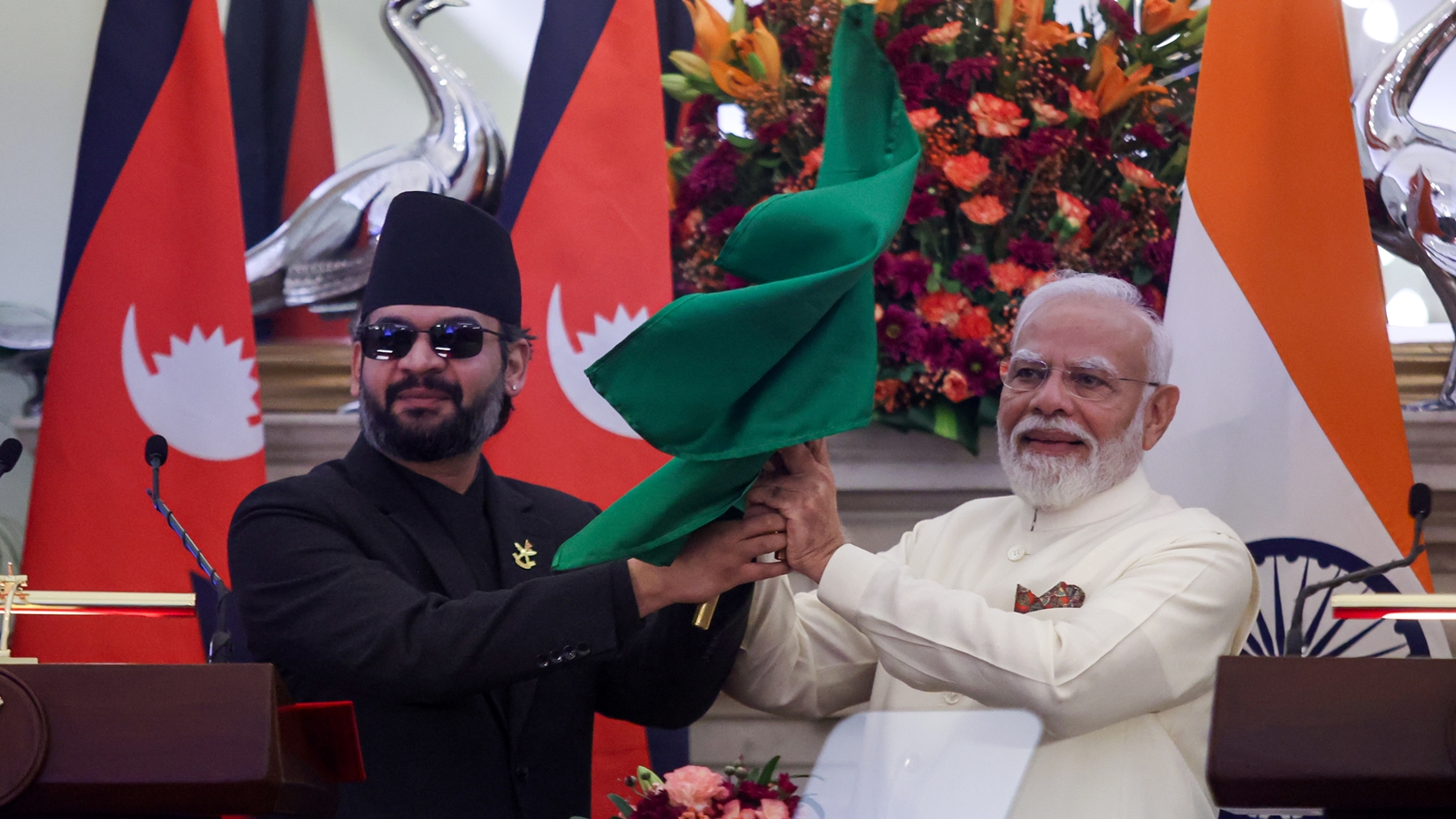
India and Nepal’s joint vision prioritises development and connectivity cooperation, review of bilateral agreements by mutual consent, and dialogue on outstanding issues.
Image: Indian Express
Why in news
During Nepal Prime Minister Balendra Shah’s visit, the two countries adopted “Viksit Bharat and Samunnat Nepal: Re-imagining the Partnership”. Foreign Secretary Vikram Misri’s description of the EPG report as “not relevant” subsequently drew criticism from former group members, who defended its bilateral character and usefulness.
₹15,000 crore
Announced development cooperation package
10
Pillars of the joint vision
At least once in six mon
Monitoring group meeting frequency
2018
EPG report completed
Background
India and Nepal share an open border, extensive people-to-people ties and interconnected economic and security interests. Landlocked Nepal depends significantly on access through India for overseas trade, while shared Himalayan river systems create opportunities for hydropower and cooperation on flood management. The 1950 Treaty of Peace and Friendship is an important foundation of bilateral relations, including reciprocal privileges concerning residence, trade and movement. However, differences over the treaty framework, boundary questions and transit reliability have periodically strained relations. India’s Neighbourhood First policy therefore requires both practical cooperation and sensitivity to Nepal’s sovereignty and political concerns.
What the joint vision provides
The joint vision seeks a contemporary, mutually beneficial partnership across economic development, health, technology, agriculture and other sectors. It envisages an updated legal framework, with existing bilateral agreements open to review by mutual consent.
India announced a development cooperation package for reconstruction and long-term development, alongside access to Indian ports in Gujarat and Odisha. The reported initiatives also include transport and energy connectivity, an Integrated Check Post and an agreement to establish an IIT campus in Nepal.
The vision envisages new transit connectivity and air routes, cooperation on cross-border special economic zones for export-oriented manufacturing, and IT parks. These proposals should not be confused with completed projects or specific clearances already granted.
- Outstanding matters concerning water resources, energy, trade and commerce, and the boundary are to be addressed through dialogue.
- The High-Level Monitoring Group is to be activated under the leadership of Nepal’s Foreign Secretary and India’s Ambassador.
- The monitoring mechanism provides a route from political commitments to implementation, but its effectiveness will depend on follow-through.
Infographic
Reconstruction
Translate the announced package into resilient, locally useful development.
Connectivity
Make port, border, transport and energy links operationally effective.
Legal renewal
Review agreements by mutual consent and consider useful expert inputs.
Grievance resolution
Sustain dialogue on boundaries, transit and aviation access.
Accountability
Use regular monitoring and joint communication to build trust.
AI-assisted infographic by Pragnya IAS Academy, based on the cited sources.
Why the EPG report remains contentious
The EPG was institutionalised following an understanding reached during bilateral talks in February 2016. Its report, completed in 2018, addressed a broad spectrum of relations, including the Kalapani dispute and the 1950 treaty, but remained under sealed covers.
India’s Foreign Secretary presented the new vision as a forward-looking basis for engagement and described the EPG report as no longer relevant. Former members countered that the report emerged from bilateral consultation, research and field visits and could still contribute positively to relations.
The dispute is therefore also about institutional trust: whether work undertaken by jointly appointed experts receives meaningful consideration. Since the supplied material does not disclose the report’s detailed recommendations, specific proposed treaty clauses or boundary solutions cannot be attributed to it.
- An expert report does not itself amend a treaty or bind either government to accept its recommendations.
- Reviewing useful EPG inputs need not prevent the governments from pursuing a new negotiating framework.
- A forward-looking approach will be more credible if it explains how unresolved concerns will be addressed rather than appearing to dismiss them.
Nepal’s concerns: sovereignty, access and responsiveness
Nepal’s grievances cannot be reduced to demands for financial assistance. Treaty modernisation, boundary issues, reliable transit and aviation access concern its political agency and economic options. The editorial notes that requests for overflight access for two airports were not directly resolved in the announcements.
The memory of the 2015 border disruption makes transit reliability especially sensitive. Kathmandu attributed the blockade to India, while India blamed Madhesi agitators; these competing positions should not be presented as an uncontested account of responsibility.
Additional port options and cross-border infrastructure can reduce logistical vulnerabilities. However, announced access becomes meaningful only when operational arrangements, border procedures and transport links make it commercially usable.
- Mutual consent must guide treaty review, without presuming that either side has already accepted particular changes.
- Boundary dialogue should proceed through agreed diplomatic and technical channels.
- Aviation requests require specific discussions; a general commitment to new air routes is not equivalent to approval.
Neighbourhood First: from generosity to partnership
India’s prompt flood assistance and reconstruction support demonstrate the value of geographic proximity and rapid humanitarian response. Connectivity, energy cooperation and productive investment can convert this goodwill into durable shared gains.
Yet an asymmetric relationship requires particular care in diplomatic language and agenda-setting. Assistance will strengthen trust only when Nepal is treated as a partner with legitimate priorities, rather than merely as a beneficiary.
The joint vision offers a way to combine development delivery with grievance resolution. Personal rapport between leaders can enable this transition, but durable cooperation requires institutions that function across political changes.
- Economic cooperation should support production, employment and local benefits, not only physical infrastructure.
- India should compete through reliability and responsiveness rather than frame every Nepali external partnership as a strategic contest.
- The quality of consultation is itself an important outcome of Neighbourhood First.
Implementation: keep development and dispute resolution moving together
The High-Level Monitoring Group should translate the vision into project responsibilities, milestones and a mechanism for resolving bottlenecks. Its scheduled meetings can help distinguish completed work from announcements and identify where regulatory or financial decisions are pending.
A parallel diplomatic track should address treaty review, boundary questions and aviation access. Neither waiting for every dispute to be settled before delivering projects nor indefinitely postponing grievances in favour of projects would provide a stable partnership.
- Use a mutually agreed process to examine relevant EPG inputs without treating them as binding.
- Consult border communities and affected stakeholders when designing connectivity and development projects.
- Integrate disaster resilience and environmental safeguards into reconstruction, transport and river-related cooperation.
- Communicate progress jointly to reduce misunderstandings and avoid competing public narratives.
| Area | Reported position | Implementation test |
|---|---|---|
| Development cooperation | ₹15,000 crore package announced for reconstruction and long-term development | Translate the announcement into agreed, transparent and locally useful projects |
| Transit connectivity | Access to ports in Gujarat and Odisha announced | Ensure workable transport links, procedures and commercial arrangements |
| Legal framework | Bilateral agreements may be reviewed by mutual consent | Agree on priorities and a consultative review process |
| Boundary and other outstanding matters | Resolution through mutual discussion and dialogue | Sustain diplomatic engagement without claiming a settlement already exists |
| Aviation access | Vision envisages new air routes; specific overflight requests were not directly resolved | Conduct dedicated technical and regulatory discussions |
| EPG report | India questioned its relevance; former members defended its value | Agree on whether and how its inputs can inform future negotiations |
- 1. Identify shared development priorities and outstanding grievances
- 2. Agree on project arrangements and issue-specific dialogue agendas
- 3. Implement connectivity and reconstruction projects while pursuing treaty and dispute discussions
- 4. Review delivery and bottlenecks through the High-Level Monitoring Group
- 5. Communicate outcomes and incorporate stakeholder feedback
1950
India and Nepal concluded the Treaty of Peace and Friendship, an important foundation of bilateral relations.
2015
Disruption along the India–Nepal border strained relations; Kathmandu and New Delhi differed over responsibility.
February 2016
An understanding during bilateral talks provided the basis for institutionalising the EPG.
2018
The EPG completed its report, which subsequently remained under sealed covers.
August 2026
India provided humanitarian and search-and-rescue assistance following floods and debris flows in Nepal.
23 November 2026
The leaders adopted the joint vision during Balendra Shah’s visit; India’s Foreign Secretary described the EPG report as not relevant.
Significance, challenges & way forward
Significance
- The vision links Nepal’s development priorities with India’s connectivity and neighbourhood objectives.
- Additional transit options can improve Nepal’s access to overseas markets and strengthen economic interdependence.
- Mutually agreed treaty review creates space to align the bilateral framework with contemporary expectations.
- Cooperation on reconstruction and disaster resilience can turn humanitarian goodwill into sustained institutional partnership.
- Regular monitoring can help maintain continuity beyond changes in political leadership.
Challenges
- Public dismissal of the EPG process risks weakening confidence in jointly created consultative mechanisms.
- Unresolved boundary and treaty issues can generate political opposition even when development cooperation advances.
- Announcements may outpace operational agreements, project readiness and administrative coordination.
- Power asymmetry can make routine disagreements appear to involve sovereignty or unequal treatment.
- Flood exposure and environmental vulnerability can disrupt infrastructure and raise reconstruction needs.
- General commitments on aviation and transit may disappoint expectations unless followed by specific decisions.
Way forward
- Treat Nepal’s grievances as substantive diplomatic concerns rather than assume assistance will offset them.
- Develop a mutually agreed treaty-review agenda that can consider useful EPG inputs without requiring automatic acceptance of the report.
- Maintain dedicated dialogue on boundaries and aviation access alongside development cooperation.
- Give the monitoring group project-wise responsibilities and milestones, supported by transparent progress communication.
- Make transit access commercially usable through coordinated logistics, customs and border arrangements.
- Prioritise locally beneficial, environmentally sound and disaster-resilient projects to sustain public support.
Key terms
- Eminent Persons Group
- A bilateral expert group established to examine India–Nepal relations and recommend improvements.
- Neighbourhood First
- India’s policy approach that prioritises engagement and cooperation with its immediate neighbours.
- Transit access
- Arrangements allowing goods to pass through another country to reach external markets or ports.
- Integrated Check Post
- A border facility bringing customs, immigration and related clearance services together to facilitate movement.
- Treaty review
- A process through which parties examine an existing treaty and consider mutually agreed changes.
- High-Level Monitoring Group
- The bilateral implementation mechanism led by Nepal’s Foreign Secretary and India’s Ambassador, to be activated under the vision.
Link with static syllabus
Prelims practice MCQs
Q1. With reference to the India–Nepal joint vision, consider the following statements: 1. Existing bilateral agreements may be reviewed with mutual consent. 2. Outstanding boundary matters are to be addressed through dialogue. 3. The vision makes acceptance of the EPG report a prerequisite for cooperation. Which of the statements given above are correct?
Q2. The High-Level Monitoring Group referred to in the India–Nepal joint vision is led by:
Q3. Consider the following statements about the India–Nepal Eminent Persons Group: 1. It arose from a bilateral understanding reached in February 2016. 2. Its report was completed in 2018. 3. Completion of its report automatically amended the 1950 treaty. Which of the statements given above are correct?
Q4. With reference to Nepal’s connectivity concerns, consider the following statements: 1. Nepal is a landlocked country. 2. Access to Indian ports is relevant to Nepal’s overseas trade. 3. The supplied reports confirm that all pending aviation access requests were approved during the visit. Which of the statements given above are correct?
Mains practice questions
GS 2 · 15 marks · 250 words
Development assistance alone cannot sustain trust in an asymmetric neighbourhood relationship. Examine with reference to the India–Nepal joint vision and the debate over the EPG report.
Frequently asked questions
What is the central purpose of the India–Nepal joint vision?
It seeks to modernise the partnership through development, connectivity and wider sectoral cooperation, supported by mutually agreed review of bilateral agreements. It also commits the countries to dialogue on outstanding matters.
Why is the EPG report controversial?
India’s Foreign Secretary described it as not relevant to the forward-looking approach, while former members defended its value as a jointly prepared document. The disagreement raises questions about continuity and trust in bilateral consultation.
Has the joint vision amended the 1950 treaty or settled the boundary dispute?
No such outcome is established by the supplied sources. The vision provides for agreement review by mutual consent and dialogue on outstanding issues, rather than announcing a completed amendment or boundary settlement.
How can the vision strengthen Neighbourhood First?
It can combine reliable connectivity and development delivery with respectful engagement on Nepal’s grievances. Assistance is more likely to produce lasting goodwill when accompanied by shared decision-making and institutional follow-through.
Sources
- The Hindu: Former members say EPG report was ‘highly positive’ for India-Nepal ties
- The Hindu (Editorial): Beyond generosity: on India-Nepal ties
- Indian Express: India, Nepal agree on comprehensive joint vision document to strengthen partnership
Analysis prepared by the Pragnya IAS Academy current-affairs desk with AI assistance from the cited reports. Verify figures with the original sources.
Turn current affairs into marks
Join Pragnya IAS Academy's mentorship for daily answer-writing evaluation on stories like this — classroom programmes from a trusted name in IAS coaching in Hyderabad.