
Food Inflation Pushes CPI to 6.1%: RBI’s Policy Dilemma and Supply-Side Priorities
Revise the static topic: UPSC Economy notes
In short: India’s CPI inflation rose to 6.1% in October 2026 from 5.5% in September, exceeding the monetary policy framework’s upper tolerance level of 6%. The November RBI Bulletin flagged continuing food-price pressures alongside firmer fuel and core inflation, making coordinated monetary and supply-side responses important.
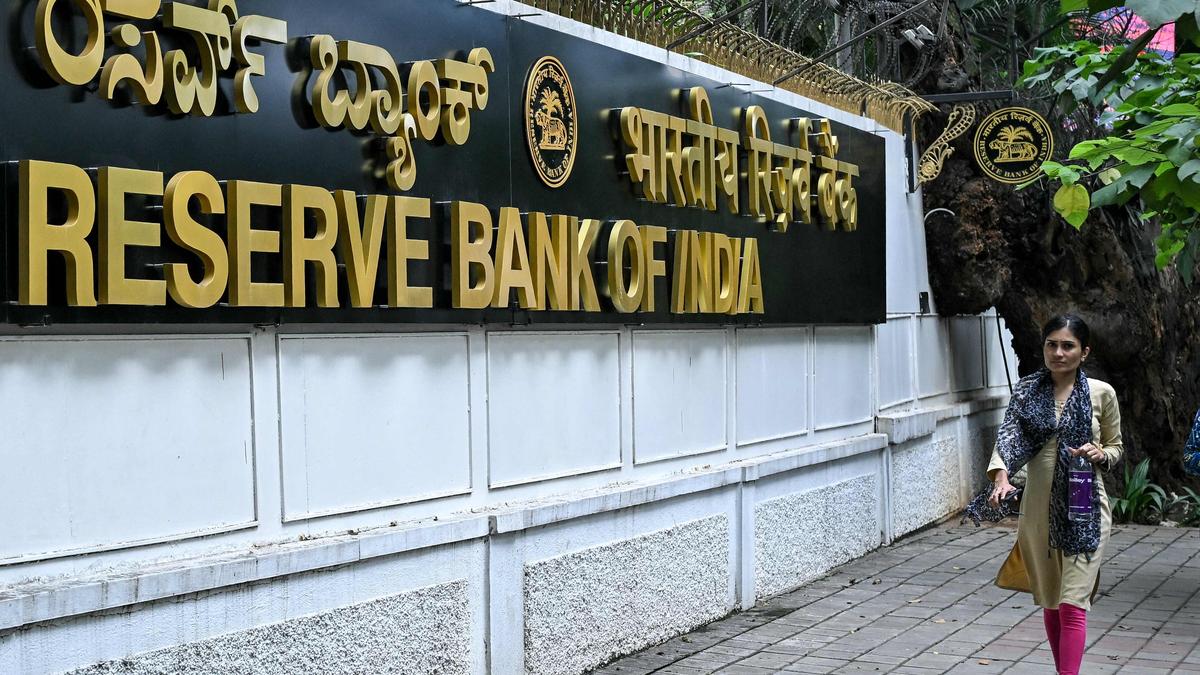
Reference image from coverage of food-price pressures in the RBI Bulletin, illustrating the article’s focus on food inflation and monetary-policy constraints.
Image: The Hindu
Why in news
The November RBI Bulletin’s State of the Economy article reported broad-based food-price pressures in high-frequency data up to November 19. The assessment follows October’s breach of the upper inflation tolerance level.
6.1%
October 2026 CPI inflation
5.5%
September 2026 CPI inflation
6%
Upper tolerance level
11 of 12
CPI divisions with sequential increases
$95 per barrel
Indian crude basket during November 1–18
Above 6%
Rural and urban food and beverages inflation
Background
Consumer Price Index inflation measures changes in the retail prices of a representative basket of goods and services. India’s flexible inflation-targeting framework operates under the Reserve Bank of India Act, with the Central Government determining the inflation target in consultation with the RBI and the Monetary Policy Committee determining the policy rate required to achieve it. Monetary policy’s primary objective is price stability while keeping growth in mind. Food-price shocks create a policy dilemma because interest rates influence demand and expectations but cannot directly increase the immediate availability of agricultural produce.
What the inflation evidence shows
The source attributes the October inflation increase primarily to food and beverages. Vegetables, cereals, pulses, and oils and fats showed notable increases, reflecting positive month-on-month price momentum rather than merely a change in the year-earlier comparison base.
High-frequency observations up to November 19 indicated continuing pressure across major cereals and pulses. Edible oil prices increased broadly, led by mustard oil. Vegetables were not uniform: onion prices rose moderately, tomato prices corrected sharply and potato prices increased.
The inflation problem was wider than food alone. Fuel and core inflation firmed up, and most CPI divisions registered sequential price increases. Inflation also increased in both rural and urban areas, while more States and Union Territories reported rates above the upper tolerance level.
- A correction in one volatile item does not establish that overall food inflation is easing.
- Broader price momentum warrants monitoring even when food remains the principal driver.
- The reported November observations are high-frequency indicators, not a completed November CPI reading.
Infographic
Headline pressure
October CPI reached 6.1%, above the 6% upper tolerance level.
Food-led rise
Cereals, pulses and edible oils faced continuing price pressure.
Broader warning
Fuel and core inflation also firmed up.
Monetary role
Contain persistence and keep inflation expectations anchored.
Supply role
Improve availability, logistics and resilience while protecting producer incentives.
AI-assisted infographic by Pragnya IAS Academy, based on the cited sources.
Tolerance-band breach: significance without overstatement
October CPI inflation exceeded the upper tolerance level of 6%. This is a warning for price stability, but the upper limit is not the policy objective itself: the framework seeks to return inflation to its target rather than merely keep it marginally below the ceiling.
A single monthly breach does not automatically establish formal failure under the inflation-targeting framework. The statutory accountability mechanism relies on sustained breaches assessed through quarterly-average inflation over the prescribed consecutive-quarter period. When failure is established, the RBI must explain the reasons, proposed remedial action and the estimated time needed to return inflation to target.
The Bulletin article is an economic assessment by RBI officials, not an MPC resolution. The supplied material does not report a policy-rate decision.
- Distinguish a monthly tolerance breach from the framework’s formal failure condition.
- Do not infer an automatic interest-rate increase from the inflation print.
- Policy assessment must consider persistence, expectations, transmission and the growth outlook.
What interest-rate policy can and cannot do
Interest-rate policy cannot directly replenish cereal stocks, accelerate a harvest or repair a disrupted vegetable supply chain. Aggressive tightening against a purely temporary supply shock can depress investment and consumption without quickly resolving the initial shortage.
Nevertheless, monetary policy cannot disregard persistent food inflation. Repeated food-price increases can influence household expectations, wage demands and firms’ pricing decisions. Firmer core inflation increases the importance of assessing whether price pressures are spreading, although the source does not establish that food inflation caused the reported core increase.
The appropriate monetary stance is therefore conditional rather than mechanical. The MPC must judge whether the shock is temporary, whether expectations remain anchored and whether broader demand conditions are accommodating persistent price increases.
- Monetary policy mainly works through borrowing costs, aggregate demand and inflation expectations.
- Interest-rate transmission operates with lags, making the inflation outlook important.
- Resilient activity and credit growth provide context but do not by themselves prove excess demand.
Supply management and the external risk channel
Complementary supply measures should address the commodities showing pressure. Depending on verified availability and stock conditions, options include calibrated buffer releases, trade facilitation, improved market arrivals and action against unlawful hoarding. These are policy options, not measures announced in the supplied report.
Durable disinflation requires better storage, cold chains, transport, crop diversification and reliable production and stock information. Supply interventions must also preserve incentives for farmers; abrupt or unpredictable trade restrictions can weaken future production and investment.
The Indian crude basket declined to $95 per barrel during November 1–18, but continuing instability in West Asia kept the external outlook uncertain. Lower crude prices may ease some cost pressures, although exchange rates, taxes and the timing of domestic price adjustments affect transmission.
- Use commodity-specific responses rather than treating all food markets as identical.
- Combine immediate availability measures with investment in supply-chain resilience.
- Maintain contingency planning for renewed energy and logistics disruptions.
| Dimension | Monetary policy | Supply-side measures |
|---|---|---|
| Primary channel | Influences demand, financing conditions and expectations | Improves availability, distribution and market functioning |
| Main instruments | Policy-rate decisions and supporting liquidity management | Buffer management, trade facilitation, logistics and market monitoring |
| Best suited to | Persistent generalised inflation and second-round effects | Commodity shortages and distribution bottlenecks |
| Main limitation | Cannot directly produce food or remove physical shortages | Cannot independently anchor economy-wide inflation expectations |
| Policy risk | Excessive tightening can weaken growth | Unpredictable intervention can undermine producer incentives |
- 1. Food-price increases directly raise headline CPI inflation.
- 2. Repeated increases can lift households’ expected future inflation.
- 3. Higher expectations may influence wage negotiations and firms’ pricing.
- 4. Cost pass-through and accommodating demand can broaden inflation pressures.
- 5. Monetary policy contains persistence while supply measures address availability constraints.
October 2024
The source identifies this as the previous instance of inflation exceeding the upper tolerance level.
September 2026
CPI inflation stood at 5.5% year-on-year.
October 2026
CPI inflation increased to 6.1%, with food and beverages driving the rise.
November 1–18, 2026
The Indian basket of crude oil declined to $95 per barrel.
Up to November 19, 2026
High-frequency data indicated continuing broad-based pressure on food prices.
November 2026 Bulletin
The State of the Economy article highlighted inflation pressures alongside resilient domestic activity.
Significance, challenges & way forward
Significance
- Food inflation erodes purchasing power, especially for households allocating a large share of expenditure to essentials.
- Simultaneous rural and urban food-price pressures make inflation management a broad welfare concern.
- Firmer core inflation makes it important to distinguish a temporary food shock from persistent generalised inflation.
- Credible coordination between monetary and supply policies can protect price stability without imposing avoidable growth costs.
Challenges
- Divergent price movements within vegetables complicate interpretation of aggregate food inflation.
- The supplied evidence identifies price movements but does not establish the specific production, weather or distribution causes behind them.
- Monetary tightening cannot immediately correct physical shortages, while its effects on demand emerge with lags.
- External energy volatility can offset gains from domestic food-supply management.
- Consumer-price relief must be balanced against remunerative farm prices and predictable agricultural policy.
Way forward
- Track food-price momentum, core inflation, expectations and market arrivals together rather than relying on the headline reading alone.
- Use timely commodity-level stock and supply information to calibrate buffer releases and trade facilitation.
- Keep monetary policy focused on the inflation outlook and the risk of persistent, broad-based price increases.
- Strengthen coordination among the Union Government, States and market agencies while preserving the MPC’s statutory decision-making role.
- Invest in storage, cold chains, transport and diversified production to reduce recurring supply bottlenecks.
- Communicate policy objectives clearly so that temporary relief measures do not weaken expectations of durable price stability.
Key terms
- Headline inflation
- Inflation measured using the complete consumer price basket, including food and fuel.
- Core inflation
- A measure that generally excludes food and fuel to assess underlying price pressures.
- Year-on-year inflation
- The percentage change in a price index relative to the same period of the previous year.
- Sequential price momentum
- The movement in prices relative to the immediately preceding period.
- Tolerance band
- The permitted range around the inflation target, distinct from the target itself.
- Second-round effects
- The spread of an initial price shock into broader wages, expectations and prices.
- Base effect
- The influence of the previous year’s price level on the current year-on-year inflation rate.
Link with static syllabus
Prelims practice MCQs
Q1. With reference to the inflation developments reported in the November 2026 RBI Bulletin, consider the following statements: Statement I: October CPI inflation exceeded the upper tolerance level. Statement II: Price pressures were confined to food and beverages. Statement III: Tomato prices corrected sharply in the reported November high-frequency observations. Which of the statements given above are correct?
Q2. With reference to India’s flexible inflation-targeting framework, consider the following statements: Statement I: The Central Government determines the inflation target in consultation with the RBI. Statement II: A single monthly reading above the upper tolerance level automatically establishes formal failure under the framework. Which of the statements given above is/are correct?
Q3. Which of the following best explains why persistent food inflation remains relevant for monetary policy even when its initial cause is a supply disruption?
Q4. Consider the following pairs: Headline CPI inflation — Price changes in the complete consumer basket Core inflation — Generally excludes food and fuel Sequential price movement — Comparison with the same period of the previous year Which of the pairs given above are correctly matched?
Mains practice questions
GS 3 · 15 marks · 250 words
Persistent food inflation requires coordination between monetary policy and supply-side management. Discuss in the context of the RBI Bulletin’s assessment of inflation pressures.
Frequently asked questions
Why did CPI inflation rise in October 2026?
The source attributes the rise primarily to food and beverages, with notable pressure in vegetables, cereals, pulses, and oils and fats. Fuel and core inflation also firmed up.
Does inflation at 6.1% automatically require a repo-rate increase?
No. The MPC must assess the inflation outlook, persistence, expectations and growth conditions; the supplied source does not report a rate decision.
Why are supply-side measures necessary if the RBI controls monetary policy?
Interest-rate policy cannot directly increase food availability or repair distribution bottlenecks. Supply measures address these constraints, while monetary policy limits broader demand and expectations-driven persistence.
Does the Bulletin establish November CPI inflation?
No. It reports high-frequency food-price observations up to November 19, not a completed November CPI reading.
Sources
Analysis prepared by the Pragnya IAS Academy current-affairs desk with AI assistance from the cited reports. Verify figures with the original sources.
Turn current affairs into marks
Join Pragnya IAS Academy's mentorship for daily answer-writing evaluation on stories like this — classroom programmes from a trusted name in IAS coaching in Hyderabad.