
FRA and Commercial Cultivation: Supreme Court Draws a Livelihood–Plantation Distinction
Revise the static topic: UPSC Polity notes · UPSC Governance notes
In short: The Supreme Court has expressed a prima facie view that planned or promoted commercial crop cultivation inside forests cannot justify occupation under the Forest Rights Act, 2006. In a case concerning silk cotton cultivation in the Agasthyamalai Biosphere Reserve, it distinguished protected forest-dependent livelihoods from commercial plantations and asked the Central Empowered Committee to examine Tamil Nadu’s minor forest produce claim.
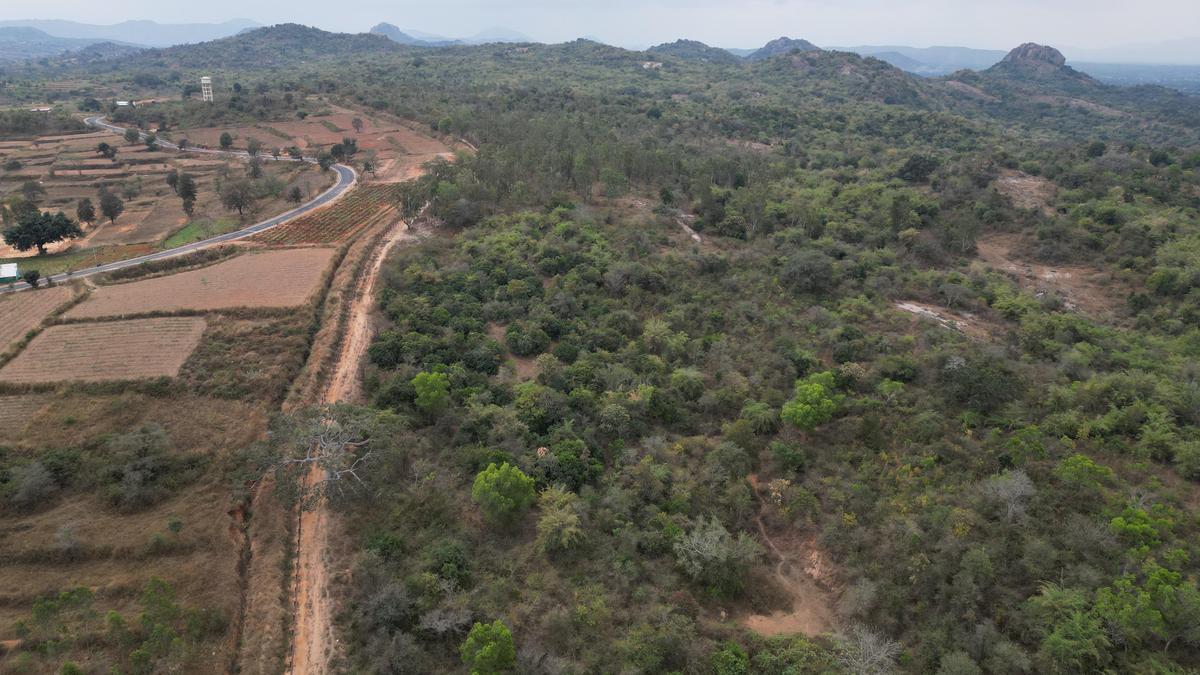
Reference image accompanying coverage of the Supreme Court’s prima facie view that planned commercial cultivation cannot justify forest occupation under the Forest Rights Act, distinct from protected forest-dependent livelihoods.
Image: The Hindu
Why in news
In its November 6 order, the Supreme Court examined extensive silk cotton cultivation within reserve forests of the Agasthyamalai Biosphere Reserve. The order raises questions about eligibility under the FRA and the distinction between collecting minor forest produce and cultivating commercial crops.
3,637.83 hectares
Forest land under silk cotton cultivation
5,072.64 hectares
Total forest land cited in the proceedings
Background
The Scheduled Tribes and Other Traditional Forest Dwellers (Recognition of Forest Rights) Act, 2006 seeks to remedy historical injustice arising from the non-recognition of customary forest rights. It recognises individual and community rights, including qualifying occupation for habitation or self-cultivation for livelihood, access to minor forest produce and community forest resource management. The Act combines livelihood security with responsibilities for conservation; it is neither a general licence to occupy forests nor a blanket prohibition on all cultivation within them.
What the Supreme Court said
A Bench of Justices Vikram Nath and Sandeep Mehta considered extensive silk cotton cultivation in reserve forests of the Agasthyamalai Biosphere Reserve. Tamil Nadu argued that silk cotton constituted minor forest produce and relied on historical cultivation to justify the cultivators’ presence.
The Bench expressed a prima facie view that the government’s affidavits indicated promoted and sponsored commercial cultivation rather than collection of naturally occurring forest produce. It stated that commercial crop cultivation could not itself be recognised as a forest right justifying occupation or continued presence.
The court directed the Central Empowered Committee to examine the State’s position on silk cotton. The reported order should therefore be read with its procedural qualification: the Bench recorded a prima facie assessment while seeking further examination of the classification claim.
- The Bench observed that commercial cultivation could change the very nature of the forest.
- According to the court’s reading of the government affidavits, large forest areas had been destroyed under the guise of silk cotton cultivation.
- The supplied report does not establish a completed adjudication of every individual cultivator’s eligibility or claim.
Infographic
Eligible communities
Verify statutory residence, forest dependence and claimant category.
Protected livelihoods
Recognise qualifying cultivation, produce access and community rights.
Commercial boundary
Produce classification does not automatically legitimise plantation occupation.
Due process
Use Gram Sabha-led verification and respect statutory safeguards.
Conservation
Prevent unlawful forest conversion while securing genuine rights.
AI-assisted infographic by Pragnya IAS Academy, based on the cited sources.
Who qualifies for protection under the FRA?
Forest-dwelling Scheduled Tribes must satisfy the Act’s requirements concerning residence in and dependence on forests or forest land for bona fide livelihood needs. Scheduled Tribe status by itself does not automatically establish a particular forest right.
Other Traditional Forest Dwellers must meet the prescribed multi-generational residence requirement before the statutory cut-off, alongside forest dependence for bona fide livelihood needs. Recognition also requires establishing the specific right claimed; a commercial plantation interest does not substitute for these conditions.
For land-related occupation rights, the FRA recognises qualifying pre-existing occupation rather than authorising fresh encroachment. The distinction is between recognising an eligible community’s lawful statutory entitlement and using the Act to legitimise a commercial enterprise.
- Eligibility of the claimant and the legal character of the claimed activity are separate questions.
- Historical cultivation alone does not dispense with statutory eligibility and evidence requirements.
- Reserve forest status does not, by itself, eliminate the possibility of valid FRA claims.
Minor forest produce versus commercial cultivation
Section 3(1)(c) recognises ownership, access to collect, use and dispose of minor forest produce traditionally collected within or outside village boundaries. The statutory definition of minor forest produce covers non-timber forest produce of plant origin, including products such as bamboo, honey, wax, leaves and medicinal plants.
The crucial distinction in the reported proceedings is between a right over forest produce and a claimed right to occupy forest land for planned commercial cultivation. Even if a product is treated as minor forest produce, that classification cannot automatically establish a separate entitlement to run a plantation on forest land.
Commercial sale must not be confused with commercial plantation occupation. Disposal of lawfully collected minor forest produce can include sale; similarly, the Act separately recognises qualifying self-cultivation for livelihood. The reported order should not be converted into a blanket rule that any market-linked forest livelihood is unlawful.
- Product classification and entitlement to occupy land require distinct legal scrutiny.
- The court’s emphasis on naturally occurring produce arose in its assessment of the silk cotton cultivation claim.
- The economic value of a forest product does not, by itself, determine whether its collection is protected.
Due process and conservation must operate together
The Gram Sabha initiates the FRA rights-recognition process, with scrutiny and decision-making through the prescribed sub-divisional and district-level institutions. The Central Empowered Committee’s examination in this case should not be confused with the ordinary statutory mechanism for determining forest rights.
The FRA protects qualifying forest dwellers against eviction or removal from land under occupation until the recognition and verification procedure is complete. Action against unlawful plantations must therefore distinguish commercial operators from eligible rights-holders and follow the applicable legal process.
The Act also assigns conservation responsibilities to rights-holders and village institutions. Its design supports a rights-based conservation approach: protect genuine livelihood entitlements while preventing forest conversion and ecological degradation.
- Conservation enforcement cannot replace claimant-specific verification.
- Recognition of rights does not authorise unrestricted alteration of forest ecosystems.
- Administrative errors in classifying activities should not be resolved through indiscriminate action against forest-dependent communities.
| Activity or claim | Legal position and necessary distinction |
|---|---|
| Collection and disposal of minor forest produce | Recognised under Section 3(1)(c), subject to the Act’s eligibility and rights framework; disposal can include sale. |
| Occupation for self-cultivation for livelihood | Recognised where the claimant, occupation and claimed right satisfy statutory requirements; not permission for fresh encroachment. |
| Community forest resource management | Recognises eligible communities’ role in protecting, regenerating, conserving or managing customary community forest resources. |
| Planned commercial silk cotton cultivation | The Supreme Court expressed a prima facie view that this activity could not justify forest occupation under the FRA. |
| Classification of silk cotton as minor forest produce | Referred to the Central Empowered Committee for examination; classification alone does not settle land-occupation rights. |
- 1. Identify the claimant category and verify statutory residence and livelihood-dependence requirements.
- 2. Identify the precise right claimed, distinguishing produce access from occupation, cultivation or community management.
- 3. Examine evidence and applicable temporal conditions through the Gram Sabha-led process.
- 4. Undertake scrutiny through the Sub-Divisional Level Committee, with applicable opportunities to contest findings.
- 5. Obtain a decision through the District Level Committee under the statutory framework.
- 6. Protect recognised rights while enforcing conservation duties and acting lawfully against unauthorised activities.
2006
The Forest Rights Act established a statutory framework for recognising rights of eligible forest-dwelling Scheduled Tribes and Other Traditional Forest Dwellers.
November 6, as reported
The Supreme Court expressed its prima facie view against using planned commercial cultivation to justify forest occupation and sought examination of Tamil Nadu’s silk cotton classification claim.
Significance, challenges & way forward
Significance
- The order reinforces that the FRA addresses historical injustice to eligible forest-dependent communities rather than providing a general route to regularise commercial plantations.
- It highlights that a right to collect and sell forest produce is legally distinct from a right to occupy forest land for cultivation.
- It brings ecological consequences into scrutiny where plantation expansion changes forest character.
- It makes accurate classification of claimants, activities and rights central to defensible forest governance.
Challenges
- Forest livelihoods often involve markets, making a simplistic subsistence-versus-sale test legally and socially misleading.
- Evidence of customary occupation and forest dependence may be difficult to assemble, requiring fair assessment of admissible community and documentary evidence.
- Confusing minor forest produce classification with land entitlement can lead either to unlawful regularisation or wrongful denial of rights.
- Overbroad interpretation of a prima facie order could expose genuine rights-holders to arbitrary enforcement.
- Where cultivation has received government support, accountability and a lawful transition require scrutiny of administrative decisions as well as cultivators’ claims.
Way forward
- Assess each claimant and each claimed right individually instead of treating all forest cultivators as either protected occupants or commercial encroachers.
- Examine the legal status and ecological effects of silk cotton cultivation separately from the question of who qualifies under the FRA.
- Strengthen Gram Sabha-led verification and ensure reasoned decisions, access to records and statutory opportunities to challenge adverse findings.
- Protect lawful collection, value addition and sale of minor forest produce without treating market participation itself as disqualification.
- Enforce conservation obligations and prevent fresh unlawful forest conversion while respecting the FRA’s procedural safeguards.
- Where unlawful cultivation is established through due process, combine ecological restoration with appropriate livelihood support for affected vulnerable households.
Key terms
- Forest Rights Act
- A law recognising specified forest rights of eligible forest-dwelling Scheduled Tribes and Other Traditional Forest Dwellers.
- Other Traditional Forest Dwellers
- Persons or communities meeting the FRA’s prescribed multi-generational forest-residence and bona fide livelihood-dependence conditions.
- Minor forest produce
- Non-timber forest produce of plant origin as defined under the FRA, over which eligible communities may hold collection, use and disposal rights.
- Community forest resource
- Customary common forest land within traditional or customary village boundaries, including qualifying seasonal-use landscapes.
- Prima facie view
- A preliminary assessment based on the material presently available, rather than necessarily a final determination of every issue.
- Central Empowered Committee
- A body assisting scrutiny of forest and environmental matters that was asked to examine the State’s silk cotton classification claim in this case.
Link with static syllabus
Prelims practice MCQs
Q1. With reference to the Forest Rights Act, 2006, consider the following statements: Statement I: Section 3(1)(c) recognises rights relating to the collection, use and disposal of minor forest produce. Statement II: Classification of a product as minor forest produce automatically establishes a right to occupy forest land for its commercial plantation. Which of the statements given above is/are correct?
Q2. Which institution initiates the process for determining the nature and extent of forest rights under the FRA?
Q3. With reference to the reported Supreme Court order concerning silk cotton cultivation, consider the following statements: Statement I: The cultivation examined was within reserve forests of the Agasthyamalai Biosphere Reserve. Statement II: The court conclusively accepted Tamil Nadu’s claim that silk cotton cultivation justified the cultivators’ presence. Which of the statements given above is/are correct?
Q4. Which of the following best describes the relationship between livelihood protection and conservation under the FRA?
Mains practice questions
GS 2 · 15 marks · 250 words
The Forest Rights Act protects forest-dependent livelihoods but does not provide a general licence for commercial exploitation. Discuss with reference to the Supreme Court’s observations on silk cotton cultivation.
Frequently asked questions
Has the Supreme Court prohibited all cultivation under the FRA?
The reported order addresses planned or promoted commercial cultivation used to justify forest occupation. The FRA separately recognises qualifying self-cultivation for livelihood, subject to statutory conditions.
Can recognised forest rights-holders sell minor forest produce?
Yes. The right to dispose of minor forest produce can include sale; market participation alone does not turn a lawful forest livelihood into an unauthorised plantation claim.
Did the court finally settle whether silk cotton is minor forest produce?
The supplied report records a direction to the Central Empowered Committee to examine Tamil Nadu’s claim. It also records the Bench’s prima facie objection to treating planned commercial cultivation as a protected forest right.
Does cultivation inside a reserved forest automatically qualify for FRA protection?
No. The claimant must establish statutory eligibility and the specific right claimed; cultivation alone does not establish entitlement.
Sources
Analysis prepared by the Pragnya IAS Academy current-affairs desk with AI assistance from the cited reports. Verify figures with the original sources.
Turn current affairs into marks
Join Pragnya IAS Academy's mentorship for daily answer-writing evaluation on stories like this — classroom programmes from a trusted name in IAS coaching in Hyderabad.