
India’s Ukraine Peace Diplomacy: Black Sea Food Corridors and Security Guarantees
Revise the static topic: UPSC International Relations notes
In short: Ahead of the scheduled Abu Dhabi talks, India engaged both Ukraine and Russia, with President Volodymyr Zelenskyy stating that New Delhi was ready to mediate on Black Sea food corridors. The initiative could protect grain and energy shipments while demonstrating India’s strategic autonomy, but no concluded corridor agreement or formal Indian participation in the talks has been reported.
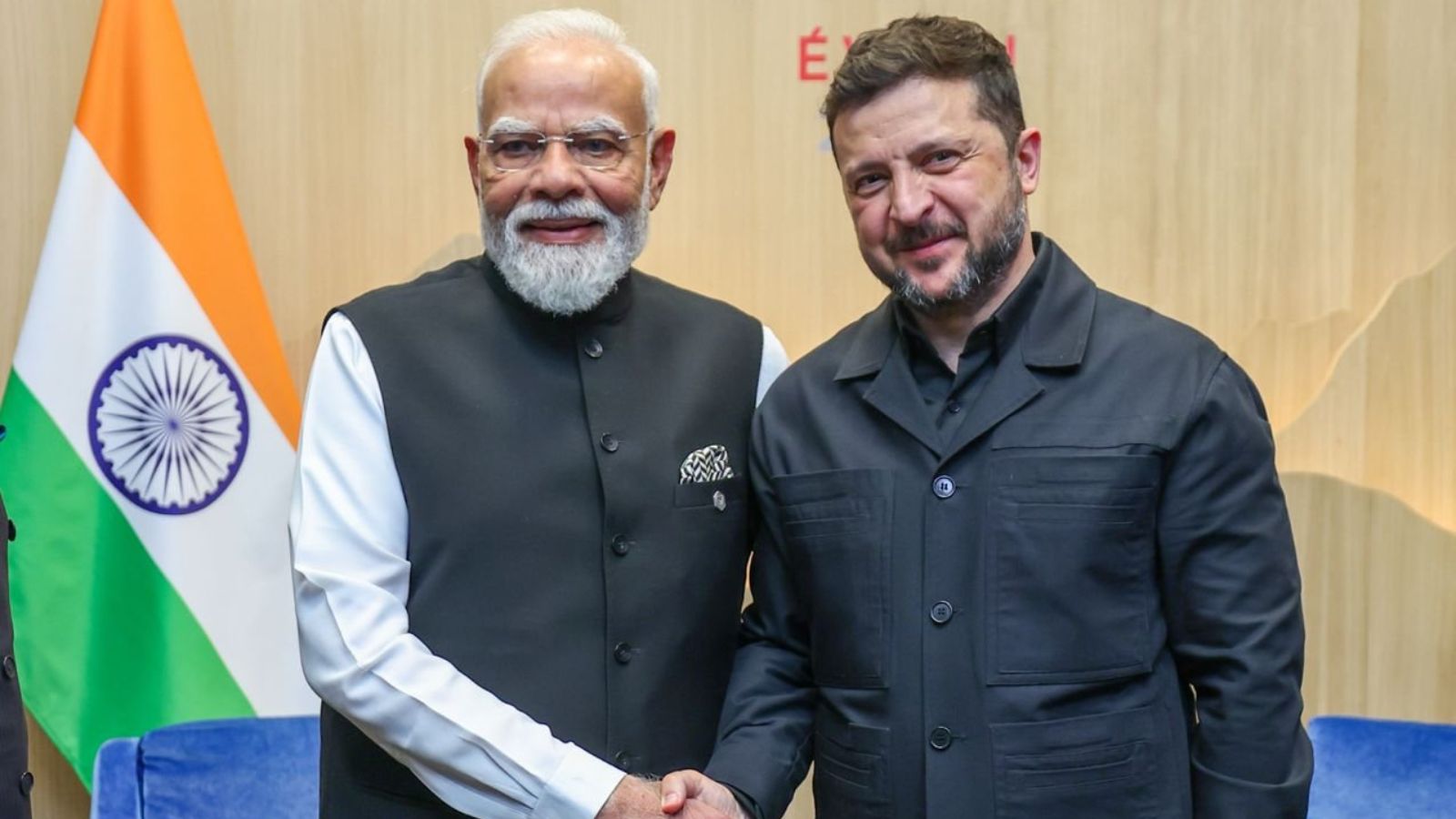
Reference image accompanying reporting on India’s proposed mediation over Black Sea food corridors, not a view of the Abu Dhabi talks. No concluded corridor agreement or formal Indian participation in the talks has been reported.
Image: Indian Express
Why in news
Prime Minister Narendra Modi spoke to President Zelenskyy and External Affairs Minister S. Jaishankar spoke to Russian Foreign Minister Sergey Lavrov ahead of the talks scheduled to begin on November 10, 2026. Security guarantees are central to the negotiations, while India has explored arrangements to protect civilians, shipping and essential exports.
2 days
Scheduled Abu Dhabi session
4 points
Reported Indian proposal
At least 400 million
People potentially at food-security risk, as reported
3
Key deep-water ports in Greater Odesa
Background
Russia’s full-scale invasion of Ukraine in 2022 intensified disputes over sovereignty, territory and Europe’s security architecture. The Black Sea is an important outlet for Russian and Ukrainian grain and other commercial shipments; the Kerch Strait connects it with the Sea of Azov, while the Turkish Straits provide access towards the Mediterranean. India maintains diplomatic engagement with both Moscow and Kyiv and advocates dialogue and diplomacy. Its strategic autonomy involves independent, issue-based decisions rather than automatic alignment with a geopolitical bloc.
What India has proposed—and what remains unconfirmed
The Ministry of External Affairs reaffirmed India’s human-centric approach and readiness to contribute to peaceful resolution. The specific statement that India was ready to mediate on food corridors came from Zelenskyy; it should not be treated as evidence that Russia has accepted an agreement.
According to the supplied reporting, India has discussed protecting civilians, enabling grain and energy exports through the Black Sea, and preventing attacks on ships and seafarers. These initiatives seek practical non-attack arrangements rather than immediately resolving every territorial or political dispute.
- Zelenskyy publicly welcomed Indian efforts concerning food corridors.
- Jaishankar’s conversation with Lavrov maintained a parallel diplomatic channel with Moscow.
- The sources do not establish a signed corridor agreement, an operational monitoring mechanism or India’s formal inclusion in the Abu Dhabi negotiations.
- The protection of merchant mariners has a direct Indian dimension because Indian nationals serve among the affected seafarers.
Infographic
Diplomatic access
Maintain communication with both Moscow and Kyiv.
Food security
Explore protected grain movement through the Black Sea.
Energy and mariners
Seek safer essential shipments, ships and crews.
Security guarantees
Credibility and acceptability remain contested.
Implementation
Consent, verification and compliance determine success.
AI-assisted infographic by Pragnya IAS Academy, based on the cited sources.
Strategic autonomy: from advocacy to functional diplomacy
India’s engagement illustrates how strategic autonomy can create diplomatic room for action. Maintaining communication with both belligerents enables New Delhi to explore limited areas of convergence without joining a military alliance or endorsing either side’s entire negotiating position.
Its strongest potential contribution lies in functional diplomacy: pursuing arrangements with identifiable humanitarian and economic benefits. Food corridors and maritime safety may offer a more manageable entry point than territorial settlements or the redesign of European security.
Access, however, is not equivalent to leverage. India’s usefulness will depend on the parties’ consent, confidence in its proposals and coordination with existing diplomatic efforts. Independent engagement must remain anchored in the UN Charter’s principles of sovereignty, territorial integrity and peaceful settlement.
- Strategic autonomy should be assessed through diplomatic outcomes, not merely balanced contact with rival sides.
- India can articulate the interests of import-dependent developing countries affected by disrupted essential supplies.
- A limited maritime arrangement could build confidence without implying agreement on disputed sovereignty.
Why security guarantees are the central obstacle
The Abu Dhabi talks are scheduled to focus on security guarantees. Ukraine seeks credible assurances against renewed invasion and favours an immediate ceasefire before a wider settlement. Russia seeks a comprehensive agreement on its conditions, including Ukrainian military restrictions and abandonment of NATO membership ambitions.
Ukraine has discussed guarantees resembling NATO’s Article 5 with its allies. Article 5 treats an armed attack on one member as an attack on all, but each ally takes the action it deems necessary; it does not prescribe an identical military response by every member. An Article 5-like guarantee for Ukraine would require a separately agreed arrangement and would not itself confer NATO membership.
The central dilemma is credibility versus acceptability: commitments strong enough to reassure Kyiv may be unacceptable to Moscow. Russia rejects a prospective European troop deployment in Ukraine, while disagreement over European participation further complicates the negotiations.
- A ceasefire suspends fighting; a security guarantee addresses the risk of renewed aggression.
- Credibility depends on clearly identified guarantors, triggering events, response commitments and implementation capacity.
- The supplied sources do not indicate that India has offered military guarantees or troop deployment.
Food and energy corridors: benefits, law and operational limits
The Indian Express identifies Odesa, Chornomorsk and Pivdennyi as key Ukrainian deep-water ports and highlights the importance of the Azov–Black Sea region for Russian grain exports. Protecting commercial movement could reduce supply uncertainty for food-importing countries and improve conditions for energy shipments.
A corridor is more than a declared route. Its viability would require agreement on covered vessels, ports and cargoes, communications between the parties, incident verification and remedies for violations. Protection of energy shipments must also be distinguished from protection of energy infrastructure; the sources discuss both, but do not establish final agreed coverage.
International humanitarian law requires distinction between civilians and combatants and between civilian objects and military objectives, alongside proportionality and precautions in attack. A negotiated non-attack arrangement would supplement these obligations, not replace them or legitimise otherwise unlawful attacks.
- Safe passage must cover predictable access to ports, not merely movement on the open sea.
- Continuing attacks could undermine shipowners’ and insurers’ confidence even after a political announcement.
- Any proposed verification or inspection system must avoid becoming another source of obstruction.
- Humanitarian access and commercial export arrangements should not be confused with a comprehensive peace settlement.
| Instrument | Purpose | Position in the supplied reporting |
|---|---|---|
| Black Sea food corridor | Protect agreed grain movements and related maritime access | Indian mediation welcomed by Zelenskyy; no concluded agreement reported |
| Energy and shipping non-attack arrangement | Reduce attacks affecting essential supplies, ships and seafarers | Discussed within India’s diplomatic initiatives; final scope unconfirmed |
| Ceasefire | Suspend hostilities within an agreed area or across the conflict | Ukraine favours an immediate ceasefire; Russia resists a general pause without a wider deal |
| Security guarantees | Deter renewed aggression and define responses to violations | Central agenda of the scheduled Abu Dhabi talks |
| Comprehensive peace settlement | Address political, territorial and wider security disputes | Major differences between Russia and Ukraine remain unresolved |
- 1. Obtain explicit consent from Russia and Ukraine on a limited humanitarian and commercial objective.
- 2. Define protected routes, ports, cargoes, vessels and non-attack commitments.
- 3. Establish communication channels and mutually acceptable verification procedures.
- 4. Enable predictable passage with clear procedures for shipping operators and seafarers.
- 5. Investigate incidents rapidly and apply agreed corrective measures.
- 6. Use demonstrated compliance to explore broader confidence-building arrangements.
2022
Russia launched its full-scale invasion of Ukraine.
September 2026
According to The Hindu, Jaishankar disclosed Indian initiatives concerning grain exports, maritime safety and energy passage during visits to Poland and Ukraine.
October 22, 2026
Indian officials described outreach to Russia and Ukraine on a four-point proposal during Polish Prime Minister Donald Tusk’s visit to Delhi.
November 9, 2026
Modi spoke to Zelenskyy, while Jaishankar spoke to Lavrov; Zelenskyy publicly welcomed Indian efforts on food corridors.
November 10, 2026
The two-day Abu Dhabi negotiations involving Russian, Ukrainian and U.S. officials were scheduled to begin, with security guarantees on the agenda.
Significance, challenges & way forward
Significance
- India could translate access to both belligerents into practical humanitarian diplomacy rather than remaining confined to general appeals for peace.
- Safer grain exports could ease supply uncertainty for vulnerable importing countries in Africa, West Asia and Asia.
- Protection of energy shipments could reduce disruptions affecting consumers and import-dependent economies, including India.
- Maritime safety arrangements could directly protect Indian seafarers working on international merchant vessels.
- A successful limited agreement could create confidence for wider negotiations without prejudging territorial questions.
Challenges
- Russia and Ukraine disagree on the sequencing of a ceasefire and a comprehensive settlement.
- Security guarantees acceptable to Ukraine may conflict with Russia’s opposition to Western military involvement.
- Continuing attacks and mutual distrust could undermine compliance with any corridor arrangement.
- Disputes over cargo identification, inspections and responsibility for incidents could obstruct implementation.
- India’s diplomatic access does not provide automatic enforcement capacity or guarantee acceptance of its proposals.
- A maritime understanding cannot by itself resolve territorial disputes or eliminate wider food and energy vulnerabilities.
Way forward
- India should seek a clearly consent-based facilitation role and distinguish exploratory proposals from accepted commitments.
- Begin with specific, verifiable protections for civilians, merchant vessels, seafarers and essential cargoes.
- Coordinate with the Abu Dhabi diplomatic process so that Indian initiatives complement rather than fragment negotiations.
- Recommend jointly accepted monitoring, incident hotlines and time-bound procedures for investigating alleged violations.
- Engage shipping operators, insurers and relevant international organisations to identify practical conditions for dependable passage.
- Keep humanitarian cooperation consistent with sovereignty, territorial integrity and international humanitarian law.
- Treat corridor diplomacy as a confidence-building measure, not as a substitute for credible security arrangements and a wider settlement.
Key terms
- Strategic autonomy
- The ability to make independent foreign-policy choices based on national interests and principles rather than automatic bloc alignment.
- Food corridor
- An agreed arrangement enabling protected movement of food supplies through routes affected by conflict or restrictions.
- Security guarantee
- A commitment specifying support or action intended to protect a state against future threats or renewed aggression.
- Ceasefire
- An agreed suspension of hostilities that need not resolve the underlying political dispute.
- Mediation
- Third-party assistance, accepted by the disputing parties, to help them negotiate a settlement.
- NATO Article 5
- The collective-defence provision under which an armed attack on one member is treated as an attack on all, with each ally taking action it deems necessary.
- Confidence-building measure
- A practical arrangement designed to reduce mistrust, lower risks and improve predictability between adversaries.
Link with static syllabus
Prelims practice MCQs
Q1. With reference to India’s reported Ukraine-related diplomatic initiatives, consider the following statements: 1. Zelenskyy stated that India was ready to mediate in establishing food corridors. 2. The supplied reporting confirms that India has signed a binding military security guarantee for Ukraine. 3. India’s initiatives have included the safety of ships and seafarers. Which of the statements given above are correct?
Q2. Which of the following correctly describes NATO’s Article 5?
Q3. Consider the following geographical pairs: 1. Kerch Strait — Connects the Sea of Azov with the Black Sea 2. Odesa — Ukrainian port on the Black Sea 3. Abu Dhabi — Capital of the United Arab Emirates Which of the pairs given above are correctly matched?
Q4. With reference to Article 51 of the Indian Constitution, consider the following statements: 1. It forms part of the Directive Principles of State Policy. 2. It calls upon the State to foster respect for international law and treaty obligations. 3. It makes every international treaty automatically enforceable in Indian courts without regard to domestic law. Which of the statements given above are correct?
Mains practice questions
GS 2 · 15 marks · 250 words
India’s proposed Black Sea food-corridor diplomacy illustrates both the possibilities and limits of strategic autonomy. Discuss with reference to security guarantees and global food and energy security.
Frequently asked questions
Has India secured a Black Sea food-corridor agreement?
No concluded agreement is established by the supplied sources. Zelenskyy welcomed India’s readiness to mediate, while India reaffirmed its willingness to support peaceful resolution.
Is India participating formally in the Abu Dhabi talks?
The sources do not confirm formal Indian participation. They report Indian outreach to Russia and Ukraine ahead of the scheduled negotiations.
Why are security guarantees different from a ceasefire?
A ceasefire suspends fighting, whereas security guarantees seek to deter renewed aggression and specify responses if it occurs. A durable settlement may require both.
Why does Black Sea shipping matter to India?
Disruptions affect international food and energy markets, while attacks on commercial shipping endanger seafarers, including Indian nationals. Protecting essential flows therefore serves both humanitarian and national interests.
Sources
- The Hindu: Ahead of Abu Dhabi peace talks, Modi speaks to Zelenskyy; Jaishankar speaks to Lavrov
- The Hindu: What to know about upcoming peace talks involving Russian, Ukrainian and U.S. officials
- Indian Express: India ready to help set up food corridors, says Ukrainian President Zelenskyy after phone call with PM Modi
- Indian Express: India News Highlights, 9 November 2026: PM Modi speaks to Zelenskyy, reaffirms India's support for peaceful resolution
Analysis prepared by the Pragnya IAS Academy current-affairs desk with AI assistance from the cited reports. Verify figures with the original sources.
Turn current affairs into marks
Join Pragnya IAS Academy's mentorship for daily answer-writing evaluation on stories like this — classroom programmes from a trusted name in IAS coaching in Hyderabad.