
UAPA Bail and Trial Delays: Article 21 Limits on Prolonged Detention
Revise the static topic: UPSC Polity notes · UPSC Governance notes
In short: The Supreme Court has reaffirmed that stringent UAPA bail restrictions cannot override constitutional protection against prolonged incarceration when trials are delayed, according to the supplied report. The central issue is how courts protect the Article 21 right to a speedy trial without disregarding the seriousness of terrorism-related allegations or legitimate security concerns.
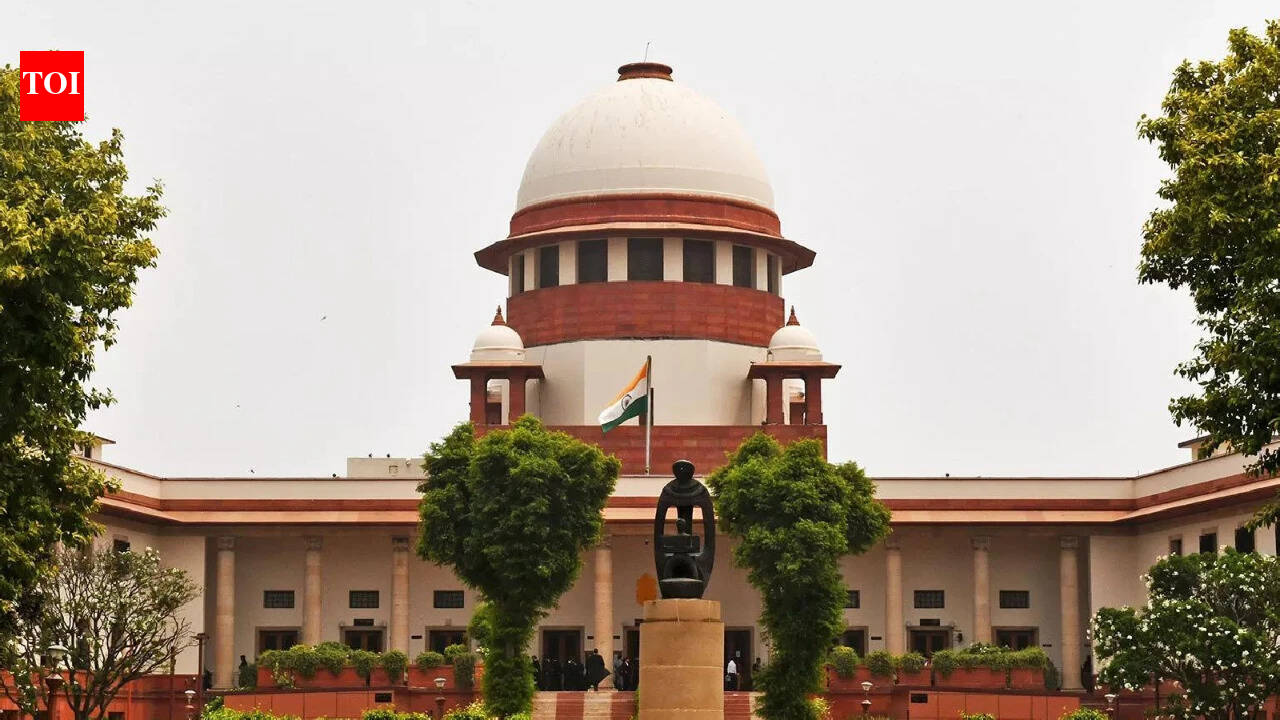
Reference image from the supplied report on UAPA bail and trial delays. The central issue is Article 21 protection against prolonged detention, even under stringent bail restrictions.
Image: Times of India
Why in news
The supplied Times of India report highlights the Supreme Court's reaffirmation of its authority to grant bail despite stringent UAPA restrictions where trial delay threatens personal liberty. The extract does not provide the underlying case's custody duration, trial progress or detailed directions.
Background
The Unlawful Activities (Prevention) Act, 1967, provides a legal framework for addressing unlawful activities and terrorism-related offences. Its special bail restrictions reflect the gravity of certain offences, but the legislation operates within the Constitution. Article 21 protects life and personal liberty, and the Supreme Court's interpretation of that provision requires deprivation of liberty to follow a just, fair and reasonable procedure. The right to a speedy trial forms part of this protection. Consequently, the legality of continued pre-trial detention involves both the applicable statutory bail conditions and the constitutional implications of prolonged incarceration.
What the reported reaffirmation means
The reported principle is that stringent statutory restrictions do not extinguish constitutional courts' power to protect personal liberty. Where an accused remains incarcerated for a prolonged period and the trial has no realistic prospect of early completion, Article 21 becomes central to the bail assessment.
This does not mean that every adjournment creates an entitlement to bail or that UAPA's restrictions have been invalidated. Courts must examine the circumstances of the individual case rather than apply a universal custody threshold.
- Bail addresses whether continued custody is justified; it does not determine guilt or innocence.
- The seriousness of allegations is relevant, but cannot by itself answer every constitutional objection to prolonged detention.
- The supplied extract supports the broad principle, not a case-specific release formula.
Infographic
Statutory restriction
Section 43D(5) imposes special bail conditions for specified offences.
Constitutional protection
Article 21 includes the right to a speedy trial.
Individual assessment
Custody, trial progress and reasons for delay must be examined.
Risk safeguards
Suitable conditions can protect witnesses, evidence and attendance.
Systemic solution
Timely trials and capable institutions protect both security and liberty.
AI-assisted infographic by Pragnya IAS Academy, based on the cited sources.
How Section 43D(5) restricts ordinary bail
Section 43D(5) of UAPA imposes special bail conditions for offences punishable under Chapters IV and VI, concerning terrorist activities and terrorist organisations. The Public Prosecutor must be given an opportunity to be heard before release.
The proviso bars bail where the court, on examining the case diary or the relevant investigation report, finds reasonable grounds for believing that the accusation is prima facie true. This is a preliminary assessment for bail, not a finding of guilt after trial.
- The provision does not apply identically to every offence contained in UAPA.
- The special restrictions operate in addition to applicable general bail restrictions.
- A prima facie assessment cannot substitute for proof of guilt at trial.
Article 21 and constitutional courts' powers
Article 21 requires the State to justify not merely the initial deprivation of liberty, but also the fairness of its continuation. Detention pending trial may begin lawfully, yet its prolonged continuation can raise a distinct constitutional concern when adjudication remains distant.
Constitutional courts reconcile the statutory framework with fundamental rights. They do not erase the UAPA bail provision; they assess whether applying it in the particular circumstances would produce constitutionally impermissible incarceration.
Articles 32 and 226 provide constitutional remedies for enforcing fundamental rights. These provisions should not be read as prescribing an identical procedural route for every bail case; the relevant jurisdiction and facts matter.
- Speedy trial is part of Article 21 even though that expression is not expressly written into the Article.
- Relevant considerations include custody already undergone, trial progress, likely remaining duration and reasons for delay.
- Delay attributable to the accused must be distinguished from delay arising from investigation, prosecution or institutional constraints.
- Constitutional relief requires a reasoned assessment, not an automatic relaxation of the statutory standard.
Balancing liberty, security and effective prosecution
Complex terrorism prosecutions may involve extensive evidence, multiple accused and witness-protection needs. These difficulties can explain why proceedings require time, but cannot become an open-ended justification for detention without timely adjudication.
The appropriate response combines effective prosecution with individualised safeguards. Where bail is warranted, courts can impose suitable conditions addressing flight risk, witness intimidation and evidence tampering. Where custody continues, credible trial management is essential.
- Security and liberty are constitutional responsibilities, not mutually exclusive policy choices.
- Bail conditions should respond to demonstrated risks and should not make release practically impossible.
- Timely trials serve accused persons, victims and the credibility of counter-terrorism enforcement.
| Dimension | Section 43D(5) scrutiny | Article 21 scrutiny |
|---|---|---|
| Central question | Is there a statutory bar based on a prima facie true accusation? | Has continued detention become incompatible with a fair and speedy process? |
| Primary focus | Applicable offence and prosecution material | Custody duration, trial progress, likely completion and causes of delay |
| Legal function | Imposes special restrictions for specified UAPA offences | Protects fundamental rights against unconstitutional deprivation of liberty |
| Nature of assessment | Preliminary scrutiny, not a final determination of guilt | Individualised constitutional scrutiny, not automatic release |
| Relationship | Remains part of the governing statutory framework | Can justify relief despite statutory restrictions where fundamental rights are violated |
- 1. Identify the alleged offences and whether Section 43D(5) applies.
- 2. Examine the applicable statutory bail conditions and prosecution material.
- 3. Assess custody already undergone, trial progress and realistic prospects of completion.
- 4. Identify the causes of delay and evaluate the Article 21 implications.
- 5. Assess flight risk, witness safety and risks to evidence.
- 6. Deliver a reasoned decision, using suitable bail conditions where release is warranted.
Significance, challenges & way forward
Significance
- The principle affirms constitutional supremacy by preventing statutory restrictions from displacing fundamental-rights scrutiny.
- It guards against pre-trial detention functioning as punishment before guilt is established.
- It reinforces the State's obligation to investigate and prosecute serious offences with reasonable expedition.
- It clarifies that an adverse prima facie assessment does not permanently foreclose constitutional scrutiny of continued custody.
- It strengthens the legitimacy of security legislation by insisting on fair procedure.
Challenges
- Complex evidence and multiple-accused proceedings can make trial timelines difficult to predict.
- Courts must distinguish unavoidable complexity from avoidable institutional delay and deliberate obstruction.
- Individualised adjudication can produce uneven outcomes unless courts clearly explain their reasoning.
- Release conditions must protect witnesses and evidence without becoming disproportionate restraints on liberty.
- Bail relief in individual cases cannot by itself resolve inadequate judicial, prosecutorial or forensic capacity.
Way forward
- Require updated information on custody duration, witnesses examined, pending evidence and expected trial completion when considering prolonged-detention claims.
- Strengthen trial-court capacity, prosecution preparedness and forensic support for complex security cases.
- Use realistic case-management schedules and record reasons for avoidable adjournments.
- Review continued incarceration periodically rather than treating an earlier bail rejection as conclusive for all future stages.
- Tailor bail conditions to identifiable risks, including witness intimidation, absconding and evidence tampering.
- Improve legal aid so that indigent accused can effectively raise speedy-trial and prolonged-detention concerns.
Key terms
- Article 21
- The constitutional guarantee that no person shall be deprived of life or personal liberty except according to procedure established by law.
- Right to a speedy trial
- An Article 21 protection requiring criminal proceedings to be conducted without unjustifiable delay.
- Section 43D(5)
- The UAPA provision imposing special bail restrictions for offences punishable under Chapters IV and VI.
- Prima facie true
- A preliminary assessment that an accusation appears true on the material examined, without finally determining guilt.
- Constitutional bail
- A descriptive expression for bail granted to protect fundamental rights despite otherwise stringent statutory restrictions.
- Undertrial
- An accused person whose trial has not concluded; an undertrial prisoner remains in custody pending adjudication.
- Presumption of innocence
- The general criminal-law principle that an accused is treated as innocent until guilt is established according to law.
Link with static syllabus
Prelims practice MCQs
Q1. With reference to the right to a speedy trial in India, consider the following statements: 1. It has been recognised as part of Article 21. 2. It applies only after an accused person has been convicted. 3. Prolonged pre-trial detention may raise a constitutional issue even where initial custody was lawful. Which of the statements given above are correct?
Q2. Consider the following statements about Section 43D(5) of UAPA: 1. Its special bail restrictions concern offences punishable under Chapters IV and VI. 2. It requires an opportunity for the Public Prosecutor to be heard before release. 3. A finding that an accusation is prima facie true amounts to a conviction. Which of the statements given above are correct?
Q3. Which of the following best describes the interaction between stringent UAPA bail restrictions and Article 21?
Q4. Consider the following pairs: 1. Article 21 — Protection of life and personal liberty 2. Article 32 — Remedies for enforcement of fundamental rights 3. Article 39A — Equal justice and free legal aid Which of the pairs given above are correctly matched?
Mains practice questions
GS 2 · 15 marks · 250 words
Stringent bail restrictions cannot become a justification for indefinite pre-trial incarceration. Examine the interaction between UAPA, Article 21 and constitutional courts' bail powers.
Frequently asked questions
Does trial delay automatically entitle every UAPA accused to bail?
No. Courts assess the duration and causes of custody, trial progress, prospects of completion and relevant risks before determining whether continued detention violates Article 21.
Does constitutional bail under UAPA mean acquittal?
No. Bail concerns release from custody pending proceedings; the trial continues and guilt must still be determined according to law.
Has Section 43D(5) been removed by this reported reaffirmation?
The supplied report does not indicate that the provision has been invalidated. The principle concerns constitutional protection against prolonged detention despite stringent statutory restrictions.
Is there a fixed custody period after which constitutional bail must be granted?
No universal threshold follows from the supplied material. The constitutional assessment depends on the circumstances of each case and should not be confused with separate statutory rules on default bail.
Sources
Analysis prepared by the Pragnya IAS Academy current-affairs desk with AI assistance from the cited reports. Verify figures with the original sources.
Turn current affairs into marks
Join Pragnya IAS Academy's mentorship for daily answer-writing evaluation on stories like this — classroom programmes from a trusted name in IAS coaching in Hyderabad.