
UNESCO on Women’s Higher Education: Gains Amid Rural–Urban Schooling Gaps
Revise the static topic: UPSC Economy notes · UPSC International Relations notes
In short: A Times of India headline attributes to UNESCO the observation that women are ahead in higher education while rural–urban gaps affect schoolgirls. These outcomes can coexist because aggregate higher-education gains do not establish equal schooling opportunities across locations and social groups; policy must address the barriers faced by girls who struggle to enter or remain in the education pipeline.
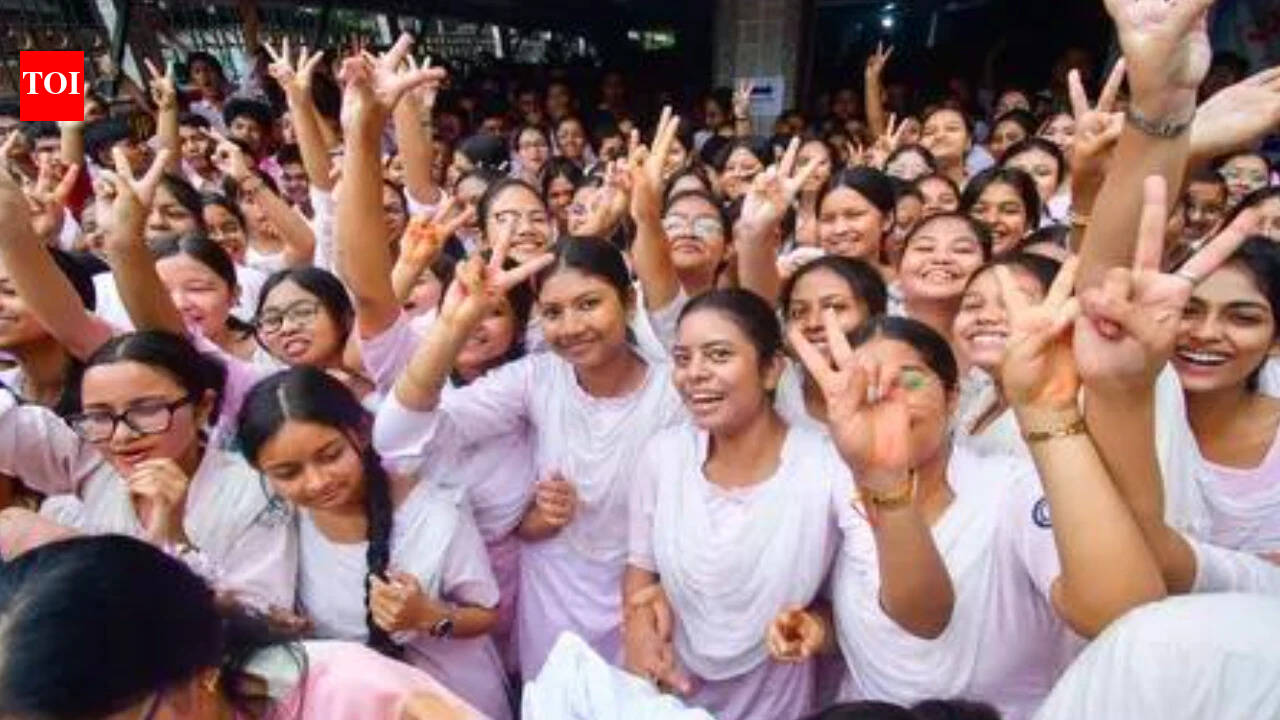
Reference view accompanying the Times of India report on UNESCO’s findings: women’s gains in higher education can coexist with rural–urban gaps in girls’ schooling.
Image: Times of India
Why in news
The Times of India has reported UNESCO’s observations on women’s higher-education gains alongside rural–urban disparities affecting schoolgirls. The supplied extract does not contain the underlying report, figures or indicator definitions, so the precise scope of the comparison cannot be verified.
Background
UNESCO is the United Nations specialised agency concerned with education, science and culture. The Sustainable Development Goal on education links inclusive and equitable quality education with lifelong learning. In India, education is a Concurrent List subject, making coordination between the Union and States important. Gender equality in education involves more than enrolment: it includes regular attendance, learning, progression, completion and meaningful choices after education.
What the reported finding establishes—and what it does not
The source headline presents two developments: women’s relative gains in higher education and rural–urban disparities affecting girls at school. These concern different educational stages and potentially different populations, so they are not inherently contradictory.
However, the supplied material does not identify the underlying UNESCO publication, geographical coverage, reference period or measure of women being “ahead”. It would therefore be incorrect to infer a specific Indian enrolment ratio, a universal female advantage or a measured rural–urban gap from this extract.
- Distinguish women’s share of enrolled students from an enrolment rate calculated against the relevant population.
- Distinguish gender parity in participation from equality in learning, completion and subject choice.
- Treat the Indian policy discussion as an analytical application, not as a set of findings verified from the missing report.
Infographic
Read indicators carefully
A higher-education aggregate cannot establish universal school access.
Locate exclusion
Disaggregate outcomes and include girls outside the school system.
Remove specific barriers
Match transport, residential and financial support to local needs.
Deliver usable schooling
Ensure teaching, sanitation, safeguarding and learning support.
Track sustained outcomes
Measure learning, transition and completion alongside participation.
AI-assisted infographic by Pragnya IAS Academy, based on the cited sources.
Why aggregate gains can coexist with unequal opportunities
An aggregate can improve without every group improving equally. Gains among urban or better-resourced women can coexist with disadvantages among rural girls. A national gender comparison also differs from a comparison between rural and urban girls: the two indicators ask different questions.
Higher-education participants have already passed through successive stages of schooling. Their outcomes cannot, by themselves, reveal the circumstances of girls who never enrolled, dropped out or could not make the transition to further study. This creates a selection problem when college-level success is used as evidence of universal opportunity.
The indicators also concern different cohorts. Women currently in higher education reflect earlier schooling experiences, whereas schoolgirls face present conditions. Neither observation alone establishes a causal relationship.
- Gender must be analysed alongside location, household resources, social disadvantage and disability.
- Parity among enrolled students does not establish universal participation among eligible girls.
- Improved access must be assessed separately from educational quality and post-education opportunities.
Where rural girls can face cumulative disadvantage
Relevant barriers to investigate include distance to secondary schools, unreliable transport, safety concerns, inadequate sanitation and gaps in teaching provision. Such barriers can become more consequential when progression requires travel beyond the immediate neighbourhood.
Household costs extend beyond fees to transport, learning materials and the opportunity cost of girls’ unpaid domestic or care work. Restrictive social norms and early marriage can further constrain continuity. Digital access can assist learning, but shared devices, poor connectivity or limited control over their use can restrict its benefits.
These are plausible policy mechanisms, not findings established by the supplied extract. Their relative importance should be diagnosed locally rather than assumed to be uniform across rural India.
- Identify whether the local bottleneck is initial access, attendance, learning, transition or completion.
- Examine whether girls have practical access to devices and services, rather than recording household ownership alone.
- Recognise that disadvantaged urban girls also require support; location is not a complete proxy for vulnerability.
Constitutional responsibilities and a targeted policy response
Article 21A guarantees free and compulsory education within its constitutionally specified age group, operationalised through the Right of Children to Free and Compulsory Education Act. Article 15(3) permits special provisions for women and children, supporting appropriately designed measures to address substantive disadvantage. The Article 21A guarantee should not be presented as a universal right to free higher education.
Samagra Shiksha provides a school-education framework within which access, inclusion and quality interventions can be coordinated. Kasturba Gandhi Balika Vidyalayas are an established residential-schooling instrument for girls from disadvantaged groups. Their relevance lies in addressing actual access barriers, subject to applicable eligibility and implementation arrangements.
Targeting should combine area-based investment with individual support. Underserved school catchments may need transport or residential options, while particular learners may require scholarships, disability support, counselling or help returning to education.
- Use school mapping to identify gaps in safe and practical access to secondary education.
- Provide timely financial assistance that addresses the actual costs of continued schooling.
- Combine infrastructure with teachers, learning support, safeguarding and grievance redress.
- Evaluate schemes through attendance, learning, transition and completion rather than enrolment alone.
| Dimension | What it can reveal | What it cannot establish alone |
|---|---|---|
| Women’s share in higher education | Gender composition among enrolled students | Equal access for all eligible women |
| Female enrolment rate | Participation relative to the relevant female population | Regular attendance, learning or completion |
| Rural–urban comparison among girls | Location-based differences in the selected indicator | The causes of those differences |
| School transition rate | Progression from one educational stage to the next | Learning quality or later employment outcomes |
| Disaggregated learning and completion data | Whether educational outcomes differ across groups | Every household-level constraint behind the differences |
- 1. Map participation and outcomes by gender, location and disadvantage.
- 2. Identify the stage and cause of interrupted schooling.
- 3. Match support to the barrier: transport, residential access, financial assistance or learning support.
- 4. Ensure safe schools, reliable teaching and accessible grievance redress.
- 5. Track attendance, learning, transition and completion with privacy safeguards.
- 6. Use evaluation findings to revise local interventions and funding.
Significance, challenges & way forward
Significance
- The contrast shows why national progress must be tested against the experiences of disadvantaged groups.
- Sustained schooling can strengthen girls’ agency, capabilities and access to further education.
- Reducing school-stage exclusion can broaden the social and geographical base of higher education.
- Attention to learning and completion shifts policy from numerical parity towards substantive equality.
Challenges
- Aggregate indicators can conceal inequalities within the female student population.
- School, transport, social protection and child-protection services require coordination across administrative boundaries.
- Infrastructure without maintenance, staff or safeguarding may fail to deliver usable access.
- Financial support alone may not overcome restrictive norms, care responsibilities or weak learning foundations.
- Poorly designed targeting can exclude vulnerable learners who do not fit broad rural or urban categories.
- The incomplete source extract prevents verification of the reported finding’s scale, coverage and methodology.
Way forward
- Verify the original UNESCO publication before citing figures or drawing country-specific conclusions.
- Develop privacy-protecting, disaggregated monitoring that includes out-of-school girls rather than only enrolled learners.
- Prioritise underserved school catchments using evidence on access, attendance and transition barriers.
- Offer safe transport or appropriately supervised residential options according to local geography and learner needs.
- Combine timely financial assistance with teaching support, functional sanitation, counselling and community engagement.
- Create supported pathways for girls to return to education after interruptions without stigma.
- Link administrative review to learning and sustained completion, while avoiding incentives to conceal exclusion.
Key terms
- Gender parity
- Numerical equality between female and male values of a specified indicator; it does not necessarily imply equal opportunities or outcomes.
- Substantive equality
- An approach that addresses actual disadvantages so that formally equal rights become meaningfully accessible.
- Aggregation bias
- A misleading inference about groups or individuals drawn from an overall measure that conceals internal differences.
- Selection effect
- A distortion arising when the observed population differs systematically from those excluded from observation.
- Transition rate
- A measure of learners’ progression from one educational stage or level to the next.
- Intersectionality
- An analytical approach examining how overlapping disadvantages, such as gender, location and disability, shape experience.
Link with static syllabus
Prelims practice MCQs
Q1. With reference to gender indicators in education, consider the following statements: Statement I: An increase in women’s share of higher-education enrolment necessarily establishes improved access for rural girls. Statement II: Gender parity in enrolment can coexist with inequalities in learning and completion. Which of the statements given above is/are correct?
Q2. Which of the following constitutional provisions expressly permits special provisions for women and children?
Q3. A researcher assesses universal educational opportunity solely by examining women who are already enrolled in higher education. Which is the most direct methodological concern?
Q4. Consider the following pairs: UNESCO — United Nations specialised agency concerned with education, science and culture Samagra Shiksha — Integrated school-education programme Kasturba Gandhi Balika Vidyalayas — Programme exclusively for women’s postgraduate research Which of the pairs given above are correctly matched?
Mains practice questions
GS 2 · 15 marks · 250 words
Aggregate gains in women’s higher education do not necessarily indicate equal educational opportunities for girls. Analyse with reference to rural–urban disparities and suggest targeted measures.
Frequently asked questions
Does the supplied source establish that Indian women lead men on every higher-education indicator?
No. The headline reports women being ahead in higher education, but the supplied extract lacks the indicator, geographical coverage and underlying figures needed for that conclusion.
How can women’s higher-education gains coexist with rural girls’ schooling disadvantage?
Aggregate gains can be concentrated among particular groups, while girls facing school-stage barriers may never reach higher education. The indicators also concern different educational stages and cohorts.
What should targeted policy prioritise?
Policy should identify local barriers and combine safe access, financial assistance, reliable teaching and continuity support. Success should be measured through learning, transition and completion as well as enrolment.
Does gender parity mean educational equality?
No. Parity is numerical equality in a specified indicator, whereas educational equality also concerns usable opportunities, learning quality, completion and freedom of choice.
Sources
Analysis prepared by the Pragnya IAS Academy current-affairs desk with AI assistance from the cited reports. Verify figures with the original sources.
Turn current affairs into marks
Join Pragnya IAS Academy's mentorship for daily answer-writing evaluation on stories like this — classroom programmes from a trusted name in IAS coaching in Hyderabad.