
West Bengal Electoral Rolls: Supreme Court Priority and Safeguards Against Exclusion
Revise the static topic: UPSC Polity notes · UPSC Governance notes
In short: The supplied report says the Supreme Court asked the Election Commission to prioritise 22 lakh pleas for inclusion in West Bengal’s electoral rolls. The issue highlights the need to combine accurate voter lists with timely decisions, safeguards against wrongful exclusion and effective appellate remedies.
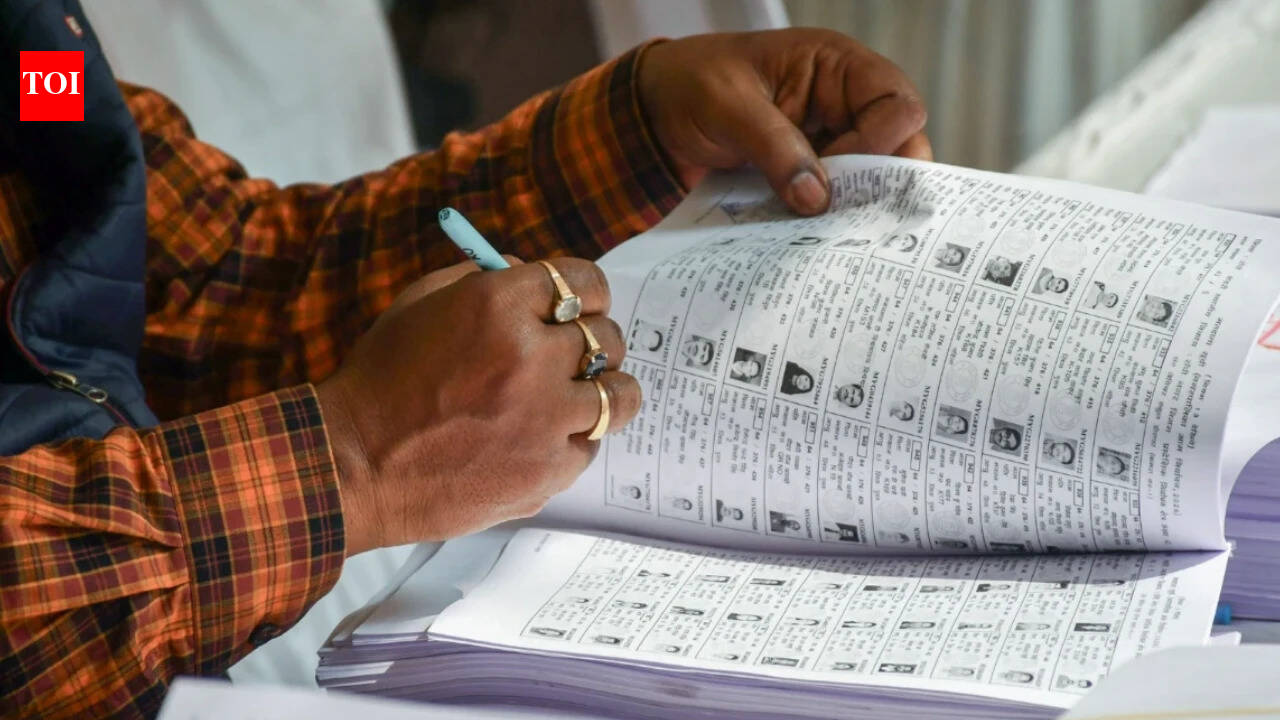
The supplied report says the Supreme Court asked the Election Commission to prioritise 22 lakh pleas for inclusion in West Bengal’s electoral rolls.
Image: Times of India
Why in news
The Times of India headline reports Supreme Court priority for 22 lakh electoral-roll inclusion pleas in West Bengal. An accompanying headline mentions 38 lakh pending appeals and the need for more tribunals, but the supplied extract does not establish the relationship between these figures or provide the detailed court order.
22 lakh
Inclusion pleas reported as priority
38 lakh
Pending appeals mentioned in accompanying headline
Background
Electoral rolls identify persons entitled to vote in a constituency. Article 324 places the superintendence, direction and control of their preparation under the Election Commission of India. Article 325 requires one general electoral roll for every territorial constituency and prohibits exclusion solely on grounds of religion, race, caste or sex. Article 326 establishes adult suffrage for elections to the Lok Sabha and State Legislative Assemblies, subject to constitutional and statutory qualifications. The Representation of the People Act, 1950 and the Registration of Electors Rules, 1960 provide the principal legal framework for preparing, revising and correcting rolls; the Representation of the People Act, 1951 primarily governs the conduct of elections and related disputes.
What the reported intervention establishes
The central reported development is the Supreme Court’s insistence that inclusion pleas in West Bengal receive priority. Its importance lies in the time-sensitive nature of electoral participation: a remedy that arrives after the relevant election may not restore the lost opportunity to vote.
Priority for disposal must not be confused with automatic inclusion. Each claim still requires a lawful determination of eligibility. The supplied material is too limited to establish the Court’s precise directions, disposal deadlines or the constitution and jurisdiction of any tribunals.
- The inclusion-plea and pending-appeal figures should not be added together because their overlap is unspecified.
- The reference to more tribunals does not, by itself, establish that the Court ordered their creation.
- The full judicial order would be necessary to assess any case-specific departure from ordinary statutory procedures.
Infographic
Eligibility
Verify citizenship, qualifying age and ordinary residence.
Fair procedure
Use prescribed notice, hearing and ground-specific scrutiny.
Accountable decisions
Communicate outcomes and reasons clearly.
Effective appeals
Correct errors through accessible statutory remedies.
Judicial oversight
Review legality while respecting electoral-law limits.
AI-assisted infographic by Pragnya IAS Academy, based on the cited sources.
Electoral-roll revision: accuracy with inclusion
Revision seeks to include eligible electors, correct particulars and remove entries that no longer satisfy the law. Citizenship, qualifying age and ordinary residence are central to registration, while the law prohibits registration in more than one constituency or more than once in the same constituency.
Ordinary residence is not identical to property ownership, and temporary absence does not by itself extinguish it. Verification must therefore assess the statutory facts rather than mechanically equating absence during a visit with ineligibility.
- The Electoral Registration Officer is the statutory authority responsible for constituency-level registration decisions.
- Section 22 of the Representation of the People Act, 1950 addresses correction of entries and specified grounds for deletion.
- Section 23 governs inclusion of names and contains an election-period restriction on changes to the roll.
- Section 24 provides statutory appeals against orders under Sections 22 and 23.
Procedural safeguards against wrongful exclusion
A reliable roll requires both substantive eligibility checks and procedural fairness. Under Section 22, the Electoral Registration Officer must provide a reasonable opportunity of being heard before specified adverse changes, including deletion on grounds of non-residence or other ineligibility. This safeguard should not be inaccurately described as an identical hearing requirement for every category of deletion, such as a verified death.
Effective administration also requires accessible notices, acknowledgement of applications, intelligible reasons for adverse decisions and clear appeal information. Digital tools can support verification and tracking, but an automated mismatch should trigger scrutiny rather than substitute for a lawful decision.
- Use ground-specific verification instead of treating every disputed entry alike.
- Provide assisted and offline access so that digital exclusion does not become electoral exclusion.
- Communicate decisions promptly enough for applicants to exercise available remedies.
- Maintain an auditable record of verification, notices, responses and orders.
ECI, appeals and judicial review: distinct responsibilities
The ECI supervises electoral-roll preparation, while Electoral Registration Officers decide individual registration matters under the statute. The ordinary statutory appellate framework involves designated authorities under Section 24; it should not be conflated with a tribunal arrangement mentioned in a news headline whose legal basis is not supplied.
Judicial review addresses legality, procedural fairness and failures of constitutional or statutory duty. Courts can scrutinise arbitrary exclusion and ineffective administration without becoming routine substitutes for registration and appellate authorities.
Electoral remedies are also time-sensitive. Section 23(3) restricts specified roll changes after the last date for nominations and before completion of the election. Article 329(b) separately protects the electoral process from being called in question except through an election petition in the prescribed manner; the timing and nature of a judicial challenge therefore matter.
- Administrative urgency cannot dispense with statutory eligibility requirements.
- Appellate capacity must be sufficient to make correction meaningful before electoral deadlines.
- Judicial directions must be understood alongside the statutory framework and constitutional limits on interrupting elections.
| Institution or mechanism | Principal role | Important limitation |
|---|---|---|
| Election Commission of India | Supervises and directs electoral-roll preparation under Article 324 | Must operate consistently with the Constitution and governing legislation |
| Electoral Registration Officer | Decides registration, correction and deletion matters under the statutory framework | Must undertake prescribed verification and follow applicable procedural safeguards |
| Statutory appellate authorities | Review appealable registration orders under Section 24 | Must act within their prescribed jurisdiction and procedure |
| Constitutional courts | Review legality, arbitrariness and procedural violations | Must account for statutory remedies and constitutional limits concerning ongoing elections |
- 1. An applicant submits an inclusion claim through the prescribed process.
- 2. The Electoral Registration Officer verifies eligibility and relevant particulars.
- 3. Required notice and opportunity to respond are provided where applicable.
- 4. The competent officer decides the claim and communicates the outcome.
- 5. An aggrieved applicant may use the applicable statutory appellate remedy.
- 6. Constitutional judicial review may address legal or procedural violations, subject to electoral-law constraints.
Significance, challenges & way forward
Significance
- Timely inclusion decisions help translate adult suffrage from a constitutional principle into effective electoral participation.
- Transparent verification protects both eligible electors and the integrity of the electoral roll.
- Functional appeals reduce the risk that an initial administrative error becomes an irreversible loss of participation in the relevant election.
- Clear institutional responsibilities strengthen confidence in the ECI without displacing judicial scrutiny of illegality.
Challenges
- A substantial reported caseload can strain verification staff and appellate capacity.
- Poorly served notices and inaccessible procedures can prevent eligible persons from contesting adverse decisions.
- Migrants, temporarily absent residents and persons facing documentation barriers may encounter difficulties proving ordinary residence.
- Pressure for rapid disposal can encourage mechanical rejection unless quality safeguards accompany performance monitoring.
- Unclear reporting about inclusion claims, appeals and tribunals can obscure the actual scale and legal character of the dispute.
- Election-related statutory cut-offs narrow the time available for meaningful corrective action.
Way forward
- Publish clear, legally grounded procedures distinguishing inclusion claims, objections, deletions and appeals.
- Strengthen registration and appellate capacity through legally authorised arrangements, while preserving independent consideration of each case.
- Track pendency by procedural stage and age of application without publicly exposing personal voter information.
- Ensure accessible notice, assisted filing, prompt communication of reasons and clear guidance on appellate remedies.
- Audit samples of adverse decisions to detect systematic verification errors or procedural failures.
- Prioritise timely disposal before statutory cut-offs, but avoid disposal targets that reward rejection over accurate adjudication.
Key terms
- Electoral roll
- The official constituency-wise list of persons registered as electors.
- Ordinary residence
- The statutory residential connection used for registration; property ownership alone is insufficient and temporary absence alone does not end it.
- Electoral Registration Officer
- The statutory officer responsible for preparing and revising the electoral roll for a constituency.
- Natural justice
- Principles of fair decision-making, including an appropriate opportunity to be heard and freedom from bias.
- Statutory appeal
- A review remedy created by legislation and exercised before the authority designated by law.
- Judicial review
- Court scrutiny of public action for constitutional or legal invalidity, including arbitrariness and procedural violations.
Link with static syllabus
Prelims practice MCQs
Q1. With reference to the constitutional framework of electoral rolls, consider the following statements: 1. Article 324 covers the superintendence, direction and control of the preparation of electoral rolls. 2. Article 325 prohibits exclusion from an electoral roll solely on grounds of religion, race, caste or sex. 3. Article 326 provides for elections to the Lok Sabha and State Legislative Assemblies on the basis of adult suffrage. Which of the statements given above are correct?
Q2. Consider the following pairs relating to the Representation of the People Act, 1950: 1. Section 22 — Correction of entries and specified grounds for deletion 2. Section 23 — Inclusion of names in electoral rolls 3. Section 24 — Appeals against specified registration orders Which of the pairs given above are correctly matched?
Q3. With reference to ordinary residence for electoral registration, consider the following statements: 1. Ownership of a dwelling house is by itself sufficient to establish ordinary residence in a constituency. 2. Temporary absence from the place of ordinary residence does not by itself terminate ordinary residence there. Which of the statements given above is/are correct?
Q4. Which of the following best describes the legal restriction under Section 23(3) of the Representation of the People Act, 1950?
Mains practice questions
GS 2 · 15 marks · 250 words
Electoral-roll integrity requires protection against both wrongful inclusion and wrongful exclusion. Discuss the procedural safeguards and institutional responsibilities necessary to achieve this balance.
Frequently asked questions
Did the Supreme Court order automatic inclusion of all reported applicants?
The supplied headline establishes priority for inclusion pleas, not automatic acceptance. Individual eligibility must still be determined under the governing law.
Are the 22 lakh inclusion pleas and 38 lakh pending appeals separate groups?
The supplied extract does not clarify their relationship or overlap. They should not be combined into a single total.
What remedy is available against an adverse electoral-registration order?
Section 24 of the Representation of the People Act, 1950 provides appeals against orders under Sections 22 and 23 through designated authorities. Constitutional judicial review is distinct and remains subject to applicable legal and electoral constraints.
Why does the timing of electoral-roll decisions matter?
Section 23(3) restricts specified roll changes after the last date for nominations and before completion of the election. Delayed correction can therefore fail to secure participation in the relevant election.
Sources
Analysis prepared by the Pragnya IAS Academy current-affairs desk with AI assistance from the cited reports. Verify figures with the original sources.
Turn current affairs into marks
Join Pragnya IAS Academy's mentorship for daily answer-writing evaluation on stories like this — classroom programmes from a trusted name in IAS coaching in Hyderabad.