
Biodiversity COP17: Yerevan Pathway, Finance Gaps and India’s Conservation Priorities
Revise the static topic: UPSC Environment notes
In short: According to UN News, Biodiversity COP17 in Armenia adopted the Yerevan Pathway after a global review found the world off track to achieve its biodiversity targets. The roadmap seeks to accelerate implementation of the Kunming-Montreal Global Biodiversity Framework through subsidy reform, stronger support for developing countries, budget alignment and improved monitoring. Its significance lies in shifting attention from international commitments to domestic delivery.
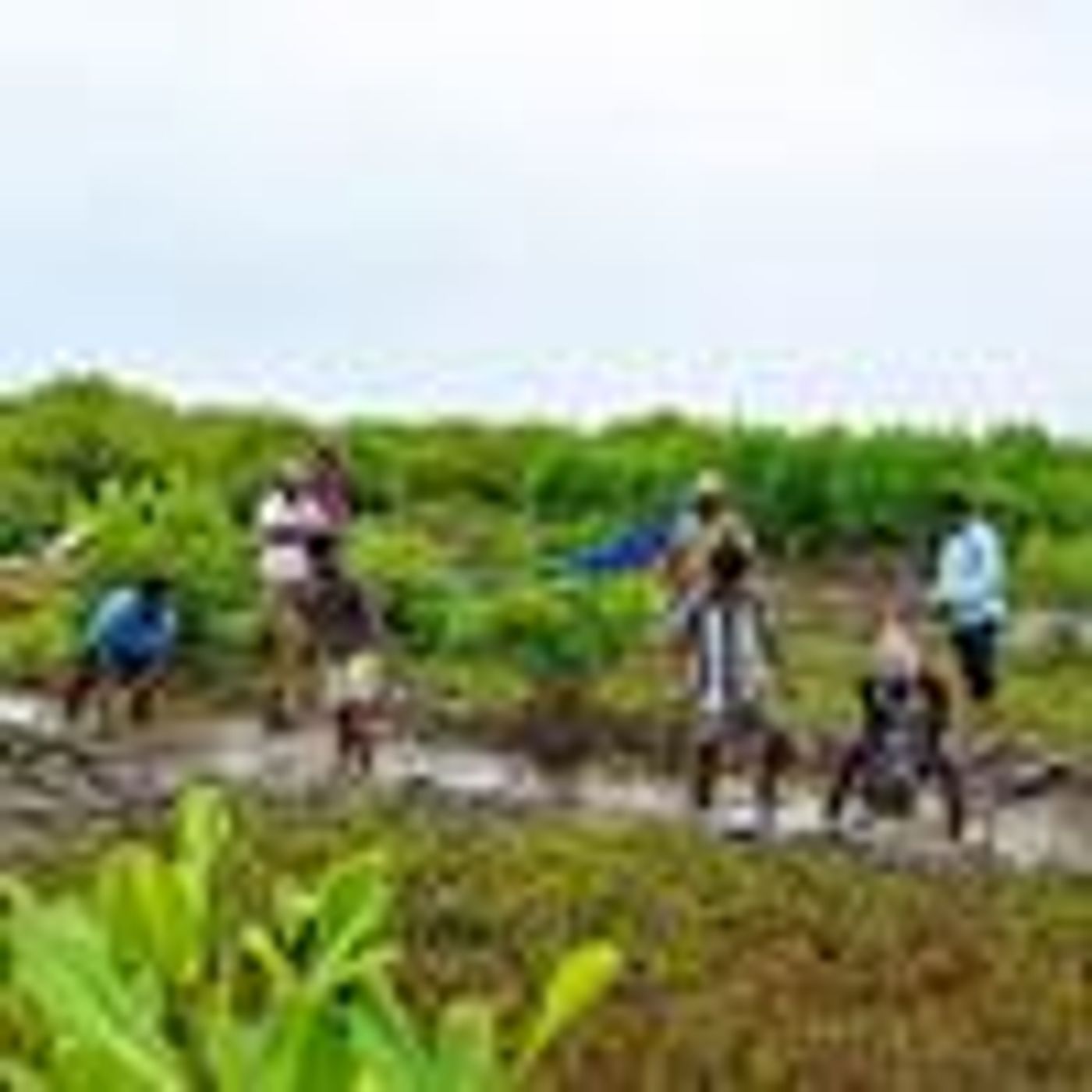
Reference image: Community members restore mangroves under the GCF ECRICC Project in Andhra Pradesh, India. The activity illustrates how community participation can translate conservation commitments into local action.
Image: UN News
Why in news
COP17 concluded in Yerevan with agreement on an implementation roadmap and the Sevan Guidelines for a permanent body strengthening Indigenous Peoples’ and local communities’ participation. Nearly $2 billion in new biodiversity funding was also announced.
23
Global biodiversity targets
2030
Target delivery horizon
Nearly $2 billion
New biodiversity funding announced
$560 million
GEF replenishment component
$500 million
Species Recovery Alliance funding
$330 million
Value Nature Fund allocation
Background
The Convention on Biological Diversity is an international treaty with three core objectives: conserving biological diversity, ensuring sustainable use of its components, and securing fair and equitable sharing of benefits arising from the utilisation of genetic resources. Its Conference of the Parties provides the principal intergovernmental forum for implementation decisions. The Kunming-Montreal Global Biodiversity Framework guides collective action towards biodiversity outcomes, while National Biodiversity Strategies and Action Plans translate global commitments into domestic priorities. India’s conservation architecture includes the Biological Diversity Act, the Wild Life (Protection) Act, protected areas, biodiversity authorities and local Biodiversity Management Committees.
What the Yerevan Pathway seeks to change
The source reports that a global review found implementation off track at the halfway mark to the framework’s target horizon. The Yerevan Pathway sets priorities for the four years remaining to deliver its 23 targets; it is an acceleration roadmap rather than a replacement framework.
Its central proposition is that biodiversity policy cannot remain confined to environment ministries. National budgets, subsidies and wider economic decisions must support conservation rather than undermine it.
- Countries are called upon to tackle subsidies that harm nature.
- Developing countries are to receive greater financial, scientific and technical support.
- Monitoring and reporting are to be strengthened.
- Nearly 50 decisions covered areas including protected areas, forests, wildlife management, invasive alien species, marine and coastal biodiversity, and synthetic biology.
Infographic
Policy alignment
Make budgets and economic decisions support biodiversity.
Incentive reform
Address subsidies that harm nature.
Finance and capacity
Expand financial, scientific and technical support.
Community voice
Strengthen Indigenous Peoples’ and local communities’ participation.
Accountability
Improve monitoring and verify ecological outcomes.
AI-assisted infographic by Pragnya IAS Academy, based on the cited sources.
The implementation gap: plans must produce ecological outcomes
The global framework addresses interconnected pressures through priorities such as ecosystem restoration, conservation, sustainable use, pollution reduction and action against invasive alien species. Progress therefore requires coordinated changes across agriculture, fisheries, infrastructure, industry and land-use planning.
Improved indicators can make commitments more measurable, but reporting alone cannot restore ecosystems. Evaluation should distinguish administrative outputs, such as plans and notifications, from ecological outcomes, such as habitat condition, connectivity and species recovery.
- Protected-area expansion should be assessed alongside management effectiveness and respect for community rights.
- Restoration should recover ecological functions rather than be equated with plantation activity.
- National reporting needs comparable indicators, credible baselines and adequate scientific capacity.
- Development planning must address cumulative impacts across landscapes and seascapes.

Reference image: Tubers, beans and seeds from Amazonian Chakra farming systems illustrate agricultural biodiversity—a dimension of conservation that extends beyond protected areas.
Image: UN News
Biodiversity finance: mobilisation must be matched by reform
Nearly $2 billion in new funding was announced, including support associated with the Global Environment Facility, the Species Recovery Alliance and the Value Nature Fund. The Asian Development Bank also launched a biodiversity bond and an investment incubator. These announcements indicate additional financing channels, but the source does not establish their disbursement schedules or resulting conservation outcomes.
The pathway links raising funds with reducing harmful financial incentives. Conservation expenditure can be undermined when other public policies encourage habitat degradation or unsustainable resource extraction. Subsidy reform must therefore accompany new funding, while protecting vulnerable livelihoods during transition.
Private finance may support suitable projects, but many biodiversity benefits do not generate dependable commercial returns. Public and concessional finance remain important for ecological monitoring, community stewardship and long-term ecosystem protection.
- Funding announcements should not be treated as evidence of completed expenditure or ecological recovery.
- The listed funding components are not a complete breakdown of the announced total.
- Financial instruments need safeguards against greenwashing and the displacement of ecological damage elsewhere.
- Developing countries require accessible finance alongside scientific and technical support.
Community participation and implications for India
The Sevan Guidelines establish operating rules for a new permanent body strengthening Indigenous Peoples’ and local communities’ role in global biodiversity policy. This advances institutional participation; however, the source does not establish any automatic change in domestic community rights.
For India, the policy task is to connect global objectives with its biodiversity strategy, Union and State budgets, sectoral policies and local institutions. The National Biodiversity Authority, State Biodiversity Boards and Biodiversity Management Committees provide an existing institutional foundation, while People’s Biodiversity Registers can support locally grounded biodiversity documentation.
Implementation should combine ecological science with community knowledge and applicable rights under the Forest Rights Act and other laws. These are implications for Indian policy, not India-specific measures reported as adopted at COP17.
- Review incentives affecting agriculture, fisheries, forestry and infrastructure for their biodiversity impacts.
- Prioritise habitat connectivity, native ecosystem restoration and invasive species management.
- Strengthen local capacity for biodiversity documentation, conservation planning and equitable benefit sharing.
- Support coastal and marine conservation alongside terrestrial conservation.
- Link financial reporting with independently verifiable ecological and social outcomes.
| Yerevan priority | Implication for India |
|---|---|
| Align budgets with biodiversity objectives | Integrate biodiversity considerations into public expenditure and sectoral planning. |
| Address nature-harming subsidies | Assess incentives for ecological harm and redesign them with livelihood safeguards. |
| Increase financial, scientific and technical support | Develop credible conservation programmes supported by domestic resources and international cooperation. |
| Strengthen monitoring and reporting | Improve ecological baselines and connect local documentation with scientific assessment. |
| Strengthen community participation | Enable meaningful participation through local institutions while respecting applicable rights. |
- 1. Identify gaps between national progress and global biodiversity targets.
- 2. Translate gaps into sectoral and subnational conservation priorities.
- 3. Align budgets and reform incentives that harm biodiversity.
- 4. Mobilise finance, science and technical capacity.
- 5. Implement programmes with meaningful community participation.
- 6. Measure ecological outcomes, report progress and correct course.
Before COP17
The Kunming-Montreal Global Biodiversity Framework established 23 targets for delivery by 2030.
COP17, Yerevan
Following a global review finding implementation off track, parties adopted the Yerevan Pathway and the Sevan Guidelines.
COP18, forthcoming
The next conference is to be held in Ecuador, with two years remaining to achieve the targets.
2030
Delivery horizon for the framework’s 23 targets.
Significance, challenges & way forward
Significance
- The pathway places implementation, rather than further target-setting alone, at the centre of biodiversity diplomacy.
- Budget alignment recognises biodiversity loss as an economy-wide governance problem.
- Support for developing countries acknowledges unequal financial and technical capacities.
- The Sevan Guidelines strengthen institutional space for Indigenous Peoples and local communities.
- Improved monitoring can make national performance more transparent and comparable.
Challenges
- Funding announcements do not establish timely disbursement, accessibility or effective utilisation.
- Subsidy reform can face political resistance and impose adjustment costs on vulnerable producers.
- Fragmented responsibilities across sectors and levels of government can weaken implementation.
- Weak ecological baselines and uneven scientific capacity can impair credible monitoring.
- Private investment may favour commercially attractive projects over ecologically important but less profitable conservation.
- Community participation may remain procedural unless supported by resources, information and meaningful influence.
Way forward
- Translate global commitments into clearly assigned national and subnational responsibilities.
- Screen public expenditure and incentives for biodiversity impacts, with transition support for affected livelihoods.
- Track funding from announcement to disbursement, expenditure and verified outcomes.
- Combine scientific monitoring with community knowledge while ensuring data quality and appropriate safeguards.
- Prioritise ecosystem integrity, connectivity and native biodiversity rather than relying only on area-based achievements.
- Strengthen community institutions, equitable benefit sharing and respect for applicable land and forest rights.
Key terms
- Yerevan Pathway
- The COP17 roadmap to accelerate implementation of the global biodiversity framework towards 2030.
- Kunming-Montreal Global Biodiversity Framework
- The global framework containing 23 targets for biodiversity action by 2030.
- Sevan Guidelines
- Operating rules for a new permanent body strengthening Indigenous Peoples’ and local communities’ participation in global biodiversity policy.
- National Biodiversity Strategies and Action Plans
- National policy instruments for translating commitments under the biodiversity convention into domestic action.
- Harmful subsidies
- Public support that incentivises activities contributing to biodiversity loss or ecosystem degradation.
- Biodiversity Management Committees
- Local-level institutions under India’s Biological Diversity Act concerned with conservation, sustainable use and biodiversity documentation.
- Ecological connectivity
- The ability of organisms and ecological processes to move or function across connected habitats.
Link with static syllabus
Prelims practice MCQs
Q1. With reference to the Yerevan Pathway, consider the following statements: 1. It seeks to accelerate implementation of the Kunming-Montreal Global Biodiversity Framework. 2. It calls for national budgets and economic decisions to be aligned with the framework. 3. It replaces the framework with a new set of global biodiversity targets. Which of the statements given above are correct?
Q2. The Sevan Guidelines, reported in connection with Biodiversity COP17, concern which of the following?
Q3. Which of the following is an objective of the Convention on Biological Diversity?
Q4. Consider the following pairs based on the COP17 announcements: 1. Value Nature Fund — Mobilisation of private capital for nature 2. Asian Development Bank — Biodiversity bond and investment incubator 3. COP18 — Ecuador Which of the pairs given above are correctly matched?
Mains practice questions
GS 3 · 15 marks · 250 words
The biodiversity crisis is as much a problem of economic governance as of conservation policy. Examine this statement in the context of the Yerevan Pathway and suggest priorities for India.
Frequently asked questions
What is the Yerevan Pathway?
It is the roadmap adopted at Biodiversity COP17 in Armenia to accelerate implementation of the Kunming-Montreal Global Biodiversity Framework towards 2030.
Does the pathway replace the global biodiversity targets?
No. The source describes it as setting implementation priorities for the existing 23 targets, not replacing them.
Does the funding announcement mean the implementation gap has been closed?
No. The source reports nearly $2 billion in announcements but does not establish complete disbursement, financing adequacy or resulting ecological improvements.
What is the main implication for India?
India should connect biodiversity priorities with budgets, sectoral incentives, local participation and measurable ecological outcomes. These are policy implications, not India-specific commitments reported in the source.
Sources
Analysis prepared by the Pragnya IAS Academy current-affairs desk with AI assistance from the cited reports. Verify figures with the original sources.
Turn current affairs into marks
Join Pragnya IAS Academy's mentorship for daily answer-writing evaluation on stories like this — classroom programmes from a trusted name in IAS coaching in Hyderabad.