
Delhi GRAP Stage 2: AQI Triggers, CAQM Powers and Limits of Emergency Pollution Controls
Revise the static topic: UPSC Environment notes
In short: The Commission for Air Quality Management invoked GRAP Stage 2 on November 2, 2026, after Delhi’s daily AQI reached 324, entering the ‘very poor’ category. Measures include higher parking fees, staggered public-office timings and additional Metro services, but sustained improvement requires year-round emissions reduction across the regional airshed.
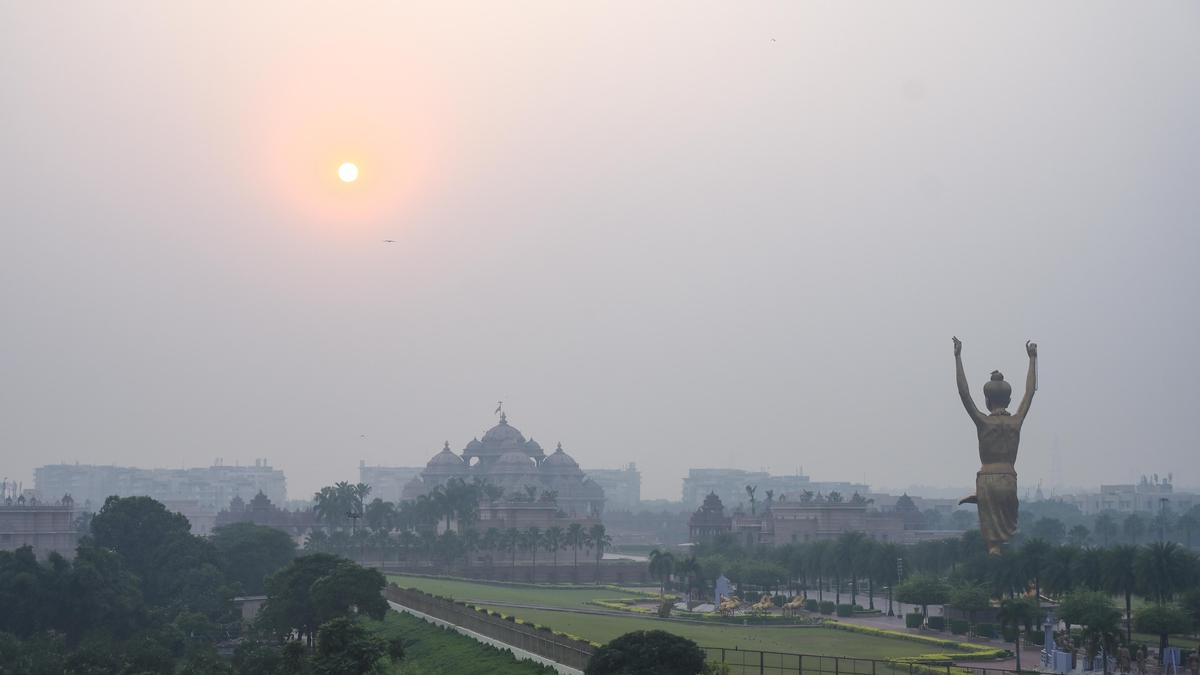
Photo from the source report: Delhi GRAP Stage 2: AQI Triggers, CAQM Powers and Limits of Emergency Pollution Controls
Image: The Hindu
Why in news
Delhi recorded ‘very poor’ air quality for the first time this winter, with forecasts indicating that the category could persist for the next three days. CAQM consequently escalated the emergency response from GRAP Stage 1 to Stage 2.
324
Delhi AQI on November 2
261
Delhi AQI a day earlier
20
Further weekday Metro trips announced
3 days
Forecast persistence of very poor air
4
Stages in GRAP
Background
Delhi-NCR forms part of the Indo-Gangetic Plains, where winter meteorology can inhibit the dispersion of pollutants. Lower wind speeds and falling temperatures allow emissions from vehicles, dust and other sources to accumulate, while seasonal stubble burning and festive firecracker use can worsen the burden. GRAP is a graded emergency-response framework for deteriorating air quality; CAQM coordinates the regional response, while pollution-control bodies, governments and local agencies undertake monitoring and implementation.
What Stage 2 changes
Stage 2 adds measures intended to discourage private-vehicle use, manage peak-hour demand and strengthen existing pollution controls. NCR State governments have been directed to enhance parking fees, while public-office and municipal-body timings are to be staggered in Delhi and the specified neighbouring districts.
DMRC announced a further 20 weekday trips, beyond the additional services introduced when Stage 1 was enforced. The reported package should not be confused with a blanket prohibition on private vehicles.
- Staggered timings cover public offices and municipal bodies in Delhi, Gurugram, Faridabad, Ghaziabad and Gautam Buddha Nagar.
- Higher parking charges are intended to shift travel demand towards public transport.
- Mechanical road sweeping and water sprinkling are among the existing pollution-control measures to be strengthened.
- The effectiveness of travel-demand measures depends on convenient, reliable and accessible public transport.
Infographic
Trigger
AQI reaches 324; forecasts indicate continued very poor air.
Coordinator
CAQM invokes Stage 2; implementing agencies act.
Immediate action
Higher parking fees, staggered timings and more Metro trips.
Core limitation
Emergency controls cannot replace structural emissions reduction.
Long-term pathway
Year-round, evidence-led action across the regional airshed.
AI-assisted infographic by Pragnya IAS Academy, based on the cited sources.
AQI-based triggers: observed pollution and forecasts
GRAP has four stages, with escalation determined by pollution recorded or forecast for the near future. In this episode, Delhi’s daily AQI moved from 261, classified as ‘poor’, to 324, classified as ‘very poor’, prompting Stage 2.
CPCB’s daily bulletin reported the 24-hour average AQI at 4 p.m.; this is not an instantaneous reading. The Air Quality Early Warning System for Delhi projected continued ‘very poor’ conditions, demonstrating why forecasts matter alongside observed pollution.
AQI communicates ambient air-quality conditions and associated health risks; it does not identify which source contributed how much pollution. CPCB associates prolonged exposure to ‘very poor’ air with respiratory illness.
- A higher AQI indicates worsening air quality.
- Forecast-informed action can bring preventive measures forward rather than waiting for further deterioration.
- Source attribution requires emissions inventories, source-apportionment studies and meteorological analysis, not AQI alone.
Institutional and legal framework
CAQM is a statutory commission under the Commission for Air Quality Management in National Capital Region and Adjoining Areas Act. Its regional mandate addresses the mismatch between administrative boundaries and the movement of polluted air. In this case, CAQM, rather than the Delhi government acting alone, invoked Stage 2.
CPCB supplies the daily AQI bulletin cited in the report. State Pollution Control Boards, the Delhi Pollution Control Committee, governments, municipal bodies and transport agencies have distinct monitoring, regulatory and implementation responsibilities.
The broader legal framework includes the Air (Prevention and Control of Pollution) Act and the Environment (Protection) Act. Judicial interpretation of the constitutional right to life recognises protection against environmental pollution, while constitutional duties concerning environmental protection reinforce the case for sustained action.
- Regional coordination is necessary because emissions originating outside Delhi can affect its ambient air quality.
- A central direction must translate into enforceable tasks for State and local implementing agencies.
- Transport, urban development, agriculture and public health must participate alongside environmental regulators.
Why emergency restrictions cannot deliver clean air alone
GRAP is designed to manage pollution episodes, not replace structural emissions policy. Winter weather aggravates the concentration of pollutants, but weather does not create vehicle exhaust, road dust or smoke; reducing these emissions remains essential.
Higher parking fees can influence travel choices only where practical alternatives exist. Staggered timings may spread traffic across the day without necessarily eliminating journeys, while road sprinkling and sweeping target dust rather than every pollutant source.
The policy objective should therefore combine short-term exposure reduction with sustained, airshed-wide emissions control. Success must be assessed through cleaner air and reduced exposure, not merely the announcement of restrictions.
- Seasonal emergency action leaves year-round pollution sources insufficiently addressed.
- Uneven enforcement across neighbouring jurisdictions can weaken regional outcomes.
- A citywide AQI can obscure local hotspots and differences in personal exposure.
- Emergency measures can impose unequal burdens on people with limited transport choices or outdoor livelihoods.
| Institution or agency | Role in the current response |
|---|---|
| CAQM | Invokes GRAP stages and coordinates regional air-quality directions. |
| CPCB | Publishes the daily AQI bulletin used to describe Delhi’s air-quality category. |
| Air Quality Early Warning System for Delhi | Provides forecasts that inform anticipatory pollution management. |
| Delhi and NCR State governments | Implement directions concerning parking fees, office timings and other controls. |
| Pollution-control boards and DPCC | Undertake pollution monitoring and regulatory functions within their jurisdictions. |
| Municipal bodies and DMRC | Implement relevant local measures and transport-service augmentation. |
- 1. Monitoring establishes current ambient air quality and the daily AQI.
- 2. Forecasts indicate the likely persistence or deterioration of pollution.
- 3. CAQM assesses recorded and forecast conditions and invokes the relevant GRAP stage.
- 4. Governments and implementing agencies operationalise stage-specific directions.
- 5. Continued monitoring and forecasts inform review of the response.
February 11, 2026
Delhi recorded an AQI of 305, the previous ‘very poor’ reading identified in the report.
October 28, 2026
GRAP Stage 1 was enforced, and DMRC began running additional trips.
November 1, 2026
Delhi’s daily AQI stood at 261, in the ‘poor’ category.
November 2, 2026
AQI reached 324; CAQM invoked Stage 2 and DMRC announced further weekday services.
Significance, challenges & way forward
Significance
- The escalation recognises worsening pollution as a public-health concern rather than merely a visibility problem.
- Forecast-informed decision-making creates scope for preventive action before conditions deteriorate further.
- Parking disincentives paired with additional Metro services link demand management with public-transport provision.
- CAQM’s regional role provides an institutional basis for addressing pollution that crosses State boundaries.
- The episode highlights the need to integrate emergency preparedness with long-term emissions reduction.
Challenges
- Unfavourable winter meteorology can sustain high pollutant concentrations despite short-term interventions.
- Fragmented responsibilities can create gaps between CAQM directions and local enforcement.
- Inadequate last-mile connectivity can limit the effectiveness of higher parking fees.
- Road-dust suppression cannot substitute for control of combustion-related emissions.
- AQI alone cannot establish the relative contributions of local emissions, transported pollution and meteorological conditions.
- Outdoor workers and people with respiratory illness may remain exposed even after restrictions are announced.
Way forward
- Treat GRAP as an emergency layer within a year-round, regional clean-air strategy.
- Use updated emissions inventories and source-apportionment evidence to prioritise controls without assuming fixed source shares.
- Expand dependable public transport and last-mile connectivity alongside parking-demand management.
- Strengthen routine controls on vehicle emissions, industrial combustion, construction dust and waste burning.
- Support practical crop-residue management alternatives through coordination with agricultural authorities and farmers.
- Assign clear implementation responsibilities and disclose compliance progress across NCR jurisdictions.
- Issue targeted health advisories and exposure-reduction guidance for vulnerable groups and outdoor workers.
Key terms
- Air Quality Index
- A composite indicator that translates ambient pollutant measurements into an understandable air-quality category and associated health message.
- GRAP
- The Graded Response Action Plan is a staged emergency framework activated according to recorded or forecast air pollution.
- CAQM
- The statutory Commission for Air Quality Management coordinates air-quality management in NCR and adjoining areas within its legal mandate.
- Airshed
- A geographical region within which emissions and atmospheric processes jointly influence air quality across administrative boundaries.
- Temperature inversion
- An atmospheric condition in which warmer air overlies cooler near-surface air, limiting vertical mixing and trapping pollutants.
- Source apportionment
- Scientific estimation of the contributions made by different pollution sources to measured ambient concentrations.
- Emissions inventory
- A systematic estimate of pollutants released by different sources over a defined area and period.
Link with static syllabus
Prelims practice MCQs
Q1. With reference to GRAP, consider the following statements: 1. Its stages can be invoked on the basis of recorded or forecast pollution. 2. CAQM announced the Stage 2 escalation discussed in the report. 3. GRAP is a substitute for year-round emissions reduction. Which of the statements given above are correct?
Q2. Which of the following were reported as measures associated with the latest GRAP Stage 2 response? 1. Enhanced vehicle parking fees 2. Staggered timings for specified public offices and municipal bodies 3. Further weekday Delhi Metro trips Select the correct answer.
Q3. Consider the following statements about AQI: 1. A higher AQI indicates worsening air quality. 2. AQI by itself establishes the contribution of each pollution source. 3. The reported daily Delhi AQI was a 24-hour average, not an instantaneous reading. Which of the statements given above are correct?
Q4. Which of the following best explains the need for an airshed approach to air-pollution control?
Mains practice questions
GS 3 · 15 marks · 250 words
Delhi’s recurring winter air-pollution episodes reveal the limits of emergency restrictions. Examine the role of GRAP and suggest an airshed-based strategy for sustained improvement.
Frequently asked questions
Why was GRAP Stage 2 invoked in Delhi?
Delhi’s daily AQI reached 324, in the ‘very poor’ category, on November 2, 2026. Forecasts also indicated that ‘very poor’ conditions could persist for the next three days.
Who invokes GRAP stages?
CAQM announces the applicable GRAP stage based on recorded or forecast pollution. Governments and designated agencies implement the corresponding directions.
Does this Stage 2 announcement mean a blanket ban on private vehicles?
No blanket private-vehicle ban is stated in the supplied report. The reported transport measures involve higher parking fees, staggered public-office timings and additional Metro services.
Why is GRAP insufficient on its own?
GRAP manages acute pollution episodes but does not independently eliminate persistent emissions sources. Sustained improvement needs year-round source control and coordination across the regional airshed.
Sources
- The Hindu: Air quality of Delhi slips to ‘very poor’ for first time this winter, Stage 2 of GRAP invoked
Analysis prepared by the Pragnya IAS Academy current-affairs desk with AI assistance from the cited reports. Verify figures with the original sources.
Turn current affairs into marks
Join Pragnya IAS Academy's mentorship for daily answer-writing evaluation on stories like this — classroom programmes from a trusted name in IAS coaching in Hyderabad.