
Digital Citizenship Certificates: Registration, Naturalisation and Governance Safeguards
Revise the static topic: UPSC Polity notes · UPSC Governance notes
In short: The government has amended the Citizenship Rules, 2009, to issue digital certificates for acquisition of citizenship through registration and naturalisation, with hard copies available on request. The change concerns certification rather than citizenship eligibility, and its success will depend on accessible delivery, reliable authentication and protection of personal information.
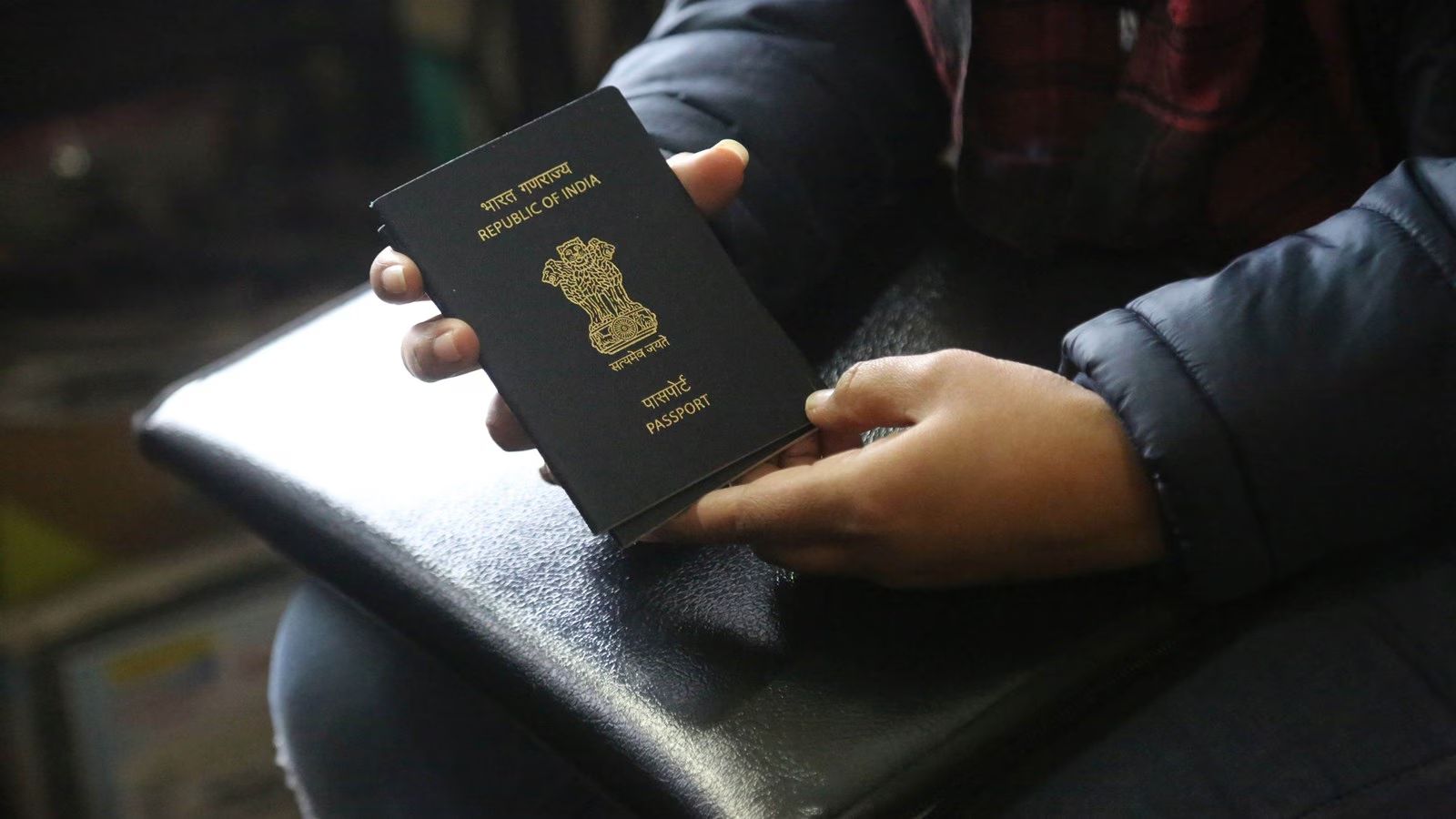
Reference image accompanying coverage of digital citizenship certificates under the amended Citizenship Rules, 2009. The change concerns certification for registration and naturalisation, not eligibility; hard copies remain available on request.
Image: Indian Express
Why in news
The Indian Express reports that an amendment notified on Friday makes citizenship registration and naturalisation certificates digital by default. Registration certificates must be digitally signed or signed by the prescribed government officer.
7 years
Residence period for specified registration categories
5 years
OCI cardholding period for the reported registration route
12 months
Residence immediately before application for the reported OCI route
Background
India follows single citizenship. The Constitution addresses citizenship at its commencement and empowers Parliament to regulate its acquisition and termination. The Citizenship Act provides distinct routes, including birth, descent, registration and naturalisation, while the Citizenship Rules prescribe procedural requirements. Registration is available to specified statutory categories; naturalisation involves satisfying the qualifications laid down in the Act’s Third Schedule. An Overseas Citizen of India card is a statutory status, not Indian citizenship or dual citizenship.
What the amendment changes
The amendment to the Citizenship Rules, 2009, makes digital certificates the default for citizenship acquired through registration and naturalisation. A hard copy will be supplied only on request.
For registration certificates, the reported notification requires a digital signature or signature by an officer not below the rank of Under Secretary to the Government of India, or an officer authorised by the Central government. The source does not specify the technical architecture for delivery, storage or verification.
- The reform changes the mode of certification; the source does not report changes to substantive eligibility.
- Digital issuance should not be confused with automatic approval of citizenship applications.
- A hard-copy option remains available, making the reported arrangement digital-first rather than digital-only.
Infographic
Legal continuity
Digital format does not replace statutory eligibility.
Digital-first delivery
Electronic certificates become the default.
Inclusive access
Hard copies on request; assisted access needed.
Trusted authentication
Verify official origin and document integrity.
Privacy and redress
Minimise disclosure and enable correction.
AI-assisted infographic by Pragnya IAS Academy, based on the cited sources.
Registration and naturalisation: distinct legal routes
Registration under Section 5 is available to specified categories. The source identifies Persons of Indian Origin ordinarily resident in India for seven years, persons married to Indian citizens and ordinarily resident in India for seven years, minor children of Indian citizens, and certain persons of full age and capacity whose parents are registered citizens.
The source also states that the change applies to OCI cardholders of five years who have been ordinarily resident in India for twelve months before applying. These are category-specific requirements, not a universal residence rule for every registration applicant.
Naturalisation is a separate statutory route governed by the qualifications in the Third Schedule, including residence-related conditions, good character and adequate knowledge of a constitutionally recognised language. Digitising the certificate does not dispense with these requirements or the competent authority’s decision.
- Marriage to an Indian citizen does not automatically confer citizenship.
- OCI status does not itself make its holder an Indian citizen.
- Registration and naturalisation are legal modes of acquiring citizenship, not merely different certificate formats.
Legal authority, authenticity and evidentiary value
The Act supplies the substantive legal framework, while rules operationalise it. A procedural amendment concerning certificates must remain within the parent statute and cannot independently rewrite eligibility conditions.
A citizenship certificate records a legally consequential status. Its usefulness therefore depends on an authoritative issuance record and a dependable means of checking the issuer, document integrity and any subsequent correction. These are implementation requirements, not technical features established by the supplied report.
- Distinguish legal acquisition of citizenship from the medium through which it is certified.
- Authentication should establish official origin and detect unauthorised alteration.
- Correction and reissue procedures should preserve an auditable record without exposing unnecessary personal data.
Service delivery gains and rights-sensitive implementation
Digital issuance can reduce dependence on physical dispatch and make certificates easier to retrieve and present. Where backed by reliable verification, it can also reduce repetitive document checking and opportunities for forgery.
These benefits are conditional. Limited connectivity, low digital literacy, inaccessible interfaces and loss of account access can create new barriers. Citizenship records also contain sensitive identity information, making data minimisation, controlled access and secure retrieval essential.
- Retain a practical, clearly communicated hard-copy request mechanism.
- Provide assisted access and accessible interfaces rather than assuming every recipient has a smartphone.
- Avoid making unrestricted public searches of citizenship records the price of easy verification.
- Ensure system outages or authentication failures do not become the sole basis for denying legitimate access to services.
| Aspect | Registration | Naturalisation |
|---|---|---|
| Legal basis | Section 5 of the Citizenship Act | Naturalisation provisions read with the Third Schedule |
| Underlying route | Eligibility through specified statutory categories | Eligibility through prescribed naturalisation qualifications |
| Illustrative conditions | Specified Indian-origin, family or OCI connections with applicable conditions | Residence-related conditions, good character and language knowledge |
| Effect of the reported amendment | Digital certificate by default; hard copy on request | Digital certificate by default; hard copy on request |
| What does not follow | Automatic citizenship through marriage or OCI status | Waiver of eligibility scrutiny because certification is digital |
- 1. Applicant seeks citizenship under the applicable statutory route.
- 2. The competent authority examines eligibility and prescribed requirements.
- 3. Citizenship is granted through the applicable legal process.
- 4. A digital certificate is issued under the amended rules.
- 5. A hard copy is provided if requested.
2009
The Citizenship Rules, 2009, provide the procedural framework now amended.
Friday, as reported by the source
The government notified the amendment for digital registration and naturalisation certificates, with hard copies on request.
Significance, challenges & way forward
Significance
- Digital certification can reduce dependence on physical delivery and repeated visits to government offices.
- Reliable electronic verification can improve trust in certificates and reduce document-handling burdens.
- Retrievable digital records can make replacement and presentation of certificates easier, subject to effective system design.
- The reform offers a test of whether digital public administration can combine efficiency with inclusion and due process.
Challenges
- Recipients without reliable connectivity or digital skills may struggle to retrieve, store or present certificates.
- Weak authentication can enable forged documents, impersonation or misuse of compromised accounts.
- Excessive data collection or unrestricted verification access can expose personal and family information.
- Errors in names or other particulars can propagate across administrative systems without an effective correction process.
- Offices may continue demanding physical originals unless acceptance procedures and staff training are aligned.
Way forward
- Publish clear guidance on retrieval, verification, correction, reissue and hard-copy requests.
- Provide assisted channels and accessible interfaces so that digital-first delivery does not become exclusionary.
- Use secure official authentication and tamper-evident verification without assuming that a scanned signature alone provides robust assurance.
- Limit verification disclosures to necessary information and maintain access controls and audit trails.
- Create time-bound grievance redress and alternative verification arrangements for outages or account-access failures.
- Train receiving authorities to recognise valid digital certificates and avoid unnecessary demands for paper copies.
Key terms
- Registration
- A statutory route to citizenship for specified eligible categories under Section 5 of the Citizenship Act.
- Naturalisation
- Acquisition of citizenship through fulfilment of prescribed statutory qualifications, including those in the Third Schedule.
- Overseas Citizen of India
- A statutory status carrying specified facilities, but not Indian citizenship or dual citizenship.
- Delegated legislation
- Rules or other instruments made by the executive under authority conferred by a parent law.
- Digital signature
- An electronic authentication mechanism using cryptographic techniques to establish origin and detect alteration.
- Data minimisation
- Restricting collection, use and disclosure of personal data to what is necessary for a defined purpose.
Link with static syllabus
Prelims practice MCQs
Q1. With reference to the reported amendment to the Citizenship Rules, 2009, consider the following statements: Statement I: Registration and naturalisation certificates will be issued digitally by default. Statement II: Hard copies of these certificates have been completely prohibited. Which of the statements given above is/are correct?
Q2. Consider the following statements about Indian citizenship: Statement I: Marriage to an Indian citizen automatically confers Indian citizenship. Statement II: An OCI card is equivalent to Indian citizenship. Which of the statements given above is/are correct?
Q3. Which of the following correctly distinguishes citizenship by registration from citizenship by naturalisation?
Q4. With reference to citizenship certification, consider the following statements: Statement I: Changing the certificate from paper to digital form does not by itself change statutory eligibility for citizenship. Statement II: The reported registration-certificate provision permits signing by an officer not below the rank of Under Secretary to the Government of India or an officer authorised by the Central government. Which of the statements given above is/are correct?
Mains practice questions
GS 2 · 15 marks · 250 words
Distinguish citizenship by registration from citizenship by naturalisation. Assess how digital citizenship certification can improve service delivery without compromising accessibility, privacy and authenticity.
Frequently asked questions
Does a digital citizenship certificate create a new route to citizenship?
No. It changes how citizenship acquired through registration or naturalisation is certified, not the underlying statutory route.
Will paper citizenship certificates still be available?
Yes. The reported amendment provides for hard copies on request.
Does the amendment make OCI cardholders Indian citizens automatically?
No. Eligible OCI cardholders must apply under the relevant registration provisions and satisfy the applicable conditions.
Does the source specify a QR-code system or a digital document platform?
No. It reports digital issuance and the signing requirement for registration certificates, but does not identify a particular platform or verification technology.
Sources
Analysis prepared by the Pragnya IAS Academy current-affairs desk with AI assistance from the cited reports. Verify figures with the original sources.
Turn current affairs into marks
Join Pragnya IAS Academy's mentorship for daily answer-writing evaluation on stories like this — classroom programmes from a trusted name in IAS coaching in Hyderabad.