
Ganga Water Treaty Renewal: Sharing Rules, Federalism and India–Bangladesh Trust
Revise the static topic: UPSC International Relations notes
In short: The 1996 Ganga Water Treaty is due to expire on 12 December 2026, with renewal requiring mutual consent between India and Bangladesh. Its future turns on reconciling Bangladesh’s demand for stronger dry-season supply guarantees with India’s domestic water requirements, changing river flows and strained bilateral trust.
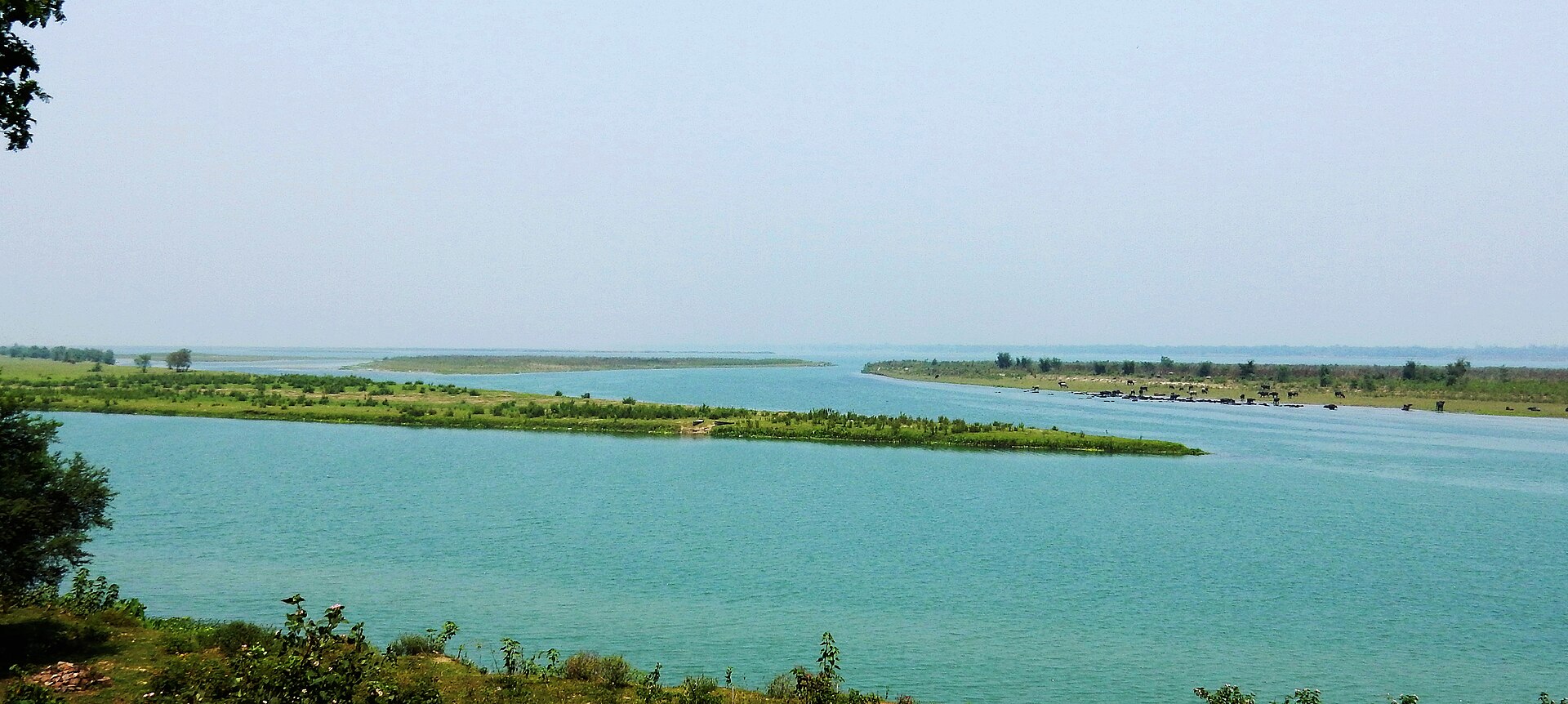
Reference view of the Ganga near Farakka Barrage in Murshidabad, relevant to the river-water sharing arrangements under the 1996 India–Bangladesh treaty.
Image: Debmalyap · CC BY-SA 4.0
Why in news
The treaty’s approaching expiry has brought its allocation formula and renewal conditions into focus. The supplied report links uncertainty over renewal to bilateral tensions surrounding the extradition of former Bangladesh Prime Minister Sheikh Hasina.
54
Rivers shared by India and Bangladesh
30 years
Original treaty duration
70,000 cusecs
Equal-sharing threshold
75,000 cusecs
Upper allocation threshold
35,000 cusecs
Alternating lean-season entitlement
50,000 cusecs
Emergency consultation trigger: flow below this
Background
The Farakka Barrage in West Bengal diverts Ganga water towards the Hooghly through a canal to support navigation at Kolkata port by improving lean-season flows and flushing sediment. The Ganga branches into the Padma, which enters Bangladesh, and the Bhagirathi, which continues through West Bengal and becomes known as the Hooghly after the Jalangi joins it. Diversion at Farakka therefore connects India’s navigation requirements with Bangladesh’s downstream water concerns. The core allocation problem arises during January–May, when river flows decline; during the monsoon, flood management becomes a major concern.
What the treaty governs
Signed in 1996 by Prime Ministers H D Deve Gowda and Sheikh Hasina, the treaty established a long-term arrangement for sharing dry-season Ganga flows at Farakka. It recognised Bangladesh’s downstream interests and created a Joint Committee to monitor and implement the agreement.
The sharing framework uses successive ten-day periods and was based on historical average-flow data for 1949–1988. It is a seasonal allocation arrangement at a specified location, not a comprehensive management framework for the entire Ganga basin.
Renewal is possible by mutual consent. This means extension is not automatic, while the approaching expiry should not be mistaken for evidence that cooperation has already ended.
- The treaty addresses dry-season sharing rather than allocating all annual river flows.
- India and Bangladesh share many rivers, but the source identifies the Ganga treaty as their only functional comprehensive water-sharing treaty.
- The Joint Rivers Commission provides a wider bilateral institutional platform beyond this treaty.
Infographic
Predictable sharing
Clear entitlements and mutually agreed continuity.
Adaptive hydrology
Updated flow evidence and negotiated drought rules.
Federal consultation
Union-led diplomacy informed by affected states.
Institutional trust
Joint monitoring and sustained technical dialogue.
Ecological resilience
Consider river health alongside competing water uses.
AI-assisted infographic by Pragnya IAS Academy, based on the cited sources.
Allocation rules and the guarantee question
The treaty applies a flow-dependent allocation formula. Its basic rules are supplemented by an entitlement under which, between 11 March and 10 May, each country receives 35,000 cusecs during three alternating ten-day periods.
This limited alternating entitlement must be distinguished from the minimum guarantee in the 1977 agreement. That earlier agreement assured Bangladesh at least 80% of its scheduled share in each ten-day period, irrespective of how low the flow fell. The 1996 treaty does not reproduce that general minimum guarantee.
Instead, Article II(iii) requires immediate intergovernmental consultations if flow at Farakka falls below 50,000 cusecs in any ten-day period. Adjustments are to follow equity, fair play and no harm to either party; consultation itself does not establish an automatic numerical shortfall-sharing rule.
- Bangladesh seeks a minimum guarantee to make dry-season supplies more dependable.
- India wants a fresh arrangement to protect the requirements of its own states.
- The central negotiation is not simply over shares, but over who bears the risk when available water is insufficient.
Hydrological variability and the limits of historical baselines
A formula grounded in historical averages provides predictability, but may not adequately reflect changing demand and future hydrological conditions. The source records criticism that the treaty does not sufficiently account for population-driven needs and climate-related stresses.
Climate variability can complicate lean-season planning through changes in rainfall, drought conditions and basin flows. However, the supplied material does not establish a quantified climate impact at Farakka; climate change should therefore be treated as a planning risk rather than a demonstrated explanation for every shortfall.
Renewal should distinguish water allocation from water availability. A legal guarantee cannot create additional water: credible commitments require shared measurements, updated assessments and a mutually accepted response to exceptional scarcity.
- Review observed ten-day flows, not merely annual averages.
- Assess domestic consumption, navigation and ecological needs alongside downstream requirements.
- Combine predictable entitlements with transparent drought-management rules.
Federal consultation and the constitutional division of powers
India’s treaty-making and foreign-affairs responsibilities lie with the Union. Under the Seventh Schedule, Union List Entry 14 covers treaties and agreements with foreign countries and their implementation; Article 253 empowers Parliament to legislate for implementing international agreements.
Water is covered by State List Entry 17, subject to Union List Entry 56 concerning regulation and development of inter-State rivers and river valleys under the specified constitutional conditions. This makes state consultation essential to workable domestic implementation, without giving states an independent treaty-making power.
West Bengal has a direct stake because Farakka and the Bhagirathi–Hooghly system lie within the state. Consultation should integrate its navigation, water-use and ecological concerns with relevant basin-wide requirements, while leaving the international negotiation with the Union.
- Consultation is a practical requirement of cooperative federalism, not an automatic constitutional veto over treaty renewal.
- Domestic agreement on data and water requirements can strengthen India’s negotiating credibility.
- Article 262 concerns inter-State water disputes; it is not the bilateral dispute-resolution mechanism under this treaty.
Institutions and trust in renewal negotiations
The treaty places implementation and initial dispute resolution with a Joint Committee containing equal representation from both governments. Unresolved matters are referred to the Joint Rivers Commission, established in 1972.
The supplied report places renewal amid tensions over Sheikh Hasina’s extradition. Such political disputes can complicate water diplomacy, even though reliable river management remains a shared long-term interest.
A durable renewal should therefore combine political consent with continuing technical cooperation. Jointly accepted data, clear operating procedures and credible consultation mechanisms can reduce the scope for competing claims during periods of scarcity.
- Maintain technical engagement even when wider political relations are strained.
- Use existing institutions rather than relying exclusively on summit-level announcements.
- Negotiate continuity arrangements by mutual consent if a revised agreement is not ready before expiry.
| Available flow | India’s share | Bangladesh’s share |
|---|---|---|
| 70,000 cusecs or less | Half of available flow | Half of available flow |
| Above 70,000 but below 75,000 cusecs | Balance after Bangladesh’s allocation | 35,000 cusecs |
| 75,000 cusecs or more | 40,000 cusecs | Balance after India’s allocation |
- 1. Determine available flow at Farakka for the relevant ten-day period.
- 2. Apply the flow-dependent allocation formula.
- 3. Account for the alternating 35,000-cusec entitlement during 11 March–10 May.
- 4. If flow falls below 50,000 cusecs, initiate immediate government-level consultations for emergency adjustments.
- 5. Address implementation disputes through the Joint Committee, referring unresolved matters to the Joint Rivers Commission.
1961
Construction of the Farakka Barrage began.
1972
India and Bangladesh established the Joint Rivers Commission.
1975
Farakka became operational; the countries concluded a temporary 41-day water-sharing arrangement.
1977
A five-year agreement introduced dry-season allocations and a minimum guarantee for Bangladesh.
1982 and 1985
Memorandums of understanding broadly retained the allocation approach but omitted the minimum guarantee.
1996
The Ganga Water Treaty established a 30-year dry-season sharing framework.
12 December 2026
Scheduled expiry of the treaty’s original term; renewal requires mutual consent.
Significance, challenges & way forward
Significance
- The treaty makes a sensitive upstream–downstream relationship more predictable through agreed allocation rules.
- Renewal would preserve an established channel of cooperation during a period of bilateral political uncertainty.
- Reliable lean-season sharing supports planning for water-dependent livelihoods and navigation.
- A revised framework could demonstrate how climate adaptation and cooperative federalism can strengthen transboundary agreements.
Challenges
- A minimum supply guarantee becomes difficult to honour when total flows fall sharply, unless scarcity-sharing obligations are clearly specified.
- Historical flow averages may not adequately capture changing demands or future variability.
- India must reconcile international commitments with affected states’ water, navigation and ecological concerns.
- Political tensions can weaken confidence in technical cooperation and delay negotiated decisions.
- Emergency consultations provide flexibility but do not automatically settle how exceptional shortages should be distributed.
Way forward
- Secure mutually agreed continuity before expiry, either through renewal or a negotiated interim arrangement.
- Update the hydrological evidence base through joint measurements, shared flow records and assessments of changing demand.
- Define drought triggers, consultation procedures and shortage-sharing options before an emergency occurs.
- Evaluate Bangladesh’s guarantee proposal against dependable flows and an explicitly negotiated distribution of scarcity risks.
- Institutionalise consultation with West Bengal and other relevant basin stakeholders before finalising commitments.
- Strengthen the Joint Committee and Joint Rivers Commission through regular technical engagement and transparent communication.
- Supplement allocation negotiations with demand management, ecological-flow assessment and wider basin cooperation.
Key terms
- Upper riparian
- A country or territory situated upstream on a shared river; India is upstream of Bangladesh on the Ganga.
- Lower riparian
- A country or territory situated downstream and affected by upstream flows and interventions.
- Cusec
- A unit of discharge equal to one cubic foot of water flowing per second.
- Lean season
- The low-flow part of the year, when competing demands make water allocation especially sensitive.
- Minimum guarantee
- An agreed floor for water delivery; the 1977 agreement assured Bangladesh a minimum proportion of its scheduled share.
- Hydrological variability
- Changes in river flows and other water-cycle conditions across seasons and years.
- Joint Rivers Commission
- The bilateral institution established in 1972 for India–Bangladesh cooperation on shared rivers.
- Adaptive water governance
- Management arrangements that use updated evidence and agreed review procedures to respond to changing water conditions.
Link with static syllabus
Prelims practice MCQs
Q1. With reference to the basic allocation formula under the 1996 Ganga Water Treaty, consider the following statements: 1. Available flow of 70,000 cusecs or less is shared equally. 2. At flows of 75,000 cusecs or more, India receives 40,000 cusecs and Bangladesh receives the balance. 3. Bangladesh receives a fixed 35,000 cusecs under every flow condition. Which of the statements given above are correct?
Q2. Consider the following statements about the Ganga water-sharing arrangements: 1. The 1977 agreement included a minimum guarantee of 80% of Bangladesh’s scheduled share in each ten-day period. 2. The 1996 treaty requires immediate consultations when flow at Farakka falls below 50,000 cusecs in a ten-day period. 3. The 1996 treaty is renewed automatically at the end of its original term. Which of the statements given above are correct?
Q3. With reference to the constitutional framework relevant to international water agreements, consider the following statements: 1. Union List Entry 14 concerns treaties and agreements with foreign countries and their implementation. 2. State List Entry 17 is subject to Union List Entry 56. 3. Article 262 is the bilateral dispute-resolution provision of the Ganga Water Treaty. Which of the statements given above are correct?
Q4. Which one of the following correctly describes the institutional arrangement mentioned in the Ganga Water Treaty?
Mains practice questions
GS 2 · 15 marks · 250 words
Renewal of the Ganga Water Treaty requires more than renegotiating water shares. Discuss with reference to hydrological variability, cooperative federalism and bilateral trust.
Frequently asked questions
When is the Ganga Water Treaty due to expire?
Its original term is due to end on 12 December 2026. Renewal requires mutual consent between India and Bangladesh.
Does the 1996 treaty contain a minimum water guarantee?
It does not reproduce the general minimum guarantee in the 1977 agreement. It does provide alternating 35,000-cusec entitlements during a specified lean-season window and emergency consultations below 50,000 cusecs.
Why is Farakka central to the dispute?
Farakka diverts water towards the Hooghly to support navigation at Kolkata port. During the dry season, this intersects with Bangladesh’s downstream requirements along the Padma.
What role do Indian states have in renewal?
The Union conducts international treaty negotiations, but consultation with affected states is essential for assessing needs and implementing commitments. West Bengal has a direct stake because of Farakka and the Bhagirathi–Hooghly system.
Sources
- Indian Express: Ganga Water Treaty: The history & uncertain future of India-Bangladesh water sharing
Analysis prepared by the Pragnya IAS Academy current-affairs desk with AI assistance from the cited reports. Verify figures with the original sources.
Turn current affairs into marks
Join Pragnya IAS Academy's mentorship for daily answer-writing evaluation on stories like this — classroom programmes from a trusted name in IAS coaching in Hyderabad.