
DR Congo Ebola Crisis: Conflict, Surveillance Gaps and Global Health Security
Revise the static topic: UPSC Social Justice notes · UPSC Science & Technology notes
In short: The Democratic Republic of Congo reported 11,042 Ebola cases and 5,387 deaths on November 11, 2026, in what the supplied reports describe as its deadliest Ebola outbreak. Caused by the Bundibugyo virus, the outbreak exposes how delayed detection, armed conflict and weak health systems can undermine containment, especially when no approved species-specific vaccine or treatment is available.
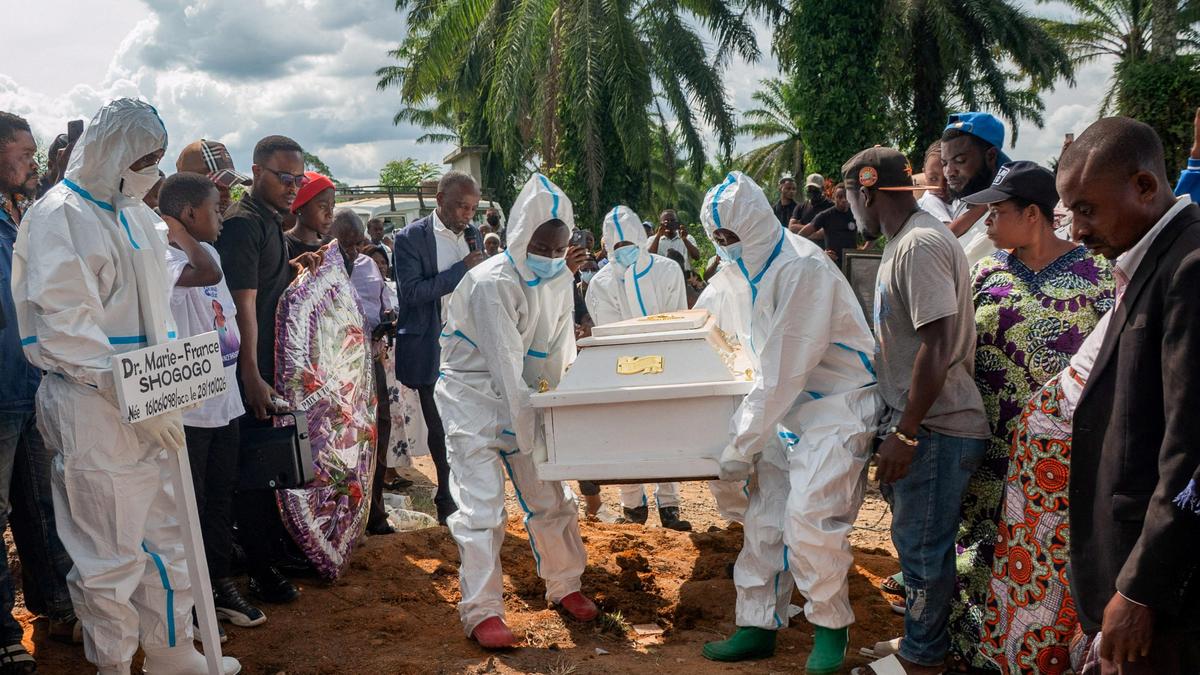
Photo from the source report: DR Congo Ebola Crisis: Conflict, Surveillance Gaps and Global Health Security
Image: The Hindu
Why in news
The Hindu reports that Ebola has spread to eight provinces in the DRC, with most cases concentrated in Ituri and North Kivu. Attacks on health facilities and clashes have disrupted the response, while a proposed trial of Ervebo seeks to assess protection against Bundibugyo.
11,042
Reported Ebola cases
5,387
Reported deaths
Around 2,990
Reported recoveries
8
Affected provinces
17th
Ebola outbreak in DRC history
Background
Ebola is a severe zoonotic viral disease associated with viruses of the filovirus family. Human infection can follow contact with infected animals, while subsequent transmission occurs through direct contact with infected blood or other body fluids, including through contaminated materials. The Democratic Republic of Congo is a Central African country distinct from the neighbouring Republic of the Congo; Ituri and North Kivu lie in its conflict-affected east. Ebola control requires early detection, laboratory confirmation, isolation and care, contact tracing, infection prevention and safe burials, supported by public trust and functioning health services.
What the latest reports establish
According to Congolese official data cited by The Hindu, the outbreak had infected 11,042 people and caused 5,387 deaths by November 11, 2026. It began in northeastern Ituri and subsequently spread to seven other provinces, with Ituri and North Kivu accounting for most cases.
The outbreak was officially declared in May, but the reports indicate that transmission may have begun weeks or months earlier. This suggests a possible detection or reporting lag; the supplied material does not establish precisely when sustained transmission began or why it went unrecognised.
- The current outbreak is caused by Bundibugyo virus, not the Zaire virus targeted by Ervebo’s existing approval.
- The reports describe it as the DRC’s deadliest Ebola outbreak, not the world’s deadliest Ebola outbreak.
- The cumulative case and death totals describe reported burden; they do not by themselves establish the final fatality risk.
Infographic
Detect early
Connect community alerts with laboratory confirmation.
Interrupt exposure
Combine isolation, infection prevention and contact tracing.
Protect care
Secure access for patients, health workers and supplies.
Build trust
Design communication and dignified burials with communities.
Research responsibly
Test cross-protection without assuming effectiveness.
Sustain systems
Preserve routine services and international cooperation.
AI-assisted infographic by Pragnya IAS Academy, based on the cited sources.
Transmission and the containment chain
Ebola spreads through direct contact of broken skin or mucous membranes with infected blood or other body fluids, and through contaminated objects. Unprotected caregiving, unsafe clinical procedures and handling infected bodies during funerals can therefore amplify transmission. Ebola is not ordinarily transmitted through the air like measles.
Containment requires a linked sequence: recognise suspected illness, report and investigate it, obtain laboratory confirmation, isolate and care for patients, trace contacts and interrupt further exposure. Laboratory testing is important because early symptoms can resemble those of other febrile illnesses.
- Health facilities need triage, appropriate personal protective equipment, safe injections and effective cleaning and waste management.
- Contacts require follow-up and rapid referral if symptoms develop, rather than automatic treatment as confirmed cases.
- Safe and dignified burials must prevent exposure while respecting families and local customs.
- The absence of an approved Bundibugyo-specific treatment does not mean that supportive care is ineffective or unnecessary.
How conflict turns an outbreak into a governance crisis
The reports describe a health centre treating Ebola patients being set on fire in Lolwa and clashes temporarily suspending the response around Fataki. They also report violence by the Allied Democratic Forces in parts of eastern DRC. These incidents directly constrain access to patients and communities.
Conflict can interrupt specimen transport, patient referral, contact follow-up and delivery of protective equipment. Displacement can make contacts harder to locate, while insecurity and distrust can discourage people from seeking care. The resulting surveillance gaps make it more difficult to distinguish genuine containment from an apparent decline caused by reduced reporting.
Health-system weakness compounds these risks: Ebola control depends on ordinary services such as reliable staffing, clean water, functioning laboratories and transport. An outbreak response that neglects routine healthcare may further weaken trust and increase avoidable illness.
- Protecting health workers and facilities is a public-health requirement as well as a humanitarian obligation.
- Trusted local organisations can improve access, reporting and acceptance of care.
- Humanitarian engagement should preserve medical neutrality and avoid treating communities primarily as security threats.
Vaccine uncertainty and global health security
The supplied reports state that no approved vaccine or treatment currently exists for Bundibugyo. They also report that WHO announced in October that Ervebo, approved against Zaire Ebola virus, would undergo a human trial in the DRC to investigate possible cross-protection. An announced trial is not evidence that such protection has been demonstrated.
The International Health Regulations provide the framework for surveillance, assessment, notification and international cooperation concerning public-health risks that may cross borders. The supplied sources do not establish that this outbreak has received a particular formal WHO emergency designation.
For India, the relevant lesson is preparedness rather than an unsupported claim of immediate domestic danger. Integrated surveillance, laboratory readiness, hospital infection control and proportionate travel-health communication are safeguards against imported infectious threats.
- Research must distinguish vaccine availability from demonstrated effectiveness against the outbreak-causing virus.
- Clinical trials require informed consent, independent oversight and meaningful community engagement.
- International assistance should strengthen local response capacity rather than create temporary parallel systems.
- Travel-related measures should be evidence-based and should not unnecessarily obstruct humanitarian supplies or personnel.
| Intervention | Public-health purpose | Conflict-related vulnerability |
|---|---|---|
| Community surveillance | Identify and report suspected illness early | Insecurity and distrust can reduce reporting |
| Laboratory confirmation | Distinguish Ebola from other illnesses | Unsafe routes can delay specimen transport |
| Isolation and supportive care | Reduce exposure while treating patients | Attacks and staff shortages can interrupt services |
| Contact tracing | Identify potentially exposed people and detect illness promptly | Displacement can break follow-up |
| Safe and dignified burials | Prevent exposure during handling of infected bodies | Poor community engagement can undermine acceptance |
| Vaccine research | Assess protection against the circulating virus | Insecurity can impede recruitment and follow-up |
- 1. Community or facility detects suspected illness and reports an alert.
- 2. Response teams investigate, assess exposure and arrange safe referral and testing.
- 3. Suspected patients receive appropriate isolation and care while laboratory confirmation is pursued.
- 4. Teams identify contacts, follow them up and rapidly evaluate anyone developing symptoms.
- 5. Facilities and communities apply infection prevention and safe, dignified burial practices.
- 6. Continuous surveillance and community feedback identify missed transmission and guide response adjustments.
1976
Ebola was first discovered, according to the supplied reports.
2014–2016
West Africa experienced the largest and deadliest recorded Ebola outbreak.
2018–2020
The DRC’s previous worst recorded outbreak caused nearly 2,300 deaths among 3,500 cases.
May 2026
Authorities officially declared the current outbreak; the reports suggest infections had begun earlier.
October 2026
WHO announced a planned human trial of Ervebo to investigate cross-protection against Bundibugyo.
November 2026
An attack on a health centre and clashes disrupted the Ebola response in parts of Ituri.
November 11, 2026
Official figures cited in the reports reached 11,042 cases and 5,387 deaths.
Significance, challenges & way forward
Significance
- The outbreak demonstrates that conflict-affected local health systems are integral to global health security.
- A possible delay between emergence and declaration highlights the importance of surveillance before a crisis becomes visible.
- Bundibugyo exposes the limits of assuming that countermeasures approved against one Ebola virus will protect against another.
- Attacks on healthcare can prolong transmission by simultaneously disrupting treatment, surveillance and public trust.
- For India, the crisis reinforces the value of integrated disease surveillance and hospital preparedness.
Challenges
- Armed violence restricts access to affected communities and threatens healthcare personnel.
- Displacement can make contact tracing and continuity of care difficult.
- Weak laboratory and referral systems can delay confirmation and isolation.
- Distrust and fear can discourage reporting, care-seeking and cooperation with burial teams.
- The absence of approved Bundibugyo-specific countermeasures increases reliance on core public-health interventions and supportive care.
- Incomplete detection and unresolved patient outcomes complicate interpretation of reported cases and deaths.
Way forward
- Prioritise protection of health facilities and negotiate safe humanitarian access while preserving medical neutrality.
- Strengthen community-based alerts, laboratory networks and secure specimen transport as a connected surveillance system.
- Equip treatment facilities with trained staff, protective equipment, water, sanitation and reliable referral arrangements.
- Design contact tracing and burial protocols with local leaders, families and trusted community organisations.
- Conduct vaccine trials with ethical oversight and communicate clearly that cross-protection remains under investigation.
- Sustain routine healthcare alongside Ebola services and direct international support towards durable local capacity.
- Use transparent reporting and coordinated cross-border surveillance without imposing unnecessary barriers to assistance.
Key terms
- Ebola virus disease
- A severe viral illness transmitted between people primarily through direct exposure to infected blood or other body fluids.
- Bundibugyo virus
- An Ebola-causing virus identified in the supplied reports as responsible for the current DRC outbreak.
- Zoonosis
- An infection that can be transmitted naturally between vertebrate animals and humans.
- Contact tracing
- Identifying and following up people exposed to an infected person so that illness is detected and managed promptly.
- Cross-protection
- Protection against a pathogen different from the one a vaccine was originally designed or approved to target.
- Supportive care
- Clinical management that sustains essential functions and treats complications, including through fluid and electrolyte replacement.
- International Health Regulations
- The legally binding international framework for preventing and responding to the international spread of disease while avoiding unnecessary interference with travel and trade.
- Safe and dignified burial
- Management of a deceased person that prevents infection exposure while respecting the family and community.
Link with static syllabus
Prelims practice MCQs
Q1. With reference to Ebola transmission, consider the following statements: 1. Direct contact with infected blood or other body fluids can transmit the disease. 2. Handling infected bodies during funerals can expose people to infection. 3. Ebola ordinarily spreads through the air in the same manner as measles. Which of the statements given above are correct?
Q2. With reference to the vaccine issue described in the supplied reports, consider the following statements: 1. Ervebo is approved for use against Zaire Ebola virus. 2. The proposed trial seeks to assess whether Ervebo offers cross-protection against Bundibugyo. 3. Announcement of the trial establishes that Ervebo is effective against Bundibugyo. Which of the statements given above are correct?
Q3. Consider the following pairs: 1. Ituri — Northeastern Democratic Republic of Congo 2. North Kivu — Eastern Democratic Republic of Congo 3. Democratic Republic of Congo — The same sovereign state as the Republic of the Congo Which of the pairs given above are correctly matched?
Q4. Which of the following best describes the role of the International Health Regulations?
Mains practice questions
GS 2 · 15 marks · 250 words
The Democratic Republic of Congo’s Ebola crisis shows that epidemic containment is as much a governance challenge as a medical one. Discuss with reference to conflict, surveillance and global health security.
Frequently asked questions
How does Ebola spread?
Ebola spreads through direct contact with infected blood or other body fluids, including through contaminated materials. Unprotected caregiving and handling infected bodies are important exposure risks.
Is there an approved vaccine for this Bundibugyo outbreak?
The supplied reports state that no approved Bundibugyo-specific vaccine is available. Ervebo is approved against Zaire Ebola virus, and its possible cross-protection against Bundibugyo is to be investigated in a human trial.
Does the absence of an approved treatment mean patients cannot be helped?
No. Supportive care, including fluid and electrolyte management and treatment of complications, remains important even without an approved virus-specific treatment.
Why does conflict make Ebola harder to contain?
Conflict can interrupt treatment, laboratory testing, referral and contact tracing while displacing communities. Attacks on health services and distrust can also discourage timely reporting and care-seeking.
Sources
- The Hindu: DR Congo Ebola outbreak exceeds 11,000 cases, causes 5,387 deaths
- The Hindu: Congo's Ebola outbreak tops 11,000 cases as disease keeps spreading
Analysis prepared by the Pragnya IAS Academy current-affairs desk with AI assistance from the cited reports. Verify figures with the original sources.
Turn current affairs into marks
Join Pragnya IAS Academy's mentorship for daily answer-writing evaluation on stories like this — classroom programmes from a trusted name in IAS coaching in Hyderabad.