
Adult Vaccination in India: Protecting the Elderly Through Life-Course Immunisation
Revise the static topic: UPSC Social Justice notes · UPSC Science & Technology notes
In short: A Times of India report flags low adult vaccination and gaps in elderly protection against influenza and shingles. The issue calls for a life-course approach to immunisation, combining informed clinical advice, affordable access and vaccination services within primary healthcare.
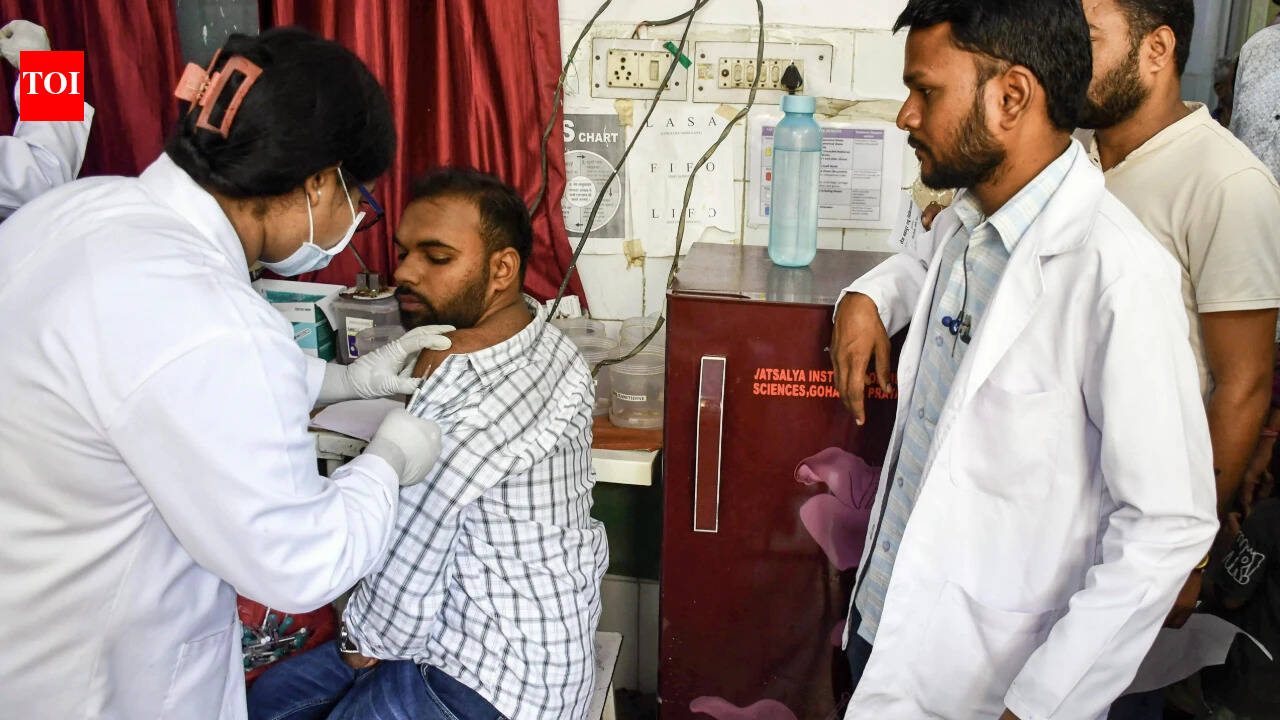
Reference image accompanying the Times of India report on low adult vaccination and gaps in influenza and shingles protection among older adults in India.
Image: Times of India
Why in news
The report highlights elderly people missing vaccination cover against influenza and shingles. The supplied material does not provide a verified coverage estimate, so the extent of the gap cannot be quantified from this source.
Background
Immunisation is relevant throughout life, not only during childhood. India's Universal Immunisation Programme primarily serves children and pregnant women; it should not be equated with a comprehensive vaccination programme for all adults. Older adults may face greater vulnerability to infections because of age-related changes in immunity and coexisting illnesses. Influenza is a viral respiratory infection, while shingles results from reactivation of the varicella-zoster virus that causes chickenpox. Adult vaccination decisions depend on the disease, age, previous vaccination, health conditions and applicable clinical guidance.
What the report establishes—and what remains unknown
The report's headline identifies low adult vaccination and missed elderly protection against influenza and shingles. It raises a preventive-health concern, but the supplied article extract largely contains website notices rather than substantive reporting.
Consequently, no national coverage percentage, vaccine price, geographical distribution or announced policy change can be inferred. The barriers discussed below are policy considerations to assess, not findings demonstrated by the supplied extract.
- Low uptake should be examined through both demand-side and service-delivery barriers.
- National policy requires representative, vaccine-specific evidence rather than extrapolation from isolated observations.
Infographic
Assess
Review age, health risks and vaccination history.
Inform
Explain eligibility, benefits, limitations and safety.
Make affordable
Assess targeted support and efficient procurement.
Deliver locally
Integrate with primary healthcare and elderly care.
Track and improve
Monitor follow-up, safety, coverage and equity.
AI-assisted infographic by Pragnya IAS Academy, based on the cited sources.
Why adults may remain outside the immunisation system
A childhood-centred understanding of vaccination can leave adults unaware of their preventive needs. Without routine review of vaccination history, consultations for chronic illness may miss opportunities to discuss appropriate vaccines.
Affordability involves more than the purchase price: travel, waiting time and dependence on a caregiver can also impede access. Fragmented records, uncertainty about recommendations and inconsistent local availability are additional barriers that health systems should investigate.
- Demand barriers include low awareness, safety concerns and uncertainty about personal eligibility.
- Financial barriers arise where vaccine and administration costs must be paid out of pocket.
- Physical barriers may disproportionately affect frail, homebound or mobility-impaired older people.
- Provider barriers include limited time, training gaps and absence of systematic vaccination-history checks.
Life-course vaccination: risk-based protection, not a uniform package
Life-course immunisation treats vaccination as a continuing component of healthcare across childhood, adolescence, adulthood and old age. It includes reviewing earlier protection and assessing new needs arising from age, occupation, travel or illness.
This approach does not mean administering every available vaccine to every adult. Influenza and shingles have different disease mechanisms and vaccination requirements; eligibility and timing must follow vaccine-specific guidance. Immunosenescence strengthens the case for timely assessment, but clinical suitability remains essential.
- Review vaccination history during routine adult and elderly consultations.
- Assess eligibility using age, comorbidities, previous doses and contraindications.
- Explain expected benefits and limitations without promising complete protection.
- Maintain records and provide reminders where repeat or subsequent doses are indicated.
Affordability and primary healthcare must work together
Public financing can reduce price barriers, but subsidies alone cannot ensure uptake. Reliable supply, trained staff, accessible sessions and clear communication are equally important. Any proposed public support should be assessed using disease burden, clinical benefit, equity, cost-effectiveness and budget impact.
Ayushman Arogya Mandirs and other primary healthcare facilities offer a potential platform for vaccination assessment alongside chronic-disease and elderly care. This is an integration opportunity, not evidence that influenza or shingles vaccines are universally available free at these facilities.
- Consider phased financial support for clinically eligible, underserved groups.
- Use pooled procurement where feasible to improve purchasing efficiency.
- Link community outreach with counselling, eligibility assessment and follow-up.
- Do not assume that hospitalisation insurance automatically finances outpatient vaccination.
Constitutional responsibility and accountable implementation
Article 47 places improvement of public health among the State's primary duties. The judicial interpretation of Article 21 recognises health-related obligations within the right to life, while public health and sanitation, hospitals and dispensaries fall within the State List.
A coherent adult-immunisation approach therefore requires coordination between national technical guidance and state-level delivery. These constitutional principles support preventive healthcare, but do not by themselves establish an automatic entitlement to every vaccine.
- National authorities can support technical standards, evidence appraisal and interoperable recording systems.
- States can adapt delivery to local needs, availability and fiscal capacity.
- Monitoring should assess eligible-population coverage, equitable access, completion where applicable and adverse events following immunisation.
| Dimension | Policy problem to assess | Suggested response |
|---|---|---|
| Awareness | Vaccination perceived mainly as a childhood intervention | Explain age- and risk-specific adult vaccination needs |
| Affordability | Direct payments and indirect access costs | Assess targeted financial support and accessible delivery |
| Clinical practice | Vaccination history overlooked during consultations | Include eligibility review in routine adult care |
| Physical access | Mobility constraints and caregiver dependence | Provide accessible sessions and appropriately supervised outreach |
| Continuity | Incomplete records and missed follow-up | Use portable records and reminders with offline alternatives |
| Evidence | Uncertain eligible-population coverage | Develop vaccine-specific surveillance and coverage measurement |
- 1. Identify adults needing review during routine consultations or outreach
- 2. Check vaccination history, health risks and clinical eligibility
- 3. Counsel on benefits, limitations, safety and costs
- 4. Administer an indicated vaccine with informed consent and appropriate safeguards
- 5. Record vaccination and arrange follow-up where required
- 6. Monitor adverse events and evaluate equitable service coverage
Significance, challenges & way forward
Significance
- Appropriate vaccination can reduce vaccine-preventable illness and its complications among vulnerable older adults.
- Integrating immunisation with chronic-disease care makes primary healthcare more comprehensive and preventive.
- Affordable access can reduce inequities between adults able to purchase vaccines privately and those unable to do so.
- Preventing illness can help preserve independence and reduce caregiving demands associated with severe infection.
- A life-course approach connects healthy ageing with universal health coverage.
Challenges
- The supplied source does not establish the scale or distribution of adult vaccination gaps.
- Disease burden, vaccine effectiveness and economic value must be assessed separately for different vaccines and eligible groups.
- Competing public-health priorities require transparent decisions about which interventions receive public funding.
- Additional vaccination responsibilities can strain primary healthcare unless staffing, training and logistics are strengthened.
- Digital-only registration or follow-up can exclude older adults with limited digital access or literacy.
- Weak communication about adverse events can undermine trust, even when an event is not caused by vaccination.
Way forward
- Establish a clearer evidence base through adult vaccination-history surveys, disease surveillance and eligible-population coverage assessment.
- Develop accessible, evidence-based adult-immunisation guidance through appropriate technical advisory processes.
- Assess phased public financing using clinical benefit, equity, cost-effectiveness and fiscal sustainability.
- Embed vaccination review in elderly care and chronic-disease consultations rather than relying only on standalone campaigns.
- Strengthen procurement, cold-chain arrangements, staff training and adverse-event reporting before expanding delivery.
- Combine portable vaccination records with paper-based options and caregiver-supported reminders.
- Evaluate programmes against equitable uptake and health outcomes, not merely doses administered.
Key terms
- Life-course immunisation
- An approach that assesses and addresses vaccination needs across all stages of life.
- Immunosenescence
- Age-related changes in immune function that can affect susceptibility to infection and responses to vaccination.
- Shingles
- A disease caused by reactivation of varicella-zoster virus, often producing a painful rash.
- Influenza
- A contagious respiratory infection caused by influenza viruses.
- Missed opportunity for vaccination
- A healthcare contact during which an eligible person without a contraindication does not receive a due vaccination.
- Adverse event following immunisation
- An untoward medical occurrence after immunisation that does not necessarily have a causal relationship with the vaccine.
- Health technology assessment
- Systematic appraisal of a health intervention's clinical, economic, ethical and wider implications to inform decisions.
Link with static syllabus
Prelims practice MCQs
Q1. With reference to life-course immunisation, consider the following statements: 1. It includes assessment of vaccination needs during adulthood and old age. 2. It requires every adult to receive every available vaccine. 3. Previous vaccination and coexisting illnesses may influence vaccination decisions. Which of the statements given above are correct?
Q2. Consider the following statements about the constitutional framework for public health in India: 1. Article 47 identifies improvement of public health as a primary duty of the State. 2. Public health and sanitation, hospitals and dispensaries are subjects in the Union List. Which of the statements given above is/are correct?
Q3. Which of the following correctly describes shingles?
Q4. With reference to vaccination programme monitoring, consider the following statements: 1. An adverse event following immunisation necessarily proves that the vaccine caused the event. 2. Doses administered alone may not adequately measure coverage among eligible people. 3. Evaluation of equitable access can require disaggregated coverage data. Which of the statements given above are correct?
Mains practice questions
GS 2 · 15 marks · 250 words
Adult immunisation must become an integral component of healthy ageing in India. Discuss the barriers to its uptake and suggest an affordable, primary healthcare-led approach.
Frequently asked questions
Why does adult vaccination matter for older people?
Age-related immune changes and coexisting illnesses can increase vulnerability to infections and complications. Appropriate vaccination can form part of a broader preventive-care plan.
Does life-course immunisation mean the same vaccine schedule for every adult?
No. Vaccination needs vary with age, health conditions, previous vaccination and vaccine-specific clinical guidance.
Does the report provide a national adult vaccination coverage figure?
No verified national coverage figure is available in the supplied material. Its headline flags low uptake, but the extract is insufficient to quantify the gap.
Are influenza and shingles vaccines universally free at public primary healthcare facilities?
The supplied material does not establish such an entitlement or availability. Integrating adult vaccination with primary healthcare is a policy recommendation here, not an announced universal benefit.
Sources
Analysis prepared by the Pragnya IAS Academy current-affairs desk with AI assistance from the cited reports. Verify figures with the original sources.
Turn current affairs into marks
Join Pragnya IAS Academy's mentorship for daily answer-writing evaluation on stories like this — classroom programmes from a trusted name in IAS coaching in Hyderabad.