
COP31 Electrification Pledge: Climate Finance, Equity and India’s Policy Autonomy
Revise the static topic: UPSC Environment notes
In short: At COP31 in Antalya, Turkiye is promoting a voluntary pledge to raise electricity’s share of global energy demand from around 20% to 35% by 2035, while the European Union wants an explicit focus on clean electrification. The proposal could accelerate energy transition, but its climate value depends on cleaner power, affordable finance and equitable implementation; it is not a binding country-wise obligation under the Paris Agreement.
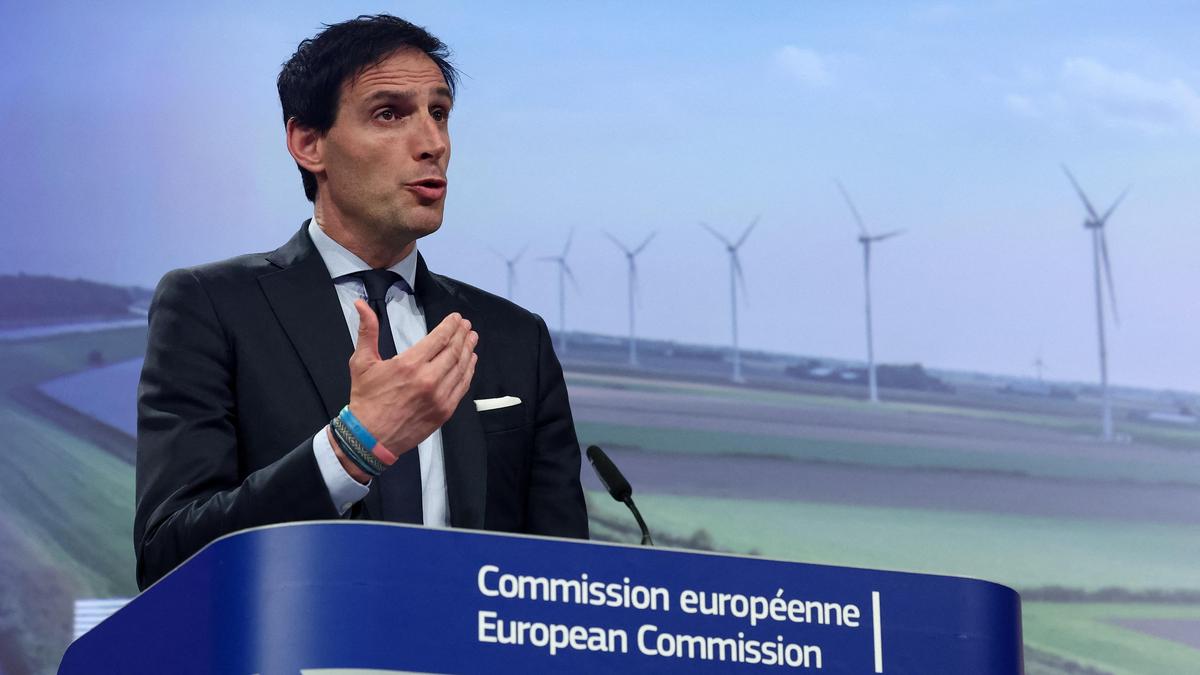
Photo from the source report: COP31 Electrification Pledge: Climate Finance, Equity and India’s Policy Autonomy
Image: The Hindu
Why in news
On November 10, 2026, European Commissioner for Climate Wopke Hoekstra described expectations from COP31 as low but argued that electrification could deliver meaningful progress. The ongoing summit faces disagreements over fossil fuels, climate finance and the balance between voluntary initiatives and negotiated outcomes.
Around 20%
Current electricity share of global energy demand
35%
Proposed electricity share of global energy demand
2035
Proposed electrification target year
1.5°C
Paris Agreement’s more ambitious warming threshold
Background
The Conference of the Parties is the supreme decision-making body of the United Nations Framework Convention on Climate Change. The Paris Agreement combines collective temperature goals with nationally determined contributions, transparency and periodic assessment of collective progress. Its implementation reflects equity and common but differentiated responsibilities and respective capabilities, in the light of different national circumstances. Electrification means shifting energy services towards electricity; decarbonisation means reducing associated carbon emissions. The two reinforce each other when electricity supply becomes cleaner, but they are not interchangeable.
What is proposed, and what remains undecided?
According to the supplied reports, COP31 is being held in Antalya, with Turkiye hosting and Australia leading negotiations under a shared arrangement. The summit has been presented as an implementation COP, intended to translate commitments into action.
Turkiye’s electrification proposal sits within an action agenda alongside formal negotiations. It seeks voluntary support for increasing electricity’s share of global energy demand, rather than prescribing an identical national target for every participant. The EU wants clean electrification at the centre of the summit’s conclusions.
As of this edition, the sources establish a proposal and negotiating preferences, not an adopted final COP31 outcome. They do not establish India’s participation, a country-wise allocation of the target or detailed implementation rules.
- The proposed target concerns electricity’s share of energy demand, not renewable energy’s share of electricity generation.
- The reported proposal is global in scope; it should not be presented as a mandatory national target.
- A political declaration alongside negotiations must be distinguished from an adopted decision and from treaty obligations.
Infographic
Ambition
Proposed global electricity share: around 20% to 35% by 2035.
Clean supply
Pair electric end uses with lower-emission generation and stronger grids.
Legal clarity
Distinguish voluntary pledges from Paris treaty duties.
Finance
Deliver accessible support without crowding out adaptation.
Equity
Protect affordability, livelihoods and nationally determined pathways.
AI-assisted infographic by Pragnya IAS Academy, based on the cited sources.
Why clean electrification matters
Electrification can replace direct fossil-fuel use in transport, buildings and suitable industrial processes. Electric technologies can improve energy efficiency, but their emissions performance also depends on the carbon intensity of electricity supply.
A larger electricity share does not, by itself, establish that emissions have fallen. Fossil-fuel-intensive generation can retain substantial upstream emissions even when pollution falls at the point of use. Cleaner generation, stronger networks, storage, demand management and efficiency therefore need to advance together.
- Electric vehicles shift propulsion towards electricity, but their operational climate benefit depends partly on the electricity used.
- Electricity-based industrial processes require reliable supply and sector-specific technological readiness.
- The pledge needs clarity on the energy-demand denominator, baseline, accounting method and treatment of fossil-fuel-generated power.
- Electrification should complement adaptation and other mitigation measures rather than displace them from the climate agenda.
Legal distinction: voluntary pledge versus Paris obligations
The Paris Agreement is a legally binding treaty, but its provisions do not all impose the same kind of obligation. Parties must prepare, communicate and maintain successive nationally determined contributions and pursue domestic mitigation measures with the aim of achieving their objectives. Applicable transparency and accounting requirements also form part of the treaty framework.
The achievement of each nationally determined emissions target is not framed as a legally binding obligation of result. Similarly, joining an informal electrification pledge does not automatically amend a country’s NDC or create a treaty obligation to achieve the proposed electricity share.
COP decisions can guide implementation and give effect to treaty provisions, but their legal consequences depend on their text and legal basis. A voluntary action-agenda pledge should not be treated as equivalent to a treaty amendment or a domestic statutory mandate.
- Political commitments can influence diplomacy, investment and reputation without creating equivalent treaty obligations.
- If a country incorporates electrification into its NDC, the relevant Paris communication, accounting and transparency framework becomes important.
- Domestic enforceability depends on applicable national law, not merely on participation in a summit announcement.
Climate finance is the central implementation test
The sources report that the EU sees little political scope for additional funding pledges at COP31, while developing countries are pressing for support for adaptation and recovery from climate impacts. African countries are seeking discussion of tripling adaptation finance. Hoekstra’s call for greater burden sharing therefore raises questions about responsibility, capacity and delivery.
Under the Paris Agreement, developed country Parties shall provide financial resources to assist developing country Parties with mitigation and adaptation. Other Parties are encouraged to provide such support voluntarily. Calls to broaden contributions should not obscure this differentiation.
Electrification requires investment beyond generation: transmission, distribution, storage, charging infrastructure, efficient equipment and worker support all matter. Commercially attractive mitigation projects must not crowd out adaptation, where returns are often public and difficult to monetise.
- Assess finance by accessibility, affordability, predictability and delivery, rather than announcements alone.
- Use grants and concessional support where debt-creating finance would undermine resilience.
- Distinguish adaptation, mitigation and loss-and-damage needs instead of treating all climate expenditure as interchangeable.
- Link implementation ambitions to technology access and institutional capacity.
India’s policy autonomy and an equitable transition
For India, the appropriate analytical test is whether participation would advance cleaner energy while preserving reliable supply, affordability, development needs and employment. The supplied sources do not report an Indian negotiating position; the following are policy considerations, not announced commitments.
Nationally determined pathways allow India to sequence measures according to grid readiness, industrial capabilities and social costs. Policy autonomy should mean choosing credible implementation pathways, not avoiding climate action. A global pledge should not become an informal uniform timetable that disregards differing starting points.
India could favour clean electrification supported by finance and technology while seeking clarity on definitions, reporting and national discretion. A just transition must also address coal-dependent workers and regions, vulnerable consumers and unequal access to modern energy services.
- Evaluate proposals through the principles of equity and common but differentiated responsibilities and respective capabilities.
- Protect affordable and reliable energy access while progressively reducing the emissions intensity of supply.
- Combine cleaner power with distribution reform, industrial capability and demand-side efficiency.
- Insist that mitigation initiatives do not marginalise adaptation finance and climate resilience.
| Instrument | Status and implications |
|---|---|
| Proposed electrification pledge | Voluntary action-agenda initiative; the reported global ambition does not establish a compulsory country-wise electricity share. |
| Nationally determined contribution | National climate contribution under the Paris framework; preparing, communicating and maintaining successive NDCs are treaty duties, while target achievement is not an obligation of result. |
| COP or Paris governing-body decision | Formal negotiated outcome whose legal implications depend on its wording and treaty basis; not automatically a treaty amendment. |
| Paris climate-finance provisions | Developed country Parties shall provide resources to assist developing country Parties with mitigation and adaptation; other Parties are encouraged to contribute voluntarily. |
| Domestic legislation | Creates enforceable national requirements according to its provisions; an international political pledge does not automatically become domestic law. |
- 1. Define the electricity-share metric, baseline and clean-power criteria.
- 2. Translate global ambition into nationally appropriate sectoral pathways.
- 3. Mobilise affordable finance, technology and transition support.
- 4. Expand cleaner generation, grids, storage and efficient electric end uses.
- 5. Track electricity uptake alongside emissions, reliability and affordability.
- 6. Review delivery and correct inequitable or ineffective outcomes.
2023
COP28 in Dubai called for transitioning away from fossil fuels in energy systems.
COP30
According to the sources, the final deal contained no explicit fossil-fuel reference; Brazil instead produced a voluntary roadmap adaptable to national circumstances.
November 9, 2026
COP31 opened in Antalya with an implementation focus and a proposed voluntary electrification drive.
November 10, 2026
Wopke Hoekstra described expectations as low and advocated placing electrification at the centre of the summit.
November 20, 2026
Scheduled conclusion of COP31; the final outcome remains pending for this edition.
2035
Target year proposed for electricity to meet 35% of global energy demand.
Significance, challenges & way forward
Significance
- A measurable electrification goal could turn broad transition language into sector-specific investment priorities.
- Cleaner electricity combined with efficient end-use technologies can reduce emissions and local air pollution.
- Diversifying energy use can reduce exposure to oil-price shocks, although it creates new infrastructure and supply-chain requirements.
- Clear separation of political pledges and legal obligations improves public understanding and negotiating accountability.
- COP negotiations remain important for collective scrutiny, differentiated responsibilities and developing-country demands that voluntary coalitions cannot adequately address.
Challenges
- An electricity-share target can conceal continued fossil-fuel dependence if the power mix remains carbon-intensive.
- The supplied sources do not specify the proposed pledge’s accounting methodology or country-wise implementation arrangements.
- Fiscal constraints and resistance to additional finance may leave developing countries with ambitions unsupported by resources.
- A narrow mitigation focus could sideline adaptation and support for vulnerable communities.
- Rapid electrification without network upgrades can worsen reliability problems and distribution-sector stress.
- Geopolitical tensions and disagreements over fossil fuels can obstruct negotiated outcomes; voluntary pledges cannot substitute for universal accountability.
Way forward
- Pair electrification objectives with transparent indicators for power-sector emissions, energy efficiency and consumer affordability.
- Clarify the pledge’s voluntary status and preserve nationally determined implementation pathways.
- Operationalise existing climate-finance responsibilities through accessible funding, clear delivery arrangements and transparent tracking.
- Protect adaptation finance from being crowded out by commercially attractive mitigation investments.
- Support workers and affected regions through skills, social protection and economic diversification.
- For India, prioritise reliable grids, cleaner supply and affordable access while negotiating technology and finance partnerships on equitable terms.
Key terms
- Electrification
- Increasing the use of electricity to provide energy services previously supplied by other energy sources.
- Clean electrification
- Expanding electricity-based energy services while reducing the emissions associated with electricity supply.
- Carbon intensity of electricity
- The amount of carbon dioxide emitted per unit of electricity generated.
- Nationally determined contribution
- A Party’s nationally determined climate contribution communicated under the Paris Agreement.
- CBDR-RC
- Common but differentiated responsibilities and respective capabilities, recognising shared climate responsibilities alongside differing capacities and circumstances.
- Just transition
- A shift towards a sustainable economy that addresses employment, livelihoods, social protection and distributional fairness.
- Adaptation finance
- Financial support for reducing vulnerability and strengthening resilience to climate impacts.
- Action agenda
- A platform alongside formal climate negotiations for mobilising initiatives and voluntary commitments.
Link with static syllabus
Prelims practice MCQs
Q1. With reference to the proposed COP31 electrification pledge, consider the following statements: 1. It seeks to raise electricity’s share of global energy demand to 35% by 2035. 2. It requires every participating country to achieve an identical electricity share. 3. It is reported as a voluntary initiative alongside formal negotiations. Which of the statements given above are correct?
Q2. Consider the following statements about the Paris Agreement: 1. Parties are required to prepare, communicate and maintain successive nationally determined contributions. 2. Achieving every national emissions target is a legally binding obligation of result. 3. Joining a voluntary electrification pledge automatically amends a Party’s NDC. Which of the statements given above is/are correct?
Q3. Which of the following best explains why electrification and decarbonisation are not synonymous?
Q4. With reference to climate finance under the Paris Agreement, consider the following statements: 1. Developed country Parties shall provide financial resources to assist developing country Parties with mitigation and adaptation. 2. Other Parties are encouraged to provide such support voluntarily. 3. All climate finance must take the form of commercial loans. Which of the statements given above are correct?
Mains practice questions
GS 3 · 15 marks · 250 words
The climate value of an electrification pledge depends more on its implementation architecture than on its headline target. Discuss with reference to COP31, climate finance and India’s policy autonomy.
Frequently asked questions
Has COP31 adopted a binding electrification target?
The supplied sources describe a proposed voluntary action-agenda pledge, not an adopted binding target. They do not establish mandatory country-wise shares or India’s participation.
Does the proposed 35% target refer to renewable electricity?
No. It refers to electricity meeting 35% of global energy demand by 2035, not renewables supplying 35% of electricity generation.
Why is the EU asking for clean electrification?
Electricity can be generated from fossil fuels as well as cleaner sources. Linking electrification to cleaner supply makes emissions reduction more credible than increasing electricity use alone.
What should India’s central negotiating concern be?
An appropriate policy approach would link cleaner electrification with affordable finance, technology access and nationally determined sequencing. This is an analytical recommendation, not a reported Indian negotiating position.
Sources
- The Hindu: EU climate chief Wopke Hoekstra warns 'expectations low' from COP31 summit
- The Hindu: COP31: Can negotiators finally deliver results? | The Hindu explains
- The Hindu: COP31 opens as climate and geopolitical pressures mount
- Indian Express: COP31: Why climate summits still matter, even as the world misses its targets
Analysis prepared by the Pragnya IAS Academy current-affairs desk with AI assistance from the cited reports. Verify figures with the original sources.
Turn current affairs into marks
Join Pragnya IAS Academy's mentorship for daily answer-writing evaluation on stories like this — classroom programmes from a trusted name in IAS coaching in Hyderabad.