
COP31 Fossil Fuel Deadlock: India’s Differentiated Transition and Climate Equity
Revise the static topic: UPSC Environment notes
In short: COP31 in Antalya, Türkiye, ended without an overarching political statement after countries failed to bridge differences over fossil fuel phase-out language, although some separate negotiating decisions were reached. The deadlock exposes the difficulty of reconciling urgent emissions reductions with differentiated national responsibilities, development needs and credible climate finance.
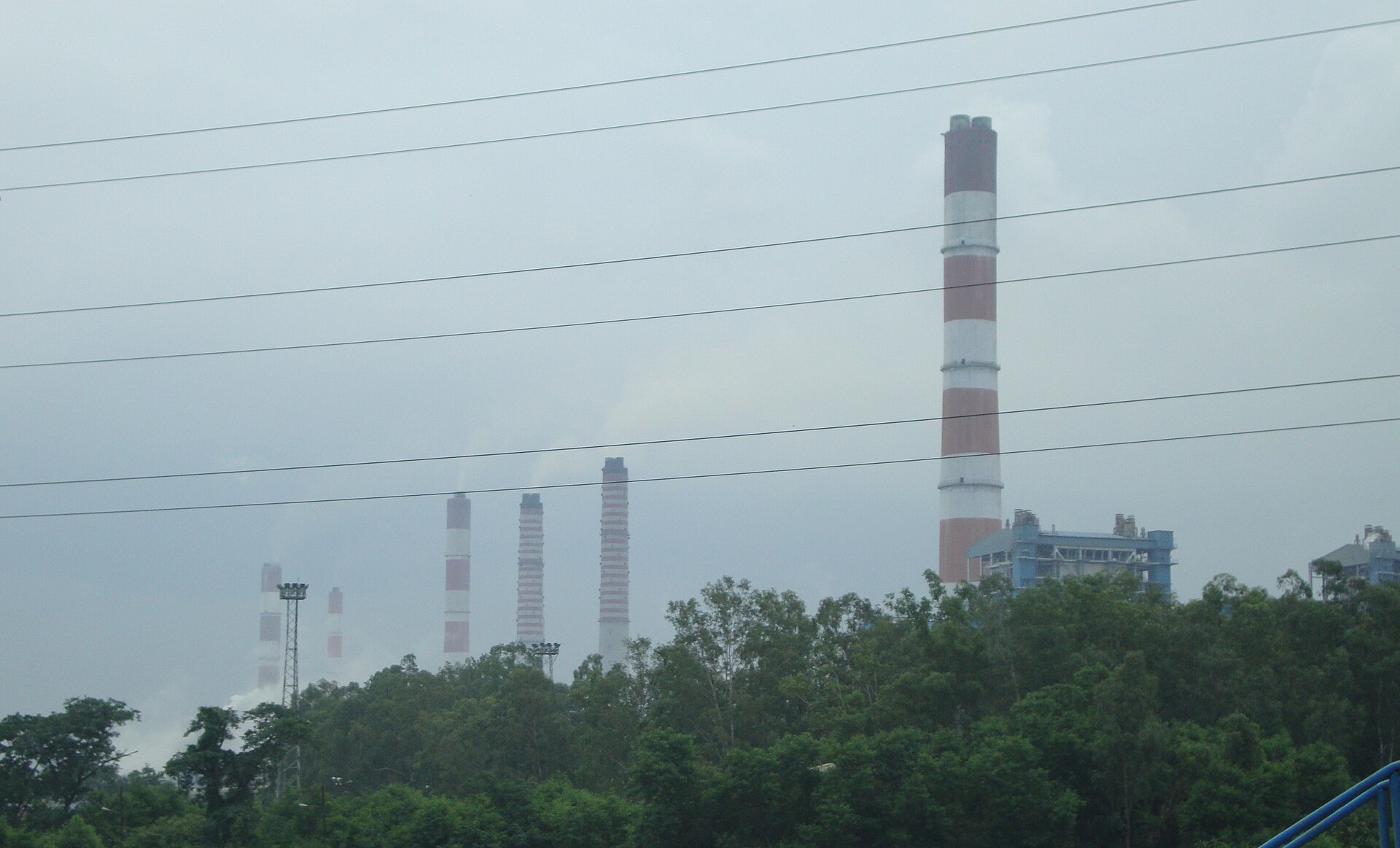
Reference view of Vindhyachal Super Thermal Power Station in Singrauli district, Madhya Pradesh, India—not the COP31 proceedings. Coal-fired power infrastructure provides context for debates over differentiated fossil fuel transition pathways.
Image: Jayadevp13 · CC BY-SA 4.0
Why in news
According to the supplied reports, the summit concluded on November 22, 2026, without adoption of its proposed cover decision. India supported nationally determined, equitable transitions backed by finance and technology, while the European Union and other parties rejected a text lacking explicit fossil fuel language.
About 130
Countries reportedly supporting explicit fossil fuel language
48 hours
Conference overtime reported in the news account
35% by 2035
Proposed electricity share in global final energy consumption
1.5°C
Warming limit central to the negotiations
Background
The United Nations Framework Convention on Climate Change provides the institutional framework for international climate cooperation. Its equity principle and common but differentiated responsibilities and respective capabilities recognise that countries differ in historical contributions to climate change and their capacity to respond. The Paris Agreement combines a shared temperature objective with nationally determined contributions, progressively stronger ambition and arrangements for finance, technology and capacity-building. Developed countries are expected to lead mitigation and provide financial support to developing countries. The central negotiating challenge is therefore not simply whether emissions should fall, but how quickly different countries should act, who should pay and how development needs should be protected.
What failed at Antalya
The proposed cover decision, referred to in the reporting as the Antalya Pact, did not secure consensus. The EU objected to the absence of explicit language on moving away from fossil fuels; Panama also formally opposed the draft. The reports place India, China and Saudi Arabia on the side willing to accept the proposed text despite reservations.
A cover decision frames the overall political outcome of a conference rather than resolving every individual negotiating item. Its rejection was consequently a major political setback, but it did not erase separate decisions or terminate existing treaty obligations. The supplied editorial reports some progress on just transition.
The presidency also sought an electrification target under which electricity would account for 35% of global final energy consumption by 2035. This was a proposed target, not an adopted COP31 commitment. Electrification reduces emissions most effectively when accompanied by cleaner electricity generation.
- Distinguish failure of the overarching political statement from failure of every negotiating track.
- Do not describe the proposed Antalya Pact or electrification target as an adopted agreement.
- A temporary temperature exceedance is not equivalent to establishing a sustained breach of the Paris Agreement’s long-term temperature goal.
Infographic
Shared ambition
Maintain a credible direction towards lower emissions.
Differentiated pathways
Reflect responsibility, capability and development needs.
Credible support
Deliver finance, technology and capacity-building.
Just transition
Protect workers, communities and vulnerable consumers.
Accountable diplomacy
Improve consensus-building and manage conflicts of interest.
AI-assisted infographic by Pragnya IAS Academy, based on the cited sources.
India’s stance: common direction, differentiated pathways
India argued that climate ambition must be accompanied by means of implementation. Its stated position was that energy transitions should be nationally determined, just and equitable, supported by finance, technology and capacity-building. Opposition to a uniform phase-out timetable should therefore be distinguished from rejection of climate action.
The Like Minded Developing Countries coalition argued that the draft inadequately reflected equity, historical responsibility and developed-country obligations. The underlying concern is that identical deadlines can impose unequal burdens on countries with different energy-access needs, fiscal capacities and dependence on fossil fuel-linked livelihoods.
However, countries opposing prescriptive targets do not necessarily have identical interests. Development and energy-access concerns differ from fossil fuel export dependence. A credible differentiated approach must preserve a common direction towards lower emissions while explaining national pathways and avoiding indefinite postponement.
- Historical responsibility concerns cumulative contributions to warming, not merely current annual emissions.
- National determination must operate alongside progression in ambition and transparent implementation.
- A just transition must protect workers, vulnerable consumers and fossil fuel-dependent regions.
Climate finance is the bridge between equity and ambition
The dispute was not confined to fossil fuel terminology. India and other developing countries also raised concerns about adaptation finance and implementation support. A transition requires investment in grids, storage, clean generation, skills and social protection; installing renewable capacity alone does not resolve these system-wide requirements.
Climate finance is therefore an enabling condition for stronger action rather than a peripheral concession. Predictable support can reduce the perceived conflict between decarbonisation and development. Adaptation finance must also remain visible because vulnerable countries face climate impacts even as mitigation efforts expand.
Equity requires developed countries to fulfil their support obligations, while accountability requires recipients and providers to demonstrate delivery and outcomes. Public finance, concessional instruments and appropriate private investment serve different purposes and should not be treated as interchangeable.
- Prioritise grants and highly concessional support where debt burdens or weak revenue prospects constrain action.
- Link transition commitments to transparent financing, technology and capacity-building arrangements.
- Protect adaptation funding from being overshadowed by commercially attractive mitigation projects.
Consensus: inclusive legitimacy, constrained ambition
Consensus-based negotiations give countries a voice in decisions affecting their development and sovereignty. However, unresolved formal objections can prevent adoption, allowing a small group or even an individual party to stall an outcome. This is a practical blocking capacity, not a separately conferred veto privilege.
Consensus should not be confused with a recorded unanimous affirmative vote. In practice, it centres on the absence of sustained formal objections. At Antalya, this decision-making approach could not reconcile demands for stronger fossil fuel language with resistance to prescriptive transition commitments.
The result illustrates a tension between participation and effectiveness. Vague wording may preserve agreement while weakening policy signals; rejecting weak language may protect ambition while leaving no collective statement. Better preparation, transparent consultations and finance-linked compromise are more immediately workable than assuming that majority voting can simply replace existing practice.
- Consensus can protect vulnerable countries against externally imposed obligations.
- The same process can encourage lowest-common-denominator outcomes.
- Voluntary coalitions may advance implementation but should not displace universal obligations or exclude vulnerable states.
Technology and commercial influence: safeguards without false binaries
Panama criticised the draft’s reliance on carbon capture, utilisation and storage instead of deeper structural change. The supplied editorial, however, cautions against dismissing carbon capture outright. A balanced approach assesses its role in difficult-to-abate activities without allowing uncertain future deployment to substitute for feasible emissions reductions today.
The sources also raise concerns about commercial participation and the absence of comprehensive, enforceable conflict-of-interest safeguards. A non-profit coalition identified major polluter groups and fossil fuel-financing banks at the summit, but its classifications are not official UN findings. Attendance does not establish that these actors influenced the outcome or caused the deadlock.
Disclosure should cover affiliations, funding and relevant interests across non-government participants, including those within national delegations. The WHO Framework Convention on Tobacco Control offers a precedent for protecting policymaking from vested interests, but any climate-specific framework must account for the different institutional and economic context.
- Assess carbon capture through lifecycle emissions, storage durability and verifiable performance.
- Distinguish commercial access, potential conflict of interest and proven undue influence.
- Apply safeguards to relevant state-owned as well as private commercial interests.
| Issue | Positions reported | Possible bridge |
|---|---|---|
| Fossil fuel language | EU and other parties sought explicit transition or phase-out language; India and others resisted prescriptive targets. | A common direction supported by differentiated national pathways and transparent milestones. |
| Historical responsibility | LMDC argued that equity and developed-country responsibility were inadequately reflected. | Earlier developed-country action combined with credible support for developing-country transitions. |
| Climate finance | Developing countries raised concerns over implementation support and adaptation finance. | Predictable finance with clear delivery and accountability arrangements. |
| Carbon capture | Panama criticised excessive reliance on CCUS; the editorial argued against rejecting it outright. | Targeted, evidence-based use without substituting for feasible direct emissions cuts. |
| Decision-making | Formal objections prevented adoption of the cover decision. | Earlier consultation and transparent mediation while retaining inclusive participation. |
- 1. Agree on a shared direction towards lower emissions and transition away from fossil fuels.
- 2. Differentiate national pathways by responsibility, capability and development circumstances.
- 3. Secure finance, technology access and capacity-building support.
- 4. Implement clean-energy systems alongside worker and community protection.
- 5. Track emissions reductions and support delivery transparently.
- 6. Strengthen commitments through subsequent review and negotiation.
Early COP31 proceedings
The leadership advanced a cover-text initiative centred partly on a proposed global electrification target.
Final COP31 negotiations
Differences persisted over fossil fuel language, differentiated responsibilities and implementation support.
November 22, 2026
The conference concluded without an agreed cover decision after extended negotiations, although some separate decisions were reached.
Significance, challenges & way forward
Significance
- The deadlock shows that scientific urgency alone cannot settle disputes over the distribution of transition costs.
- India’s position places development needs and implementation support at the centre of climate diplomacy.
- Failure to agree on a cover decision weakens the collective policy signal without extinguishing existing climate obligations.
- The dispute highlights that clean-energy deployment, adaptation and social protection must be negotiated as connected priorities.
- Public confidence in climate negotiations depends on both substantive outcomes and accountable participation.
Challenges
- Uniform deadlines risk ignoring unequal capacities, while open-ended differentiation can become a rationale for delay.
- Unclear or unreliable finance commitments undermine trust and constrain developing-country implementation.
- Electrification without cleaner power generation may shift emissions between sectors rather than sufficiently reduce them.
- Consensus can produce either diluted language or deadlock when core interests remain unresolved.
- Overreliance on future carbon capture can weaken incentives for immediately available emissions reductions.
- Limited conflict-of-interest safeguards make it difficult to assess commercial influence without overstating evidence.
Way forward
- Combine a common transition direction with nationally determined, progressively stronger pathways rather than an identical timetable for all countries.
- Translate historical responsibility into earlier developed-country action and credible finance, technology and capacity-building support.
- Integrate grids, storage, energy efficiency, worker reskilling and regional diversification into transition planning.
- Provide predictable adaptation support alongside mitigation finance, with instruments suited to vulnerable countries’ debt constraints.
- Improve pre-summit consultations and publish accessible explanations of unresolved issues and proposed compromises.
- Establish enforceable disclosure and conflict-management safeguards without assuming that participation itself proves misconduct.
- Evaluate CCUS selectively through measurable climate benefits and safeguards against fossil fuel lock-in.
Key terms
- Cover decision
- An overarching COP decision framing the political outcome, distinct from individual negotiating-track decisions.
- CBDR-RC
- Common but differentiated responsibilities and respective capabilities: shared climate responsibility exercised according to differing contributions and capacities.
- Nationally determined contribution
- A country’s climate contribution communicated under the Paris Agreement, with successive contributions expected to represent progression.
- Just transition
- A transition towards a low-emission economy that protects workers, communities and vulnerable groups.
- Means of implementation
- Finance, technology development and transfer, and capacity-building needed to carry out climate action.
- Phase-out and phase-down
- Phase-out means ending the specified activity or use over time; phase-down means reducing it without necessarily eliminating it.
- Carbon budget
- The cumulative carbon dioxide emissions compatible with limiting warming to a specified level at a given likelihood.
- CCUS
- Carbon capture, utilisation and storage involves capturing carbon dioxide for use or storage; its climate benefit depends on the process and emissions avoided.
Link with static syllabus
Prelims practice MCQs
Q1. With reference to a COP cover decision, consider the following statements: 1. It frames the overarching political outcome of the conference. 2. Failure to adopt it necessarily invalidates all separate negotiating decisions. 3. Rejection of a proposed cover decision terminates the Paris Agreement. Which of the statements given above is/are correct?
Q2. Consider the following statements about common but differentiated responsibilities and respective capabilities: 1. It recognises differing national contributions to climate change and capacities to respond. 2. It permanently exempts developing countries from climate action. 3. It can support differentiated pathways towards a shared climate objective. Which of the statements given above are correct?
Q3. Which of the following best describes consensus-based decision-making in climate negotiations?
Q4. Consider the following statements: 1. Electrification guarantees emissions reductions regardless of the source of electricity. 2. The climate benefit of carbon capture depends partly on lifecycle emissions and the durability of storage where storage is used. 3. The presence of a fossil fuel company representative at a summit, by itself, proves influence over the final decision. Which of the statements given above is/are correct?
Mains practice questions
GS 2 · 15 marks · 250 words
The COP31 fossil fuel deadlock reflects a crisis of distributive justice as much as one of climate ambition. Examine with reference to India’s position, climate finance and consensus-based negotiations.
Frequently asked questions
Did COP31 fail to produce any decisions?
No. The supplied reports state that the overarching cover decision failed, while some separate negotiating decisions were reached, including reported progress on just transition.
Why did India oppose a uniform fossil fuel phase-out timetable?
India emphasised differing national circumstances, development needs and equitable transitions. It argued that stronger ambition must be backed by finance, technology and capacity-building.
Was the proposed global electrification target adopted?
The supplied editorial describes a proposal for electricity to constitute 35% of global final energy consumption by 2035. It should not be presented as an adopted COP31 commitment.
Did fossil fuel lobbying cause the Antalya deadlock?
The supplied material does not establish that causal claim. It identifies concerns about commercial participation and safeguards while explicitly distinguishing access from proven influence.
Sources
- The Hindu: Global climate talks must shut door on fossil fuel ‘clout’
- The Hindu: COP31 talks fail as EU, others reject any climate deal without language on a fossil fuel phase-out
- The Hindu: Fatal disagreement: on the COP31 summit
- Indian Express: Can’t have uniform fossil fuel phase-out timetable, countries must decide: Environment Minister Bhupender Yadav
Analysis prepared by the Pragnya IAS Academy current-affairs desk with AI assistance from the cited reports. Verify figures with the original sources.
Turn current affairs into marks
Join Pragnya IAS Academy's mentorship for daily answer-writing evaluation on stories like this — classroom programmes from a trusted name in IAS coaching in Hyderabad.