
COP31 Outcomes: Adaptation Finance, Article 6.4 and India’s Equity Concerns
Revise the static topic: UPSC Environment notes
In short: According to the supplied reports, COP31 in Antalya ended without consensus on the proposed Antalya Pact, while advancing decisions on the Adaptation Fund, climate-finance discussions and just transition. India welcomed a $50 million Adaptation Fund pledge but stressed that adaptation requires adequate, predictable and accessible finance, not announcements alone. The central issue is whether institutional progress can translate into timely support for climate-vulnerable developing countries.
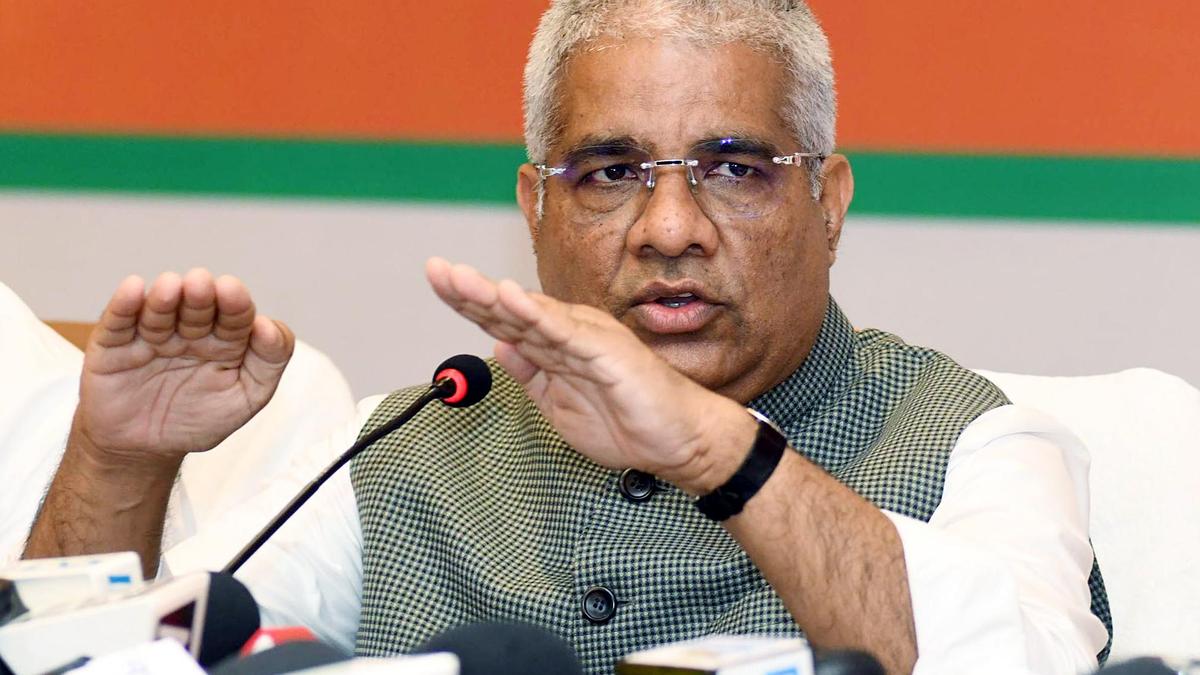
Photo from the source report: COP31 Outcomes: Adaptation Finance, Article 6.4 and India’s Equity Concerns
Image: The Hindu
Why in news
India expressed disappointment over the omission of the proposed $120 billion adaptation-finance figure and the failure to adopt COP31’s overarching agreement. Parties also agreed on arrangements linking the Adaptation Fund’s exclusive service of the Paris Agreement to the first revenue from Article 6.4 share of proceeds.
$50 million
Adaptation Fund pledge welcomed by India
$120 billion
Adaptation-finance figure omitted from the outcome
2035
Horizon for the reported adaptation-finance tripling goal
November 2029
Extended duration of the Just Transition Work Programme
Background
The UNFCCC provides the framework for international climate cooperation, guided by equity and common but differentiated responsibilities and respective capabilities. The Paris Agreement combines nationally determined climate action with provisions on adaptation, finance, technology and capacity-building. Adaptation reduces vulnerability to climate impacts, whereas mitigation addresses emissions and enhances greenhouse-gas sinks. The Adaptation Fund was established under the Kyoto Protocol framework and supports concrete adaptation projects and programmes in developing countries. Article 6.4 of the Paris Agreement establishes a UN-supervised carbon-crediting mechanism, with a share of proceeds intended to support adaptation in particularly vulnerable developing countries.
What COP31 delivered—and what remained unresolved
The supplied reports describe a failure to secure consensus on the proposed Antalya Pact, the overarching political text intended to frame COP31’s outcome. Disagreement over fossil-fuel phase-out language was the immediate flashpoint, alongside wider differences over mitigation pathways, historical responsibility and financial obligations.
This was not equivalent to the rejection of every negotiating outcome. Decisions on the Adaptation Fund, the Climate Finance Work Programme and the Just Transition Work Programme survived the failure of the cover text. India also emphasised that existing commitments under the UNFCCC and Paris Agreement were not extinguished.
- The Climate Finance Work Programme established a discussion process, but agreement on its substantive scope remained outstanding.
- The process includes party submissions, workshops, virtual dialogues and a high-level ministerial roundtable in 2027.
- The Just Transition Work Programme was extended until November 2029, with stronger implementation-oriented activities.
- Further consideration of the Just Transition Mechanism’s functions and institutional arrangements is expected in 2027.
Infographic
Political gap
No consensus on the proposed Antalya Pact.
Finance gap
$50 million pledged; India sought support commensurate with needs.
Revenue linkage
First Article 6.4 proceeds revenue triggers exclusive Paris service arrangements.
Equity test
Predictable public finance and substantial grants, without added debt burdens.
Delivery test
Measure disbursement, accessibility and practical resilience support.
AI-assisted infographic by Pragnya IAS Academy, based on the cited sources.
Adaptation-finance adequacy: distinguish pledges, targets and delivery
India welcomed the $50 million pledge while judging it inadequate relative to developing countries’ adaptation needs. The omitted $120 billion figure was part of the proposed negotiating text, not an adopted COP31 commitment. The supplied material does not establish a comprehensive estimate of adaptation needs or actual disbursements, so it cannot support a numerical calculation of the financing gap.
A single fund pledge cannot be treated as directly equivalent to a broader adaptation-finance benchmark. Adequacy must be assessed through scale, predictability, grant content, accessibility and delivery. India’s emphasis on primarily public and substantially grant-based support addresses the risk that vulnerable countries may otherwise accumulate debt merely to protect communities from climate impacts.
- A pledge announces an intention to provide resources; it does not establish that money has reached a fund or beneficiary.
- Predictable finance enables adaptation planning beyond short funding cycles.
- Grant-based support can protect fiscal space where adaptation produces essential public benefits but limited commercial returns.
- The reported goal of tripling adaptation finance by 2035 requires clarity on the baseline, accounting and monitoring of progress.
Adaptation Fund and Article 6.4: an institutional link, not a funding guarantee
According to the supplied explainer, parties agreed on arrangements for the Adaptation Fund to serve the Paris Agreement exclusively once the first share of proceeds under Article 6.4 turns into revenue. The trigger is the realisation of revenue, not merely the adoption of arrangements or the existence of the carbon-market mechanism.
Article 6.4 connects mitigation activity with adaptation support through a share of proceeds. However, establishing this relationship does not guarantee adequate or predictable funding: realised receipts depend on the functioning of the mechanism and the monetisation of proceeds. Market-linked resources should therefore supplement, rather than be treated as a substitute for, predictable public finance.
- The decision concerns the Fund’s institutional relationship with the Paris Agreement; it does not create a new adaptation fund.
- No amount of actual Article 6.4 revenue is established in the supplied material.
- The reported $50 million pledge is not identified as Article 6.4 revenue.
- Institutional readiness and financial sufficiency are separate tests of success.
India’s position: equity must shape implementation
India’s position combines stronger adaptation support with transparency and implementation of existing commitments. It frames adaptation as an immediate developmental necessity and seeks finance that is adequate, predictable, primarily public and substantially grant-based. This approach links historical responsibility and differentiated capabilities with the protection of present-day development needs.
The supplied interview records India’s coordination with the LMDCs, BASIC and the broader G77 framework. On just transition, India advocated a nationally determined, party-guided approach encompassing employment, social protection, energy access, poverty eradication and sustainable development.
The Indian Express editorial interprets the breakdown as evidence of weaker incentives for compromise and changing negotiating power. This is an analytical interpretation, not a formal COP finding. The policy lesson is to avoid framing mitigation ambition and equity as mutually exclusive: credible transition commitments need finance, technology and capacity-building support.
- Equity concerns who bears costs, who receives support and how national circumstances shape implementation.
- Developing-country coalitions share core interests but contain diverse vulnerabilities and development priorities.
- Consensus protects participation but becomes difficult when disagreements over ambition and support remain unresolved.
- India’s stated test of success is practical support delivered to developing countries, not procedural activity alone.
| Outcome or proposal | Reported status | Correct interpretation |
|---|---|---|
| Antalya Pact | Consensus not reached | The overarching political text was not adopted; separate decisions still made progress. |
| $50 million Adaptation Fund pledge | Welcomed by India | An announced contribution is not evidence of completed disbursement. |
| $120 billion adaptation-finance figure | Absent from the final outcome | It must not be presented as an adopted COP31 financial commitment. |
| Adaptation Fund’s exclusive Paris Agreement service | Arrangements agreed with a revenue-linked trigger | The transition is linked to the first realised Article 6.4 share-of-proceeds revenue. |
| Climate Finance Work Programme | Discussion process established | Procedural progress does not settle substantive scope or ensure finance delivery. |
| Just Transition Work Programme | Extended until November 2029 | Implementation activities will continue; mechanism design requires further consideration. |
- 1. Activities under the Article 6.4 mechanism generate carbon credits through the applicable rules.
- 2. A share of proceeds is directed towards adaptation support.
- 3. The proceeds are converted into revenue.
- 4. The first realised revenue triggers the reported arrangements for the Adaptation Fund to serve the Paris Agreement exclusively.
- 5. Resources support adaptation through the Fund’s project and programme processes.
COP29, Baku, 2024
A climate-finance agreement was adopted despite strong dissatisfaction among developing countries, according to the supplied editorial.
COP30, Brazil
The supplied editorial reports that efforts to include a fossil-fuel phase-out roadmap did not secure agreement.
COP31, Antalya, 2026
The proposed Antalya Pact failed to secure consensus, while decisions on selected institutional and work-programme matters advanced.
2027
A climate-finance ministerial roundtable and further consideration of the Just Transition Mechanism’s arrangements are envisaged.
November 2029
The extended Just Transition Work Programme is scheduled to run until this point.
2035
The supplied interview identifies this as the horizon for the existing adaptation-finance tripling goal.
Significance, challenges & way forward
Significance
- The outcome places the quality and accessibility of climate finance alongside its headline scale.
- The Article 6.4 linkage provides a route for carbon-market activity to contribute to adaptation support.
- Separate decisions demonstrate that failure of an overarching text need not eliminate all institutional progress.
- India’s position connects climate equity with debt sustainability, development priorities and support for vulnerable communities.
- The just-transition agenda broadens climate policy beyond emissions to employment, social protection and energy access.
Challenges
- The supplied reports identify an underfunded Adaptation Fund, without establishing a complete numerical financing-gap estimate.
- Unclear accounting and monitoring can make collective adaptation-finance goals difficult to verify.
- Market-linked revenues cannot be assumed to provide stable funding across time.
- Debt-creating finance can shift the cost of climate protection onto countries with constrained fiscal capacity.
- Procedural work programmes may postpone substantive agreement unless linked to concrete delivery milestones.
- Disputes over fossil fuels, historical responsibility and support obligations can obstruct consensus across negotiating constituencies.
Way forward
- Secure predictable public contributions and substantially grant-based adaptation support, particularly for the poorest and most climate-vulnerable countries.
- Report pledges, contributions received, project approvals and disbursements separately to make delivery transparent.
- Clarify the baseline, accounting boundaries and monitoring arrangements for the reported adaptation-finance tripling goal.
- Treat Article 6.4 proceeds as supplementary resources and publish receipts transparently without assuming guaranteed revenue.
- Simplify access procedures while retaining fiduciary safeguards, environmental integrity and community participation.
- Link climate-finance and just-transition discussions to implementation milestones, technology access and capacity-building.
- Build negotiating packages that combine mitigation ambition with equitable support and nationally determined development pathways.
Key terms
- Adaptation finance
- Resources supporting adjustment to actual or expected climate impacts and reducing vulnerability.
- Adaptation Fund
- A multilateral fund established under the Kyoto Protocol framework to support concrete adaptation projects and programmes in developing countries.
- Article 6.4 mechanism
- The Paris Agreement’s UN-supervised carbon-crediting mechanism for mitigation and sustainable development.
- Share of proceeds
- A portion generated through the carbon-market mechanism that helps fund adaptation and cover administrative expenses.
- Cover decision
- An overarching political decision that frames a climate conference’s outcome.
- CBDR-RC
- Common but differentiated responsibilities and respective capabilities, recognising shared duties alongside differences in responsibility and capacity.
- Just transition
- A transition towards sustainable development that addresses distributional impacts, livelihoods, social protection and national circumstances.
- Grant-based finance
- Financial support that does not require repayment, unlike loans.
Link with static syllabus
Prelims practice MCQs
Q1. With reference to the Adaptation Fund arrangements reported at COP31, consider the following statements: 1. Exclusive service of the Paris Agreement is linked to the first realised revenue from Article 6.4 share of proceeds. 2. The reported $50 million pledge is identified as revenue already generated under Article 6.4. Which of the statements given above is/are correct?
Q2. Consider the following statements about the reported COP31 outcomes: 1. The proposed Antalya Pact was adopted by consensus. 2. The $120 billion adaptation-finance figure became an adopted COP31 commitment. 3. The Just Transition Work Programme was extended until November 2029. Which of the statements given above is/are correct?
Q3. Which of the following best explains why Article 6.4 proceeds cannot, by themselves, establish the adequacy of adaptation finance?
Q4. Consider the following pairs: 1. BASIC — Brazil, South Africa, India and China 2. Adaptation — Reduction of vulnerability to climate impacts 3. Grant-based finance — Finance requiring repayment of principal Which of the pairs given above are correctly matched?
Mains practice questions
GS 3 · 15 marks · 250 words
“Institutional progress in climate negotiations is insufficient without equitable financial delivery.” Examine with reference to the reported COP31 outcomes, the Adaptation Fund and India’s position.
Frequently asked questions
Did COP31 adopt a $120 billion adaptation-finance commitment?
No. The supplied interview states that the figure was absent from the final outcome; it should not be described as an adopted COP31 commitment.
What is the Adaptation Fund’s relationship with Article 6.4?
Article 6.4 provides a share-of-proceeds channel for adaptation support. The reported COP31 arrangements link the Fund’s exclusive service of the Paris Agreement to the first such proceeds becoming revenue.
Did the failure of the Antalya Pact cancel existing climate commitments?
No. Failure to adopt the overarching political text did not extinguish existing commitments under the UNFCCC and Paris Agreement, and separate decisions still advanced.
Why does India favour substantially grant-based adaptation finance?
India argues that developing countries should not be forced to take on additional debt to protect vulnerable communities. Grants help meet adaptation needs without creating repayment obligations.
Sources
- The Hindu: COP31: India welcomes $50 million climate fund pledge, says adaptation needs far greater
- The Hindu: Why is COP31 perceived to be a failure? | Explained
- Indian Express: Why COP31 marks the end of an era of climate compromises
Analysis prepared by the Pragnya IAS Academy current-affairs desk with AI assistance from the cited reports. Verify figures with the original sources.
Turn current affairs into marks
Join Pragnya IAS Academy's mentorship for daily answer-writing evaluation on stories like this — classroom programmes from a trusted name in IAS coaching in Hyderabad.