
Great Nicobar Litigation: Forest Rights, Tribal Protection and Environmental Oversight
Revise the static topic: UPSC Environment notes
In short: The Calcutta High Court deferred final hearings on petitions challenging forest-rights proceedings and national park buffer-zone reductions linked to the Great Nicobar project. The litigation raises unresolved questions about the relationship between the Forest Rights Act and island-specific tribal protections, alongside the environmental scrutiny of strategic infrastructure.
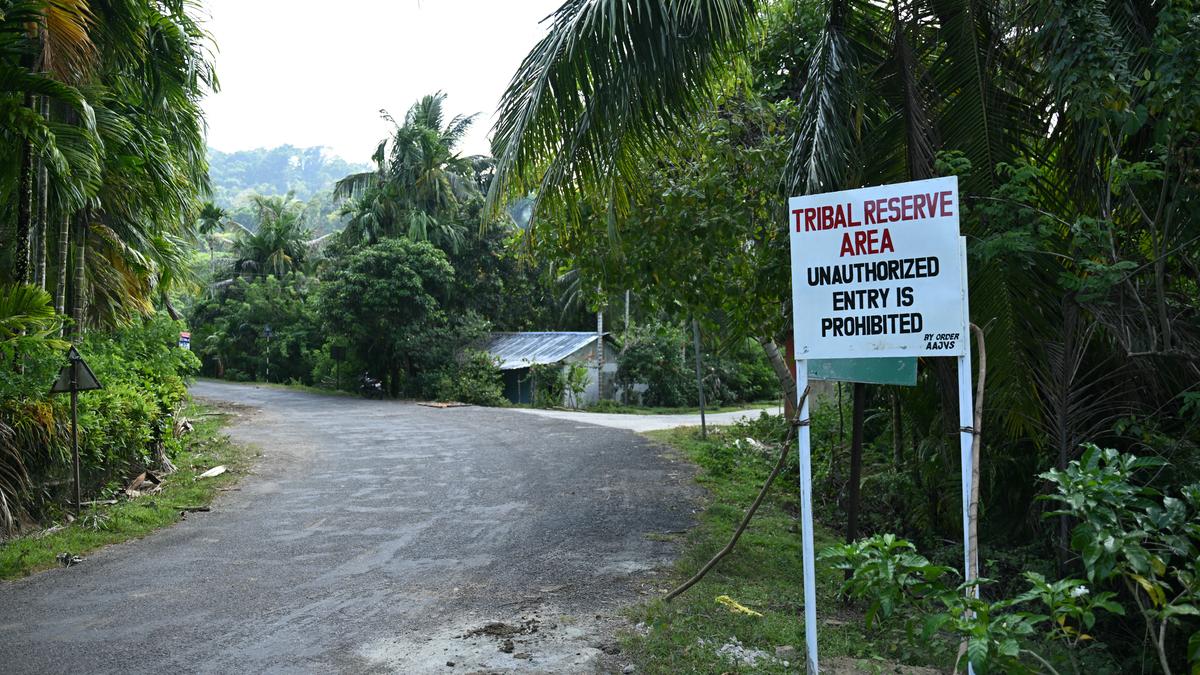
Photo from the source report: Great Nicobar Litigation: Forest Rights, Tribal Protection and Environmental Oversight
Image: The Hindu
Why in news
On November 25, 2026, the Calcutta High Court allowed the Centre additional time to submit documents and arguments, postponing final hearings until January 2027. The Centre disputed the applicability or implementation of the Forest Rights Act in the islands and sought to raise maintainability objections to related petitions.
₹92,000 crore
Reported project cost
3
Gram Sabha resolutions challenged
2
National parks in buffer-zone petitions
Background
Great Nicobar lies in the southern part of the Andaman and Nicobar archipelago and is home to indigenous communities, including the Shompen and Nicobarese. Its location near important Indian Ocean shipping routes gives infrastructure development strategic significance, while its forests, coasts and island ecosystems demand careful environmental appraisal. The Scheduled Tribes and Other Traditional Forest Dwellers (Recognition of Forest Rights) Act, 2006, recognises eligible forest dwellers’ rights and provides a process for their determination. The Andaman and Nicobar Islands (Protection of Aboriginal Tribes) Regulation, 1956, provides island-specific protections through measures including tribal reserves and restrictions on entry.
What the court proceedings concern
The proceedings concern alleged defects in forest-rights processes associated with the Great Nicobar project, alongside challenges to reductions in the buffer zones of Galathea National Park and Campbell Bay National Park. The postponement is procedural: the supplied reports do not record a final judicial determination on the legality of the challenged actions.
The project envisages a transshipment container port at Galathea Bay, an integrated township, a solar and gas-based power plant, and an airport for military and civilian use. A reported draft master plan also emphasises tourism, a coastal city, services and a port-linked finance hub.
The sources report different land-area figures: The Hindu refers to 121 sq km in relation to the challenged FRA-compliance orders, while The Indian Express refers to proceedings for diversion of 166 sq km. Their relationship is not established in the supplied material; neither figure should be presented as an uncontested common measure of forest diversion.
- The challenge includes Gram Sabha resolutions, the composition of a sub-divisional-level committee and the eventual forest-rights certification.
- The petitions concern both the integrity of decision-making procedures and the adequacy of safeguards.
- The reports differ on the affidavit deadline; both establish that further submissions were permitted and final hearings deferred.
Infographic
Legal clarity
Distinguish applicability, implementation and compliance.
Indigenous rights
Verify representation, rights recognition and habitat protection.
Ecological integrity
Assess cumulative pressures and justify buffer changes.
Strategic resilience
Align infrastructure with island resources and hazard exposure.
Accountability
Ensure reasoned decisions, judicial review and independent monitoring.
AI-assisted infographic by Pragnya IAS Academy, based on the cited sources.
Forest Rights Act versus island-specific tribal protection
The Centre argues that the island-specific tribal protection regulation governs the issue and that pursuing the FRA in the islands has historically been considered unnecessary. Petitioners counter that the administration itself conducted FRA proceedings and issued a certificate claiming that forest rights had been settled. They challenge the validity of those proceedings and that certification.
A distinction is essential between a law’s territorial applicability, its administrative implementation and compliance with its requirements in a particular project. Non-implementation does not, by itself, establish a legal exemption. Equally, an administrative certificate does not conclusively establish lawful compliance when the underlying proceedings are under judicial challenge.
The two frameworks have different functions: restrictions on outsider access and protection of tribal reserves are not identical to recognition of individual, community and habitat rights. Whether, and how, the frameworks operate together in this dispute requires authoritative legal interpretation rather than an assumption that one automatically replaces the other.
- The FRA gives the Gram Sabha a central role in initiating the process for determining forest rights.
- The FRA recognises community rights, including habitat rights for particularly vulnerable tribal groups, described in the Act using its earlier terminology.
- Section 4(5) protects eligible forest-dwelling communities against eviction or removal until the recognition and verification procedure is complete.
- The validity of the challenged consent resolutions remains a contested issue, not an established finding of either compliance or violation.
Indigenous protection and ecological scrutiny must operate together
For indigenous communities, forests and coastal landscapes support subsistence, cultural identity and social continuity. Protection therefore requires more than checking whether a habitation lies within a construction footprint. Assessment should consider access to customary resources, cultural landscapes, health risks from increased contact and the consequences of induced settlement.
The environmental question similarly extends beyond individual project components. Port activity, airport operations, power infrastructure, urban growth and tourism can interact through land-use change, water demand, waste generation and habitat fragmentation. These are risks requiring assessment, not impacts established by the supplied reports.
Buffer-zone reductions deserve independent scrutiny because activities outside a national park can affect ecological connectivity and conditions within it. The reports do not establish the precise legal character of each disputed buffer; a buffer zone should not automatically be equated with a notified eco-sensitive zone or with the park’s legal boundary.
- Cumulative appraisal should examine the combined infrastructure and urbanisation footprint.
- Consultation must be culturally appropriate and designed to avoid harmful or coercive contact with vulnerable communities.
- Coastal hazards, seismic exposure, freshwater availability and emergency response capacity should inform island planning.
- Strategic utility strengthens the case for resilient design; it does not by itself displace statutory safeguards.
Judicial oversight: jurisdiction and merits are separate questions
The Centre seeks to contest the maintainability of related petitions, arguing that some matters belong before the National Green Tribunal or the Supreme Court. Petitioners maintain that the High Court had already addressed maintainability. These are competing submissions; the current reports do not establish a fresh final ruling resolving them.
Under Article 226, High Courts exercise constitutional writ jurisdiction. The National Green Tribunal exercises specialised jurisdiction defined by its statute and the environmental enactments listed in it. The FRA is not itself a scheduled enactment under the NGT Act, so describing a dispute as environmental does not automatically settle the appropriate forum.
A reasoned decision must distinguish the court’s power to hear a petition from the substantive legality of the challenged action. Clear identification of the orders, statutory provisions and remedies involved can reduce procedural fragmentation while preserving effective rights protection.
- Maintainability concerns whether proceedings can be entertained; merits concern whether the challenged action is lawful.
- The existence of an alternative statutory remedy does not automatically extinguish the High Court’s constitutional jurisdiction.
- The precautionary principle, sustainable development and the polluter-pays principle are statutory guides for the NGT.
| Framework | Primary function | Question requiring scrutiny |
|---|---|---|
| Forest Rights Act, 2006 | Recognition and vesting of eligible individual and community forest rights | Were the rights-determination proceedings and certification legally valid? |
| Protection of Aboriginal Tribes Regulation, 1956 | Island-specific protection through tribal reserves and access restrictions | How does this protective framework interact with forest-rights recognition? |
| Environmental and forest-diversion regulation | Appraisal and regulation of environmental impacts and forest land use | Have relevant impacts, alternatives and applicable conditions been adequately examined? |
| National park and surrounding-area safeguards | Protection of wildlife habitats and regulation of relevant surrounding activities | Were the disputed buffer-zone reductions legally and ecologically justified? |
| Article 226 and the NGT Act | Constitutional judicial review and specialised statutory adjudication | Which forum can hear each challenge and grant the relief sought? |
- 1. Identify applicable laws, customary resource use and potentially affected communities.
- 2. Complete lawful rights recognition and verification through competent institutions.
- 3. Ensure culturally appropriate participation and satisfy applicable consultation and consent requirements.
- 4. Assess cumulative impacts, alternatives and ecological carrying capacity.
- 5. Issue reasoned decisions with enforceable safeguards and accessible remedies.
- 6. Monitor compliance independently and apply corrective measures when necessary.
1956
The Andaman and Nicobar Islands (Protection of Aboriginal Tribes) Regulation established an island-specific tribal protection framework.
2006
The Forest Rights Act was enacted to recognise and vest specified rights of eligible forest-dwelling communities.
August 2022
According to The Indian Express, three Gram Sabha resolutions concerning consent to forest diversion were adopted; their validity is now challenged.
May 2026
The Indian Express reports that the High Court agreed to hear the petitions after addressing maintainability.
October 2026
The Hindu reports that the Centre told the Supreme Court that the High Court should consider and decide the related cases at the earliest.
November 25, 2026
The High Court deferred final hearings and permitted further submissions by the Centre.
January 13, 2027
The next hearing, including the FRA-related challenge, is scheduled according to The Hindu.
January 22, 2027
The High Court is scheduled to hear the Attorney General’s submissions according to The Hindu.
Significance, challenges & way forward
Significance
- The dispute tests whether island-specific tribal protection and forest-rights recognition are treated as complementary safeguards or competing legal regimes.
- Judicial scrutiny can clarify the evidentiary value of administrative compliance certificates when underlying proceedings are disputed.
- Integrated appraisal can improve the resilience and credibility of infrastructure intended to serve strategic and economic objectives.
- The case highlights that indigenous welfare, environmental integrity and procedural legality are interconnected dimensions of development.
Challenges
- Uncertainty over the interaction of protective laws can create gaps in accountability and delay rights recognition.
- Formal resolutions may not establish meaningful participation unless representation, procedure and freedom from coercion are verified.
- Component-wise assessments can overlook the combined pressures of infrastructure, settlement and tourism.
- Repeated jurisdictional objections can fragment litigation and delay substantive resolution.
- Differing reported land-area figures and procedural deadlines make primary official records essential for accurate scrutiny.
Way forward
- Publish a consolidated, legally reasoned account of applicable safeguards, clearly distinguishing statutory applicability from administrative implementation.
- Make rights proceedings, committee constitution, certification and relevant maps accessible, subject to legitimate privacy and security protections.
- Verify the integrity of Gram Sabha proceedings and the treatment of community and habitat rights before relying on compliance certification.
- Undertake cumulative ecological and social appraisal, including alternatives and the carrying capacity of the island.
- Explain buffer-zone changes through transparent ecological evidence and the applicable legal procedure.
- Use time-bound adjudication and independent compliance monitoring without prejudging the court’s findings or weakening substantive safeguards.
Key terms
- Forest Rights Act
- A law recognising specified individual and community rights of eligible Scheduled Tribes and other traditional forest dwellers.
- Habitat rights
- Community rights recognised under the FRA over habitat and habitation for particularly vulnerable tribal groups and pre-agricultural communities.
- Gram Sabha
- The village assembly that initiates the statutory process for determining the nature and extent of forest rights under the FRA.
- Maintainability
- The legal question of whether a court or tribunal can entertain a particular proceeding.
- Cumulative impact assessment
- Assessment of the combined effects of multiple activities and pressures rather than each component in isolation.
- Precautionary principle
- An environmental principle under which scientific uncertainty should not justify postponing protective measures against serious or irreversible harm.
- Transshipment port
- A port where cargo is transferred between vessels for onward transport.
Link with static syllabus
Prelims practice MCQs
Q1. With reference to the Forest Rights Act, 2006, consider the following statements: 1. The Gram Sabha initiates the process for determining the nature and extent of forest rights. 2. The Act recognises only individual rights and excludes community rights. 3. Section 4(5) protects eligible forest dwellers against eviction or removal until recognition and verification procedures are complete. Which of the statements given above are correct?
Q2. Consider the following statements concerning environmental adjudication: 1. High Courts exercise writ jurisdiction under Article 226. 2. The National Green Tribunal has jurisdiction over every dispute concerning any forest-related enactment. 3. The Forest Rights Act is not itself a scheduled enactment under the NGT Act. Which of the statements given above are correct?
Q3. Which of the following best describes cumulative impact assessment in the context of an island infrastructure project?
Q4. Consider the following pairs: 1. Galathea Bay — Proposed transshipment container port 2. Campbell Bay National Park — Subject of a buffer-zone reduction challenge 3. Protection of Aboriginal Tribes Regulation — Island-specific tribal protection framework How many of the above pairs are correctly matched?
Mains practice questions
GS 3 · 15 marks · 250 words
Strategic infrastructure in fragile island ecosystems requires integration of indigenous rights and environmental safeguards. Examine in the context of the Great Nicobar project litigation.
Frequently asked questions
Has the court declared the Great Nicobar project unlawful?
The supplied reports record a postponement of final hearings and permission for further submissions. They do not report a final ruling declaring the project unlawful.
Why is the Forest Rights Act disputed in this case?
The Centre relies on the island-specific tribal protection regulation and disputes the need to pursue the FRA in the islands. Petitioners point to the administration’s own FRA proceedings and certification, whose validity they challenge.
Are national park buffers and eco-sensitive zones the same?
Not necessarily: a buffer description does not by itself establish the legal status of an eco-sensitive zone. The relevant notification and statutory basis must be examined.
Why does the project need cumulative environmental appraisal?
The port, airport, township, power infrastructure and associated development may generate interacting pressures on a fragile island. Assessing each component separately can miss their combined effects.
Sources
- The Hindu: Great Nicobar Island project: Final Calcutta High Court hearing deferred as Centre seeks to file affidavit, objections
- Indian Express: Nicobar forest rights matter: Centre gets time until December 10 to file fresh submissions
Analysis prepared by the Pragnya IAS Academy current-affairs desk with AI assistance from the cited reports. Verify figures with the original sources.
Turn current affairs into marks
Join Pragnya IAS Academy's mentorship for daily answer-writing evaluation on stories like this — classroom programmes from a trusted name in IAS coaching in Hyderabad.