
India’s Crude Import Bill Surge: External Stability, Inflation and Energy Security
Revise the static topic: UPSC Economy notes
In short: India’s October crude import bill rose 87.5% year-on-year to $19.5 billion, while import volumes increased 11%, according to provisional PPAC data reported by The Hindu. Higher petroleum product export earnings provided a partial cushion, but sustained energy-price increases could widen the current account deficit, raise inflation and complicate exchange-rate and fiscal management.
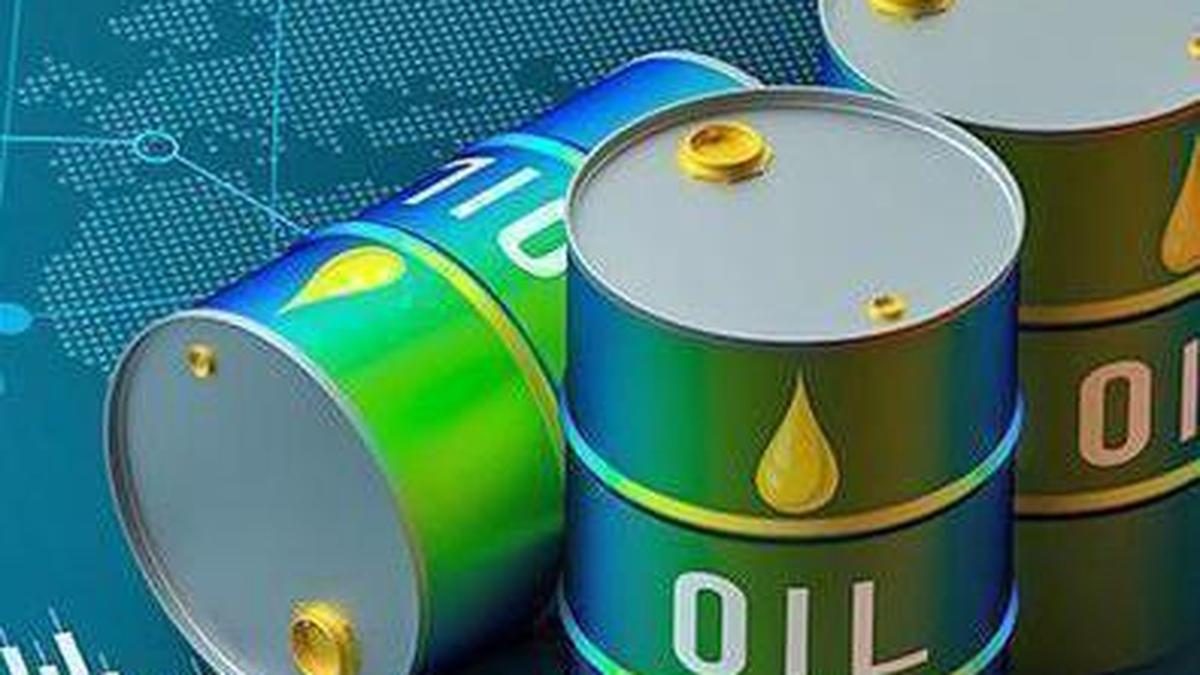
India’s October crude import bill rose 87.5% year-on-year to $19.5 billion, while volumes increased 11%, according to provisional PPAC data reported by The Hindu—highlighting the dominant role of higher prices.
Image: The Hindu
Why in news
Provisional data from the Petroleum Planning and Analysis Cell show a sharp increase in India’s October energy import costs amid renewed West Asia tensions. The net import bill for crude oil, petroleum products and natural gas, after deducting petroleum product exports, rose 60% year-on-year to $16 billion.
$19.5 billion
October crude import bill
87.5%
Year-on-year crude import bill increase
11%
Year-on-year crude import volume increase
$16 billion
October net energy import bill
$119.91 per barrel
October Indian crude basket average
$6.3 billion
October petroleum product export earnings
Background
India imports crude oil for domestic refining and consumption while also exporting refined petroleum products. Its energy exposure therefore depends on both gross imports and export earnings. West Asia is an important hydrocarbon-producing region, and the Strait of Hormuz connects the Persian Gulf with the Gulf of Oman, making regional stability significant for energy shipping. International oil prices influence India through the balance of payments, domestic production costs and fuel-pricing decisions. The Petroleum Planning and Analysis Cell functions under the Ministry of Petroleum and Natural Gas and provides petroleum-sector data and analysis.
What the data show: a price-dominated increase
India imported 23.3 million metric tonnes of crude oil in October, compared with 21 million metric tonnes in the corresponding month last year. Expenditure rose from $10.4 billion to $19.5 billion. The much faster growth in expenditure than in physical volumes indicates that higher procurement prices were the dominant driver, although additional volumes also contributed.
The Indian crude basket averaged $119.91 per barrel in October, against $116.09 in September. LNG imports illustrate the same vulnerability: volumes declined approximately 7%, but the import bill increased 8.33%. The supplied report links elevated benchmark prices to West Asia tensions; it does not establish an actual interruption of India’s oil supplies.
- Distinguish import value from import volume: a larger bill does not necessarily indicate a proportionate increase in energy consumption.
- The figures are provisional and should not be treated as final annual outcomes.
- The Indian crude basket and Brent are different price references and need not move identically.
Infographic
Price exposure
Crude import spending rose much faster than volumes.
External pressure
Higher net payments can strain the current account and rupee.
Domestic costs
The burden falls across prices, business margins and public finances.
Partial cushion
Petroleum exports offset some, but not all, import costs.
Immediate resilience
Diversify procurement and maintain emergency supply buffers.
Structural security
Reduce oil intensity through efficiency and electrification.
AI-assisted infographic by Pragnya IAS Academy, based on the cited sources.
Current account and rupee: mutually reinforcing pressures
Other things remaining equal, a higher net petroleum import bill worsens the merchandise trade balance and can widen the current account deficit. However, the current account also includes services, primary income and secondary income, including remittances. The reported energy balance is therefore neither India’s total trade deficit nor its current account deficit.
Larger oil payments can increase demand for foreign exchange and place depreciation pressure on the rupee. Depreciation, in turn, raises the rupee cost of dollar-priced imports. This feedback is not automatic: export receipts, capital flows, global dollar movements and RBI operations also influence the exchange rate.
- A dollar-denominated import bill captures external payment exposure; the rupee cost also depends on the exchange rate.
- A wider current account deficit increases external financing requirements, making the composition and stability of capital inflows important.
- Foreign exchange reserves can cushion temporary volatility but cannot permanently offset an adverse energy-price shock.
Inflation and fiscal position: who absorbs the shock?
Higher energy costs can affect inflation directly through household fuels and indirectly through freight, manufacturing and other energy-intensive activities. The size and timing of transmission depend on retail-price adjustments, taxation, inventories, contracts and firms’ ability to absorb costs. A persistent shock can spread beyond fuel prices if businesses raise prices and inflation expectations become less anchored.
The fiscal impact is conditional, not mechanical. Fuel-tax reductions can contain retail prices but reduce revenue relative to unchanged tax rates. Higher subsidies or explicit compensation to suppliers can increase expenditure. If prices are restrained without budgetary compensation, the initial burden may fall on firms rather than immediately appearing in the fiscal deficit.
- Higher gas prices can also create pressure on fertiliser production costs and subsidy requirements.
- The RBI cannot create additional oil supply; its role is to contain generalised inflation and maintain confidence.
- Untargeted price suppression may weaken conservation incentives and obscure the allocation of costs.
Petroleum exports provide a partial, not complete, hedge
Petroleum product export volumes rose 5.9% to 5.4 million metric tonnes, while export earnings increased approximately 91% to $6.3 billion. Higher export realisations helped offset part of the crude procurement burden.
This is a partial natural hedge because refined-product receipts can rise alongside crude costs. It is incomplete because India also consumes petroleum domestically and imports natural gas. Moreover, higher export revenue does not by itself establish higher refinery profitability: profitability depends on input costs, product prices, operating costs and refining margins. The net energy import bill still rose from $10 billion to $16 billion.
- Export earnings should be assessed alongside imported feedstock costs rather than treated as an entirely separate windfall.
- Refining capacity strengthens commercial flexibility but does not eliminate dependence on imported primary energy.
Energy security requires both buffers and structural change
Immediate resilience requires diversified suppliers, flexible procurement, shipping preparedness and strategic petroleum reserves. Diversification reduces dependence on particular suppliers, but it cannot insulate India from a globally synchronised price rise. Long-term contracts can improve supply certainty, although their price protection depends on contractual terms.
Durable resilience requires lower oil intensity through efficient freight, public transport, vehicle electrification and cleaner power supported by grids and storage. Renewable electricity reduces oil exposure most effectively when it replaces petroleum-based end uses; additional renewable generation alone does not automatically displace transport fuels. Domestic exploration can complement these measures, subject to geological, commercial and environmental constraints.
- Strategic reserves are finite emergency buffers, not a permanent instrument for keeping fuel prices low.
- Gas can diversify energy use, but imported LNG remains exposed to international prices and shipping risks.
- Energy security combines availability, affordability and sustainability rather than pursuing self-sufficiency at any cost.
| Channel | Likely effect | Important qualification |
|---|---|---|
| Current account | Higher net imports can widen the current account deficit. | Services exports, remittances and other trade flows can offset part of the pressure. |
| Exchange rate | Additional foreign exchange demand can put downward pressure on the rupee. | Capital flows, export receipts and global financial conditions also matter. |
| Inflation | Fuel and production costs can raise consumer prices. | Pass-through depends on pricing, taxes, contracts and cost absorption. |
| Fiscal position | Tax relief or higher subsidies can strain the budget. | Higher crude prices do not automatically cause an equal increase in public expenditure. |
| Refining exports | Higher product prices can improve export receipts. | Higher revenue need not imply higher profits or a lower net energy import bill. |
- 1. West Asia tensions can increase perceived supply and shipping risks.
- 2. Higher international crude and gas prices raise procurement costs.
- 3. Higher net import payments worsen the external balance, other things remaining equal.
- 4. Foreign exchange demand can put pressure on the rupee, adding to domestic import costs.
- 5. Costs are distributed among consumers, firms and government through prices, margins, taxes and subsidies.
- 6. Persistent pass-through can raise inflation and complicate monetary and fiscal choices.
October of the previous year
The crude import bill was $10.4 billion, while the net energy import bill was $10 billion.
September preceding the reported October
The Indian crude basket averaged $116.09 per barrel.
Reported October
The Indian crude basket averaged $119.91 per barrel; the crude import bill reached $19.5 billion and the net energy import bill reached $16 billion.
Significance, challenges & way forward
Significance
- The episode shows how geopolitical developments can transmit rapidly into India’s external accounts and domestic price stability.
- Petroleum product exports provide a meaningful cushion, highlighting the strategic value of India’s refining capabilities.
- Energy security is a macroeconomic objective because reliable and affordable supplies support growth, fiscal stability and household welfare.
- The divergence between import volumes and expenditure underlines the need to monitor prices and net payments, not just physical supply.
Challenges
- Oil demand is relatively difficult to reduce quickly because transport and industrial systems depend on existing equipment and infrastructure.
- Supplier diversification cannot eliminate exposure to globally traded oil prices or shared maritime routes.
- Broad fuel-price relief can strain public finances, while full and immediate pass-through can burden vulnerable households and firms.
- Strategic reserves provide only temporary protection and involve storage, replenishment and financing costs.
- Electrification can create new dependencies on critical minerals, batteries and clean-technology supply chains unless these risks are managed.
Way forward
- Track the net energy import bill alongside crude prices, refining margins, inventories and exchange-rate movements to assess exposure accurately.
- Diversify suppliers and contract structures while evaluating delivered costs, route risks and refinery compatibility.
- Maintain strategic petroleum reserves and coordinate emergency preparedness with commercial stocks and shipping arrangements.
- Use targeted, transparent and time-bound support for vulnerable groups rather than prolonged, economy-wide price suppression.
- Accelerate public transport, efficient freight and electrification backed by reliable power, grids and storage.
- Preserve macroeconomic buffers through prudent fiscal management, credible inflation control and resilient external financing.
Key terms
- Current account deficit
- A shortfall when current-account payments exceed receipts across goods, services, primary income and secondary income.
- Net energy import bill
- In the supplied report, imports of crude oil, petroleum products and natural gas minus exports of petroleum products.
- Natural hedge
- An offset arising when related receipts and costs respond to a common risk, as petroleum export receipts may rise with crude prices.
- Exchange-rate pass-through
- The extent to which currency movements affect import costs and domestic prices.
- Cost-push inflation
- Price increases originating from higher production costs, including energy and transport costs.
- Strategic petroleum reserves
- Emergency crude stocks intended to cushion significant supply disruptions.
- Refining margin
- The spread between the value of refined products and crude feedstock costs, distinct from net profit.
Link with static syllabus
Prelims practice MCQs
Q1. With reference to an increase in India’s crude oil import bill, consider the following statements: 1. It necessarily causes an equal increase in the current account deficit. 2. Higher petroleum product export receipts can partly offset the external payment burden. 3. Rupee depreciation can increase the domestic-currency cost of dollar-priced crude imports. Which of the statements given above are correct?
Q2. The Petroleum Planning and Analysis Cell functions under which of the following?
Q3. Consider the following statements about policy responses to high oil prices: 1. Strategic petroleum reserves can provide a temporary supply buffer. 2. Supplier diversification guarantees insulation from a global oil-price increase. 3. Fuel-tax reductions can moderate retail-price increases while reducing revenue relative to unchanged tax rates. Which of the statements given above are correct?
Q4. With reference to the reported October energy trade data, consider the following statements: 1. Crude import expenditure increased faster than crude import volumes. 2. LNG import volumes declined even as the LNG import bill increased. 3. Higher petroleum product export earnings fully offset the increase in the energy import burden. Which of the statements given above are correct?
Mains practice questions
GS 3 · 15 marks · 250 words
Explain how sustained increases in international oil prices affect India’s external balance, inflation and fiscal position. Assess the policy options for strengthening energy security.
Frequently asked questions
Why did India’s crude import bill rise much faster than import volumes?
Higher international procurement prices amplified the cost of increased volumes. The report records an 87.5% expenditure increase against an 11% volume increase.
Does a higher oil import bill automatically widen the fiscal deficit?
No. The fiscal impact depends on government decisions on taxes, subsidies and compensation; costs may instead be passed to consumers or absorbed by firms.
Why are petroleum exports only a partial hedge?
Higher refined-product export receipts offset some crude import costs, but India also uses petroleum domestically and imports gas. The reported net energy import bill increased despite stronger export earnings.
Can renewables immediately remove India’s oil vulnerability?
No. Renewable electricity reduces oil dependence most effectively when accompanied by electrification of petroleum-consuming activities, alongside efficiency improvements and supporting infrastructure.
Sources
- The Hindu: India’s Oct. crude import bill soars 87.5% to $19.5-bn amid West Asia tensions, volumes up 11%
Analysis prepared by the Pragnya IAS Academy current-affairs desk with AI assistance from the cited reports. Verify figures with the original sources.
Turn current affairs into marks
Join Pragnya IAS Academy's mentorship for daily answer-writing evaluation on stories like this — classroom programmes from a trusted name in IAS coaching in Hyderabad.