
Judicial Appointments: Supreme Court Notice and the Collegium Accountability Debate
Revise the static topic: UPSC Polity notes · UPSC Governance notes
In short: The supplied Indian Express headline reports that the Supreme Court issued notice to the Centre and the Chief Justice of India concerning judicial appointments. The development raises questions about how the appointments process can preserve judicial independence while ensuring transparency and institutional accountability; issuing notice does not establish wrongdoing or settle the dispute.
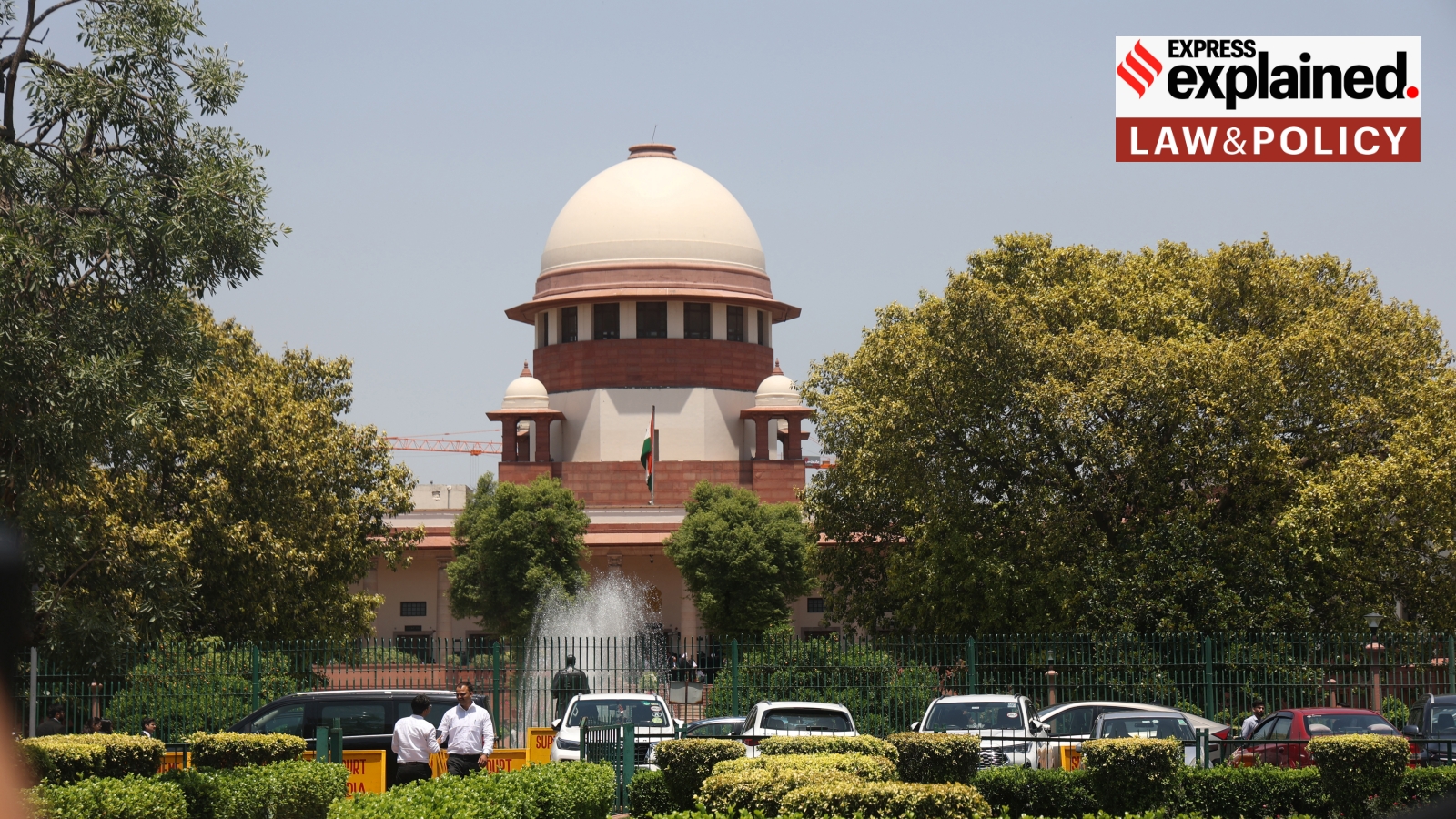
The Indian Express report on the Supreme Court’s notice to the Centre and the Chief Justice of India concerning judicial appointments. Issuing notice does not establish wrongdoing or resolve the dispute.
Image: Indian Express
Why in news
The reported notice brings the constitutional framework for judicial appointments and the functioning of the collegium into focus. The supplied material does not include the petition or judicial order, so the specific grounds, parties’ arguments and scope of the proceedings cannot be verified.
Background
The Constitution provides for presidential appointment of Supreme Court judges under Article 124 and High Court judges under Article 217, following constitutionally prescribed consultation. The collegium is not expressly mentioned in the constitutional text; it evolved through the Supreme Court’s interpretation of the appointments provisions in the Judges Cases. The present framework combines judicial primacy in selecting candidates with executive participation in processing appointments. Independence of the judiciary forms part of the Constitution’s basic structure, but this does not place the appointments process beyond scrutiny.
What the reported notice does—and does not—mean
A judicial notice ordinarily calls upon the addressee to respond before the court determines the matter. It is a procedural step, not a finding that an appointment was unlawful or that any institution acted improperly.
The headline alone does not establish whether the dispute concerns eligibility, consultation, delay, transparency or another aspect of appointments. Analysis must therefore distinguish the reported procedural development from the wider constitutional debate.
- The notice should not be described as an order striking down an appointment or changing the collegium system.
- The CJI’s reported inclusion does not, by itself, establish personal wrongdoing or an institutional conflict of interest.
- The petition and court order are necessary to identify the precise relief sought and the legal questions involved.
Infographic
Independence
Protect selection from improper political influence.
Collective consultation
Ensure institutional judgement rather than individual discretion.
Transparency
Publish criteria and appropriate reasons with privacy safeguards.
Accountability
Make procedural compliance and responsibility identifiable.
Timeliness
Plan vacancies and monitor processing at each stage.
Representation
Broaden the candidate pool while preserving merit and integrity.
AI-assisted infographic by Pragnya IAS Academy, based on the cited sources.
Constitutional design: appointment through institutional consultation
Article 124 governs appointments to the Supreme Court. Article 217 governs appointments to High Courts and provides for consultation with the CJI, the Governor of the State and, when appointing a judge other than the Chief Justice, the Chief Justice of the High Court concerned. Article 222 separately deals with transfers of High Court judges.
The President is the formal appointing authority. However, the operative meaning of consultation has been shaped by judicial decisions, making appointments neither an exclusively executive choice nor a process conducted by the CJI acting alone.
- Judicial primacy aims to protect courts from political pressure in adjudication.
- Executive participation provides a channel for relevant background information and constitutional processing.
- Article 50 directs the State to separate the judiciary from the executive in the public services of the State; it does not itself create the collegium.
The collegium: judicial primacy, not individual discretion
The First Judges Case favoured executive primacy in the consultation process. The Second Judges Case established judicial primacy, while the Third Judges Case clarified the requirement of collective judicial consultation. The CJI’s institutional opinion must therefore emerge through the prescribed consultative process rather than personal preference.
The collegium recommends candidates, while the executive processes recommendations and may seek reconsideration under the applicable framework. A duly reiterated recommendation carries binding force under the settled appointments framework. The Memorandum of Procedure sets out the working arrangements for appointments.
Judicial review of appointments is limited: constitutional eligibility and compliance with the required consultation process are distinct from a fresh judicial reassessment of a candidate’s suitability.
- Eligibility concerns constitutional qualifications and legal requirements.
- Suitability concerns the institutional assessment of merit, integrity and fitness for judicial office.
- Judicial primacy does not dispense with collective deliberation or constitutional procedure.
Independence, transparency and accountability must reinforce one another
Judicial independence protects citizens by enabling courts to decide disputes involving the government without fear or favour. Yet an appointments process that does not adequately explain its criteria can weaken confidence in the fairness of selection.
Transparency must be calibrated. Published criteria, procedural clarity and suitably reasoned decisions can strengthen accountability, while indiscriminate disclosure of personal information or unverified allegations may damage candidates and inhibit candid consultation.
The Supreme Court invalidated the National Judicial Appointments Commission framework for violating judicial independence, a basic-structure requirement. This does not foreclose reform; it requires any alternative or procedural improvement to preserve the judiciary’s effective independence.
- Accountability should focus on fair procedures, recorded reasons and institutional responsibility rather than political control.
- Diversity should be considered alongside merit and integrity to broaden the experience represented on the Bench.
- Timely action by both the judiciary and the executive is essential to prevent the appointments process from impairing access to justice.
| Institution or mechanism | Role and constitutional significance |
|---|---|
| President | Formally appoints Supreme Court and High Court judges under the relevant constitutional provisions. |
| Collegium | Exercises the judicial consultative role through collective recommendations; it is a product of constitutional interpretation. |
| Union executive | Processes recommendations, supplies relevant inputs and may seek reconsideration within the applicable framework. |
| Governor | Is a constitutional consultee in High Court appointments under Article 217. |
| Memorandum of Procedure | Provides the operational framework for processing appointments; it is not a substitute for the Constitution. |
| Judicial review | Examines limited legal questions such as eligibility and required consultation, rather than conducting a fresh selection exercise. |
- 1. A proposal originates through the applicable judicial appointments process.
- 2. The prescribed consultations and assessment of relevant material take place.
- 3. The Supreme Court collegium considers and recommends names under the applicable procedure.
- 4. The Union executive processes the recommendation and may seek reconsideration.
- 5. Any reconsideration is addressed through the prescribed collegium process.
- 6. The appointment is formally made by the President.
Original constitutional framework
The Constitution provides for presidential appointment of judges through prescribed consultation.
First Judges Case
The Supreme Court interprets consultation in a manner favouring executive primacy.
Second Judges Case
The Supreme Court establishes judicial primacy and the foundation of the collegium system.
Third Judges Case
The Court clarifies the collective consultation required for judicial recommendations.
NJAC judgment
The Supreme Court invalidates the NJAC framework on basic-structure grounds, preserving the collegium system.
Significance, challenges & way forward
Significance
- Independent appointments help courts protect fundamental rights and review executive and legislative action without political dependence.
- Transparent criteria and fair procedures strengthen public confidence in the legitimacy of judicial institutions.
- Clear institutional responsibilities reduce friction between the judiciary and the executive.
- Timely appointments support access to justice by helping courts maintain their adjudicatory capacity.
Challenges
- Insufficient visibility into selection criteria can create perceptions of favouritism even when individual recommendations are defensible.
- Delay at different stages can make responsibility difficult to identify and prolong vacancies.
- Excessive disclosure can expose candidates to reputational harm from confidential or unverified material.
- Executive influence can threaten independence, while unaccountable judicial discretion can weaken institutional credibility.
- Improving representation across gender, social backgrounds and regions requires a wider candidate pool without compromising competence or integrity.
Way forward
- Publish clear criteria for assessing merit, integrity, professional competence and relevant experience.
- Release suitably reasoned collegium resolutions while protecting privacy and sensitive information.
- Strengthen dedicated administrative support for vacancy tracking, candidate records and continuity in the appointments process.
- Use clear processing schedules and stage-wise monitoring to make delays attributable without prejudging individual cases.
- Broaden the pool of eligible candidates and explain how institutional needs and diversity inform selection.
- Pursue reforms through constitutional dialogue while preserving judicial independence and collective consultation.
Key terms
- Collegium
- A judicial consultative mechanism through which the CJI and designated senior judges formulate recommendations on appointments and transfers.
- Judicial primacy
- The decisive weight accorded to the judiciary’s collectively formed opinion within the appointments framework.
- Memorandum of Procedure
- The procedural framework governing the processing of appointments to the higher judiciary.
- Basic structure doctrine
- The principle that Parliament’s constitutional amending power cannot destroy the Constitution’s fundamental features.
- Reiteration
- The collegium’s reaffirmation of a recommendation after reconsidering objections or material returned by the executive.
- Judicial independence
- The institutional and decisional freedom necessary for courts to adjudicate impartially, without improper external influence.
Link with static syllabus
Prelims practice MCQs
Q1. With reference to appointments to the higher judiciary, consider the following statements: 1. The Constitution expressly uses the term collegium to describe the appointments mechanism. 2. The President formally appoints judges of the Supreme Court and High Courts. 3. The collegium system evolved through judicial interpretation. Which of the statements given above are correct?
Q2. Consider the following pairs: 1. Article 124: Appointment of Supreme Court judges 2. Article 217: Appointment of High Court judges 3. Article 222: Transfer of High Court judges Which of the pairs given above are correctly matched?
Q3. With reference to the constitutional evolution of judicial appointments, consider the following statements: 1. The Second Judges Case established judicial primacy in appointments. 2. The Third Judges Case clarified the requirement of collective judicial consultation. 3. The NJAC framework was upheld as consistent with the basic structure of the Constitution. Which of the statements given above are correct?
Q4. Which of the following best describes Article 50 of the Constitution?
Mains practice questions
GS 2 · 15 marks · 250 words
Judicial independence and accountability are complementary constitutional objectives. Examine this proposition in the context of the collegium system and suggest reforms to judicial appointments.
Frequently asked questions
Does issuing notice mean the Supreme Court has found an appointment illegal?
No. Notice ordinarily seeks a response before adjudication and does not, by itself, establish illegality or misconduct.
Is the collegium expressly mentioned in the Constitution?
No. It evolved through judicial interpretation of the constitutional provisions governing appointments and consultation.
Can the executive participate in judicial appointments?
Yes. The executive processes recommendations, supplies relevant inputs and may seek reconsideration, but its role is constrained by the framework of judicial primacy.
Does the NJAC judgment prevent all reform of judicial appointments?
No. Reform remains possible, but it must preserve judicial independence and comply with the Constitution’s basic structure.
Sources
Analysis prepared by the Pragnya IAS Academy current-affairs desk with AI assistance from the cited reports. Verify figures with the original sources.
Turn current affairs into marks
Join Pragnya IAS Academy's mentorship for daily answer-writing evaluation on stories like this — classroom programmes from a trusted name in IAS coaching in Hyderabad.