
Karakoram-2026: China–Pakistan Military Integration and India’s Two-Front Challenge
Revise the static topic: UPSC Internal Security notes
In short: China and Pakistan held Karakoram-2026 in Xinjiang from October 14–22, involving regular army formations, joint command arrangements and mixed combat teams. The exercise indicates movement beyond defence supplies towards greater operational interoperability, requiring India to prepare for potentially coordinated military pressure without assuming that a formal alliance or integrated war plan already exists.
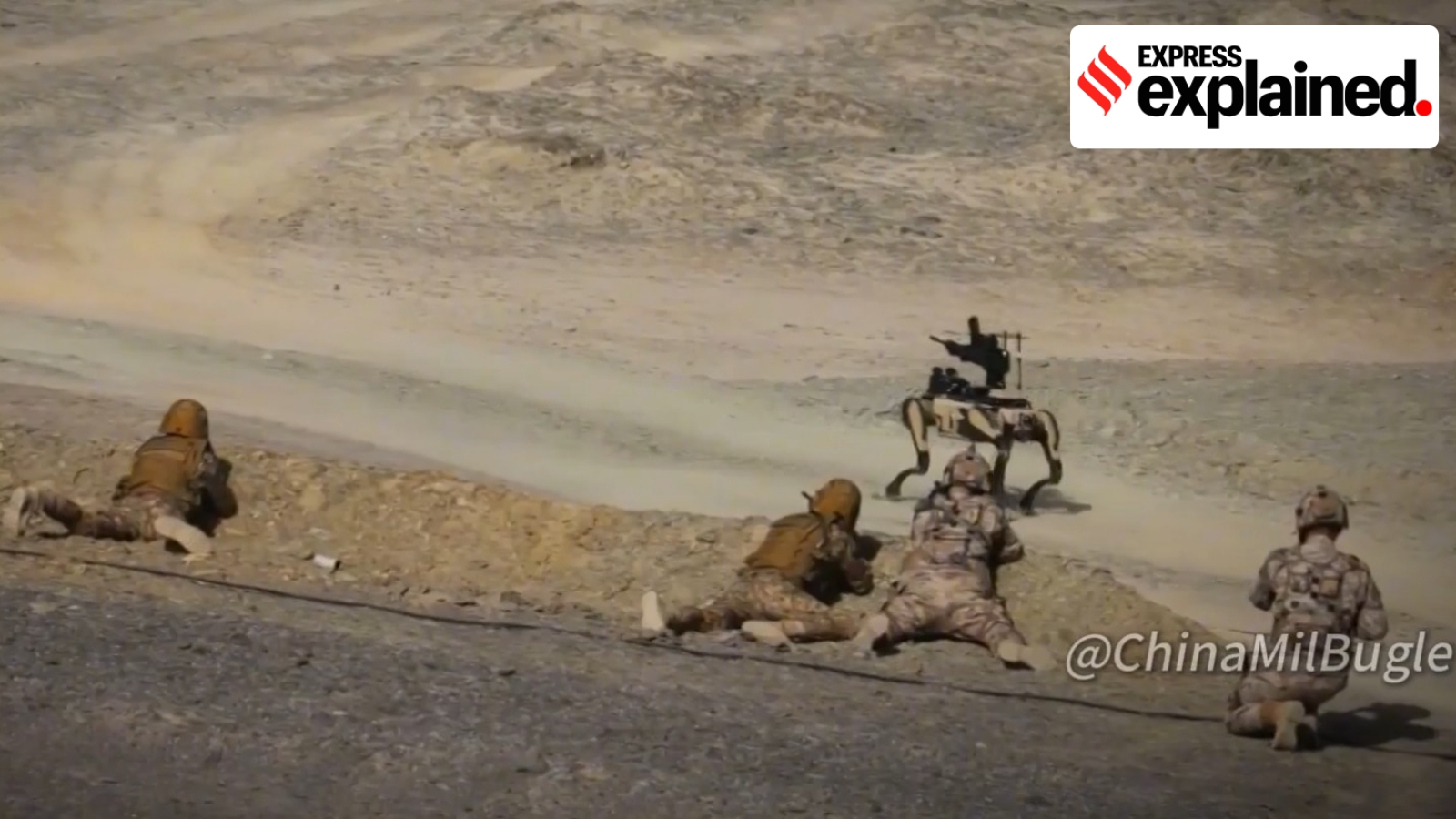
Photo from the source report: Karakoram-2026: China–Pakistan Military Integration and India’s Two-Front Challenge
Image: Indian Express
Why in news
The Indian Express describes the recently concluded Karakoram-2026 as the first joint army-level exercise between the People’s Liberation Army and Pakistan Army. Its high-altitude focus and mixed-formation training are significant for India’s northern security environment.
October 14–22, 2026
Exercise period
4,700 metres
Reported Mantika Pass patrol altitude
Background
China–Pakistan relations combine strategic alignment, defence cooperation and economic engagement, but do not constitute a formal military alliance. The 1963 Sino-Pakistan Boundary Agreement concerned territory in the Shaksgam Valley that India regards as its own and Pakistan transferred to China; India rejects the agreement’s validity. China’s subsequent assistance to Pakistan’s nuclear and missile capabilities and its role as a defence supplier have shaped the regional balance. For India, the Line of Actual Control with China and the Line of Control with Pakistan represent distinct but potentially interacting security theatres.
What Karakoram-2026 demonstrated
According to the supplied report, Karakoram-2026 was the first joint army-level exercise involving regular formations of the PLA and Pakistan Army. This does not mean that it was their first military or land-based training engagement: it built upon earlier naval, air and counterterrorism exercises.
The exercise’s operational significance lay in its progression from specialised tactical training to joint command, mixed formations and coordinated manoeuvres. Chinese equipment provided a common platform base, potentially reducing compatibility barriers during training.
- The first phase, up to October 19, covered specialised tactics, close-quarter combat and drone operations.
- The second phase involved counterterrorism clearance operations, joint manoeuvres and coordinated fire drills by mixed combat teams.
- Equipment included Chinese small arms, armoured assault vehicles, infantry fighting vehicles, artillery and drones.
- The high-altitude setting was relevant to the PLA Western Theatre Command, which oversees China’s border with India.
Infographic
Operational shift
Mixed teams and joint command practice deepen interoperability.
Strategic geography
Xinjiang and the Karakoram connect training to India’s northern security environment.
Two-front preparedness
Plan for simultaneous, staggered and indirect pressure.
Resilient capability
Prioritise logistics, surveillance, air defence and domestic sustainment.
Calibrated deterrence
Combine military readiness with communication and neighbourhood engagement.
AI-assisted infographic by Pragnya IAS Academy, based on the cited sources.
From arms transfers to functional interoperability
A buyer–supplier relationship provides military hardware; interoperability additionally requires compatible procedures, communications, command arrangements and training. Mixed teams and joint command practice therefore indicate a deeper form of cooperation than equipment familiarisation alone.
The report also describes a joint security patrol at Mantika Pass in Gilgit-Baltistan. Taken together, exercises and patrols suggest a widening institutional relationship, although they do not establish a permanent combined command or an automatic commitment to fight together.
- Common platforms can simplify equipment familiarisation and create opportunities for shared maintenance and training.
- Repeated training can improve operational vocabulary, procedural compatibility and coordination.
- Claims about Pakistani officers serving in key Chinese formations are attributed to intelligence reports and should not be treated as independently verified deployments.
- Exercise interoperability is evidence of growing capability, not proof of a predetermined joint offensive plan.
India’s two-front challenge: coordination without simultaneous war
A two-front challenge need not involve simultaneous full-scale wars. It can take the form of pressure on one frontier while the other adversary supplies equipment, shares information or undertakes deployments that constrain India’s ability to redeploy forces. The relevant planning problem is the convergence of capabilities and timing, not merely the geographical existence of two borders.
During the May 2025 crisis surrounding Operation Sindoor, the report cites evidence of accelerated Chinese deliveries of missiles, air-defence and electronic platforms to Pakistan. The reported deliveries illustrate why crisis-time external support deserves attention; Pakistan’s claims about Chinese weapons’ combat performance remain claims rather than independently established assessments.
- India should assess concurrent and staggered contingencies rather than rely on a single two-front war scenario.
- High-altitude logistics, surveillance and reserve mobility become especially important when demands arise across separate theatres.
- Drone operations, electronic warfare and air defence require coordinated responses across the armed forces.
- Operational planning should account for replenishment and external support to an adversary during a crisis.
Regional deterrence and the wider neighbourhood
Closer China–Pakistan cooperation may strengthen Pakistan’s confidence in access to equipment and support, while enabling China to complicate India’s strategic choices. However, common strategic interests do not eliminate differences in political objectives, escalation tolerance or willingness to enter a conflict.
The report also discusses Bangladesh’s plans to acquire Chinese J-10CE fighters, prospective Pakistani pilot training at Jessore, and discussions on radar and tank cooperation. These are developments to monitor, not evidence of an established China–Pakistan–Bangladesh military bloc. India should distinguish procurement plans, discussions and actual operational deployments.
- Deterrence should combine credible defence capability with clear political signalling and crisis communication.
- Proximity to the Siliguri corridor makes developments in Bangladesh strategically relevant, but proximity alone does not establish hostile intent.
- Sustained engagement with neighbouring countries can reduce the space for security polarisation.
- Overstating an emerging bloc risks weakening diplomatic options and encouraging threat inflation.
Sovereignty, geography and strategic preparedness
The Xinjiang–Karakoram setting connects the exercise to a sensitive strategic geography involving Ladakh, the China–Pakistan frontier and Pakistan-occupied territory. India’s objections to the 1963 boundary agreement remain relevant when assessing military activity around Gilgit-Baltistan and the Shaksgam Valley.
India’s response should integrate diplomatic, military, technological and industrial instruments. Priorities include joint planning, resilient border logistics, secure communications, domestic sustainment capacity and intelligence assessments that distinguish observed capabilities from inferred intentions.
- Maintain a consistent sovereignty position without allowing territorial rhetoric to substitute for capability development.
- Develop a shared assessment of threats across military services and civilian agencies.
- Link procurement to realistic operational scenarios and lifecycle sustainment needs.
- Preserve crisis-management channels alongside stronger deterrence.
| Dimension | What the source indicates | What cannot automatically be inferred |
|---|---|---|
| Equipment | Chinese platforms are central to the exercise and increasingly embedded in Pakistan’s inventory. | Complete compatibility across all weapons, communications and support systems. |
| Training | Joint command practice, mixed formations and coordinated fire drills. | A permanent integrated wartime command. |
| Crisis support | Reported accelerated Chinese military deliveries during the May 2025 crisis. | An automatic Chinese commitment to enter a war alongside Pakistan. |
| Border engagement | A reported joint patrol at Mantika Pass in Gilgit-Baltistan. | A verified joint offensive plan against India. |
| Regional outreach | Bangladesh-related procurement plans, prospective training and defence discussions. | An established trilateral military alliance. |
- 1. Defence supplies create a common equipment base.
- 2. Repeated training builds familiarity and shared procedures.
- 3. Joint command practice improves coordination between formations.
- 4. Mixed-team exercises test interoperability in selected tasks.
- 5. India must assess the resulting potential for coordinated pressure, without assuming an automatic joint war commitment.
1963
The Sino-Pakistan Boundary Agreement addressed the Shaksgam Valley; India rejects its validity.
May 2025
India launched Operation Sindoor against terrorist infrastructure in Pakistan; the source reports accelerated Chinese military supplies to Pakistan during the crisis.
October 14, 2026
Karakoram-2026 began in Xinjiang, involving regular army formations from China and Pakistan.
Up to October 19, 2026
The first phase covered specialised tactics, close-quarter combat and drone operations.
October 22, 2026
The exercise concluded after a second phase involving joint command, mixed teams, manoeuvres and coordinated fire drills.
Significance, challenges & way forward
Significance
- Karakoram-2026 indicates a qualitative shift from platform acquisition towards practising military coordination.
- High-altitude training links the exercise to terrain and operational demands relevant to India’s northern frontier.
- Potentially coordinated pressure can constrain India’s force allocation even without simultaneous full-scale conflict.
- Crisis-time replenishment highlights the strategic importance of domestic production, stock resilience and diversified supply chains.
- The exercise reinforces the need to assess China–Pakistan cooperation across military, diplomatic and geographical dimensions.
Challenges
- The depth of actual wartime interoperability remains uncertain because exercise arrangements may not translate fully into combat effectiveness.
- India must balance preparedness across separate theatres without dispersing scarce high-value capabilities excessively.
- High-altitude infrastructure and sustainment face difficult terrain, weather and connectivity constraints.
- Unverified deployment claims and politically motivated weapons-performance narratives can distort threat assessment.
- Military signalling intended to deter can increase misperception if not accompanied by clear communication.
Way forward
- Use scenario-based joint planning to test simultaneous, staggered and indirect forms of two-front pressure.
- Strengthen integrated surveillance, secure communications and intelligence fusion across services and agencies.
- Improve border logistics, redundant connectivity and the mobility of reserves.
- Prioritise counter-drone capability, electronic resilience and coordinated air defence.
- Expand indigenous maintenance, ammunition production and reliable replenishment arrangements.
- Combine credible deterrence with crisis communication and sustained diplomatic engagement across the neighbourhood.
Key terms
- Interoperability
- The ability of different forces or systems to operate together effectively through compatible procedures, communications and equipment.
- Mixed formations
- Training or operational groupings that combine personnel or elements from participating forces for specified tasks.
- Two-front challenge
- The risk of military pressure across the China and Pakistan fronts, whether simultaneous, staggered or mutually supporting.
- Deterrence by denial
- Discouraging aggression by convincing an adversary that it is unlikely to achieve its objectives.
- Western Theatre Command
- The PLA theatre command responsible for China’s western strategic direction, including its border with India.
- Escalation management
- Measures to prevent a confrontation from expanding in intensity, geographical scope or types of force employed.
Link with static syllabus
Prelims practice MCQs
Q1. With reference to Karakoram-2026, consider the following statements: 1. It was held in the Xinjiang Uyghur Autonomous Region. 2. Its second phase involved joint command arrangements and mixed combat teams. 3. It established a formal mutual-defence alliance between China and Pakistan. Which of the statements given above are correct?
Q2. Consider the following pairs: 1. Shaksgam Valley — Territory associated with the 1963 Sino-Pakistan Boundary Agreement 2. Siliguri corridor — Land connection between India’s North-East and the rest of the country 3. Xinjiang — Location of Karakoram-2026 How many of the above pairs are correctly matched?
Q3. In military affairs, interoperability most appropriately refers to:
Q4. With reference to India’s potential two-front security challenge, consider the following statements: 1. It can arise only when China and Pakistan simultaneously launch full-scale wars. 2. Pressure on one frontier may constrain India’s redeployment towards another frontier. 3. Military replenishment supplied to an adversary during a crisis can affect the regional balance. Which of the statements given above are correct?
Mains practice questions
GS 3 · 15 marks · 250 words
China–Pakistan military cooperation increasingly extends beyond defence supplies towards operational interoperability. Examine its implications for India’s strategic preparedness and regional deterrence.
Frequently asked questions
Why is Karakoram-2026 important for India?
Its high-altitude training, joint command arrangements and mixed combat teams indicate deeper China–Pakistan military coordination. India must assess how this could complicate frontier preparedness, reserve allocation and crisis management.
Does the exercise establish a China–Pakistan military alliance?
No. The source describes a longstanding partnership, not a formal alliance; joint exercises do not by themselves create an automatic obligation to fight together.
Does a two-front challenge necessarily mean simultaneous war?
No. It can also involve staggered military pressure, diversionary deployments or material support that restricts India’s options during a crisis.
Has a China–Pakistan–Bangladesh military bloc been established?
The source does not establish such a bloc. It discusses procurement plans, prospective training and defence consultations, which must be distinguished from binding commitments or operational integration.
Sources
- Indian Express: Karakoram-2026: How China and Pakistan are deepening military ties — and what it means for India
Analysis prepared by the Pragnya IAS Academy current-affairs desk with AI assistance from the cited reports. Verify figures with the original sources.
Turn current affairs into marks
Join Pragnya IAS Academy's mentorship for daily answer-writing evaluation on stories like this — classroom programmes from a trusted name in IAS coaching in Hyderabad.