
Supreme Court on FRA: Forest Livelihood Rights Versus Commercial Plantation Claims
Revise the static topic: UPSC Environment notes
In short: The Supreme Court has expressed a prima facie view that planned or promoted commercial crop cultivation inside forests cannot itself justify occupation under the Forest Rights Act, 2006. In a case concerning silk cotton cultivation in the Agasthyamalai Biosphere Reserve, it distinguished such claims from the livelihood and minor forest produce rights of eligible forest-dwelling communities.
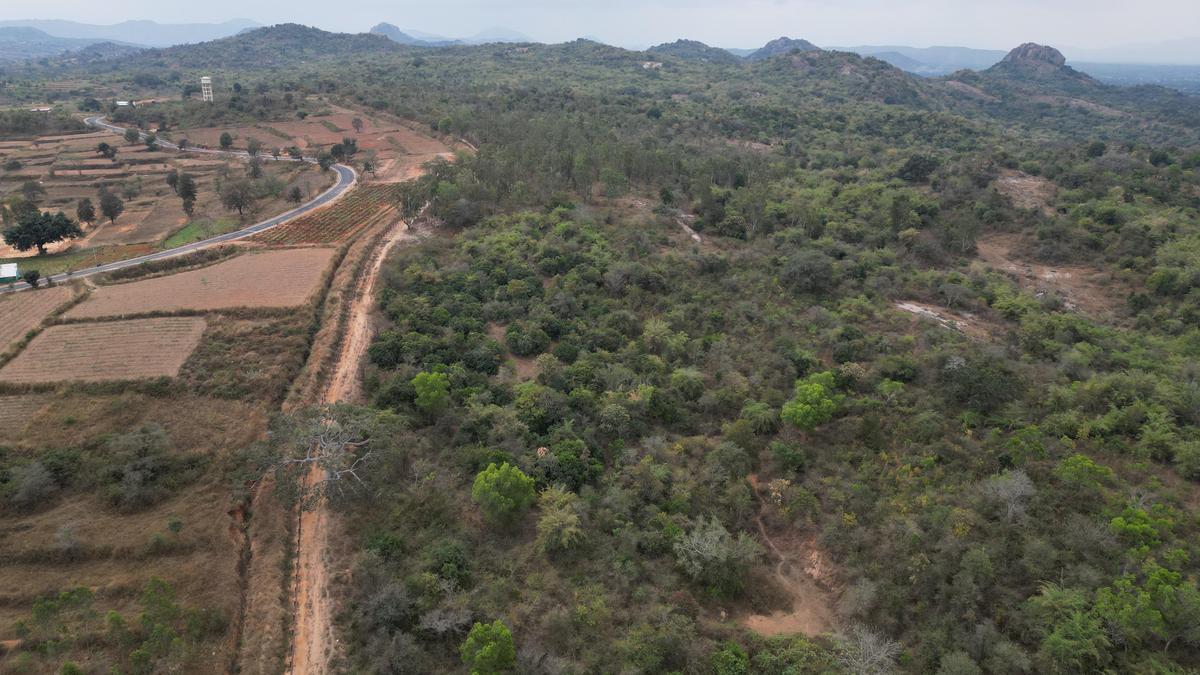
The Supreme Court expressed a prima facie view that commercial crop cultivation in forests cannot itself justify occupation under the Forest Rights Act, distinct from eligible communities’ livelihood and minor forest produce rights.
Image: The Hindu
Why in news
In its November 6 order, the Supreme Court directed the Central Empowered Committee to examine Tamil Nadu’s position that silk cotton constituted minor forest produce. The Bench questioned the use of extensive commercial cultivation to justify cultivators’ continued presence in reserve forests.
3,637.83 hectares
Area under silk cotton cultivation in the case
5,072.64 hectares
Forest land referred to in the case
Background
The Scheduled Tribes and Other Traditional Forest Dwellers (Recognition of Forest Rights) Act, 2006 seeks to remedy historical injustice arising from the non-recognition of forest-dependent communities’ customary rights. It recognises individual and community rights, including habitation, self-cultivation for livelihood, access to minor forest produce and community forest resource management, subject to statutory eligibility and verification. Forest-dwelling Scheduled Tribes and Other Traditional Forest Dwellers are distinct eligible categories; the latter must establish the longer historical residence and dependence required by the Act. The Gram Sabha initiates the recognition process, while rights holders and community institutions also have conservation responsibilities.
What the Supreme Court observed
A Bench of Justices Vikram Nath and Sandeep Mehta considered extensive silk cotton cultivation within reserve forests of the Agasthyamalai Biosphere Reserve. According to the report, the court found that Tamil Nadu’s affidavits indicated promotion and sponsorship of silk cotton as a commercial crop rather than merely the collection of naturally occurring forest produce.
The Bench expressed a prima facie view that planned commercial cultivation inside forests could not be recognised as a forest right to justify occupation or continued presence. It also observed that commercial cultivation could change the character of forests and that large forest areas had been destroyed under the guise of silk cotton cultivation.
The procedural distinction is important: the court directed further examination by the Central Empowered Committee. The reported order should not be presented as a final determination of every claimant’s eligibility or a conclusive classification of silk cotton in all circumstances.
- The immediate dispute concerns commercial cultivation and the justification for forest occupation.
- The State’s historical-cultivation argument was questioned, not accepted as sufficient proof of a protected right.
- The Central Empowered Committee was asked to examine the State’s minor forest produce claim.
Infographic
Eligible claimant
Establish statutory status, forest dependence and historical conditions.
Recognised livelihood
Protect qualifying cultivation, produce access and community rights.
Commercial distinction
Sale of collected produce is not the same as a plantation occupation claim.
Due process
Verify claims through statutory institutions before adverse action.
Conservation
Prevent forest degradation and strengthen community stewardship.
AI-assisted infographic by Pragnya IAS Academy, based on the cited sources.
Who is eligible under the FRA?
Eligibility is not established merely by cultivating a crop on forest land. Forest-dwelling Scheduled Tribes must satisfy the Act’s residence and livelihood-dependence requirements; Other Traditional Forest Dwellers must additionally establish the prescribed historical duration of forest residence and dependence.
Claims to occupied forest land must satisfy the statutory temporal conditions and be verified through the recognition process. The Act protects qualifying habitation and self-cultivation for livelihood, but it does not authorise fresh occupation, unrestricted expansion or automatic recognition of plantation ownership.
- Distinguish the claimant’s eligibility from the particular right being claimed.
- Distinguish existing qualifying occupation from new encroachment or plantation expansion.
- Community forest rights extend beyond individual agricultural holdings.
Minor forest produce rights are not plantation licences
Section 3(1)(c) recognises ownership, access to collect, use and dispose of minor forest produce traditionally collected within or outside village boundaries. The statutory definition covers non-timber forest produce of plant origin, including products such as bamboo, honey, wax, tendu leaves, medicinal plants and roots.
Disposal includes sale; therefore, earning income from lawfully collected minor forest produce does not by itself extinguish FRA protection. The issue highlighted by the court is different: whether planned commercial crop cultivation can be treated as a recognised forest right and used to justify occupation.
The court’s reference to naturally occurring produce must be understood in the context of the disputed cultivation. A commodity’s possible classification as minor forest produce does not, by itself, establish a right to cultivate it commercially or occupy forest land.
- Sale of recognised minor forest produce and a commercial plantation claim are legally distinct.
- Self-cultivation for livelihood is a recognised category, subject to eligibility and verification.
- The nature of the activity, its history and the legal basis of occupation require separate examination.
Due process and conservation must operate together
The FRA provides that eligible forest-dwelling Scheduled Tribes and Other Traditional Forest Dwellers cannot be evicted or removed from occupied forest land until the recognition and verification procedure is complete. The reported observations therefore should not be treated as a substitute for claimant-specific verification and statutory safeguards.
The Gram Sabha initiates claims verification; claims then pass through the statutory sub-divisional and district-level institutions. The Central Empowered Committee’s examination in this litigation is distinct from these ordinary recognition institutions.
The Act also empowers rights holders and community institutions to protect forests, wildlife and biodiversity. The policy objective should be to prevent commercial misuse while securing legitimate livelihoods, rather than treating rights recognition and conservation as mutually exclusive.
- Give claimants notice, an opportunity to present evidence and reasoned decisions.
- Use ecological assessment alongside historical and livelihood evidence.
- Avoid blanket assumptions that every cultivator is eligible or that every market-linked livelihood is illegal.
| Issue | Position under the FRA | Implication for this case |
|---|---|---|
| Habitation and self-cultivation | Recognisable for eligible claimants when statutory conditions are met. | Cultivation alone does not establish entitlement; claimant eligibility and occupation history matter. |
| Minor forest produce | Ownership, collection, use and disposal are recognised under Section 3(1)(c). | Lawful sale of collected produce is distinct from claiming a right to run a plantation. |
| Planned commercial cultivation | The court’s prima facie view rejects it as an independent basis for recognition and continued forest occupation. | State promotion or asserted historical cultivation does not automatically establish a forest right. |
| Community forest resource management | Communities may claim rights to protect, regenerate, conserve and manage qualifying customary forest resources. | Forest governance must consider community stewardship as well as individual claims. |
| Protection against removal | The Act safeguards eligible occupants until recognition and verification are complete. | Commercial misuse must be addressed without bypassing statutory procedures. |
- 1. Identify the claimant’s statutory category and establish residence and forest dependence.
- 2. Identify the precise right claimed: livelihood cultivation, minor forest produce access or a community right.
- 3. Verify occupation history, applicable temporal conditions and supporting evidence.
- 4. Distinguish recognised livelihood activity from plantation expansion or an unsupported commercial occupation claim.
- 5. Process the claim through the Gram Sabha and statutory committees with procedural safeguards.
- 6. Align the final decision and any subsequent action with recognised rights and conservation duties.
2006
The Forest Rights Act was enacted to recognise qualifying individual and community forest rights.
November 6
The Supreme Court expressed its prima facie view on planned commercial cultivation and directed the Central Empowered Committee to examine Tamil Nadu’s silk cotton classification claim.
Significance, challenges & way forward
Significance
- The observations reinforce that the FRA is a rights-recognition law, not a general route to regularise commercial occupation of forests.
- The case clarifies the need to separate rights over forest produce from claims to cultivate or occupy forest land.
- Scrutiny of plantation expansion can help protect forest structure, habitat integrity and biodiversity.
- Careful interpretation preserves legitimate livelihood cultivation and income from minor forest produce.
Challenges
- Customary use and historical occupation can be difficult to establish where documentary records are incomplete.
- Market-linked subsistence livelihoods may be wrongly equated with commercial plantation operations.
- State support for cultivation can complicate accountability without itself establishing FRA eligibility.
- Blanket enforcement can undermine pending claims and statutory protection against premature removal.
- The reported order leaves the specific minor forest produce classification question subject to further examination.
Way forward
- Undertake claimant-specific verification rather than treating all occupants or all cultivated areas as legally identical.
- Strengthen Gram Sabha participation, access to records and reasoned consideration of legally admissible evidence.
- Examine the commodity’s classification, the nature of cultivation and the basis of occupation as separate questions.
- Combine ecological assessment with livelihood mapping to identify forest degradation without prejudging legitimate rights.
- Prevent fresh plantation expansion while completing recognition procedures and observing applicable legal safeguards.
- Support sustainable minor forest produce value chains and community-led restoration consistent with recognised rights.
Key terms
- Forest Rights Act
- The law recognising specified individual and community rights of eligible forest-dwelling Scheduled Tribes and Other Traditional Forest Dwellers.
- Other Traditional Forest Dweller
- A statutory category requiring proof of the prescribed historical forest residence and dependence for bona fide livelihood needs.
- Minor forest produce
- Non-timber forest produce of plant origin covered by the FRA, with recognised rights of ownership, collection, use and disposal.
- Community forest resource
- Customary common forest land within traditional village boundaries or seasonal-use landscapes over which qualifying community management rights may be recognised.
- Prima facie view
- A preliminary judicial assessment that should not be confused with a final adjudication of every disputed issue.
- Central Empowered Committee
- An expert body assisting scrutiny of forest and environmental matters, directed in this case to examine the State’s silk cotton claim.
Link with static syllabus
Prelims practice MCQs
Q1. With reference to minor forest produce under the Forest Rights Act, 2006, consider the following statements: 1. Section 3(1)(c) recognises rights to collect, use and dispose of minor forest produce. 2. Selling lawfully collected minor forest produce necessarily removes it from FRA protection. Which of the statements given above is/are correct?
Q2. Which institution initiates the process of determining individual or community forest rights under the Forest Rights Act?
Q3. Consider the following statements about the reported Supreme Court order on silk cotton cultivation: 1. The court expressed a prima facie view against treating planned commercial cultivation as a forest right justifying occupation. 2. The court directed the Central Empowered Committee to examine Tamil Nadu’s claim that silk cotton was minor forest produce. 3. The court conclusively prohibited every sale of forest produce by FRA rights holders. Which of the statements given above are correct?
Q4. With reference to the Forest Rights Act, consider the following statements: 1. Cultivation on forest land automatically establishes eligibility for recognition of rights. 2. Community rights under the Act are confined to individual agricultural plots. Which of the statements given above is/are correct?
Mains practice questions
GS 3 · 15 marks · 250 words
Distinguish recognised livelihood rights under the Forest Rights Act, 2006 from commercial plantation claims. How can forest governance protect legitimate claimants while preventing ecological degradation?
Frequently asked questions
Has the Supreme Court banned all cultivation protected by the FRA?
The reported order does not establish such a blanket ban. It questions planned commercial cultivation as a basis for forest occupation, while qualifying self-cultivation for livelihood remains a recognised statutory category.
Can FRA rights holders sell minor forest produce?
Yes. Recognised minor forest produce rights include disposal, which encompasses sale; selling collected produce is distinct from claiming a right to establish a commercial plantation.
Has silk cotton been finally ruled out as minor forest produce?
The supplied report does not establish a final classification. The Supreme Court directed the Central Empowered Committee to examine Tamil Nadu’s claim.
Does this order automatically authorise eviction of every cultivator?
The reported observations should not be read as a blanket eviction authorisation. Claimant-specific eligibility, recognition procedures and applicable FRA safeguards remain essential.
Sources
Analysis prepared by the Pragnya IAS Academy current-affairs desk with AI assistance from the cited reports. Verify figures with the original sources.
Turn current affairs into marks
Join Pragnya IAS Academy's mentorship for daily answer-writing evaluation on stories like this — classroom programmes from a trusted name in IAS coaching in Hyderabad.