
UPI MDR Rollout: Funding Payment Infrastructure Without Weakening Merchant Acceptance
Revise the static topic: UPSC Economy notes
In short: The proposed merchant discount rate on select person-to-merchant UPI transactions had no newly notified implementation date at the time of the supplied report, despite an earlier announcement of a post-Deepavali rollout. The debate concerns how to finance digital-payment infrastructure without squeezing merchant margins, encouraging cash payments or weakening financial inclusion.
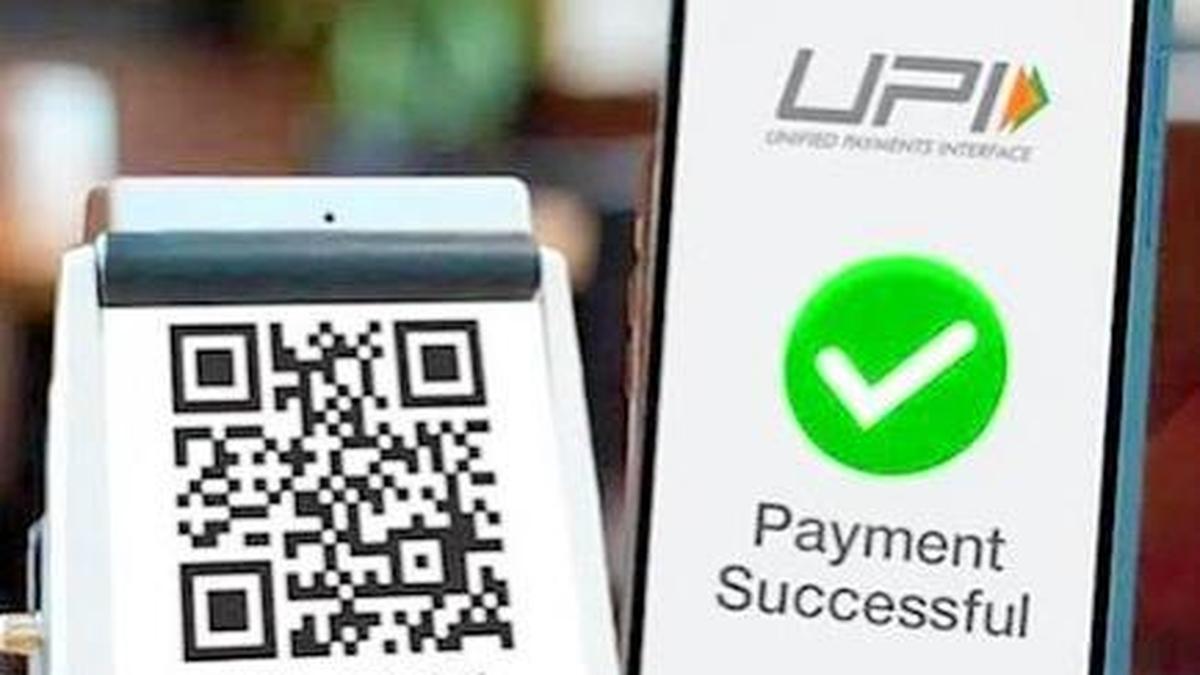
Photo from the source report: UPI MDR Rollout: Funding Payment Infrastructure Without Weakening Merchant Acceptance
Image: The Hindu
Why in news
The Hindu reported that NPCI had not announced a fresh implementation date even two days after Deepavali. The original October 15 rollout had been deferred amid opposition from traders and petrol pump dealers.
Background
Unified Payments Interface, developed by the National Payments Corporation of India, enables interoperable, real-time payments through participating institutions and applications. The Reserve Bank of India regulates payment systems under the Payment and Settlement Systems Act, while NPCI operates retail-payment infrastructure. Merchant discount rate is the charge associated with a merchant accepting a payment through a payment arrangement; it is not automatically a fee payable by the customer. Digital payments require expenditure on processing, cybersecurity, fraud prevention, system availability and grievance redressal, even when users face no transaction charge.
What the report establishes—and what remains unannounced
According to the supplied report, NPCI’s UPI and Services Steering Committee announced on October 13 that MDR on select person-to-merchant UPI transactions would be implemented after Deepavali, with the date to be notified separately. This deferred the originally planned October 15 rollout.
At the time of reporting, NPCI’s spokesperson said there was no announcement on the matter. The proposed levy therefore must not be described as an implemented, universal charge on UPI.
- The reported proposal concerns select person-to-merchant transactions, not all UPI payments.
- The source does not specify the MDR rate, eligible transaction categories, thresholds or exemptions.
- The report does not establish a new implementation date or the precise legal instrument governing the proposal.
- The delay does not, by itself, establish that the proposal has been permanently withdrawn.
Infographic
Status clarity
Deferred proposal; no fresh rollout date in the report.
Legal certainty
Specify coverage and reconcile the levy with applicable law.
Sustainable funding
Finance reliable, secure and efficient payment infrastructure.
Inclusive acceptance
Protect merchant participation and affordable everyday use.
AI-assisted infographic by Pragnya IAS Academy, based on the cited sources.
The economic trade-off: sustainable funding versus acceptance
A payment ecosystem needs predictable funding for processing capacity, operational resilience, fraud controls and merchant support. An MDR can potentially provide a recurring funding stream, but whether it improves services depends on how revenue is allocated and whether providers face incentives to deliver measurable quality.
For merchants, the relevant burden is the charge relative to their margins, not merely relative to turnover. Petrol pump dealers cited in the report argued that an MDR would further squeeze margins because their dealer commission had not been revised for several years.
The ultimate economic burden may differ from the formal liability. A merchant could absorb the cost, discourage digital acceptance or attempt to recover it through prices. The source reports customer apprehension about higher prices; it does not establish that such pass-through has occurred.
- An affordable and reliable payment network benefits both merchants and customers.
- A poorly calibrated levy could reduce merchant acceptance, especially in low-margin businesses.
- Taxpayer-funded support can preserve low user costs but creates a fiscal funding requirement.
- Any funding model should be judged against cost efficiency, service quality and inclusion outcomes.
Legal and institutional clarity must precede implementation
NPCI’s operational role must be distinguished from RBI’s statutory regulatory role and the Government’s responsibility for applicable legislation and policy. A committee announcement or a reported policy discussion is not sufficient evidence that all legal requirements for a levy have been satisfied.
Section 10A of the Payment and Settlement Systems Act prohibits banks and system providers from imposing charges on persons making or receiving payments through electronic modes prescribed under Section 269SU of the Income-tax Act. UPI is among the prescribed modes. A reported proposal involving select UPI transactions therefore requires precise clarification of its instrument coverage and legal basis; the source does not supply enough detail to resolve that question.
UPI is a payment interface, while the underlying funding instrument and transaction category can matter for applicable rules. Without the proposed circular, it would be unsafe either to infer that ordinary bank-account UPI payments are becoming chargeable or to classify the proposal as applying to a particular alternative instrument.
- Identify the underlying payment instrument, covered merchants and transaction category.
- Distinguish a merchant-facing charge from a customer fee and from an inter-participant settlement fee.
- Specify the statutory and regulatory basis before announcing an effective date.
- Communicate any legally valid change through a clear, authoritative notification.
Financial inclusion depends on both sides of the payment network
Financial inclusion requires more than access to an account or application: people must be able to use digital payments at nearby businesses. UPI has two-sided network effects—wider merchant acceptance makes it more useful to consumers, while more users make acceptance more attractive to merchants.
A charge that causes merchants to stop accepting digital payments could weaken everyday usability. Conversely, inadequate funding for reliability, cybersecurity and dispute resolution can also undermine trust, particularly among users with limited capacity to absorb losses or navigate complaints.
The appropriate policy objective is therefore not simply the lowest visible fee. It is a legally compliant, affordable and dependable ecosystem in which funding responsibilities are transparent and vulnerable users and businesses remain protected.
- Assess impacts separately for small merchants, low-margin sectors and underserved locations.
- Measure acceptance, transaction failures and complaint resolution alongside payment activity.
- Avoid abrupt changes that leave merchants and customers uncertain about applicable charges.
| Issue | Supported position | Not established by the source |
|---|---|---|
| Coverage | The proposal concerns select person-to-merchant UPI transactions. | A charge on every UPI transaction or on person-to-person transfers. |
| Timing | The October 15 rollout was deferred; a post-Deepavali date was to be notified separately. | A fresh effective date or completed implementation. |
| Pricing | An MDR levy was proposed. | The rate, thresholds, exemptions or revenue-sharing arrangement. |
| Merchant impact | Traders opposed the proposal; petrol pump dealers raised margin concerns. | A quantified loss of merchant income or measured decline in acceptance. |
| Consumer impact | Customers feared that merchants could pass on costs. | An implemented customer fee or observed price increase. |
- 1. A legally valid MDR, if introduced, creates a payment-acceptance cost for covered merchants.
- 2. Merchants assess the cost against margins and the benefits of digital acceptance.
- 3. They may absorb the cost, seek efficiency gains, alter pricing or discourage digital payments.
- 4. Customers respond to affordability, convenience and continued merchant acceptance.
- 5. The resulting usage and revenue influence infrastructure funding and network participation.
October 13
NPCI announced that the proposed MDR on select person-to-merchant UPI transactions would be implemented after Deepavali, on a date to be notified separately.
October 15
The originally scheduled rollout date had been deferred.
Two days after Deepavali
The Hindu reported that no fresh implementation date had been announced; NPCI said there was no announcement at that moment.
Significance, challenges & way forward
Significance
- The debate brings the long-term financing of digital-payment infrastructure into focus.
- It highlights the importance of merchant acceptance as a foundation of meaningful financial inclusion.
- It shows why low-margin businesses may experience a payment charge differently from higher-margin enterprises.
- Clear differentiation between proposals and implemented rules can prevent misinformation and preserve public trust.
- A transparent funding framework can align payment reliability, innovation and affordability.
Challenges
- The absence of a notified date and detailed coverage creates uncertainty for merchants and payment providers.
- A poorly designed charge could encourage merchants to favour cash or restrict digital acceptance.
- Potential cost pass-through could weaken affordability, although the source provides no evidence that it has occurred.
- Indefinite reliance on public support can raise questions about fiscal sustainability and efficient allocation.
- Revenue collection alone does not ensure better security, uptime or grievance redressal.
- Any proposed levy must be reconciled with the statutory framework governing charges on prescribed electronic payment modes.
Way forward
- Publish an authoritative clarification stating whether the proposal remains under consideration and distinguishing it from currently applicable rules.
- Disclose the proposed transaction coverage, underlying instruments, rates, exemptions and legal basis before implementation.
- Undertake a merchant-impact assessment that examines margins, sectoral conditions and the risk of reduced acceptance.
- Evaluate legally permissible funding options, including targeted budgetary support and efficiency improvements, rather than treating a uniform MDR as the only solution.
- If any charging framework is legally authorised, provide adequate notice and consider a phased approach with protection for vulnerable merchant segments.
- Link financial support and provider incentives to reliability, fraud prevention, transparent settlement and effective complaint resolution.
- Monitor merchant exits, customer complaints and any cost pass-through, and revise policy if inclusion outcomes deteriorate.
Key terms
- Merchant Discount Rate
- A merchant-facing charge associated with accepting a payment through a payment arrangement.
- Person-to-Merchant payment
- A payment by an individual to a merchant for goods or services.
- Person-to-Person payment
- A transfer between individuals, distinct from a merchant payment.
- Interchange fee
- A fee between participating institutions in a payment arrangement, distinct from the total merchant-facing charge.
- Economic incidence
- The ultimate distribution of a charge’s burden, which may differ from who formally pays it.
- Two-sided network effects
- A situation in which greater participation by consumers increases value for merchants, and vice versa.
- Interoperability
- The ability of different participating institutions and applications to transact through compatible payment infrastructure.
Link with static syllabus
Prelims practice MCQs
Q1. With reference to merchant discount rate in digital payments, consider the following statements: 1. It is associated with the cost incurred by a merchant for accepting a payment. 2. Its introduction necessarily means that the customer is directly charged the same fee. 3. The ultimate economic burden can differ from the formal liability to pay. Which of the statements given above are correct?
Q2. Consider the following statements about India’s payment ecosystem: 1. NPCI stands for National Payments Corporation of India. 2. RBI regulates payment systems under the Payment and Settlement Systems Act. 3. NPCI’s role as an infrastructure operator is identical to RBI’s statutory regulatory role. Which of the statements given above are correct?
Q3. Based on the supplied report on the proposed UPI MDR rollout, which one of the following conclusions is justified?
Q4. Which one of the following best illustrates a two-sided network effect in a digital-payment system?
Mains practice questions
GS 3 · 15 marks · 250 words
Financing digital-payment infrastructure must not undermine merchant acceptance and financial inclusion. Discuss in the context of the proposed MDR on select UPI merchant transactions.
Frequently asked questions
Has an MDR been implemented on all UPI transactions?
The supplied report does not establish this. It describes a deferred proposal covering select person-to-merchant transactions, with no fresh implementation date announced at the time of reporting.
Does MDR mean customers must pay a UPI fee?
Not automatically: MDR is a merchant-facing charge. Merchants may attempt to pass on costs, but the report records apprehension rather than an implemented customer charge or observed price increase.
Why did petrol pump dealers oppose the proposal?
They argued that the proposed charge would further squeeze their margins because their dealer commission had not been revised for several years.
What remains unclear about the proposed rollout?
The source does not provide the rate, detailed transaction coverage, exemptions, legal instrument or a newly notified effective date. These details are necessary to assess both legality and economic impact.
Sources
Analysis prepared by the Pragnya IAS Academy current-affairs desk with AI assistance from the cited reports. Verify figures with the original sources.
Turn current affairs into marks
Join Pragnya IAS Academy's mentorship for daily answer-writing evaluation on stories like this — classroom programmes from a trusted name in IAS coaching in Hyderabad.