
Form 6 Re-enrolment: EC Assurance to Supreme Court and Electoral-Roll Safeguards
Revise the static topic: UPSC Polity notes · UPSC Governance notes
In short: The Election Commission has assured the Supreme Court that eligible citizens seeking re-enrolment through Form 6 will not face legal action for re-registering during the current exercise. The assurance addresses wrongful exclusion, while the Commission’s advice to check for enrolment elsewhere underscores the need to prevent duplicate registration.
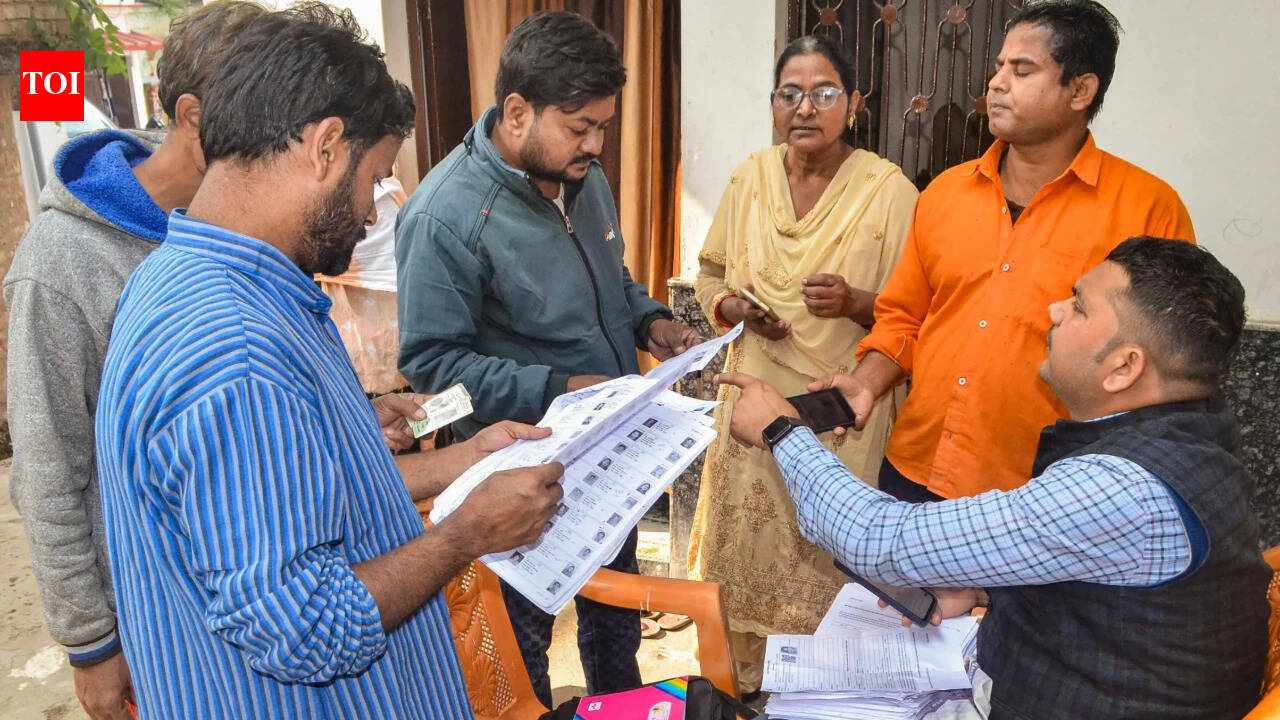
The Election Commission has assured the Supreme Court that eligible citizens seeking re-enrolment through Form 6 during the current exercise will not face legal action for re-registering.
Image: Times of India
Why in news
According to the supplied report, the Election Commission has committed to including every eligible citizen in the electoral rolls and allowing those erroneously removed to submit fresh applications. The report does not provide the text of the assurance or a detailed Supreme Court order.
Background
Electoral registration translates the constitutional commitment to adult suffrage into effective participation. Article 324 vests the Election Commission with superintendence, direction and control over the preparation of electoral rolls and the conduct of specified elections. Article 325 provides for a general electoral roll for each territorial constituency and prohibits exclusion solely on grounds of religion, race, caste or sex. Article 326 establishes adult suffrage for elections to the Lok Sabha and State Legislative Assemblies, subject to constitutional and statutory qualifications. The Representation of the People Act, 1950 and the Registration of Electors Rules, 1960 govern electoral registration, revision and related procedures.
What the Election Commission has assured
The reported assurance has two components: inclusion of every eligible citizen during the current process and protection from legal action for seeking re-enrolment through Form 6. Persons whose names were erroneously removed can submit fresh applications for inclusion.
The assurance should be understood within its reported context. It is not evidence of an amendment to electoral law, automatic acceptance of every application or blanket immunity for deliberately false declarations.
- Eligible applicants must still satisfy the statutory conditions for registration.
- The Commission has advised applicants to ensure that their names are not already enrolled in another constituency.
- The supplied material reports the Commission’s position before the Court, not a detailed judicial ruling on its legal scope.
Infographic
Inclusion
Enable every eligible citizen to secure a valid roll entry.
Fair procedure
Verify grounds and provide the legally required hearing before deletion.
Correction
Provide accessible inclusion applications and statutory appeals.
Integrity
Prevent duplicate entries through lawful verification.
Accountability
Track decisions, restore entries promptly and review wrongful exclusions.
AI-assisted infographic by Pragnya IAS Academy, based on the cited sources.
Constitutional responsibility: inclusion with accuracy
Universal adult suffrage requires more than formal eligibility: an eligible citizen must be able to secure and retain an entry in the electoral roll. Erroneous deletion can therefore obstruct meaningful political participation even where the underlying eligibility remains unchanged.
Roll integrity is equally necessary. The Representation of the People Act, 1950 prohibits registration in more than one constituency and multiple registration within the same constituency. The constitutional objective is an inclusive and accurate roll, rather than a choice between inclusion and verification.
- Article 324 supplies the institutional framework for the Commission’s supervision of roll preparation.
- Article 325 protects against specified forms of discriminatory exclusion.
- Article 326 anchors elections to the Lok Sabha and State Legislative Assemblies in adult suffrage.
- The exercise of voting rights is regulated by electoral law; constitutional guarantees must be implemented through lawful registration procedures.
Safeguards against wrongful deletion
The Electoral Registration Officer is the statutory authority responsible for inclusion, correction and deletion decisions. Under Section 22 of the Representation of the People Act, 1950, deletion on grounds such as cessation of ordinary residence or other ineligibility requires proper verification and a reasonable opportunity of being heard. The procedural position differs where death is established.
Verification must distinguish between genuine ineligibility and circumstances that require further inquiry. A person’s temporary absence does not, by itself, end ordinary residence. Consequently, failure to find someone during a visit should not automatically be treated as proof that the person is no longer entitled to registration.
- Communicate the proposed ground of adverse action so that the affected person can respond effectively.
- Assess ordinary residence according to law rather than equating it mechanically with physical presence on a particular day.
- Maintain a traceable record of verification, notice and the final decision.
- Use supervisory review to identify recurring wrongful exclusions.
Remedies and limits of the Form 6 route
For a citizen wrongly omitted from the roll, an application for inclusion through Form 6 provides a route to restoration, subject to verification. Section 23 of the Representation of the People Act, 1950 governs inclusion, while Section 24 provides statutory appeals against specified registration decisions.
Fresh inclusion and an appeal serve different purposes: the former seeks an entry in the roll, while the latter challenges a registration decision. Administrative grievance channels can facilitate resolution but do not replace statutory remedies. Relief must also be timely because the law restricts changes to the roll during the specified election-stage freeze.
- Check current enrolment status before applying and disclose relevant previous registration information truthfully.
- Retain the application acknowledgement and track its disposal.
- Where an adverse order exists, examine the applicable appeal procedure and limitation period.
- Verify the final roll entry; submitting a form alone does not establish successful enrolment.
| Situation | Response and safeguard |
|---|---|
| Eligible citizen wrongly omitted | Seek inclusion through Form 6, as reported in the EC assurance; eligibility remains subject to verification. |
| Proposed deletion for loss of ordinary residence | Require proper verification and a reasonable opportunity of being heard under the statutory framework. |
| Existing enrolment in another constituency | Disclose the existing entry and follow the prescribed procedure to avoid duplicate registration. |
| Adverse registration decision | Use the applicable statutory appeal mechanism; administrative complaints are supplementary. |
| Application submitted but entry not confirmed | Track disposal and verify inclusion in the electoral roll. |
- 1. Check the electoral roll and ascertain whether the name is missing or recorded elsewhere.
- 2. Obtain available information about the deletion or omission and any registration order.
- 3. Submit Form 6 for inclusion where appropriate, with truthful declarations and prescribed supporting material.
- 4. Track verification and respond to communications from the registration authority.
- 5. Use the applicable statutory appeal if an adverse decision requires challenge.
- 6. Confirm that the final electoral roll contains the correct entry.
Significance, challenges & way forward
Significance
- The assurance can reduce fear of legal action among eligible citizens seeking to correct wrongful exclusion.
- Effective re-enrolment protects the practical operation of universal adult suffrage.
- Accurate rolls strengthen public confidence by addressing both missing eligible voters and duplicate entries.
- Judicial scrutiny reinforces the need for electoral administration to remain accountable within the statutory framework.
Challenges
- Requiring fresh applications places time, documentation and follow-up burdens on citizens affected by administrative errors.
- Mobile workers and temporarily absent residents may be wrongly treated as having ceased to be ordinarily resident.
- An assurance against prosecution may be misunderstood as permission to retain duplicate entries or make false declarations.
- Delayed decisions can leave an otherwise eligible applicant without an effective remedy before the statutory election-stage freeze.
- Without documented reasons and accessible status information, citizens may struggle to identify or challenge wrongful deletion.
Way forward
- Issue accessible clarification on the scope of the assurance, eligibility requirements and the prohibition on duplicate registration.
- Ensure legally required verification and hearing before adverse deletion decisions, rather than relying on re-enrolment as the primary safeguard.
- Provide assisted filing, local-language guidance and accessible offline channels alongside digital services.
- Make application tracking, decision communication and information about statutory appeals easy to obtain.
- Prioritise timely disposal before electoral deadlines and verify that approved applications translate into actual roll entries.
- Audit wrongful deletions and restoration outcomes while protecting personal data, using findings to improve field verification and supervision.
Key terms
- Form 6
- The prescribed application for inclusion of a name in the electoral roll, identified in the report as the route for eligible persons seeking re-enrolment.
- Electoral Registration Officer
- The statutory authority responsible for preparing and revising the electoral roll and deciding registration matters for a constituency.
- Ordinary residence
- The legally assessed residential connection relevant to registration in a constituency; temporary absence alone does not terminate it.
- Universal adult suffrage
- The constitutional basis of voting eligibility for adult citizens, subject to applicable constitutional and statutory conditions.
- Natural justice
- Principles of procedural fairness, including a meaningful opportunity to respond before an adverse decision where the law requires it.
- Roll integrity
- The accuracy and completeness of electoral rolls, including eligible voters while addressing duplicate and ineligible entries.
Link with static syllabus
Prelims practice MCQs
Q1. With reference to constitutional provisions concerning elections, consider the following statements: 1. Article 324 extends the Election Commission’s superintendence, direction and control to the preparation of electoral rolls. 2. Article 325 prohibits exclusion from an electoral roll solely on grounds of religion, race, caste or sex. 3. Article 326 provides the constitutional basis of adult suffrage for elections to the Lok Sabha and State Legislative Assemblies. Which of the statements given above are correct?
Q2. With reference to electoral registration, consider the following statements: 1. Temporary absence from a place automatically terminates ordinary residence there. 2. A person is not entitled to registration in more than one constituency. 3. Submission of Form 6 automatically establishes inclusion in the electoral roll. Which of the statements given above is/are correct?
Q3. Which of the following best describes the Election Commission’s assurance reported in the supplied material?
Q4. Consider the following pairs under the Representation of the People Act, 1950: 1. Section 22: Correction of entries in electoral rolls 2. Section 23: Inclusion of names in electoral rolls 3. Section 24: Appeals against specified registration decisions Which of the pairs given above are correctly matched?
Mains practice questions
GS 2 · 15 marks · 250 words
Electoral-roll integrity and universal adult suffrage are complementary objectives. Examine this statement in the context of wrongful deletion of voters and discuss the safeguards required for effective remedies.
Frequently asked questions
What has the Election Commission assured the Supreme Court?
According to the supplied report, eligible citizens seeking re-enrolment through Form 6 during the current process will not face legal action for re-registering. The Commission has also committed to including every eligible citizen.
Does filing Form 6 guarantee inclusion in the electoral roll?
No. The application remains subject to statutory eligibility and verification, and the applicant should confirm the final roll entry.
Can a voter retain registration in two constituencies?
No. Electoral law prohibits registration in more than one constituency, and the reported assurance does not remove this prohibition.
What can a citizen do after wrongful deletion?
The citizen can seek inclusion through the appropriate application and examine the statutory appeal available against an adverse registration decision. Prompt action matters because electoral-roll changes are restricted during the statutory election-stage freeze.
Sources
- Times of India: Those using Form 6 to re-enroll won't be prosecuted: EC to SC
Analysis prepared by the Pragnya IAS Academy current-affairs desk with AI assistance from the cited reports. Verify figures with the original sources.
Turn current affairs into marks
Join Pragnya IAS Academy's mentorship for daily answer-writing evaluation on stories like this — classroom programmes from a trusted name in IAS coaching in Hyderabad.